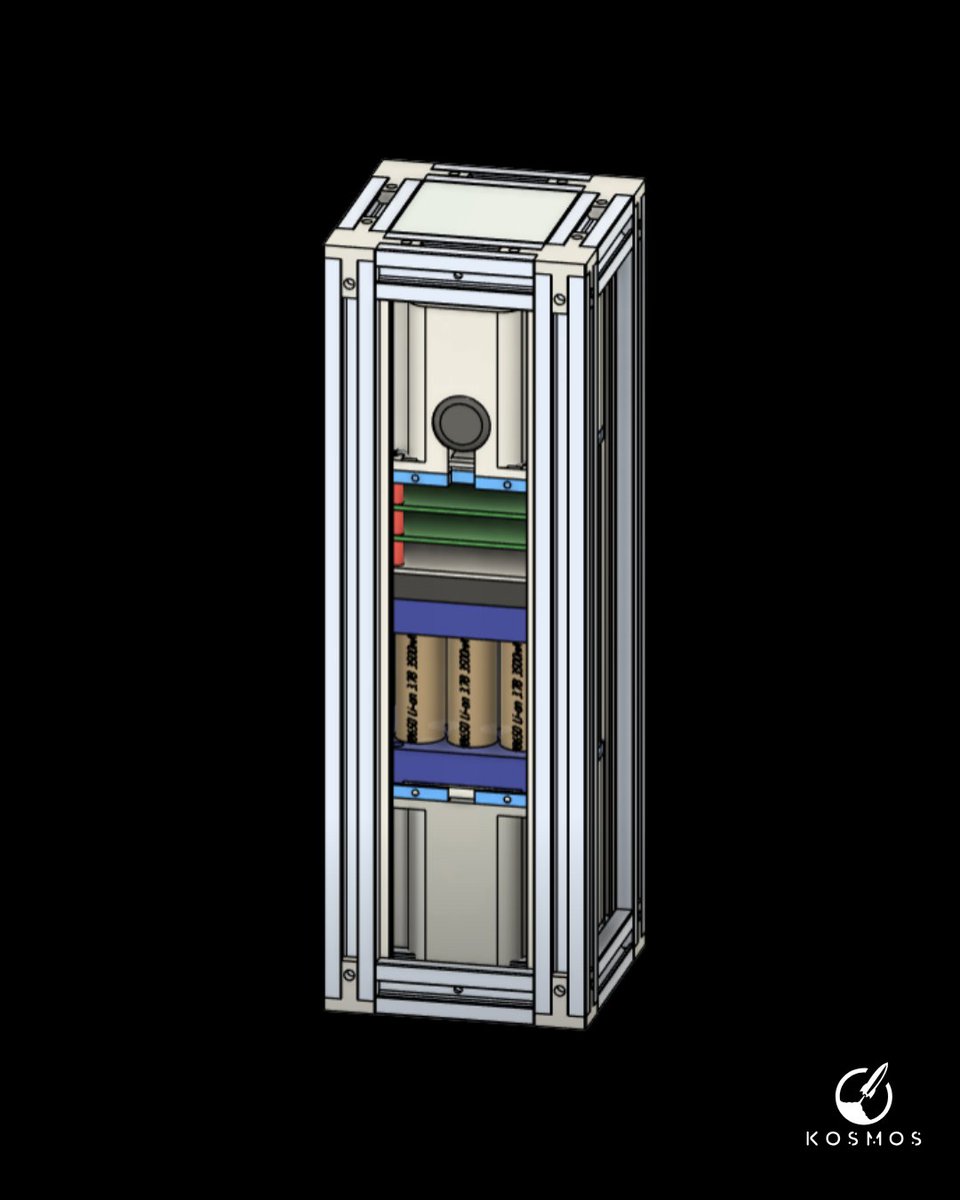
PANDORA is a 2U CubeSat that measures in-flight vibrations using acceleration and rotation sensors. By applying numerical methods, noise is reduced and the most critical phases are identified, contributing to the reliability of aerospace missions. More at https://t.co/TFYERCFTcy.
The DEIMOS II features a Sandia RFD parachute with CO2 ejection, a metal-printed nozzle, optimized avionics, and a wet lay-up ellipsoidal nosecone. The LAPESP payload performs navigation and collects environmental and inertial data. More about LASC at https://t.co/TFYERCFTcy.
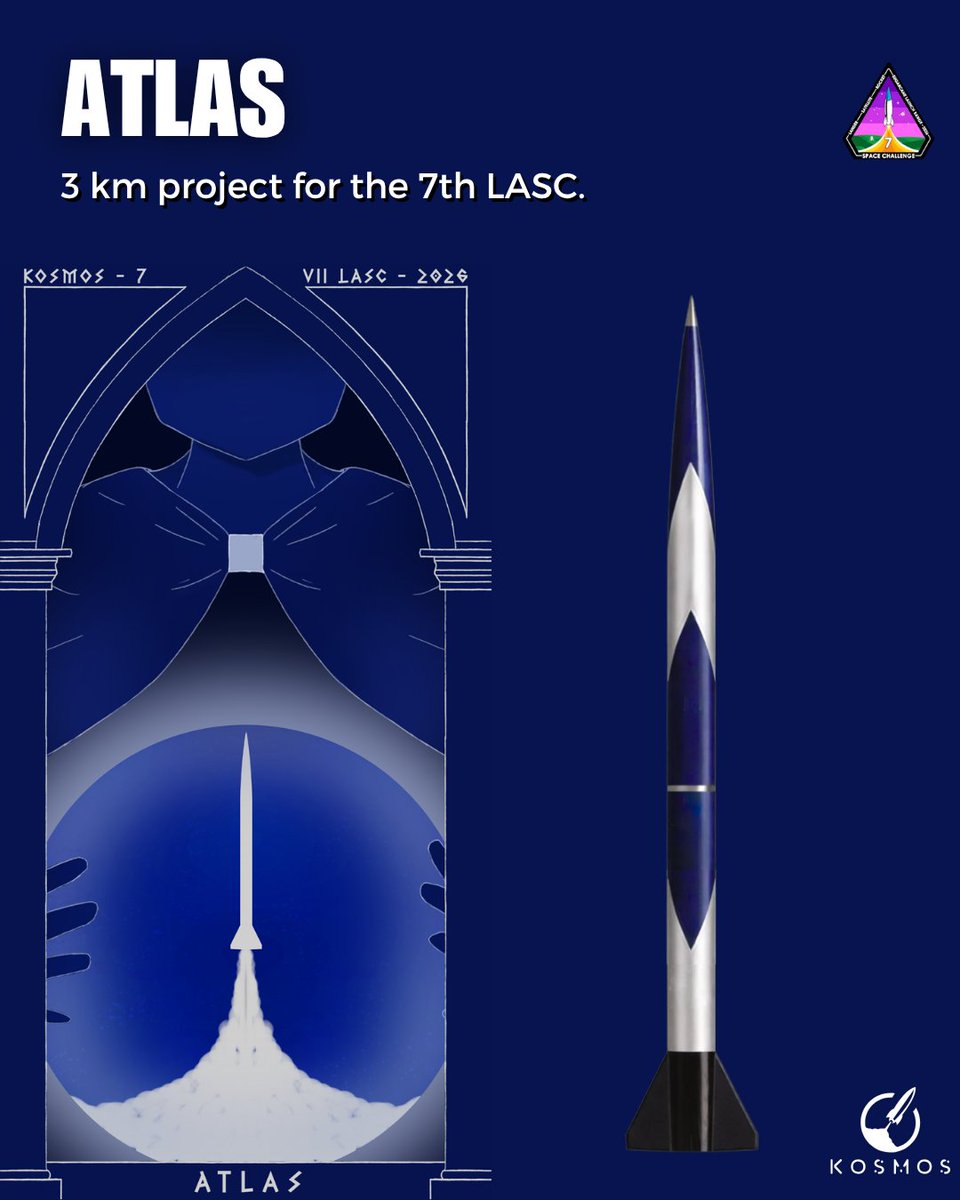
The ATLAS project features nosecone avionics, pyrotechnic ejection, a conical parachute with reefing, and a motor with 6 KNSB grains. Its structure is made of fiberglass, includes a conical boattail, and will carry the PANDORA payload. More information on https://t.co/TFYERCFTcy.
Clustril
PHOBOS' payload for the 6th @lascspace.
Clustril will study the agglomeration of carbon nanotubes (CNT) in different substances during the high acceleration environment of a rocket launch.
This study is specially important due to the usefulness of CNTs across different applications, most commonly used as an additive for increasing material's strength properties
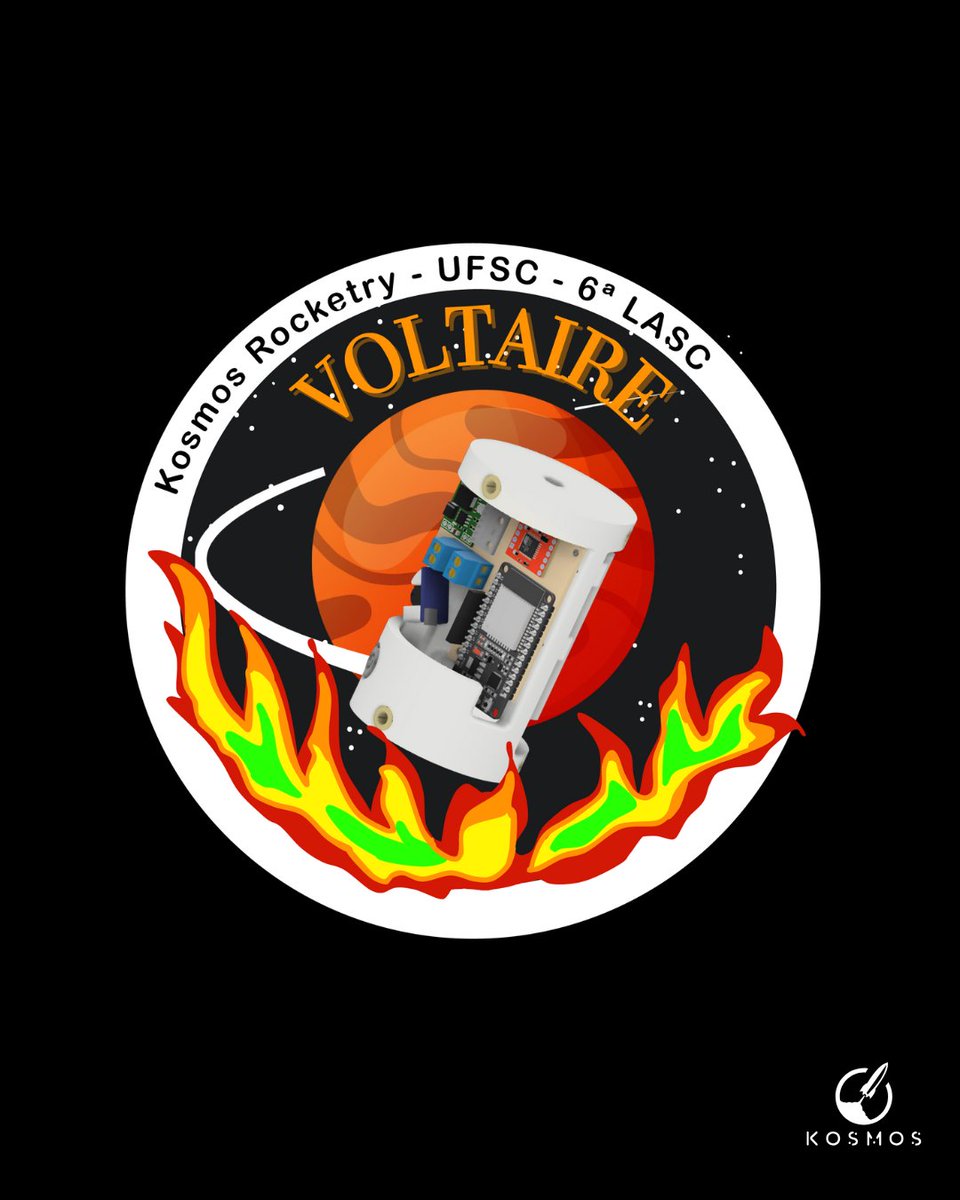
Voltaire
DEIMOS' payload for the 6th @lascspace.
Voltaire will experiment using barometric pressure, wind direction and altitude to essentially make a weather forecast.
This project aims to validate the Zanbretti method, a weather forecasting technique developed in 1915. We will use flight-collected data to predict post-launch weather conditions and compare these predictions with actual weather observations. This comparison will serve to prove the method's effectiveness.