We’re solving the Olodo uprising pandemic, one NYSC at a time. That’s our contribution to society.
That’s why @Tunde_OD, @hackSultan and I are launching a ₦250 Million Scholarship Fund to help recent graduates gain real, in-demand tech skills that lead to jobs.
Each successful applicant will receive a ₦160,000 scholarship towards a 9–12 month AltSchool Africa diploma in any course of their choice. Beyond technical training, participants will also receive career support and internship/job opportunities through Jobs59.
We also know that learning without a laptop is a major barrier, so we’ll be providing laptops to a select number of scholarship recipients through an additional application process.
If you know a recent graduate who deserves this opportunity, share this post with them.
Tap to apply 👉🏾 https://t.co/goQ7Jmpctj
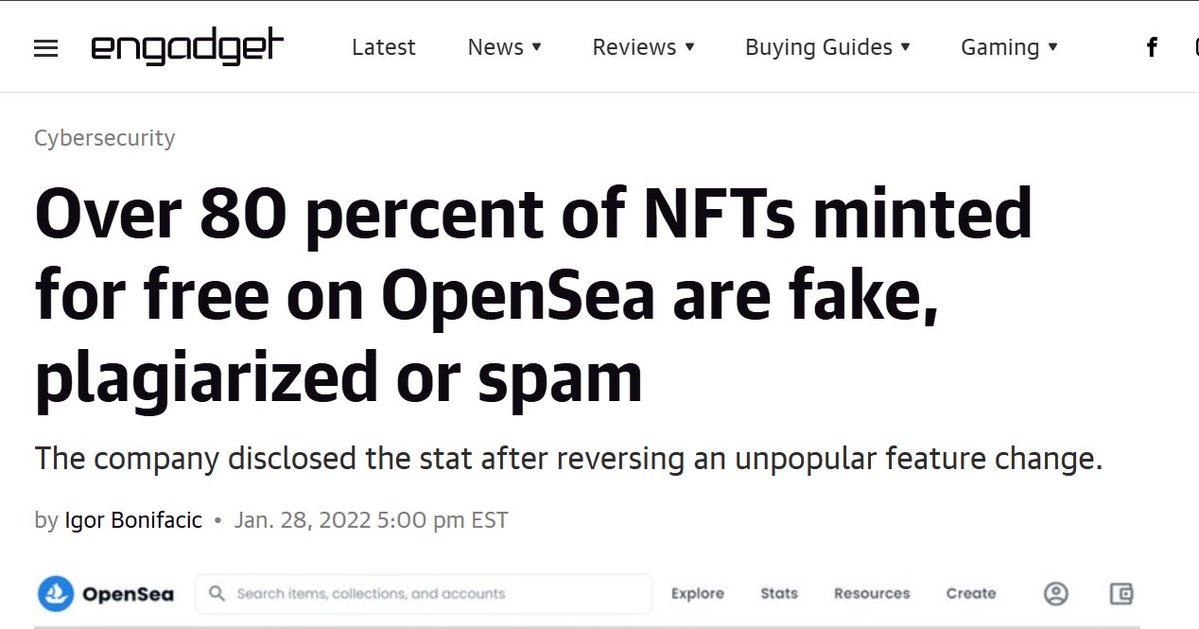
In 2022, @opensea admitted that Over 80% of Free mint NFT'S were flagged by the platform itself as plagiarized, fake, or spam.
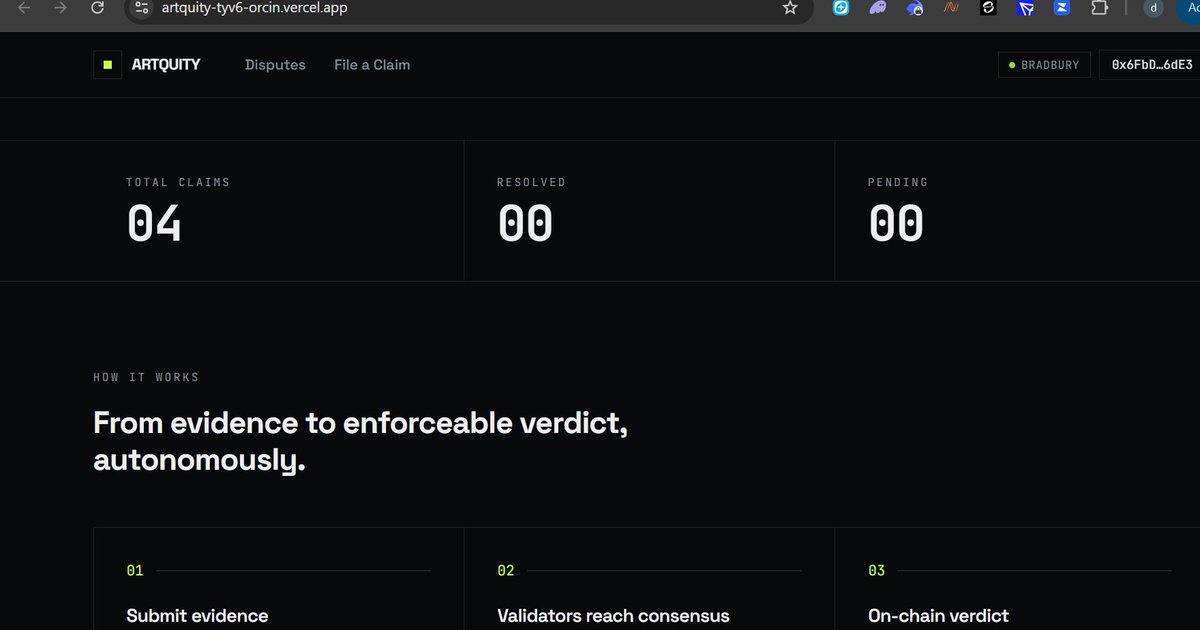
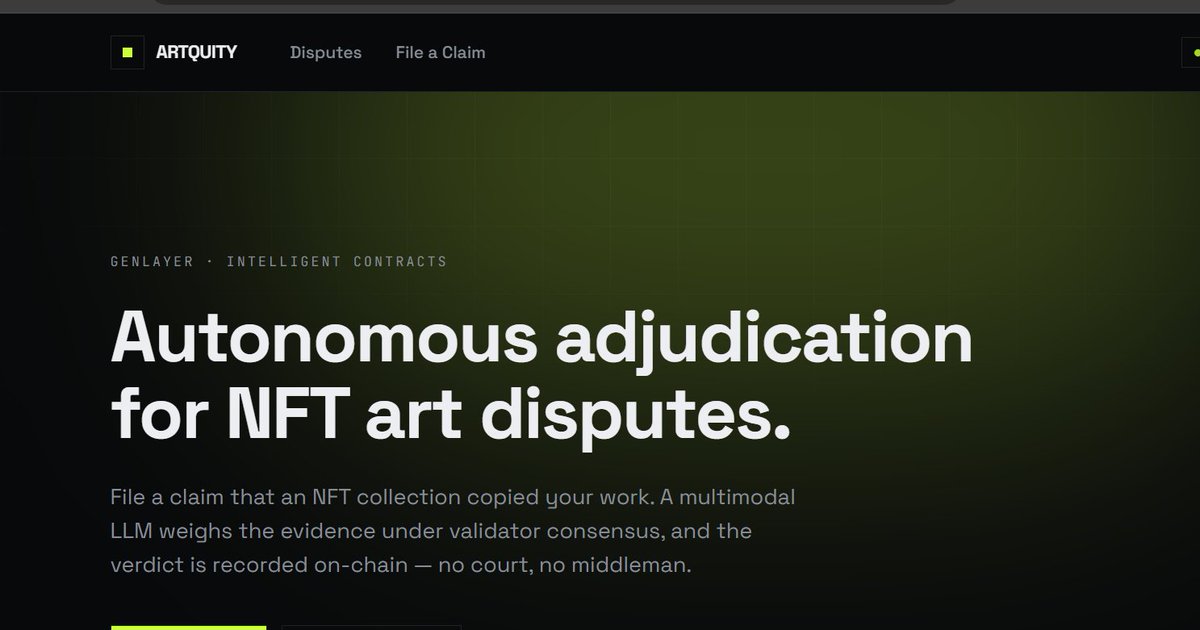
In the real world, an artist's IP is well protected unfortunately it's not the same in Web3, this is why I built Artquity... Artquity is an IP dispute platform for NFT art, built on @GenLayer intelligent contracts.
So Instead of relying on slow centralized systems to reaolve disputesover NFT IP, Artquity resolves it directly on-chain.
Here's how it works:
If someone(plaintiff) feels that their art was used for another collection without their authorisation, they can file a claim against the collection with the necessary evidence in the form of a url, they also need to add the defendant's wallet so that only them can defend themselves.
It runs adjudication through the art_dispute_registry.py intelligent contract , validators run LLM's that properly check the plaintif's claim.
After a consensus from multiple vaiidators, the contract outputs a reason and if it's false/ rejected then the case will be closed, but if it's true the defendant can submit their own evidence and then the contract takes a look at both evidence and declares it's verdict.
Here are some of the functions in the art_dispute_registry.py contract:
file_claim(defendant, original_art_url, collection_url, plaintiff_argument)
This files a case against a named defendant wallet, it runs an intake screen: a vision LLM checks if the claim is plausible & non-frivolous. If it passes → SERVED. Fails → REJECTED. Frivolous claims never make it to the next stage.
respond(case_id, evidence_url, argument)
The defense. It's gated so ONLY the named defendant wallet can call it. They submit counter-evidence + their argument before the deadline.
adjudicate(case_id), it then weighs both sides based on visual similarity, originality, odds of independent/coincidental creation and records a verdict + written reasoning. If the deadline passed with no response, it enters default judgment, but the claim still has to win on its merits.
I built Artquity on Genlayer because the product is about adjudicating whether one artwork infringes another depending on subjective, visual reasoning and tbh a normal smart contract cannot perform this but on GenLayer it can and it's the only chain where that judgment can happen on-chain, check out the repo below..
@FabianB58246501 @JAMBHQ
My sister is unable to check her result
It keeps showing
"Unable to charge your line at the moment. ?<chgw-v2.err.response.parse?>"
₦500,000 cash GIVEAWAY
To win ⤵️
▫️Follow - @PsychedeliaAcad
▫️Like & Repost this Giveaway
▫️Turn on post notifications to our page
▫️Show screenshot proof of post notifications turned on
Winners will be credited in 24hrs
Let’s go💯🔥