“No one deserves God’s love, but He offers it anyway. His saving grace changes our course from eternal judgment to eternal life. Choose life.” —Billy Graham
I'm going to keep posting this Alstair Begg clip "The Man on the Middle Cross" (less than four minutes in length) every Holy Week, because its message is true in 2026, it will be true in 2036 and it will be true in 3036.
"If i take my eyes off the cross, I can then give only lip service to its efficacy while at the same time living as if my salvation depends upon me.
And as soon as you go there it will lead you either to abject despair or a horrible kind of arrogance.
And it is only the cross of Christ that deals both with the dreadful depths of despair and the pretentious arrogance of the pride of man that says you know, I can figure this out."
Jesus Christ—God the Son—set aside His glory, power, and majesty. He stepped out of eternity and into our temporal world. He submitted Himself to the restrictions, pain, and suffering of physical existence. He took His place on the lowest rungs of the socioeconomic ladder.
He was born in a manger. He left the throne of Heaven for a feeding trough. He left the presence of angels to enter a cave filled with animals.
He who is larger than the universe became an embryo. He who sustains the world with a word chose to be dependent upon the nourishment of a young virgin.
He left Heaven so we could go to Heaven.
“God became man, and God lived among us, and God walked among us … That’s the great mystery of the manger of Bethlehem.” —@BillyGraham, The Hour of Decision Christmas Program, 1952
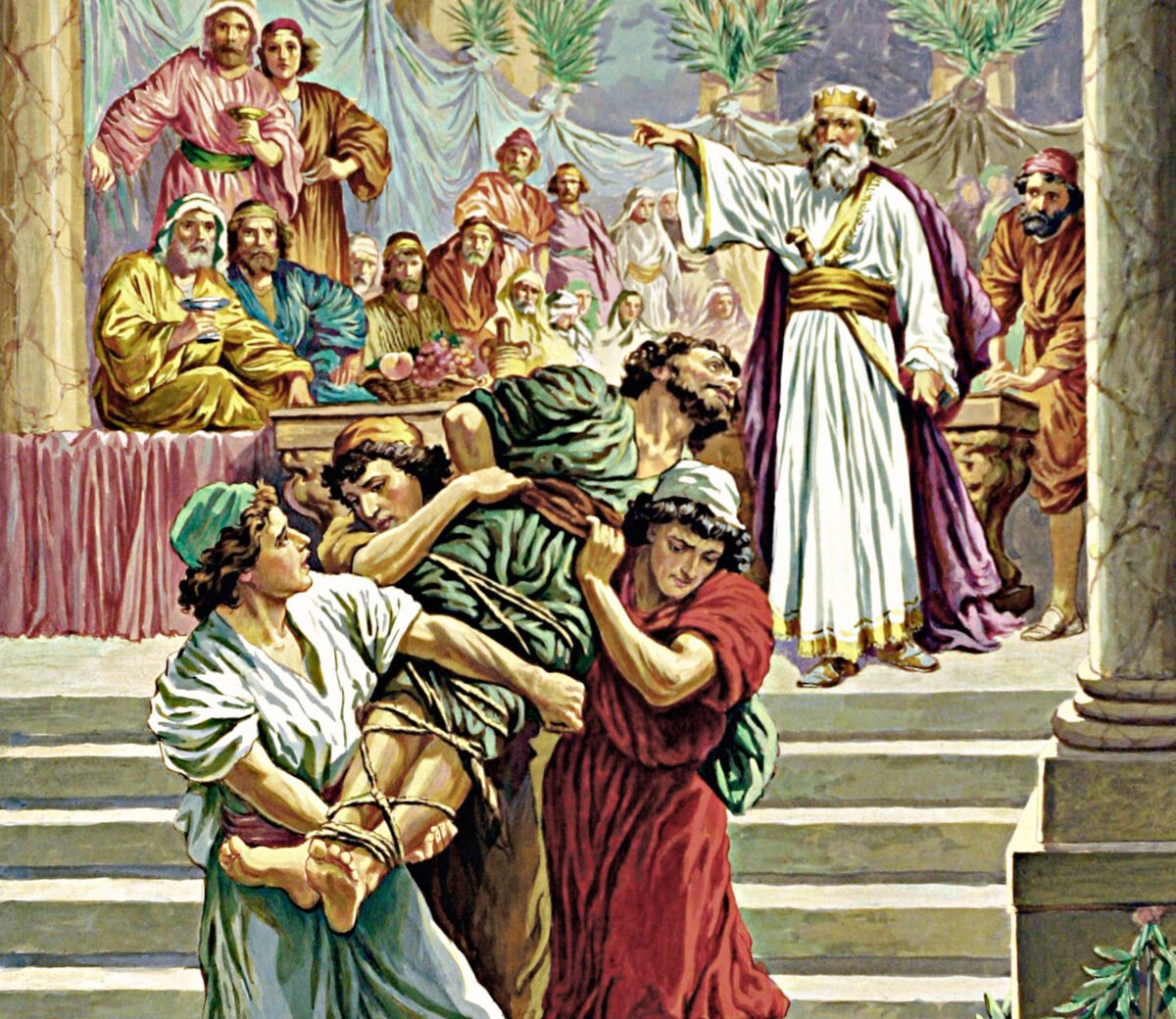
Title: The Parable of the Wedding Feast Explained Through Jewish Culture
Matthew 22:1–14
When we read the Parable of the Wedding Feast some of us feel confused, especially about the man who was thrown out for not wearing wedding garments. At first glance, it sound harsh or unfair. But when we read this parable through Jewish culture, everything becomes clear, logical, and deeply powerful.
Jesus was speaking to Jewish listeners, using Jewish wedding customs they understood very well. This parable is not about cruelty, it is about God’s grace, invitation, and righteousness.
Weddings in Jewish culture, especially the wedding of a king’s son, were among the most important and joyful events in society. Such a wedding was not a private ceremony. It was a public celebration that could last many days. The honor of attending was immense, and rejecting the invitation was seen as a serious insult.
In Jewish custom, invitations to a wedding were sent in two stages. The first invitation announced that the wedding was coming, and those invited agreed to attend. The second invitation was sent when everything was ready, telling the guests that it was time to come. When Jesus begins the parable by saying that a king prepared a wedding banquet for his son and sent servants to call those who had been invited, His Jewish listeners immediately understood that these guests had already accepted the first invitation. Their refusal to come was not ignorance, it was rebellion and dishonor.
This is why the response of the invited guests is so serious. Some ignore the invitation and go back to their farms and businesses. Others go even further and seize the servants, mistreat them, and kill them. To the Jewish mind, this clearly reflected Israel’s history. God had called Israel into covenant, and again and again He sent prophets to call them back to Him. Instead of listening, many ignored the message, and some even killed the prophets. Jesus was not telling a new story, He was retelling Israel’s story in parable form, and the religious leaders knew it.
When the king responds by judging those who rejected the invitation and destroying their city, this would not have sounded strange or cruel to a Jewish audience. In Jewish covenant theology, privilege brings responsibility. To reject a king’s invitation, especially after agreeing to attend, was an act of open rebellion. Many scholars understand this part of the parable as a prophetic warning about the coming destruction of Jerusalem, which happened in AD 70. Jesus was showing that persistent rejection of God’s grace eventually leads to judgment.
After this, the parable takes a shocking turn. The king tells his servants to go into the streets and invite everyone they can find, both good and bad. In Jewish society, especially at a royal wedding, this was unthinkable. A king’s banquet was for honored guests, not for strangers, outcasts, or morally questionable people. Yet Jesus deliberately includes this detail to show the radical nature of God’s grace. When those who were first invited rejected the call, the invitation did not disappear. It was extended to everyone. This is where the Gentiles enter the picture, along with sinners, the poor, and the socially rejected.
The wedding hall becomes full, and the story seems to end happily. But then Jesus introduces the most misunderstood moment in the parable. The king notices a man who is not wearing wedding clothes and asks him how he entered without them. The man is speechless. This detail is crucial. His silence shows that he has no excuse.
In Jewish royal weddings, it was common for the host to provide wedding garments. This was especially true when guests were invited unexpectedly from the streets. The garment was not a test of wealth or social status. It was a gift. To refuse to wear it was to dishonor the king and reject his authority. This man was not thrown out because he was poor or ignorant. He was thrown out because he deliberately rejected what the king had provided.
In Jewish thought, clothing often symbolized spiritual condition. Throughout the Old Testament, righteousness is described as a garment. Isaiah speaks of being clothed with garments of salvation and a robe of righteousness. Zechariah describes the removal of filthy garments from the high priest and the giving of clean ones. Jesus listeners would have immediately understood that the wedding garment represented a kind of righteousness that comes from God, not from human effort.
The man without the garment represents someone who accepts the invitation but refuses God’s terms. He wants to be present at the feast, but he does not want to submit to the king’s provision. In modern terms, he wants the benefits of the kingdom without honoring the King. This is why his punishment is severe. In Jewish culture, rejecting a king’s gift at his son’s wedding was a direct act of contempt.
This parable teaches that grace is free, but it must be received properly. The invitation costs nothing. The garment costs nothing. Everything is provided by the king. But it must be accepted. A person cannot stand before God on their own righteousness and expect to remain in His kingdom. The wedding garment points forward to the righteousness of Christ, which is given, not earned.
When Jesus concludes by saying that many are called but few are chosen, He is not saying that God invites many but only desires a few. In Jewish understanding, being “called” means being invited, while being “chosen” means responding rightly to the invitation. God’s call goes out to all, but only those who humble themselves and receive what He provides remain at the feast.
This parable fits perfectly with the wider biblical story. It connects with the Jewish wedding imagery found in John 14, where Jesus speaks as a bridegroom preparing a place for His bride. It connects with Revelation, where the marriage supper of the Lamb is described, and the bride is clothed in fine linen given to her. From beginning to end, Scripture presents salvation as an invitation to a wedding, where joy, covenant, and union are central.
In the end, the Parable of the Wedding Feast is not a message of fear but of honor and mercy. The door is open. The table is prepared. The garment is ready. No one is excluded because of background, past sin, or status. The only ones who are excluded are those who refuse the King’s gift and insist on standing before Him on their own terms.
The question Jesus leaves with His listeners, and with us today, is simple. Are we going to accept the invitation and humbly wear the garment the King has provided, or are we going to stand before Him clothed in our own righteousness and be found speechless?
“That baby who was born to Mary was more than just another man—He was God in human flesh. He came into the world for one reason: to make it possible for our sins to be forgiven, so we could become part of God’s family forever.” #BillyGraham
So many horrible acts of senseless violence in the last 48 hours.
The murder of students at Brown University… the antisemitic attack and killing of Jewish people in Australia… and now, reports of the heartbreaking death of filmmaker Rob Reiner and his wife Michele, allegedly at the hands of their own son.
Of course, it was only three months ago that Charlie Kirk was assassinated—another shocking reminder of the dark and violent times we live in.
What a crazy and evil world we live in. The devil seems to be working overtime.
As Jesus said of him, “The thief comes only to steal, kill, and destroy.”
But then Jesus added, “I have come that they may have life, and have it more abundantly.” (John 10:10)
In these scary and tragic times, we need to call out to God. Pray that the Lord will send a mighty spiritual awakening across our land and around the world.
And we need to tell people—especially during this Christmas season—that there is a God in Heaven who loves them so much He sent His Son Jesus to be born in a manger, to die on a cross, and to rise again from the dead.
Jesus left His home in Heaven so we could have a home in Heaven.
Jesus was born so we could be born again.
“God offers forgiveness, inner peace, and eternal life to all who will repent and believe in His Son.” —Billy Graham
Because of God’s love for all people, He gave the world the gift of His Son, Jesus, on that first Christmas to bring lasting hope. As you read this Advent devotional, may you be reminded that this moment that changed history can change your life today: https://t.co/ZxSH7rhh7H
Starting tomorrow, it will get dark before many Alabamians get off work or home from after-school activities.
We must make Daylight Saving Time PERMANENT.
Jesus said, “Therefore stay awake—for you do not know when the master of the house will come, in the evening, or at midnight, or when the rooster crows, or in the morning—lest he come suddenly and find you asleep. And what I say to you I say to all: Stay awake.” (Mark 13:35-37)
Jesus said, “Let not your heart be troubled; you believe in God, believe also in Me. In My Father’s house are many mansions; if it were not so, I would have told you. I go to prepare a place for you. And if I go and prepare a place for you, I will come again and receive you to Myself; that where I am, there you may be also.” (John 14:1-3)
Forgiveness: The Gospel Is Big Enough for Tyler Robinson
The bullet didn’t just pierce skin. It cracked the illusion that we could disagree and still stay human.
Charlie Kirk’s body hit the ground beside a folding chair.
Someone screamed. Others froze. Phones fumbled in trembling hands. The white tent snapped in the wind. Somewhere in the crowd, a father whispered, “Get down.”
By the time sirens carved a path through the silence, a young man with a gun had vanished into the American bloodstream.
Now he has a name.
Tyler Robinson. Twenty-two. Alleged. Caught. Handcuffed. Alive.
And we are left behind with questions hotter than justice.
What are we supposed to do now?
It would be easier if we were only angry.
But there is something more complicated churning inside the body of Christ.
A grief too bruised to name. A rage we feel guilty for carrying. A hollow place where vengeance crouches and licks its lips.
Some Christians are praying. Some are cursing. Some are doing both.
But there is a story older than our fear.
It starts with a sermon.
Stephen stood before men who claimed to speak for God.
He opened his mouth, and the old story of Israel came pouring out.
He called them stiff-necked. Blind. Murderers of the Righteous One.
They dragged him outside like garbage.
The first stone broke the skin. The second, the jaw. And as the blood filled his mouth, Stephen did something no modern Christian seems quite ready to do.
He prayed for the man who held the coats.
He asked forgiveness for the hands that shattered his bones.
He gave grace while his heart was still beating.
What would it mean to forgive that fast?
Not when the verdict is read. Not after the funeral. But while the shots still echo.
What kind of gospel grows in a soil that broken?
We’ve spent so much of our modern Christianity numbing ourselves with safe slogans and forgettable prayers. But Stephen wasn’t reciting bumper stickers. He was standing inside the furnace of God’s Spirit, praying through blood.
“Lord, do not hold this sin against them.”
That line is not soft.
It is a declaration that the kingdom of God is real, and it does not play by the rules of our tribe or our politics.
The Church today is full of clenched fists and sharpened tongues. We post screenshots like scripture. We bless and curse from the same mouth. We say things like “just saying what needs to be said” and ignore the rot we’re feeding.
And yet we wonder why the Spirit feels so far away.
Forgiveness isn’t forgetting.
It isn’t pretending nothing happened.
It’s war. The kind that happens inside the chest when the Holy Spirit tells you to lay your weapon down and bless the one who drew theirs.
You don’t forgive because the world tells you to.
You forgive because the man on the cross forgave you.
And he didn’t wait.
Neither did Stephen.
Stephen’s prayer was heard.
Not just by God.
But by a young man named Saul, whose fingerprints were all over that execution.
And though Saul went on raging, rounding up Christians and dragging them from homes, something had cracked open inside him. A goad buried deep. A prayer he couldn’t forget.
And one day on a Damascus road, that man heard a voice from heaven.
“It is hard for you to kick against the goads.”
It always is.
Forgiveness leaves a splinter.
Even in your enemies.
You may never stand beneath a tent with bullets flying. But you will be wounded. You will be hated. You will be misunderstood. That is not failure.
That is the cross-shaped road.
You will want to hate back. You will have verses lined up to justify it. You will call it justice.
But the real question is not whether you’re angry.
It’s whether you’ll trust Christ enough to lay your vengeance down.
Stephen looked up and saw Jesus standing. Not seated. Standing. Ready to receive. Bearing witness to the kind of faith that stops heaven mid-song.
And even then, Stephen died.
He did not get a reprieve.
He got a Savior.
So what should we do now?
We pray for justice.
We ask for peace.
We name the evil.
And then we say it aloud, even if our voice shakes:
“Lord, do not hold this sin against them.”
Not because they deserve it.
But because Jesus does.
Forgiveness isn’t a soft option.
It is a blood-soaked, Spirit-driven revolution. It is a war against hell that begins inside the heart of one believer who dares to look up instead of looking back.
So if you’re asking what now?
Do what Stephen did:
Speak the truth.
Stand tall.
And when the stones come…
Pray like heaven is listening.
Because it is.
Let them say of us:
The bullets flew.
But we did not return fire.
We knelt. We forgave.
And we looked up, where Jesus was still standing.
“The greatest legacy you can pass on to your children and grandchildren is not your money or the other material things you have accumulated in life. The greatest legacy you can pass on to them is the legacy of your character and your faith.” #BillyGraham#GrandparentsDay