Urban Resilience Specialist- Africa West Region @WorldBank @WBG_Cities.| Sustainable Cities & Urbanization I Disaster Risk Management. All my views are my own
African urban households pay 20 to 31% more for goods and services than urban residents in other developing regions—not because of higher incomes, but because of the way many cities are built and serviced. In cities such as Ibadan, missing infrastructure acts as a regressive tax, increasing the cost of living for poor households while undermining business productivity, competitiveness, and growth.
In this article, co-authored with Prashant Kapoor and published on the World Bank Blog, we argue that cities can simultaneously create jobs, accelerate the green transition, improve service delivery, and make urban life more affordable by addressing critical infrastructure gaps and crowding in private investment.
The World Bank Group's approach, combining public lending, private investment, and risk mitigation in a single package, gives cities the integrated support they need to move from informal substitute economies to green service economies, at scale.
Read the blog here: https://t.co/eCLdSrUHKe
#SustainableCities #UrbanDevelopment #GreenGrowth #Infrastructure #Cities #WorldBank #UrbanEconomics #Africa #Ibadan #BlendedFinance #PrivateSectorDevelopment
How do cities produce deprivation even as they continue to grow?
In our newly published paper, we examine urban deprivation in the rapidly expanding Lagos–Ogun border settlements in Nigeria.
Using household survey data, we find significant gaps between what residents consider essential for a good quality of life and what they actually experience. Poor roads, unreliable electricity, inadequate drainage, and weak access to social services remain major sources of deprivation despite the area's growing economic and residential importance.
Our key argument is that these challenges are rooted in the dynamics of metropolitan expansion. While the Lagos–Ogun corridor increasingly functions as a single urban system, governance, planning, and service responsibilities remain fragmented across administrative boundaries. The paper contributes to ongoing discussions on urban governance, infrastructure provision, environmental justice, and sustainable urban development in rapidly urbanizing regions.
Delighted to have worked with @Jaiyeoba Olatunji and Prof. Oluwole Daramola, PhD, FNITP, RTP, MNES, TRCN on this study.
Full paper here: https://t.co/1bLkbv2Yze
#UrbanDevelopment #UrbanGovernance #Nigeria #Urbanization #Infrastructure #SustainableCities #UrbanPlanning #Development #Africa #ResearchPublication
I am proud and privileged to have been part of the team that produced this timely and compelling World Bank Report: Nigeria— Multi-Sector Analytical Review and Pathway to Transformation (2025).
Nigeria’s urban population has multiplied by almost 14 times over the past sixty years - from less than 7 million people in 1960 to 117 million in 2022. Projections indicate that by 2050, about 70% of Nigeria’s population will live in urban areas, making cities central to the country’s economic future. While rapid urbanization offers substantial opportunities, it also poses significant challenges that, if not addressed, could impede sustainable growth.
The report presents findings from a comprehensive, cross-sector analysis of Nigeria’s main cities and outlines a strategic roadmap to transform them into more livable, inclusive, and resilient urban centers.
For stakeholders interested in urban livability in Nigeria, the report is available here: https://t.co/qEOLrmoqYf
@WorldBankAfrica@WorldBank
https://t.co/MtPLJa8HBg
I am truly honoured to be among the three recipients of the 2025 Mary Fran Myers. This recognition is very significant to my work in urban resilience and disaster risk management. I am very grateful to the Natural Hazards Center for this opportunity and look forward to engaging with the disaster research and practice community at the 50th Natural Hazards Workshop this summer!
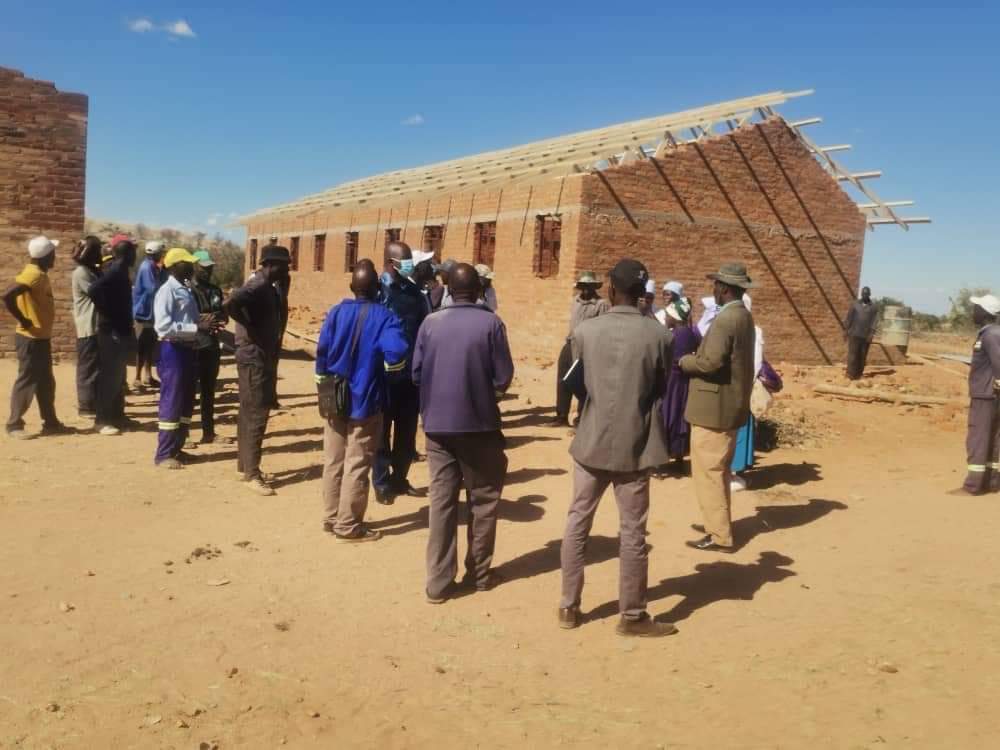
Village School Project: Update
Those familiar with Zimbabwe’s districts know very well that Buhera is one of the poorest districts in the Republic. Schools are often very far away from villages. Learners have to cross rivers via swimming to get to school. The road network especially the one linking Murambinda Growth Point and Birchenough is one of the worst in the country.
Going to my village an 80km road stretch often takes 4 hours. Amidst all our challenges, we the ordinary people are doing something to change our fortunes. It is naive to expect government to deal with all challenges confronting us. It doesn’t have the financial and institutional capacity to do that. Hence ordinary people must do what is within their capacity and government focuses on the major infrastructure works.
The environment I grew up with thousands others was tough . Walking 14km to and from primary school everyday. Many got tired and decided to stay at home or look for cattle herding jobs elsewhere. A few soldiered and completed elementary school. Very few proceeded to secondary education as the school was 10km away, a tough 2 hour walking journey. Meanwhile you needed to walk back home 10km again with books etc.
Together with fellow villagers, I committed myself to changing that.
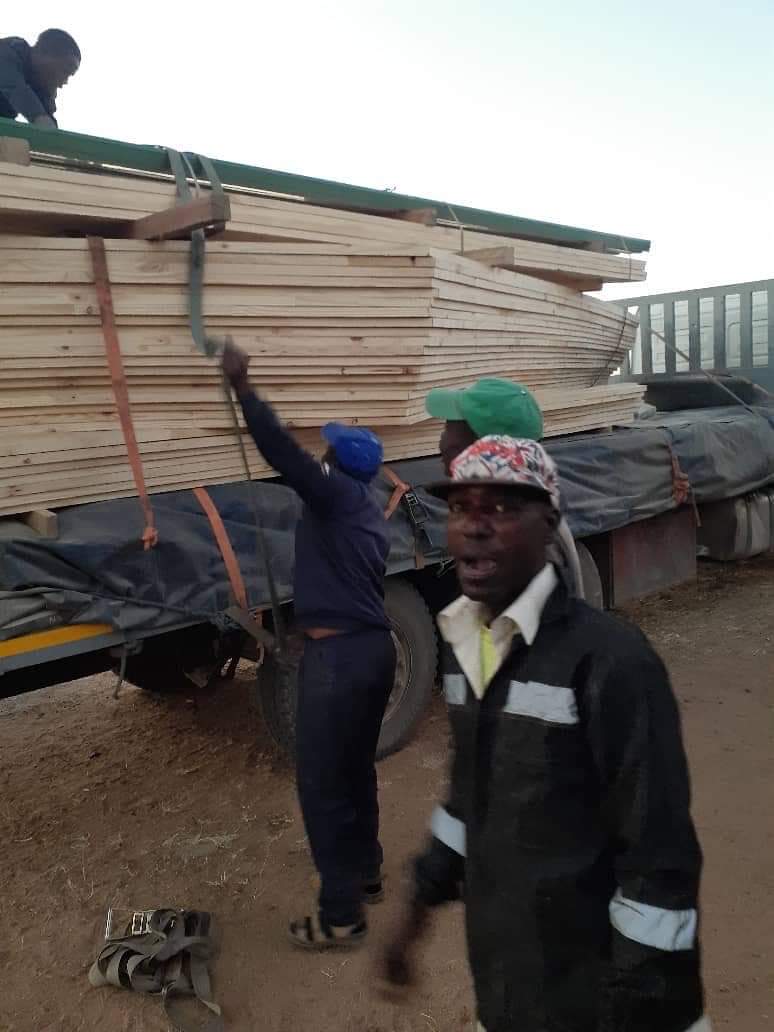
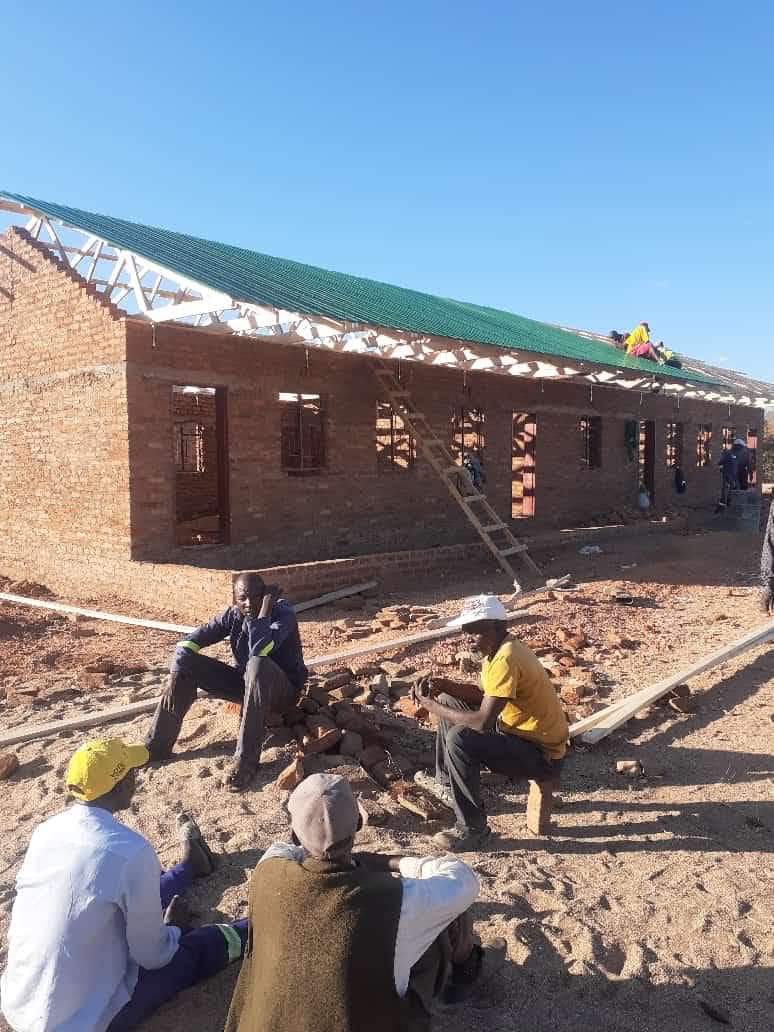
The Community provides labour, bricks and sand for free. I buy all materials. Last month they took delivery of roofing materials. They are busy plastering now. And we will get there!