¿Se acuerdan de las pinches churpias que se la fueron a hacer de tos a la chica de una pizzería y que ésta las recibió con una oleada de chingadazos?
Pues ya tenemos otro ángulo de la acción.
Querían chingadazos y chingadazos se llevaron.
I DON’T UNDERSTAND WHY PEOPLE DON’T USE CHATGPT FOR JOB SEARCHES.
I got 5 interview calls in 7 days, all with ChatGPT as my recruiter.
Here are 6 prompts that turn your job hunt into a strategy.
[Save this thread]
If you get an Offer Letter with a salary that is lower than expectations, don't keep refusing! There are ways to respond professionally and negotiate salaries wisely.
1. Read the offer letter correctly
- Salary offered
- Other benefits (insurance, allowances, leave)
- Scope of work & promotion opportunities
2. Don't keep rejecting, try to respond in a neutral tone while showing interest
3. Justify why you deserve more salary
- Work experience
- Specific skills
- Market rate
4. Talk professionally
5. If you can't negotiate a salary, negotiate other benefits
- Transportation or meal allowance
- Flexible work hours
- Training/upskills opportunities
- Post-probation salary review
7. Show commitment, interest and always be professional even negotiation must be rejected okay!
Sample Mail
Subject: Discussion on Job Offer - [Your Name]
Dear [Hiring Manager's Name],
Thank you for offering me the [Position Title] role at [Company Name]. I am truly excited about the opportunity to contribute to the team and help achieve the company's goals.
After carefully reviewing the offer, I would like to discuss the salary package. Based on my experience, skills, and the current market value for similar roles, I was expecting a compensation closer to [your desired salary]. I believe this would better reflect the value I can bring to the position.
I am very enthusiastic about joining [Company Name] and contributing to the team's success. I hope we can discuss this further and find a mutually beneficial agreement. I am also open to exploring other benefits or a salary review after the probationary period.
Thank you again for this opportunity, and I look forward to your response.
Best regards,
[Your Full Name]
[Your Contact Information]
The interview is over. The recruiter asks: "Do you have any questions for us?"
You say: "What’s the culture like?" or "When will I hear back?"
The recruiter’s brain: Standard. Forgettable. Just like the last five people.
You just missed your biggest chance to close the deal. Say this instead:
🚨 FPS WARNING 🚨
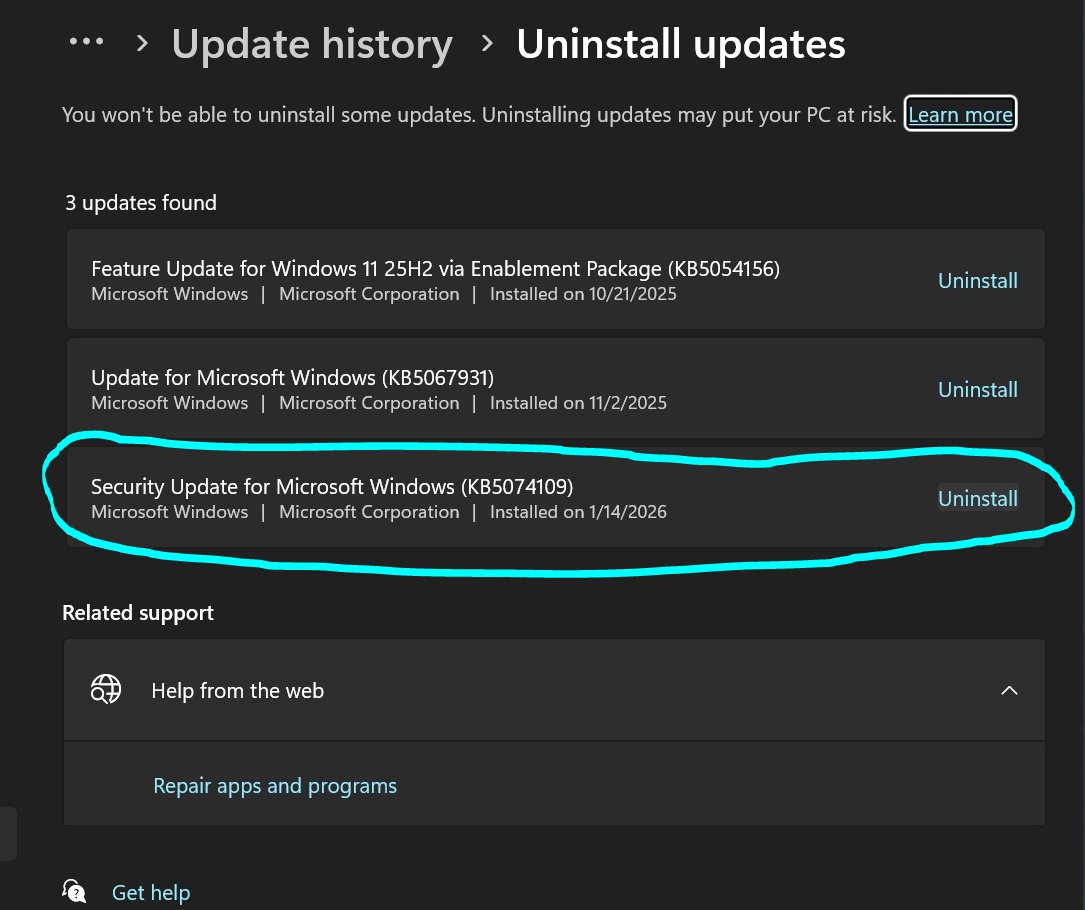
NVIDIA users on Windows 11 — the KB5074109 update is causing:
❌ 15–20% FPS loss
❌ Persistent stuttering
Roll it back ASAP.
In Search “Uninstall Updates” → Find KB5074109 → Uninstall → Restart.
Restore the frames.
If you were not invited back for a second round interview
Even though you know you crushed it
It’s probably because you’re a victim of the horn effect and didn’t even know it.
Here’s how to make sure it never happens again ❤️
If a Hiring Manager asks you to introduce yourself in an interview, the best way to introduce about yourself is quite simple! Just structure your answer around your past, present & future.
Here’s how you can answer "Tell me about yourself" based on your experience level:
1) For candidates WITH EXPERIENCE
- INTRODUCTION
"First of all, thank you for inviting me to this interview today. My name is [Name], and I’d describe myself as an ambitious and self-motivated individual with experience in the [Industry/Sector]"
- PAST
"I started my career as an intern at [XYZ Company], where I was responsible for [Task 1] and assisted with [Task 2] weekly. One of my biggest accomplishments in that role was [Achievement], which I managed to do within [Timespan] by implementing [Strategy]. This led to [Positive Result]"
- PRESENT
"Currently, I’m working as a [Your Role] at [Current Company/University]. I have a strong interest in [Relevant Skills/Industry], which has allowed me to develop [Key Strengths or Projects]"
- FUTURE
"I thrive in a collaborative environment and enjoy working with dynamic teams to achieve specific goals. That’s why I’m excited about this opportunity—to contribute my skills and experience to help [Company Name] with [Job Responsibilities]"
2) For candidates WITH NO EXPERIENCE
- PAST
"I grew up in [City], where I attended [High School]. During that time, I developed an interest in [Relevant Skill/Field] and actively contributed to [School Project/Website/Community Work]"
- PRESENT
"My passion for [Industry/Skill] led me to pursue my degree in [Field of Study] at [University Name]. Currently, I’m in my [Year] and have been working on projects related to [Relevant Skill]. In my free time, I enjoy [Skill 1] and [Skill 2], which have helped me refine my expertise in [Industry]"
- FUTURE
"Although I may not have formal work experience yet, I’m eager to dive deeper into [Industry/Skill] and apply my knowledge in a real-world setting. That’s why I’m excited about this opportunity at [Company Name]"
Keep your answer concise, relevant & engaging. Show enthusiasm, confidence & a strong alignment with the role you’re applying for.
Need a CV that actually gets seen (and gets you interviews)?
Email your CV to [email protected] with subject 'Revamp', for express CV makeover!
Your resume is NOT your CV!!!
Your resume is NOT your CV!!!
Your CV is NOT your resume!!!
Your CV is NOT your resume!!!
A resume is a concise, tailored summary of your skills, experience, and achievements, usually 1–2 pages, and designed to land you a specific job.
While a CV (Curriculum Vitae) is a comprehensive document that details your entire career journey, including education, research, publications, awards, and more, often multiple pages, and is typically used for academic, research, or international positions.
They perform similar functions (showcasing your experience and qualifications) but they are essentially NOT the same.
Always know which one is expected before applying. Sending a CV when a resume is required (or vice versa) can cost you the opportunity.
Please be careful out there.