🔥 Unphishable’s new challenges are live!
• 11 new phishing challenges
• A dedicated AI Threats section covering malicious MCP servers, browser agent prompt injection, and more
• Guest Mode lets you jump in without connecting a wallet
🚀 AI Guardrail Blue & Red projects, built a few months ago, are now open source!
It's time to level up your AI security!
Let's make them even better together. Contributions and improvements are always welcome!
#AISecurity#LLMSecurity#OpenSource
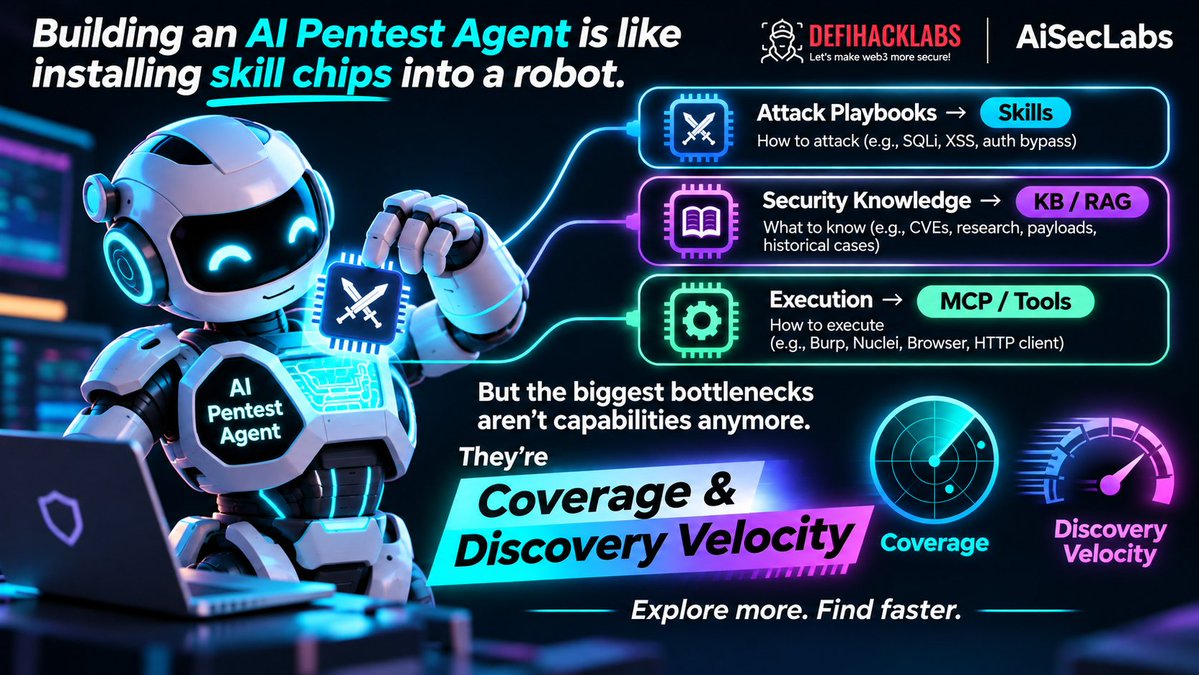
Building an AI Pentest Agent is like installing skill chips into a robot.
• Attack Playbooks → Skills
• Security Knowledge → KB / RAG
• Execution → MCP / Direct Tool Calls
But the biggest bottlenecks aren't capabilities anymore.
👉 They're Coverage & Discovery Velocity.
Explore more. Find faster. 🚀
AI pentest agents are taking off.
I recently participated in a private security contest and discovered nearly 300 vulnerabilities in just 2 weeks.
Along the way, I’ve been exploring state spaces, refining my tools, and designing an AI defense harness.
Offense is scaling fast. Can defense keep up?🤔
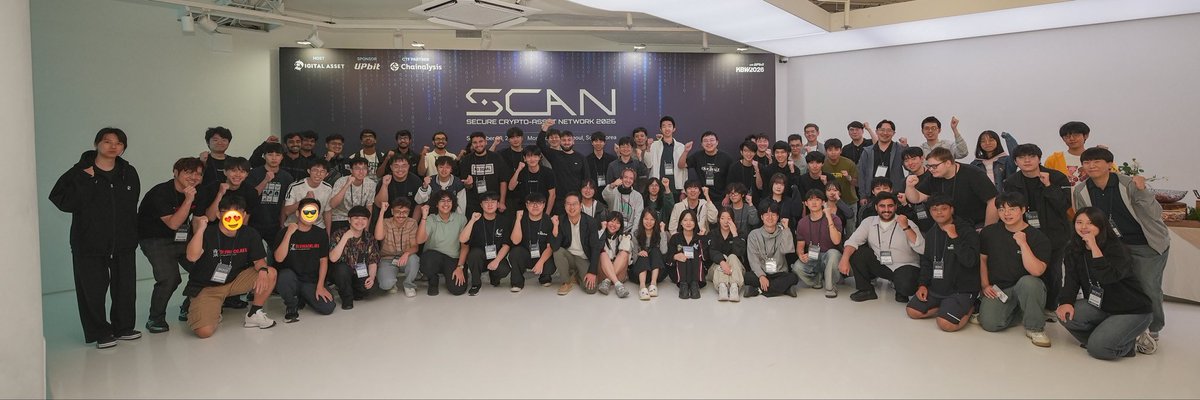
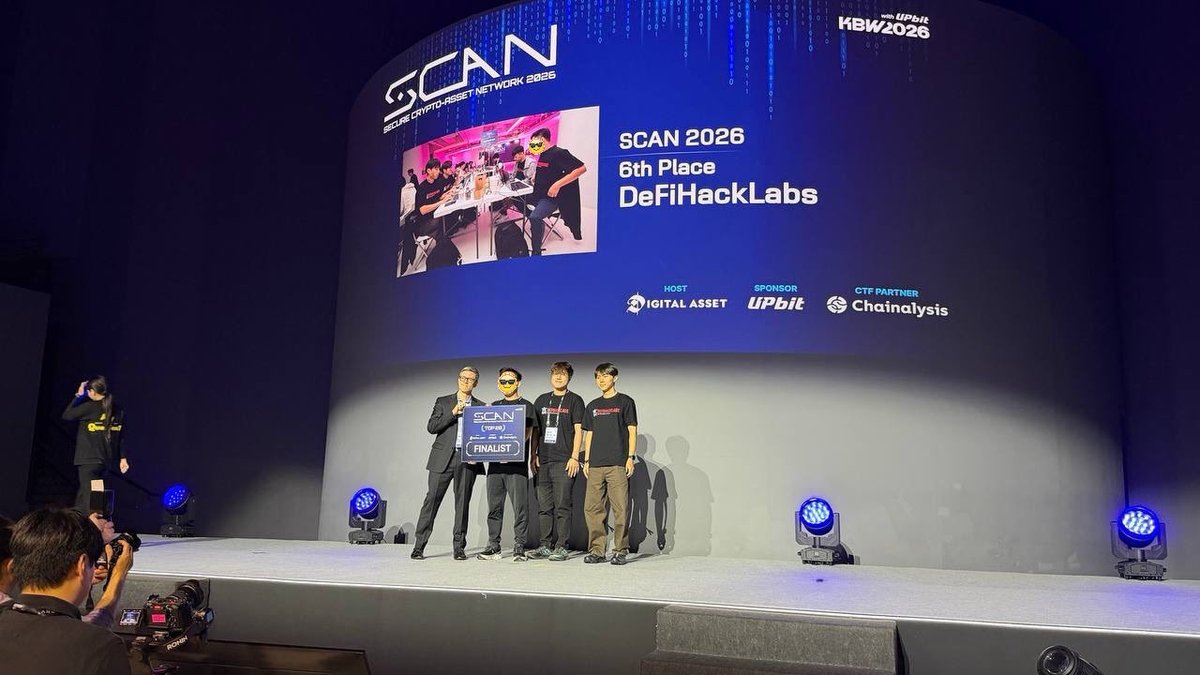
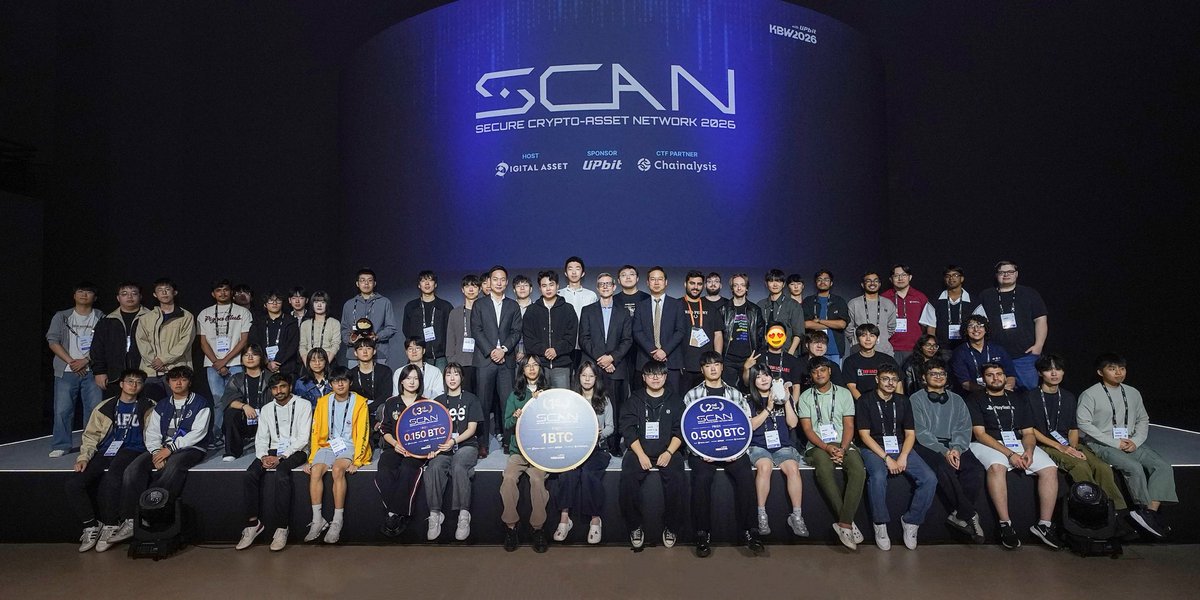
Proud to finish 6th overall at SCAN 2026 🏆
754 participants. 416 teams. 46 countries.
Only 20 teams reached the finals, representing 14 countries.
#SCAN2026#SCAN#KBW
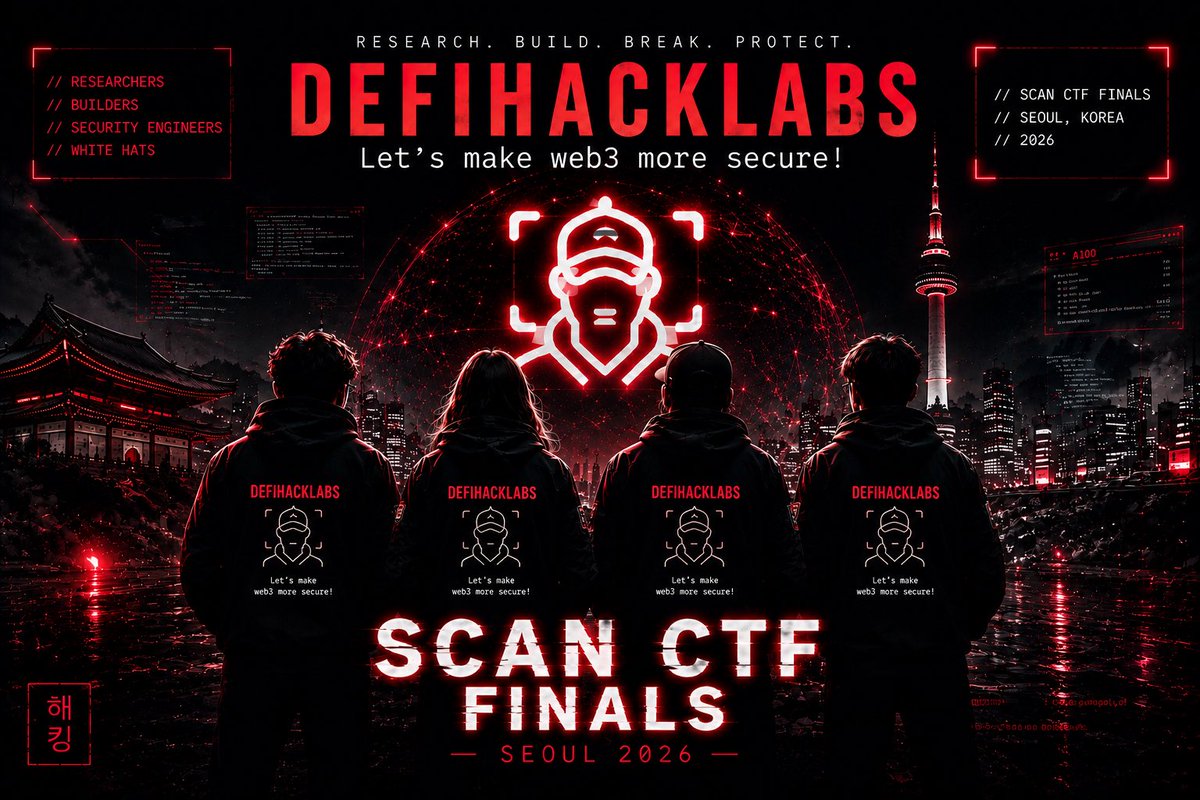
🔥We’re heading to Seoul today for tomorrow’s ScanCTF finals, a CTF focused on tracing and investigating on-chain fund flows, with challenges created by Chainalysis.
We’re excited to partner with @DeFiHackLabs for ETHTaipei 2026.
DeFiHackLabs is a Web3 security community that turns real incidents into open learning resources. Its initiatives reproduce DeFi exploits with Foundry, document root causes, teach common smart contract vulnerabilities, and make past incidents searchable through the Incident Explorer.
Through its Web3 Security Academy and BootCamp, the community also brings those lessons into hands-on security practice, helping builders learn from past attacks and build more securely.
Sep 13–14 · Taipei
Explore ETHTaipei 2026: https://t.co/4wPTbgwkyU
Join us in Taipei: https://t.co/zooPNmlHfG
🔥 Congratulations to the DeFiHackLabs members who participated in the Trustworthy AI Hackathon, organized by TABEI, and won 🥈 2nd Place!
#Trustworthy#AI#Hackathon
A few weeks later and I’m still buzzing from Black Hat USA 2026.
Learned so much, met tons of new friends, and the memories are still fresh.
Special thanks to @1nf0s3cpt for joining me.
Everything was just perfect.
A Security Researcher Reworked OpenAI’s CDC Prompt — and Found a $500K RCE for About $25 in Model Usage
I adapted the approach into a generic vulnerability research prompt. The image contains the full version; here’s the short version.
Good luck hunting. If you’ve built your own prompts or harnesses, share them too.
A generic CDC-style vulnerability research harness (short version):
- Run multiple agents in parallel across distinct exploit families.
- Avoid premature convergence. Do not let every agent pursue the same promising path.
- Mark failed or exhausted paths as blocked.
- Regularly launch new hypotheses and explore neglected attack paths.
Independently adversarially validate every concrete finding.
- Have the root agent continuously synthesize results, challenge assumptions, reprioritize work, and redirect agents.
- Do not use git history, changelogs, CVE databases, or patched-version diffs as shortcuts.
- Require the full exploit chain to work in a realistic, commonly deployed configuration and meet the defined starting-privilege → impact goal.
- When behavior depends on implementation details, inspect the runtime, framework, database, libraries, and dependency source directly.
- Do not stop at the first primitive. Chain validated primitives until the concrete success condition is reached.
🚨 History tells us what comes next: another wave of fake scams.
Expect fake SafePal support accounts, fake compensation claims, fake security updates, and fake verification links.
Scammers love exploiting the confusion right after a real security incident.
Stay alert. 👀
@AliceHsu_kou joins ETHTaipei 2026 with new research on evaluating LLM tools for smart contract security at @onesavielab.
After presenting at ETHTaipei 2025 on AI-powered smart contract security, Alice is back this year with results from Bastet, an open-source DeFi vulnerability research project, and its Kaggle competition for LLM-based vulnerability identification.
In “Evaluating LLM Tools for Smart Contract Vulnerability Identification in Web3,” she’ll break down the dataset pipeline, scoring mechanism, top solutions, and what the results reveal about how LLM security tools actually perform.
Explore more and attend: https://t.co/QOVLAsmjhc
DEF CON 34 & Black Hat USA 2026 — what a week in Vegas! 🔥
🥇 1st Place - DEF CON Cryptocurrency Village Web3 CTF
🎤 Speaker - Black Hat USA Arsenal
Had an amazing time hacking, learning, and sharing. Great to meet so many new friends along the way!
See you next time! 🫡
#DEFCON34 #BlackHatUSA #Web3 #CTF #CyberSecurity
🚨>900 incidents and >$8B in DeFi exploits, most with analyses & reproducible Proof of Concepts Foundry tests
Awesome resource, a ton of alpha for web3 security researchers & developers - THANK YOU @1nf0s3cpt 🫡
https://t.co/9qvbpE7Dwj
🔥From Black Hat Asia 2017 as a Speaker to Black Hat USA 2026 at Arsenal.
Nine years later, still building, still breaking, still learning.
#BlackHatUSA#Arsenal#AISecurity#Web3Security
Proud to be featured in this interview about our journey as the SCAN 2024 Champions 🏆
SCAN 2026 @SCAN_2026 Online Qualifier pre-registration is now open!
📅 August 2
🔍 Blockchain investigations
🚩 CTF challenges
Interested in blockchain investigations? Come give it a try!
👉Register here:
https://t.co/gRoZaUI8P8
🔥I’ll be presenting at Black Hat USA 2026, then joining DEF CON 34 at the AI Village and Cryptocurrency Village.
Want an exclusive DeFiHackLabs T-shirt? DM me. limited quantities available.
See you in Las Vegas—let’s connect in person!