Excellent NYT article about parisian AI unicorn Mistral, the effervescent AI ecosystem in Paris, the rapidly increasing strength of the open source AI community, the support of open source AI by Meta, and the opposition to it by Google and OpenAI.
https://t.co/pv4djxuIAW
While #GenAI is still in its early stages of deployment, it could be a critical ingredient in the way financial services are delivered. https://t.co/suysMWzpkK
Announcing Grok!
Grok is an AI modeled after the Hitchhiker’s Guide to the Galaxy, so intended to answer almost anything and, far harder, even suggest what questions to ask!
Grok is designed to answer questions with a bit of wit and has a rebellious streak, so please don’t use it if you hate humor!
A unique and fundamental advantage of Grok is that it has real-time knowledge of the world via the 𝕏 platform. It will also answer spicy questions that are rejected by most other AI systems.
Grok is still a very early beta product – the best we could do with 2 months of training – so expect it to improve rapidly with each passing week with your help.
Thank you,
the xAI Team
https://t.co/iPqreWxmQh
Q: Why are startup ideas worthless?
In his essay Ideas for Startups, Paul Graham wrote:
“startup ideas are not million dollar ideas, and here's an experiment you can try to prove it: just try to sell one. Nothing evolves faster than markets. The fact that there's no market for startup ideas suggests there's no demand. Which means, in the narrow sense of the word, that startup ideas are worthless.”
Steve Jobs expands on this idea further:
“There’s a tremendous amount of craftsmanship in between a great idea and a great product”
A lot of people think that a really great idea is 90% of the work, but a great product idea will never turn out as originally conceived. You learn a lot from the details of building it and there are always tradeoffs you have to make.
In this clip, Jobs tells the story of how a widowed man showed him a rock tumbler when he was little kid. He uses the rock tumbler and process of turning common stones into beautifully polished rocks as a metaphor for a team working really hard on something they're passionate about:
"It's through the team--through a group of incredibly talented people--bumping up against each other, having arguments, having fights sometimes, making some noise, and working together... they polish each other and polish the ideas. And what comes out are these really beautiful stones."
The key to building a great product is a great team, not a great idea.
There is no perfection only life (The Unbearable Lightness of Being by Milan Kundera) RIP to one of the great horny novelists of the 20th century, Milan Kundera who died in Paris on July 11, 2023 https://t.co/cj2vugUlRB
.@Euromoney disclosed its 2023 awards, recognizing our work & commitment at global, regional, and country levels. A real encouragement to continue our ambitious efforts towards a more #inclusive and #sustainable economy, an approach at the heart of our GTS 2025 strategic plan.
What does focus mean? “is saying no to something that you—with every bone in your body—think is a phenomenal idea, and you wake up thinking about it, but you say no to it because you're focusing on something else.” Steve Jobs #customerexperience#productiondesign
Shortly after Steve Jobs returned as the CEO of Apple in 1997, he met with Jony Ive, Apple’s Senior VP of industrial design.
Apple had 40 products on the market.
“Jony, how many things have you said no to?” Jobs asked.
Ive was confused.
“You have to understand,” Jobs said,
“There are measures of focus, and one of them is how often you say no.”
“What focus means,” Jobs taught Ive, “is saying no to something that you—with every bone in your body—think is a phenomenal idea, and you wake up thinking about it, but you say no to it because you're focusing on something else.”
Jobs walked up to a whiteboard and drew a 2 x 2 grid. On top, he wrote “Consumer” and “Professional.” Down the side, “Portable” and “Desktop.”
Four products—meet Apple’s new radically focused product line, Jobs said.
After that meeting, over the next two decades, Jobs and Ive—focused on making a few high-quality products while saying no to everything else—transformed a dying, near-bankrupt company into one of the most valuable companies in the world, worth over $2.9 trillion.
Takeaway 1:
The philosopher Marcus Aurelius pointed out that the focus of doing less “brings a double satisfaction.”
You get the satisfaction of having fewer things to do. And…you get the satisfaction of doing those fewer things at a higher level.
You get “to do less, better.”
During Steve Jobs’ first visit to Jony Ive’s design studio, he looked around, and then he said, “Fuck, you’ve not been very effective, have you?”
It was clear to Jobs that Ive was full of ideas and potential he wasn’t able to execute or fulfill under Apple’s previous leadership.
In the Jobs era of “doing less, better,” Ive was very effective.
Some products he designed include: iMac, iPod, iPhone, iPad, Apple Watch, and AirPods.
Takeaway 2:
Even though he slashed the product line down to four products, Jobs loved to have and hear ideas.
“Steve used to say to me,” Ive said, “and he used to say this a lot, ‘Hey, Jony, here’s a dopey idea.’ And sometimes they were: really dopey. Sometimes they were truly dreadful.
But sometimes they took the air from the room, and they left us both completely silent.”
It made me think of what Jerry Seinfeld identifies as the ultimate skill of the artist: “taste and discernment.”
“It’s one thing to create,” Seinfeld says. It’s one thing to have ideas.
“The other is you have to choose. ‘What are we going to do, and what are we not going to do?’” What are we going to add to the product line, and what are we not going to add?
“This is a gigantic aspect of [artistic] survival,” Seinfeld continues.
“It’s kind of unseen—what’s picked and what is discarded—but mastering that is how you stay alive.”
- - -
“Everything just got simpler. That’s been one of my mantras—focus and simplicity.” — Steve Jobs
Follow @bpoppenheimer for more content like this!
Meet the startup Manaos at the @BNPParibas booth @VivaTech.
Manaos, assists institutional investors and asset managers in sourcing reliable #ESG data and in reporting on the sustainability of their investments. #vivatech https://t.co/91WtoKpsSt
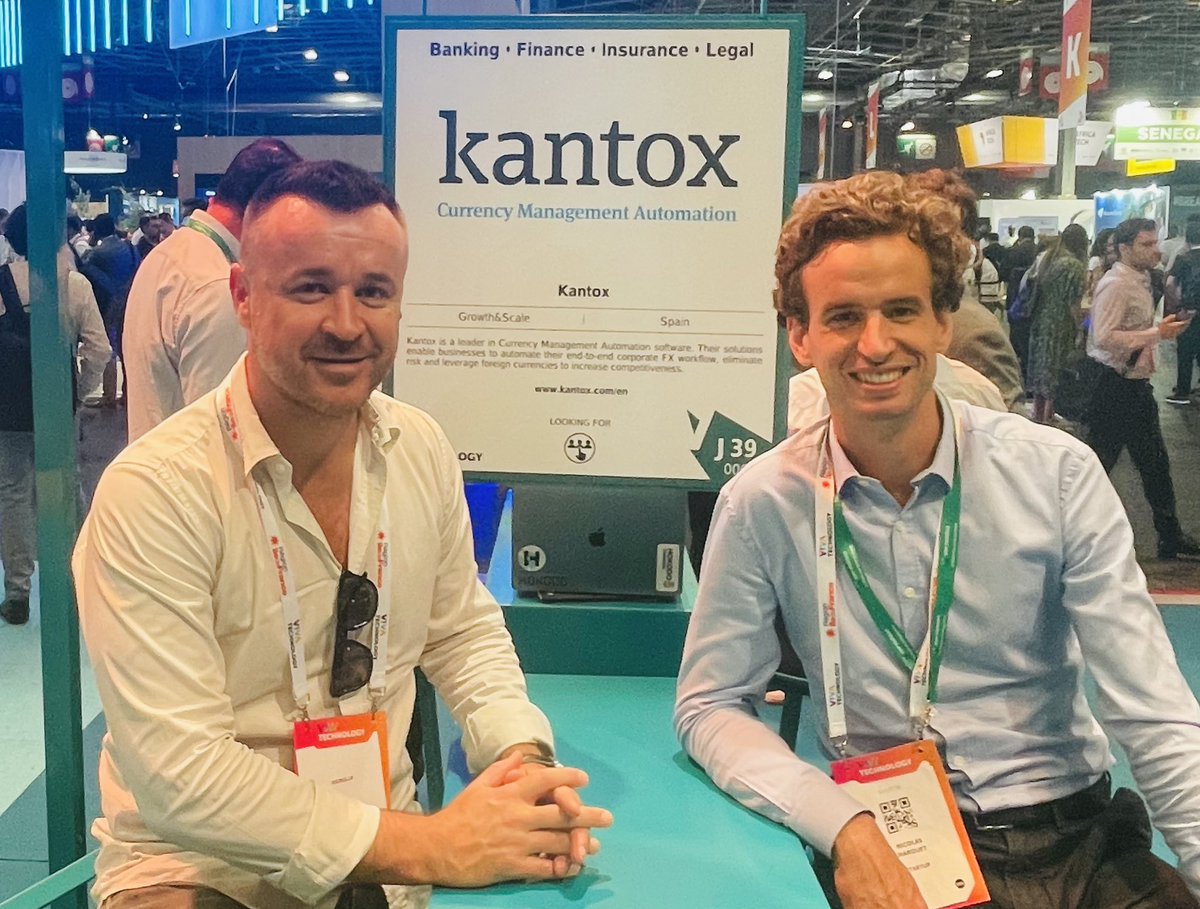
Meet the startup Kantox on the @BNPParibas booth @vivatech. Kantox can help your business by optimising the entire FX workflow while removing currency & operational risk. #BNPPAdvance@VivaTech#VivaTech https://t.co/z4CAddYSd2
🚀It's the 3️⃣rd day at @VivaTech!
You are interested in #innovative and secured payments. Then, this is the right day for you!
Come and join us at our lab to find out more about our innovative #payments solutions 💳.
#BNPPAdvance#VivaTech
Is the #AI bubble already here? #vivatech
▪️Mistral AI, 🇫🇷 AI startup is valued at $260 million to take on OpenAI.
▪️Startup was created 4 weeks ago.
▪️The startup don’t even have a product and it barely started working.
https://t.co/uy1jNMKHPd
AI regulation has been a hot topic @VivaTech. While the EU is pushing forward with its own AI legislation, France 🇫🇷 call for global regulation on #AI technology.
https://t.co/FBQJ2G8ZF7
🚀Day 2️⃣ at @VivaTech!
Today, we are introducing our vision of #data🌐. Generative #AI 🤖, #NFT 👾, #cybersecurity 🛡️,...
Come discover with experts how data is helping to build the society of tomorrow.
Keep watching, there is more to come!
#BNPPAdvance#VivaTech
France 🇫🇷 will invest 50 million Euros to quadruple the computing capacity of the Jean Zay, France's most powerful supercomputer for research. The president Emmanuel Macron says that this investment "allows us to be in the game". #VivaTech


![bpoppenheimer's tweet photo. Shortly after Steve Jobs returned as the CEO of Apple in 1997, he met with Jony Ive, Apple’s Senior VP of industrial design.
Apple had 40 products on the market.
“Jony, how many things have you said no to?” Jobs asked.
Ive was confused.
“You have to understand,” Jobs said,
“There are measures of focus, and one of them is how often you say no.”
“What focus means,” Jobs taught Ive, “is saying no to something that you—with every bone in your body—think is a phenomenal idea, and you wake up thinking about it, but you say no to it because you're focusing on something else.”
Jobs walked up to a whiteboard and drew a 2 x 2 grid. On top, he wrote “Consumer” and “Professional.” Down the side, “Portable” and “Desktop.”
Four products—meet Apple’s new radically focused product line, Jobs said.
After that meeting, over the next two decades, Jobs and Ive—focused on making a few high-quality products while saying no to everything else—transformed a dying, near-bankrupt company into one of the most valuable companies in the world, worth over $2.9 trillion.
Takeaway 1:
The philosopher Marcus Aurelius pointed out that the focus of doing less “brings a double satisfaction.”
You get the satisfaction of having fewer things to do. And…you get the satisfaction of doing those fewer things at a higher level.
You get “to do less, better.”
During Steve Jobs’ first visit to Jony Ive’s design studio, he looked around, and then he said, “Fuck, you’ve not been very effective, have you?”
It was clear to Jobs that Ive was full of ideas and potential he wasn’t able to execute or fulfill under Apple’s previous leadership.
In the Jobs era of “doing less, better,” Ive was very effective.
Some products he designed include: iMac, iPod, iPhone, iPad, Apple Watch, and AirPods.
Takeaway 2:
Even though he slashed the product line down to four products, Jobs loved to have and hear ideas.
“Steve used to say to me,” Ive said, “and he used to say this a lot, ‘Hey, Jony, here’s a dopey idea.’ And sometimes they were: really dopey. Sometimes they were truly dreadful.
But sometimes they took the air from the room, and they left us both completely silent.”
It made me think of what Jerry Seinfeld identifies as the ultimate skill of the artist: “taste and discernment.”
“It’s one thing to create,” Seinfeld says. It’s one thing to have ideas.
“The other is you have to choose. ‘What are we going to do, and what are we not going to do?’” What are we going to add to the product line, and what are we not going to add?
“This is a gigantic aspect of [artistic] survival,” Seinfeld continues.
“It’s kind of unseen—what’s picked and what is discarded—but mastering that is how you stay alive.”
- - -
“Everything just got simpler. That’s been one of my mantras—focus and simplicity.” — Steve Jobs
Follow @bpoppenheimer for more content like this!](https://pbs.twimg.com/media/FzeinZYWYAEzlYI.jpg)