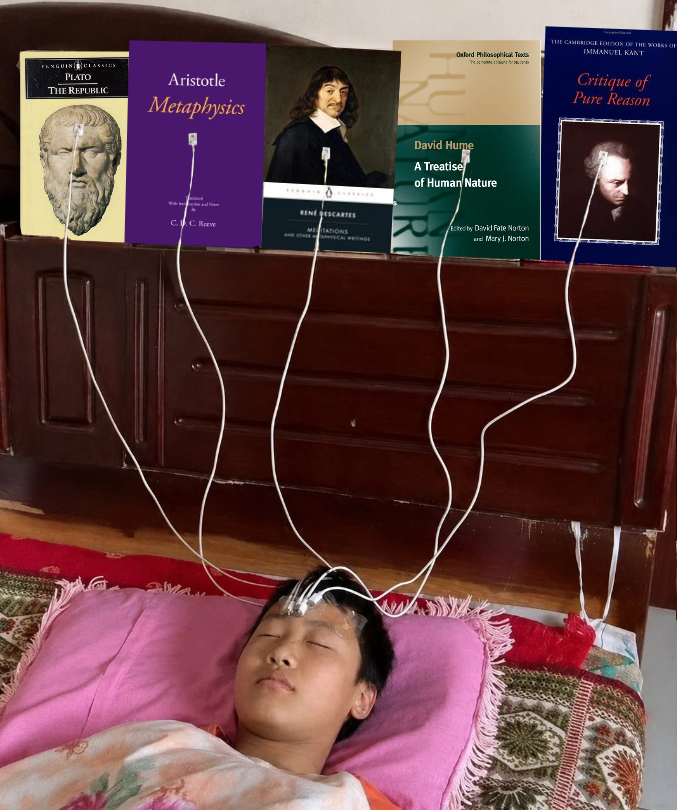
"It might seem that our critics have an argument that we cannot answer. We may have grounds for rejecting some theories and accepting others, provisionally, and in this respect, we may be offending no rational principle that anyone else would adopt, but the sheer uselessness of metaphysics shows why we shouldn’t do it. Because science has at least some connection with the empirical world that we observe and with which we interact, we can use our scientific theories to get what we want. Science can be applied usefully. We can manipulate the world and use science to our own ends. Good science produces good results. Because metaphysics is so theoretical, so abstract, and so non-empirical, it seems that it has no pay-off at all. It doesn’t allow us to manipulate the world around us. It is literally useless.
We need have no fear of this argument. In the first place, its basis is contestable. Causation, for instance, matters to everything. Our very manipulation of the world depends on causation. Nothing would make sense without it. And it turns out that we cannot know what causes what unless we have some theory – an inevitably metaphysical one – of what it is for something to cause something else. A philosophical misunderstanding could lead to a practical error, if we assumed causation was nothing more than correlation, for instance.
But suppose the basis of the argument is correct. Suppose metaphysics really is useful for nothing. Does this mean it is worthless? No. The value of many things is instrumental: they get you something else that you want. But some things have intrinsic value. They are valuable just for what they are, in their own right. Even if metaphysics is useless, its insights may be so deep and so profound that it could have the highest intrinsic value to us. It would give us a useless but deep understanding of the nature of reality. Indeed, Plato’s idea makes sense. A metaphysical understanding of what the world is, how it works, and how it all fits together, in general and abstract terms, could be the most real and important thing there is. In that case, we don’t do metaphysics so that we can stay healthy and wealthy: we want to stay healthy and wealthy so that we can do metaphysics."
—Stephen Mumford, Metaphysics: A Very Short Introduction (Oxford University Press, 2012), pp. 107-108
in 1968 a scientist named john calhoun built a paradise for mice
unlimited food. unlimited water. no predators. no disease. no winter. no work
he called it universe 25 and put 8 mice inside
at first it was perfect. the population doubled every two months
then something strange happened
a group of males stopped acting like males. they didn't defend territory. they didn't fight for anything
they just ate, slept and groomed themselves. all day, every day
their coats were flawless. not a scar on them. calhoun called them "the beautiful ones"
they looked like the healthiest mice in the colony. they contributed nothing
the females turned on their own young. mothers abandoned their nests. the birth rate fell to zero
the population peaked around 2,200, with room for thousands more. nobody was starving. nobody was hunted
and the whole colony still died out
calhoun said they died twice. first the spirit, then the body