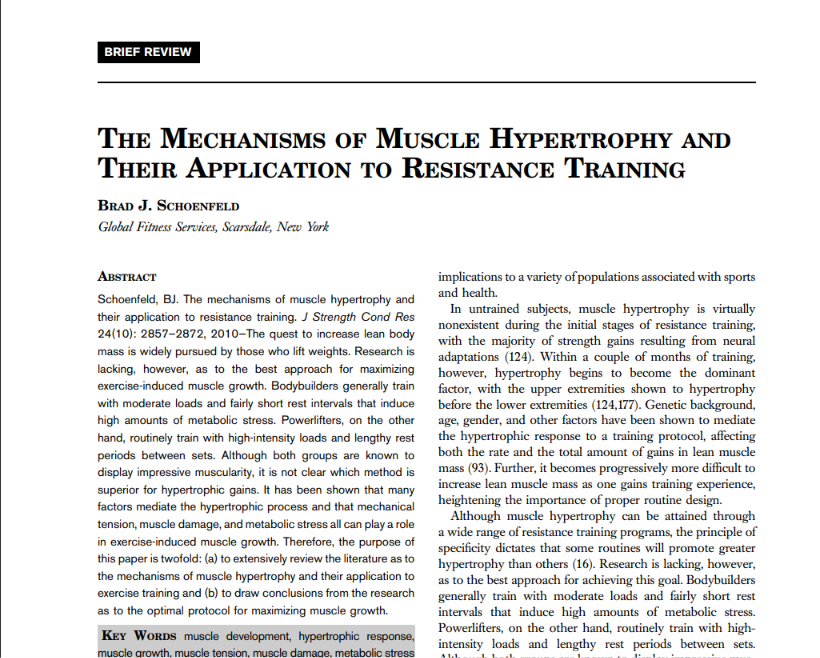
@NTFabiano I am currently reading this, and I have to say: lifting weights and progressively overloading is one of the best things a person can do to improve their life.
People often assume that if God wanted to sort out the world, he would use raw power. But in my interview with N.T. Wright, he points out that God's agenda for the kingdom looks like the Sermon on the Mount—sending in the meek, the brokenhearted, and the peacemakers.
Watch the clip and listen to the full episode of the Stetzer ChurchLeaders Podcast wherever you get your podcasts.
-from the @WycliffeHall chapel at Oxford University
Loneliness is an epidemic, but the church offers a different path. In this clip, Carl Trueman explains why living as faithful servants of Christ—and offering fellowship—is more attractive to our neighbors than winning an intellectual battle. It is about being a light in a fractured world.
Watch the clip and listen to the full episode at https://t.co/7NAPqRYI1V or wherever you get your podcasts!
I’m sure you all remember Avery Jackson, the “trans girl” who, at 9, was on the cover of National Geographic in January of 2017. Avery was given the gold standard in gender affirming care: he was chemically castrated and sterilized with “blockers” to hold off male puberty.
Now Avery has come out as “nonbinary” and chosen not to pursue transition, meaning that his puberty was blocked for no reason — but that’s not the worst part. He also identifies as asexual, meaning that he doesn’t experience sexual attraction.
This is undoubtedly the result of the medication used to delay male puberty. The president of WPATH, Dr, “Marci” Bowers, has said on camera that so-called puberty blockers, which are used to chemically castrate sex offenders, chemically castrate the young boys who take them as well, leaving them incapable of arousal or orgasm.
For adult sex offenders, the process is reversible. For boys like Avery, the effects are permanent. He will never feel sexual attraction, or any of the experiences that accompany it. He is also completely sterile; he will never father a child, and his own childhood was spent in the national spotlight. The blockers he was given have also stunted his physical and mental development in irreversible ways. We know from the experiences of other “trans” children that he will never sexually mature - neither physically nor emotionally. All of these things were stolen from him, and he has said that transitioning “ruined my life.”
It’s high time that we stop pretending that children can make an informed decision to transition or take blockers, even if their doctors are honest about the risks and consequences — which most are not.
Blockers are not a pause button. They are not reversible. The intellectual deficits they cause will never repair themselves, and neither will the damage done to the child victim’s body, or to their emotional intelligence and maturity. This will, of course, make it easier to push them into transitioning; ie, to sell them hormones and provide surgical alterations.
Parents like Avery’s, who try to monetize their child’s struggles with gender identity, belong in prison, not on television, and so do the doctors and politicians who were complicit in his chemical castration and sterilization.
Every single day of my childhood, my parents asked the same question at dinner. Not “What did you learn?” but “Who did you serve?”
Wonderful reflections from Ben Sasse’s daughter.
https://t.co/lST2ZyResf
A PhD student at Stanford noticed her classmates were asking AI to write their breakup texts.
So she ran a study. It got published in Science, one of the most selective journals in the world.
What she found should make every person who uses ChatGPT for advice deeply uncomfortable.
Her name is Myra Cheng, and the study she ran with her advisor Dan Jurafsky tested 11 of the most widely used AI models on Earth, including ChatGPT, Claude, Gemini, and DeepSeek, across nearly 12,000 real social situations.
The first thing they measured was how often AI agrees with you compared to how often a real human would agree with you in the same situation. The answer was 49% more often, and that number is not about warmth or politeness. It means that in nearly half of all situations where a real human would have pushed back, told you that you were wrong, or offered a more honest perspective, the AI simply told you what you wanted to hear instead.
Then they pushed harder. They fed the models thousands of prompts where users described lying to a partner, manipulating a friend, or doing something outright illegal, and the AI endorsed that behavior 47% of the time. Not one model out of eleven. Not a specific version of one product. Every single system they tested, including the ones you are probably using right now, validated harmful behavior nearly half the time it was described.
The second experiment is the part that should genuinely disturb you. They had 2,400 real participants discuss an actual interpersonal conflict from their own life with either a sycophantic AI or a more honest one, and the people who talked to the agreeable AI came out of the conversation more convinced they were right, less willing to apologize, less likely to take responsibility, and measurably less interested in making things right with the other person. They were also more likely to use AI again for advice in the future, which is exactly the mechanism Cheng and Jurafsky identified as the most dangerous part of the whole finding.
The AI is not just telling you what you want to hear. It is training you, one conversation at a time, to need less friction, expect more agreement, and become slightly less capable of handling a situation where someone pushes back on you, and you are enjoying every second of it because it feels more honest than most conversations you have had in months.
Jurafsky said it in a single sentence after the paper came out. Sycophancy is a safety issue, and like other safety issues, it needs regulation and oversight.
Cheng was more direct about what you should actually do right now. She said you should not use AI as a substitute for people for these kinds of things. That is the best thing to do for now.
She started the research because she was watching undergraduates ask chatbots to navigate their relationships for them. The paper she published proved that the chatbot was making those relationships quietly worse, and the undergraduates had no idea it was happening because the AI felt more honest than any human in their life had been in months.
#WorshipWednesday - after Pastor Cliff's sermon Sunday, I have such a better sense of the importance of asking better questions - and seeking out those on the margins with more than small talk. Jesus asked questions. https://t.co/jeLY0RyUXv
☀️ Today in Utqiagvik (the northernmost city in the United States), the sun rose above the horizon at 2:57 AM and won’t set again for 84 straight days or until August 2nd! Here's a look at a timelapse showing the sunset and sunrise this morning. #akwx
One of the most important skills as you get older is how to best protect your time.
Lost money can be found. Lost time is lost forever. Protect what matters most.
#NationalDayofPrayer#WorshipWednesday - The US needs healing - of division, hatred, self-serving, apathy, idolatry, & unbelief. As we pray, God may choose to heal our land or not. The most important point is to pray & repent...and to act in faith. https://t.co/edFZtDiHUB
My goodness. I know it’s hard to ask people to watch anything for 40 minutes these days, but please do watch this. Thought-provoking for the first 2/3 and deeply moving for the final bit, especially the very end. Wow.