Argentina’s behavioral crisis in the World Cup final has brought to light traits many of us in Latin America have internalized and that we need to come to terms with.
In many countries, emotional self-control and the ability to admit mistakes are seen as virtues. A behavioral problem in parts of Latin America is that there are social circles where the opposite is often celebrated.
This is the idea that someone who remains in control of their emotions is a coward or, depending on the situation, a traitor.
If someone offends you, your family, your team, the reaction that is celebrated in these circles is not restraint but flipping the table. The more berserk you go, the more you show that you care. That is a harmful value to hold, and also, one that many of us once shared. I certainly had it internalized when I left Chile 20+ years ago. In fact, I’ve spent much of my adult life trying to unlearn what I grew up believing was the socially acceptable behavior.
The second trait is an unwillingness to admit mistakes. You can always find an excuse, move the goalposts, or, once again, start a fight instead of publicly accepting that you’ve made a mistake. Admitting fault is a sign of weakness. Defending a losing position is a symbol of courage or, in sports, a test of loyalty.
Together, these two traits are behavioral dynamite. People explode because they cannot admit fault, and double down. Instead of learning from their mistakes, they become prisoners of them.
I grew up watching football with my father. When I was 10 or so, I was learning what was right and wrong from the way he interpreted the game. This included behavior both on and off the field. Only later in life did I realize that every penalty he called for, or contested, had little to do with the play itself. Whether a call was fair depended entirely on which team benefited. He was happy if his team received a nonexistent penalty or an opposing player got an undeserved red card.
These traits are among the things that pushed me away from the continent. They are certainly not exclusive to Latin America or the Southern Cone. I’ve encountered them in people all over the world. In an important sense, these are behaviors that all of us exhibit as children. What strikes me as unusual from the place I am from is having been part of social circles where these behaviors were not seen as flaws of character but as virtues to be admired, celebrated, and enforced.
These excessive forms of pride are not conducive to learning. They make it psychologically difficult to update one’s beliefs, accept responsibility, or improve. Although they become particularly visible in sports, they are by no means confined to them.
Something I am proud to have learned is to apologize quickly and often. Not because it is too difficult, but because it was like learning a new language at old age. That doesn’t mean becoming a pushover. But I’ve learned that a man who never apologizes cannot be a man of integrity, because we all make mistakes.
Argentina’s behavior on and off the field during the World Cup final was, to me, a particularly blatant expression of values that many people continue to defend. In some circles, these attitudes have become intertwined with ideas of national identity and loyalty. Yet they are shackles that ultimately limit our development, not because they make us lose a football match, but because they make it harder for us to learn from our mistakes.
The right thing to do now is the least likely: offer an honest apology. If my interpretation is even partially correct, we are more likely to see the opposite. Never back down. Never apologize. Never control your emotions. There is such a thing as having the wrong values. I hope that one day we can do better.
I'm half-Syrian, half-Lebanese, and here's why I can't stand people like Greta Thunberg. She quit school to chase climate activism while millions of children in my region quit school because their families can't afford it. She skips university "for Palestine" while our youth can't afford tuition, transport, or a functioning country to build a future in. She's never had a job; our people can't find one. She travels around the world (on a bicycle, of course) and sails to Gaza on a whim; our people can't get a visa to leave the misery they were born into. She has the luxury of adopting foreign causes; we don't have the luxury of just one problem. Millions of us live abroad because that's the only way to build a sustainable life. She acts like suffering belongs to Palestinians alone, while everyone in the Middle East lives in hell too, and it's not because of capitalism or climate change. It's because of a destructive ideology that uses the Palestinian cause as its tool. And like Khamenei, like Sinwar, like Arafat before her, she wears the keffiyeh �� the uniform of that ideology, not a symbol of peace.
Then there's the shirt: "Yalla Intifada." The First Intifada (1987–1993) began as a mostly grassroots uprising — strikes, boycotts, stone-throwing — and still killed roughly 1,100 Palestinians and 160 Israelis. The Second Intifada (2000–2005) was a different animal entirely: a sustained campaign of suicide bombings that ripped through Israeli buses, cafés, and markets, deliberately targeting civilians. It left close to 3,000 Palestinians and 1,000 Israelis dead. "Intifada" doesn't mean "ceasefire." It doesn't mean "peace talks." It means uprising by force, and the second one was defined by terror attacks on ordinary people.
So while Greta claims to be protesting an alleged genocide, the slogan on her chest is a celebration of the exact kind of violence that killed thousands, most of them Palestinian. She isn't standing against death. She's wearing merchandise for it.
@GretaThunberg #Intifada #Israel
The Norwegian fans may be rowing home on the baggage carousel... 🚣🇳🇴😂
But what a World Cup you gave us. You brought color, passion, smiles and unforgettable moments wherever you went. ❤️
And your team... thank you for the football and the memories. It was a joy to watch. Safe travels, Vikings! 🇳🇴👏
#Norway #WorldCup2026 #Vikings #Football #Respect ❤️
So incredibly frustrating. Flight UA 1065 #United EWR-MEX has us inside a full plane for the past three hours waiting on the tarmac for takeoff. First they forgot to load drinking water and now we are waiting to hear what’s next. The AC doesn’t seem to be working #UA1065
Papua'nın yağmur ormanlarında bulunan Vogelkop Süper Paradise, sadece Endonezva'nın Papua eyaletinde bulunur. Karanfil siyah tüyleri 99.5% ışığı emer, bu da mavi gözleri ve göğsünü dijital bir ilüzyon gibi gösterir.
Dear Norway fans… you are, without question, the finest supporters this tournament has seen.
From a nation of just over five and a half million people, you travelled across oceans, filled stadiums, painted American streets red and white and turned every single game into a festival of noise, pride and pure joy.
28 years away from the World Cup stage and you returned not with entitlement, but with energy. Not just with noise, but with meaning.
The Viking Row didn’t just inspire your players. It inspired everyone. Opponents. Neutrals. The entire watching world.
The quarter finals. You deserve every single second of it. Keep going. Keep rowing. Norway, the world is behind you. 🇳🇴
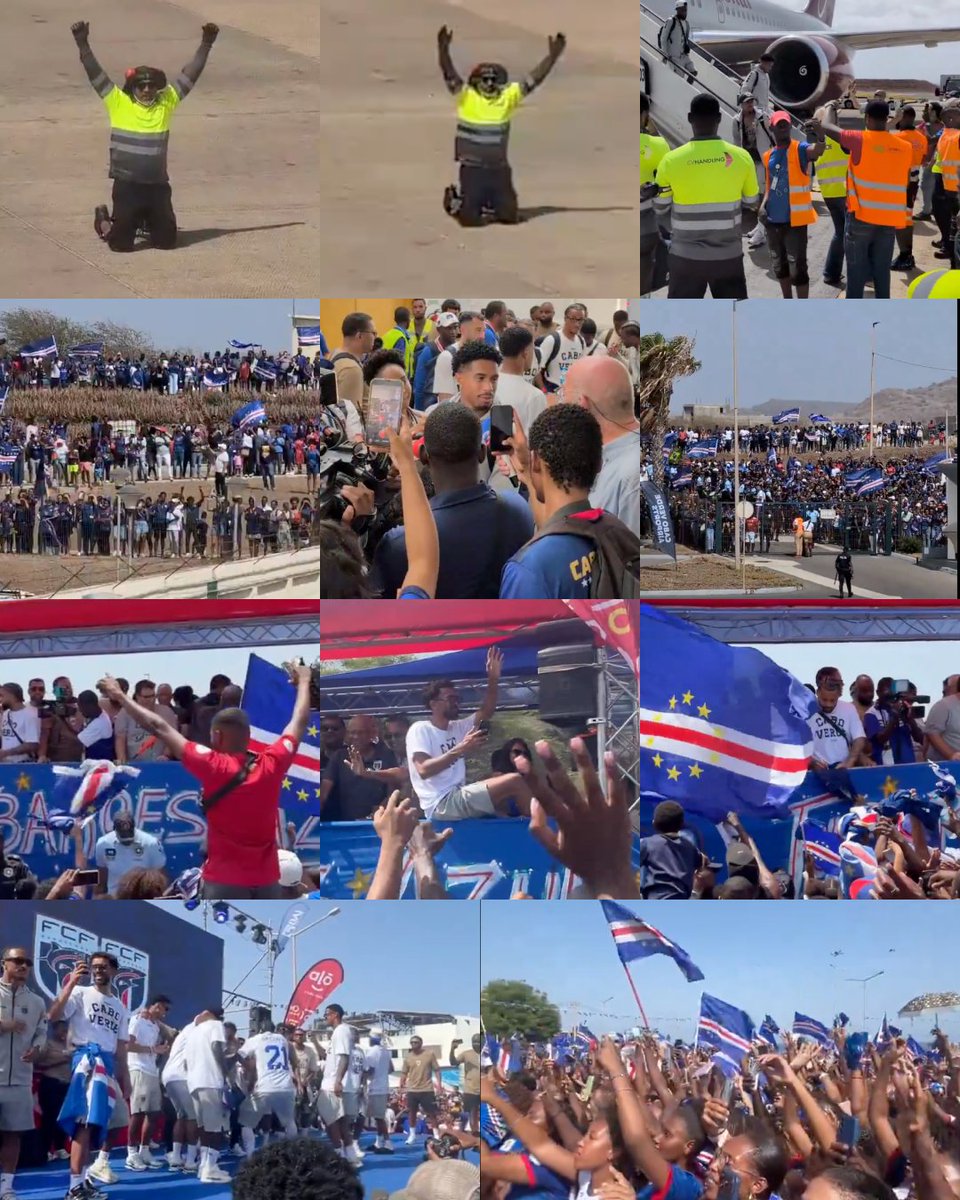
Uffff, qué imágenes, señoras y señores. El espectacular recibimiento a la Selección de Cabo Verde en su país. Después de su épica actuación en su primera Copa del Mundo, los jugadores caboverdianos fueron recibidos como HÉROES. Los empleados del aeropuerto se pusieron de rodillas y se juntaron para pedirle fotos. Miles de aficionados los estaban esperando desde que bajaron del avión. Y el recorrido por el país estuvo repleto de gritos de reconocimiento, admiración y celebración.
Su participación ya terminó, pero hay muchas razones para festejar. Y es que el planeta NUNCA olvidará al grupo de jugadores que, representando a una nación de poco más de 500,000 habitantes, compitió a tope ante la Selección de España de Lamine Yamal, la Selección de Uruguay de Fede Valverde y la Selección de Argentina de Lionel Messi.
Gracias por regalarnos la historia más mágica de toda la Copa del Mundo, Cabo Verde.
HONOR A QUIEN HONOR MERECE.
- Su arquero tiene 40 años y juega en la segunda división de Portugal
- Nadie del plantel juega en su liga local (que es semiprofesional)
- Los convocados son hijos y nietos de emigrantes criados en Europa.
- A un defensor lo buscaron por LinkedIn.
- Medio millón de habitantes (hay más caboverdianos viviendo fuera que en el propio país)
- Le sacaron un punto al campeón de Europa y llevaron al tiempo extra al campeón del mundo
Mis respetos para Cabo Verde 🇨🇻
🚨 David Beckham on Cape Verde’s elimination after pushing Argentina to extra time in the FIFA World Cup:
🗣️ “This is the cruelest side of football. Cape Verde have been eliminated, but they leave this tournament with something far more important than just a scoreline—they leave with the respect of the entire football world. They took the defending world champions all the way into extra time and made Argentina fight for every single minute. Nobody expected that before kick-off.
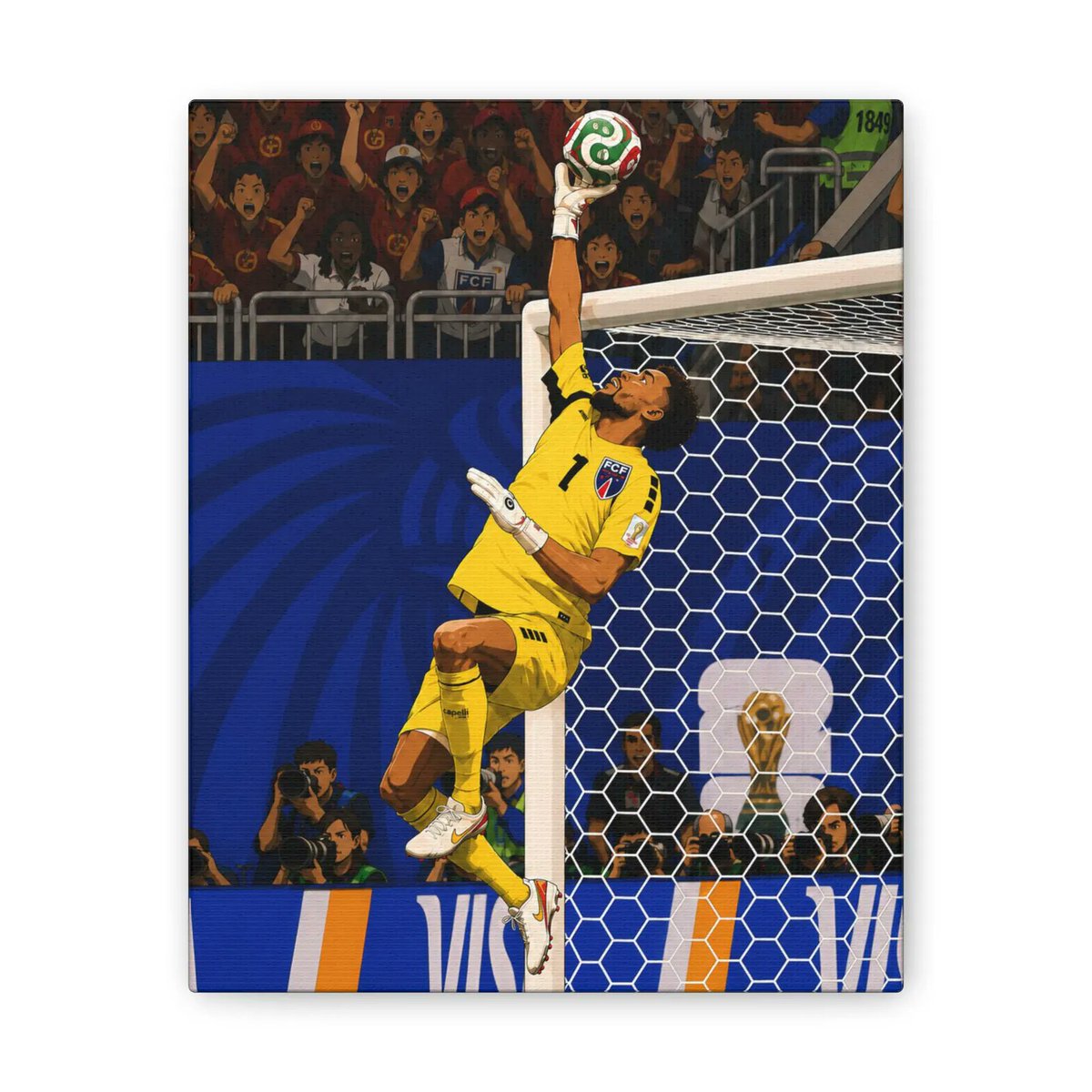
When I think about this performance, I think about Vozinha first. His saves kept Cape Verde alive when many teams would have collapsed. Then you have Deroy Duarte and Sydney Lopes, two players who will forever be remembered in their country’s football history. They scored against Argentina, they believed when so many people doubted them, and they gave millions of Cape Verdeans a night they will never forget.
People will only remember that Argentina qualified, but those who truly understand football will remember how close Cape Verde came to creating one of the greatest upsets in World Cup history. They never hid, they never stopped running, and they never accepted that they were supposed to lose. Every challenge, every tackle, every attack showed a team playing with pride, courage, and absolute belief.
This is not a story of failure. This is a story of a nation announcing itself to the football world. Cape Verde arrived at this World Cup as outsiders, but they leave having proven they belong on the biggest stage. They stretched the world champions to their absolute limit, forced them into extra time, and made them earn every second of their qualification.
Football can be incredibly unfair. Sometimes the team that captures the hearts of everyone watching is not the team that advances. But no whistle can erase what Cape Verde have achieved. Vozinha, Deroy Duarte, Sydney Lopes, and every player wearing that shirt have inspired a generation. Argentina continue their journey, but Cape Verde leave this World Cup as heroes.”