🔥 LET"S GO! Congressman Brandon Gill just got a MASSIVE, prolonged standing ovation from the crowd here at the RNC
Gill is a rising star, and a TRUE patriot.
And one of the VERY few members of Congress who repeatedly calls for mass deportations.
🚨Thousands of Americans joined together in Ohio last night & sang “God Bless America” with @JohnRich’s Big & Rich.
The next time the fake news media tries to divide our country further, remember this sound.
There are more of us than there are of them.
The flight made world headlines – And the unidentified passenger … was Jonathan! Now for the first time, he reveals the true story, what really happened, on that flight with the Duct Tape man, a spiritual war in the heavenlies, a demonic manifestation, the strategy of the preemptor, the actual attack at 30,000 feet, and how behind it all was the enemy and The Altar of Pergamon! A stunning and shocking account and yet filled with spiritual revelation!
👉 To watch the full video click here - https://t.co/fV4yygsalV
#jonathancahn #jonathancahnlatest #AmericanAirlinesFlight618
John chapter 4 opens with a sentence that is easy to skim past: "And he had to pass through Samaria." Every first-century Jew reading that would have stopped. He did not have to. Jews traveling between Judea and Galilee routinely took the long way around, crossing the Jordan and adding days to the journey specifically to avoid Samaria. The hostility ran centuries deep. Samaritans were considered half-breeds and heretics, descendants of the mixed population left after Assyria conquered the northern kingdom, keepers of a rival temple on Mount Gerizim that Jewish forces had destroyed a century before Jesus was born. Jews and Samaritans did not share meals, did not share vessels, and rabbinic sources say a Samaritan woman in particular was to be regarded as perpetually unclean. When John writes that Jesus "had to" go through Samaria, the necessity was not geographic. It was a divine appointment with one person.
Notice the time. Jesus, wearied from the journey, sits down beside Jacob's well at "the sixth hour," noon, the hottest point of the day. This matters because no one drew water at noon. Women came to the well in the cool of early morning or evening, together, and the well was the social center of village life. A woman coming alone in the midday heat was a woman avoiding other women. She had arranged her whole day around not being seen. And that is exactly where Jesus was waiting.
He speaks first, and His opening is a request for help: "Give me a drink." The woman is startled, and John explains why for his readers: Jews have no dealings with Samaritans. A Jewish man, a rabbi no less, speaking alone to a Samaritan woman and asking to drink from her vessel was breaking three social walls at once: of ethnicity, of religion, and of gender. His own disciples, returning later, were stunned to find Him talking with a woman at all. Jesus began by placing Himself in her debt, asking something of a person everyone else considered beneath asking.
Then the conversation turns. He tells her that if she knew who was asking, she would ask Him, and He would give her living water. She takes it literally, and gently mocks Him: You have no bucket, and the well is deep. Are you greater than our father Jacob, who gave us this well? She has no idea she has just asked the central question of the Gospel. Jesus answers that everyone who drinks from this well will thirst again, but whoever drinks the water He gives will never thirst, because it will become in them a spring welling up to eternal life. She wants it, still thinking of buckets: Give me this water, so I do not have to keep coming here. Even her request reveals her: she wants to stop having to come to this well at noon.
And then Jesus says the thing that changes everything: "Go, call your husband." She answers, "I have no husband." His reply is devastating and tender at once: "You are right in saying you have no husband, for you have had five husbands, and the one you now have is not your husband. What you have said is true." He knows. He knew before He sat down. He knew when He asked her for a drink. Whether those five marriages ended in death or divorce, whether she was the one who was discarded, the text does not say, and a woman in that world could not divorce a man, so it is at least possible she had been cast off again and again. Whatever the story, she was living outside marriage now, and the whole village knew it, and that was why she came at noon.
Jesus names her shame out loud, and then keeps talking to her. That is the miracle of this scene. He does not use what He knows to dismiss her. He uses it to show her that He is not a stranger she can manage with clever answers. She responds the way people often do when exposed: she changes the subject to religion. Our fathers worshiped on this mountain; you Jews say Jerusalem. It is a real theological question, and Jesus takes it seriously, telling her that the hour is coming when true worshipers will worship neither on Gerizim nor in Jerusalem, but in spirit and truth. Then she reaches for the one hope both peoples shared: "I know that Messiah is coming. When he comes, he will tell us all things."
And Jesus says to her: "I who speak to you am he."
Stop there and take in what just happened. In the entire Gospel of John, this is the first time Jesus openly declares Himself to be the Messiah. He did not say it to the crowds. He did not say it to Nicodemus, the learned Pharisee who came to Him by night in the chapter just before. He did not say it to His own disciples. He said it to a Samaritan woman with five failed marriages, alone at a well at noon, a person that every religious authority of the day would have considered the least worthy to receive it. John places the two conversations back to back on purpose: the respected male teacher of Israel, who leaves confused, and the outcast foreign woman, who leaves transformed.
Then comes the detail that closes the scene. The woman, John writes, left her water jar. The thing she came for, the reason she had walked to the well in the heat, the vessel Jesus had asked to drink from: she abandons it and runs into the town. And the woman who had arranged her life to avoid being seen goes straight to the people she had been hiding from and says, "Come, see a man who told me all that I ever did." Her shame had become her testimony. The very thing she hid was now the thing she announced, because someone who knew all of it had not turned away.
The village comes out to Him, and they beg Him to stay, and He stays two days, and John records that many believed, telling the woman, "It is no longer because of what you said that we believe, for we have heard for ourselves, and we know that this is indeed the Savior of the world." That title, the Savior of the world, appears here, in a Samaritan town, on the lips of people Israel despised. The first community outside Israel to receive Jesus was reached through a woman the town had shunned.
There is one more piece worth knowing. The well is still there. Jacob's Well sits at the foot of Mount Gerizim near ancient Shechem, in the modern city of Nablus, a deep shaft cut into rock, roughly a hundred and thirty feet down, exactly the "deep" well the woman described. Pilgrims have drawn water from it since at least the fourth century, and its location has never been seriously disputed. You can lower a bucket into the same water today.
To the world, religion is for the respectable, the clean, the ones with their lives in order. But the first person Jesus ever told that He was the Messiah was a woman with a history everyone whispered about, and He went out of His way, days out of His way, into enemy territory, in the heat of noon, to sit and wait for her.
He knows everything you ever did. All of it. And He is still sitting at the well, asking you to come and talk. The shame you have organized your life around hiding, He already knows, and He has not left. He is not waiting for you to fix it first. He is offering you water that ends the thirst.
Leave the jar. Go tell someone.
Jesus is the Savior of the world, the Living Water. Thank You, Jesus.
@Franklin_Graham God bless the Father of the Heavens this morning for sending Jesus as the ultimate sacrifice for our sin. That we may spend eternity in Glory with Him forever and ever. Thank you, Reverend Graham for your steadfast commitment in showing us the love of Christ. God bless you
Dolly Parton addressed health concerns about her on May 4, 2026
She incredibly compared herself to an old antique car that needed a new engine, transmission, new pistons and spark plugs.
“They didn’t say anything about my mental health” she joked.
She clearly had a ton of plans and active projects for this year, including a Nashville museum and hotel, writing, recording, getting on stage in 5 inch heels.
RIP Dolly. Her greatness makes it feel like 80 is way too soon. 🧡
Dolly Parton wrote a song just for Johny Carson because she attributed her success to the popularity after her first appearance. @DollyParton
On September 19, 1979, Dolly Parton was still a year away from topping the pop charts with “9 To 5,” the title song she wrote for the hit 1980 film in which she starred with Jane Fonda and Lily Tomlin. The 33-year-old was a bonafide country star but was still a year away from the superstardom that the movie would bring her when it became 1980’s second-biggest film.
The beloved singer, actress and philanthropist, was born January 19, 1946, in “the hills of Tennessee.” By age 10, she was performing on local television and radio shows in nearby Knoxville. While in her early 20s, her country music career blossomed when Porter Wagoner began featuring her on his popular syndicated television show, attracting the attention of executives at RCA Records.
After the prophet Elijah was taken into heaven, Elisha began his ministry. One of the first places he visited was Jericho.
The people there came to him with a serious problem.
They told Elisha that the city was pleasant, but the water was bad and the land was unproductive. Their spring was a source of trouble, affecting the land around them.
Elisha asked them to bring him a new bowl with salt.
Then he went to the spring and threw the salt into the water. But the salt itself was not the miracle. Elisha declared the word of the Lord over the spring:
“This is what the Lord says: I have healed this water.”
And the water was healed.
From that time forward, the water was no longer bad, and the land was no longer barren.
What makes this story so fascinating is how simple the scene appears: a prophet, a bowl of salt, and a polluted spring. Yet behind that simple act was the power of God.
The people of Jericho couldn't fix the problem themselves. But God showed that He could transform what seemed unusable.
There are seasons when something in our lives can feel just like that spring—barren, broken, or beyond repair. We may look at a situation and think, “Nothing can change this.”
But the story of Jericho reminds us that God can bring restoration where we see only brokenness.
The miracle wasn't really about the salt.
It was about the God who healed the water.
📖 “This is what the Lord says: I have healed this water.” — 2 Kings 2:21
🙏 If you believe God can restore what seems broken, type AMEN.
💬 What area of your life are you trusting God to restore?
#BibleStories #GodsPower #Faith
@WatchChad Thank you, My brother in Christ. I appreciate your prayers. They are a wakeup call every day. God bless you and others who are seeking our Lord today. Amen
“Your soul, your spirit is more valuable than all the rest of the world put together … All the money, all the wealth that there is in this world is not as valuable in the sight of God as your soul.” —@BillyGraham#WednesdayWisdom
I needed to hear this today 💖
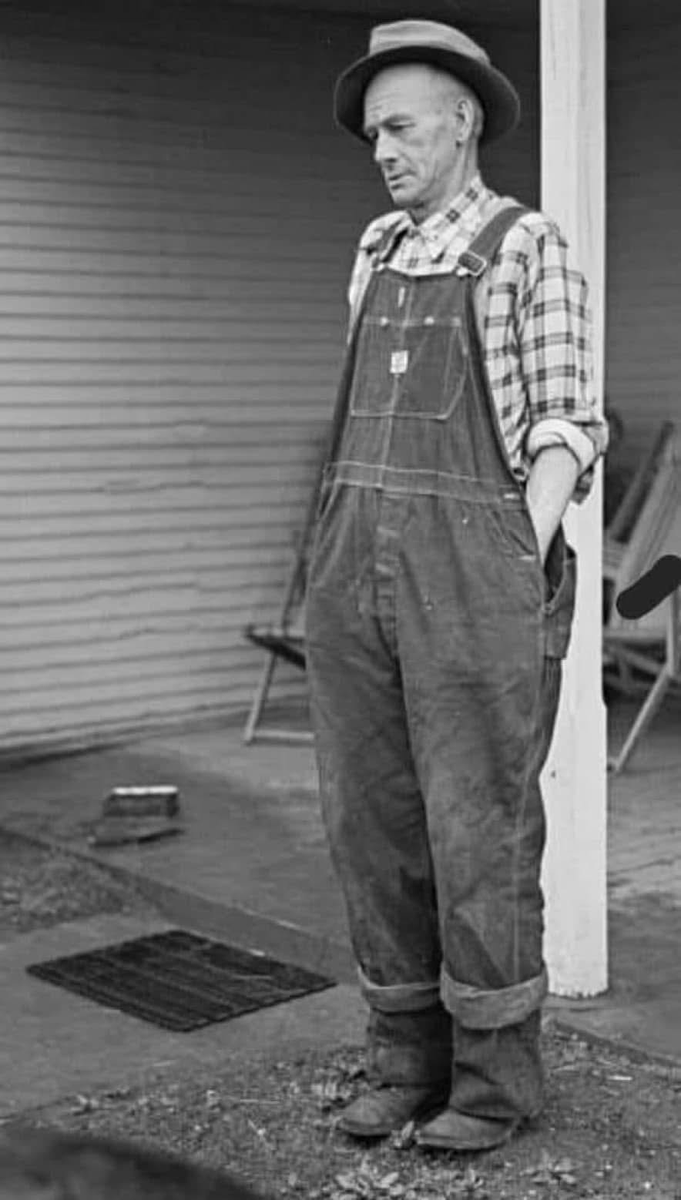
A pastor asked an older farmer, decked out in bib overalls, to say grace for the morning breakfast.
"Lord, I hate buttermilk", the farmer began. The visiting pastor opened one eye to glance at the farmer and wonder where this was going.
The farmer loudly proclaimed, "Lord, I hate lard." Now the pastor was growing concerned.
Without missing a beat, the farmer continued, "And Lord, you know I don't much care for raw white flour". The pastor once again opened an eye to glance around the room and saw that he wasn't the only one to feel uncomfortable.
Then the farmer added, "But Lord, when you mix them all together and bake them, I do love warm fresh biscuits. So Lord, when things come up that we don't like, when life gets hard, when we don't understand what you're saying to us, help us to just relax and wait until you are done mixing.
It will probably be even better than biscuits. Amen."
Within that prayer there is great wisdom for all when it comes to complicated situations like we are experiencing in the world today.
Stay strong, my friends, because our LORD is mixing several things that we don't really care for, but something even better is going to come when HE is done with it.
💝💝💝💝💝💝💝💝💝💝💝
Mr. President,
⠀
I don’t know if you’ll ever read this. Probably not. But I’m writing it anyway because my wife and I talk about this all the time, and somebody needs to say it out loud.
⠀
We can’t wait for the day you’re no longer President.
⠀
Not because we’re tired of you. The opposite. Because you deserve to go home. You deserve quiet mornings. You deserve to sit on your own porch without the weight of 330 million people sitting on your shoulders. You deserve your family back. You deserve peace.
⠀
You didn’t have to do any of this.
⠀
You had the money.
You had the name.
You had the life most men only dream about.
You could’ve spent the rest of your days golfing, traveling, watching your grandkids grow up.
⠀
Instead you stepped into a fire that nearly cost you everything.
⠀
They mocked you. They sued you. They raided your home. They tried to bankrupt you. They tried to lock you up. They dragged your wife and kids through the mud. They put a bullet through your ear and you got up with your fist in the air and kept going.
⠀
For what?
⠀
For us. Regular people. Truck drivers. Welders. Waitresses. Roughnecks. Farmers. Single moms working two jobs. Grandparents on a fixed income watching the country they built get handed away.
⠀
You didn’t owe us a thing. And you gave us everything.
⠀
You risked your name. Your legacy. Your safety. Your family’s safety. Your brand. Your freedom. All of it. So this country could have one more shot at being what it was supposed to be.
⠀
And the truth nobody wants to admit?
⠀
We didn’t deserve a President like you.
⠀
A nation this divided, this ungrateful, this asleep at the wheel didn’t earn a man willing to bleed for it. But God sent you anyway. And I’ll thank Him for that until the day I die. 🙏
⠀
So when the day finally comes that you walk away from that desk, I hope you sleep good. I hope your wife laughs again without looking over her shoulder. I hope your kids breathe easy. I hope you golf till the sun goes down and nobody bothers you for nothing.
Donald Trump works more than one week than Joe Biden worked in four years. Yeah.
⠀
You earned every bit of it.
⠀
Thank you, Mr. President. From a retired auto worker in Ohio, who prays for you often.
⠀
God bless you. God bless your family. And God bless the United States of America. 🇺🇸