Vitalik Buterin challenges Ethereum's layer-2 landscape, demanding an end to repetitive EVM copies and a focus on unique features like privacy and low-latency systems amid L1 advancements. 📷$ETH
@TheGlobal_Index@realMaalouf Clearly astroturfed by Mossad/CIA/MI6 related forces. Where does one get that two -in-one Zionist and Pahlavi flag??? That's a fabricated item that gives up the whole game. Jew backed insurgency attempt to Balkanize and destroy Iran. They don't believe in freedom AT ALL.
@MarcJSchmidt@mrexodia It is like you build a playground and installed swings and slides, but some corpoarte still comes and builds theme park with it and starts charging money, still with YOUR swings and slides inside.
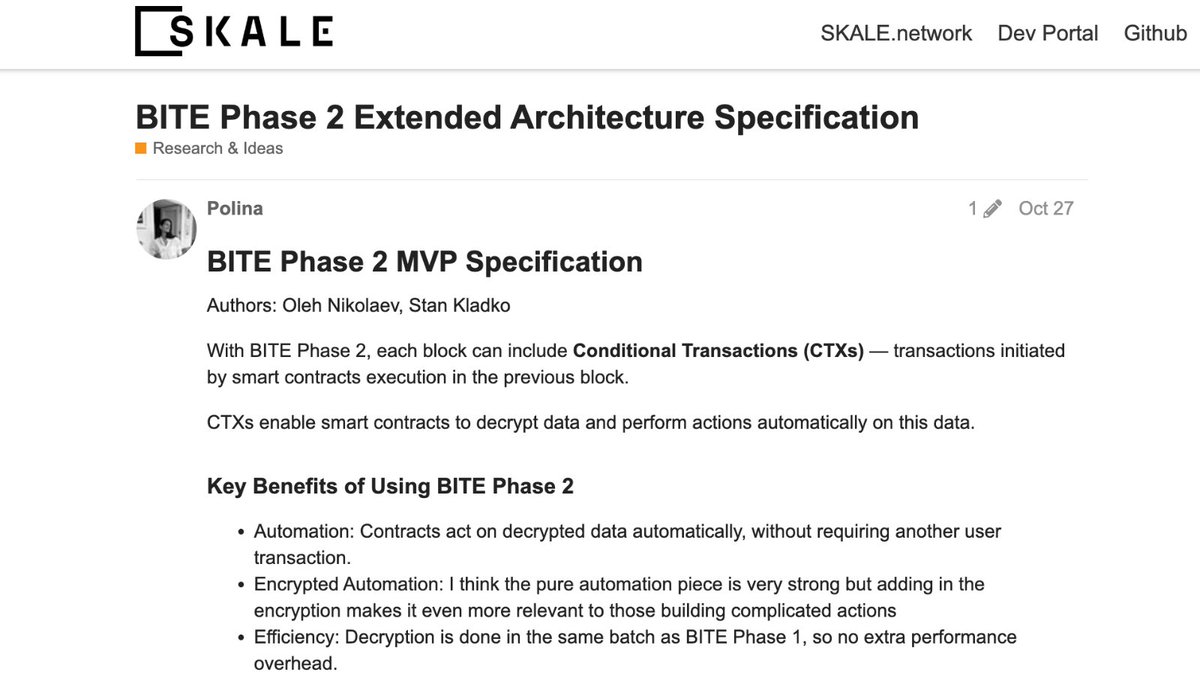
Hey SKALE Community/Devs! BITE Phase 2 is underway. Devs, your feedback on the new architecture spec is essential. Read & contribute: https://t.co/d65al7JauT
Plus, here’s what we’ve accomplished in the last two weeks:
@SkaleNetwork@SkaleDevelopers@FAIR_Blockchain
Stan prepared Bite2 encrypted token spec.
D3 discussed confidential token specifications, collaborated with Sasha2 on an infrastructure cost-optimization plan, and outlined upcoming smart contract updates.
Polina worked on development timelines for the current main priorities and facilitated the SKALE on Base project.
D1 finalized merge of FAIR and SKALE codebases in node components, updated Portal UI (new Home, Bridge and Chains pages) and migrated SKALE Proxy to skale-contracts and https://t.co/lkzyDXL5BL libraries.
Alex upgraded test, build and publish pipelines for node-cli repo. He also improved the configuration of SKALE Ethereum nodes, the Ethereum load balancer, and SKALE Mainnet ELK server to increase overall system stability
Inês worked on the new UI for the latest Portal version, specifically on the Ecosystem page, focusing on the migration to Tailwind CSS and the integration of a new icon library.
D2 worked on confidential token specification and improved EIP-3009 implementation.
Vadim applied post-migration fixes to stats containers that stopped working after moving Nebula to a separate instance. He also worked on technical debt in SKALE-allocator.
Eduardo worked on tech-depth issues in several repositories, improved documentation, and supported infrastructure requests related to smart-contracts tooling.
Ivan worked on reducing leveldb compactions number to remediate state root mismatch issues under high load.
Sidnei refactored and added tests for BITE2 in consensus side.
Sasha 1 was focused on tech-debt in internal QA automation framework and complete refactoring the event and block sync tests.
Sasha 2, was working on infrastructure backup and its improvements.
Karina improved the testing workflows by creating a reusable Ansible setup, reducing duplicated steps, and completed the workflow for running BITE tests.
🎉 Celebrating 10 Years of #Ethereum! 🎉
From a revolutionary whitepaper in 2013 to the backbone of #DeFi, #NFTs, and #Web3 today.
Cheers to a decade of building the decentralized future!
#Ethereum10Years
🎙️ https://t.co/6mbJViBQVl - "Recording the decentralized era"
🎉 Happy 10th Anniversary, Ethereum! 🎉
Today marks a decade since the launch of 📷$ETH - a network that redefined what’s possible with blockchain technology. From smart contracts to DeFi, NFTs, and beyond, Ethereum has been at the heart of Web3 innovation.
#ETHBlockchain#ETH
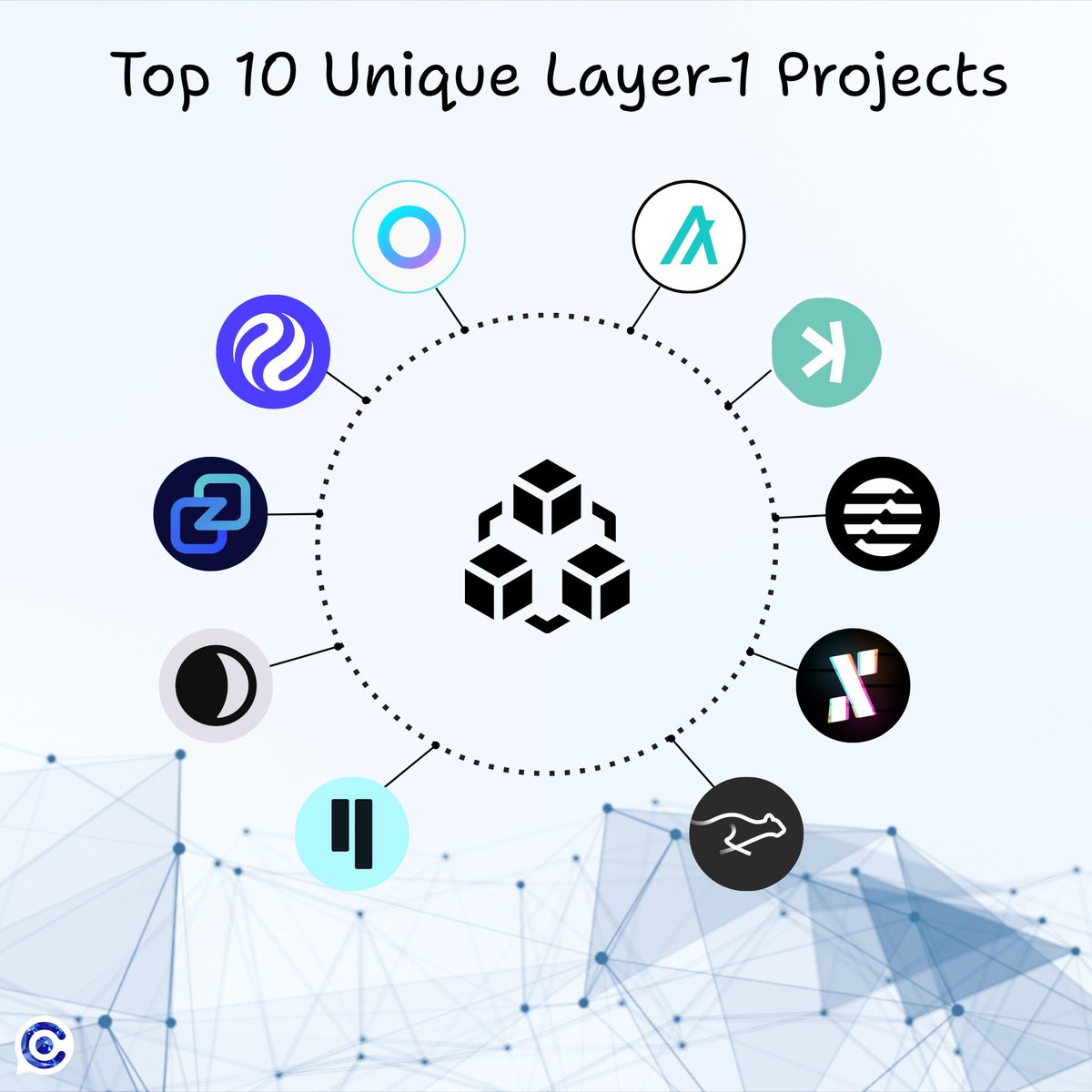
𝐓𝐨𝐩 𝟏𝟎 𝐔𝐧𝐢𝐪𝐮𝐞 𝐋𝐚𝐲𝐞𝐫-𝟏 𝐏𝐫𝐨𝐣𝐞𝐜𝐭𝐬
Telos ( $TLOS): Up to 10,000 TPS with near-zero fees using Delegated Proof-of-Stake (DPoS).
Keeta ( $KTA): Claims 10M TPS and 400ms finality on its low-fee, high-throughput Layer-1.
Algorand ( $ALGO): Delivers ~6,000 TPS and low fees via Pure Proof-of-Stake (PPoS).
Kaspa ( $KAS): Uses GHOSTDAG PoW for parallel block creation; handles thousands of TPS with minimal fees.
Aptos ( $APT): Theoretically supports up to 160,000 TPS with low fees using PoS and the Move language.
Alephium ( $ALPH): Reaches 10,000+ TPS via BlockFlow sharding and Proof-of-Less-Work (PoLW).
Qubic ( $QUBIC): Uses quorum-based Useful PoW for AI tasks; TPS not disclosed, fees are low.
Dusk ( $DUSK): Focuses on privacy with Secure Tunnel Switching and PoS; moderate TPS and low fees.
Zano ( $ZANO): Hybrid PoW + PoS chain offering private, low-fee transactions with decent TPS.
Injective ( $INJ): Optimized PoS chain for DeFi; high TPS with near-zero gas fees.
DePin and RWA are critical right now because the global economy is shifting. Decades ago, manufacturing dominated GDP, but today, the service sector drives most economic output.
To stay competitive, businesses will increasingly turn to blockchain to streamline operations, reduce costs, and create decentralized infrastructure. DePin enables real-world deployments without massive overhead.