This is how u deal with so-called "illegal/ encroached" Hawkers, squatters, street vendors etc informal workers & not bulldoze. Permanently win a positive sum game
@Anurag_Anu06@TheBengalIndex@indiceconomics@bongpol
Wonderful 🧵 👇
https://t.co/35mNEjoNlR
As a result, fan loyalty increases and so does receipts for the BCCI. Such a league setup would let broadcasters package and market the media rights more aggressively, turning them into a bigger, more salable deal.
As the next year embarks the 20th edition of cricket's biggest cash splurge, the new changes will usher a new mindset shift in #decentralisation in india as well.
The IPL lens can be used to see how Indian businesses are treated: no stable rules, no long horizons, no room for real compounding; making the future unsustainable and thwarting potential future entrepreneurs.
[Pics courtesy @IPL]
RCB just won back-to-back IPL titles. Millions celebrated but here is the cruel irony no one is talking about: by last of next year, #IPL rules will force #RCB to release a minimum of 19 players — over 75% of their squad — in preparation for the mega auction.
The dynasty gets destroyed before it can be called one. The system actively prevents compounding — the only thing that creates greatness over time.
A #decentralised IPL would flip the incentives for all stakeholders (even fans) that currently runs mainly on artificial scarcity in the cricket calendar and centralised control:
Read along the 🧵(1/3):
1) Best of the best talent around the world would compete if there are no caps on foreign players and team purse. A secondary "IPL Division 2" could be introduced to increase chances.
2) Instead of treating world-class athletes like cattle in a chaotic auction bazaar, the IPL should move toward long-term player contracts (e.g., 5–10 years), allowing franchises to build genuine team chemistry, identity, and dynasties.
Players should be free to choose the teams they want to represent, negotiate salaries and release clauses, and develop long-term loyalty. Likewise, young players could sign directly with franchises that offer the best developmental pathways.
3) Franchise cricket should evolve into a year-round, club-first ecosystem, reducing the burden on national and state boards to solely shoulder player development, employment, welfare, and financial sustainability.
A stronger club structure would create more direct & indirect jobs, spread responsibility across the cricket ecosystem, and provide players with greater certainty of opportunities, career progression, and long-term professional stability. #CricketReforms
(2/3)
IT DOESN’T MAKE SENSE 🙏
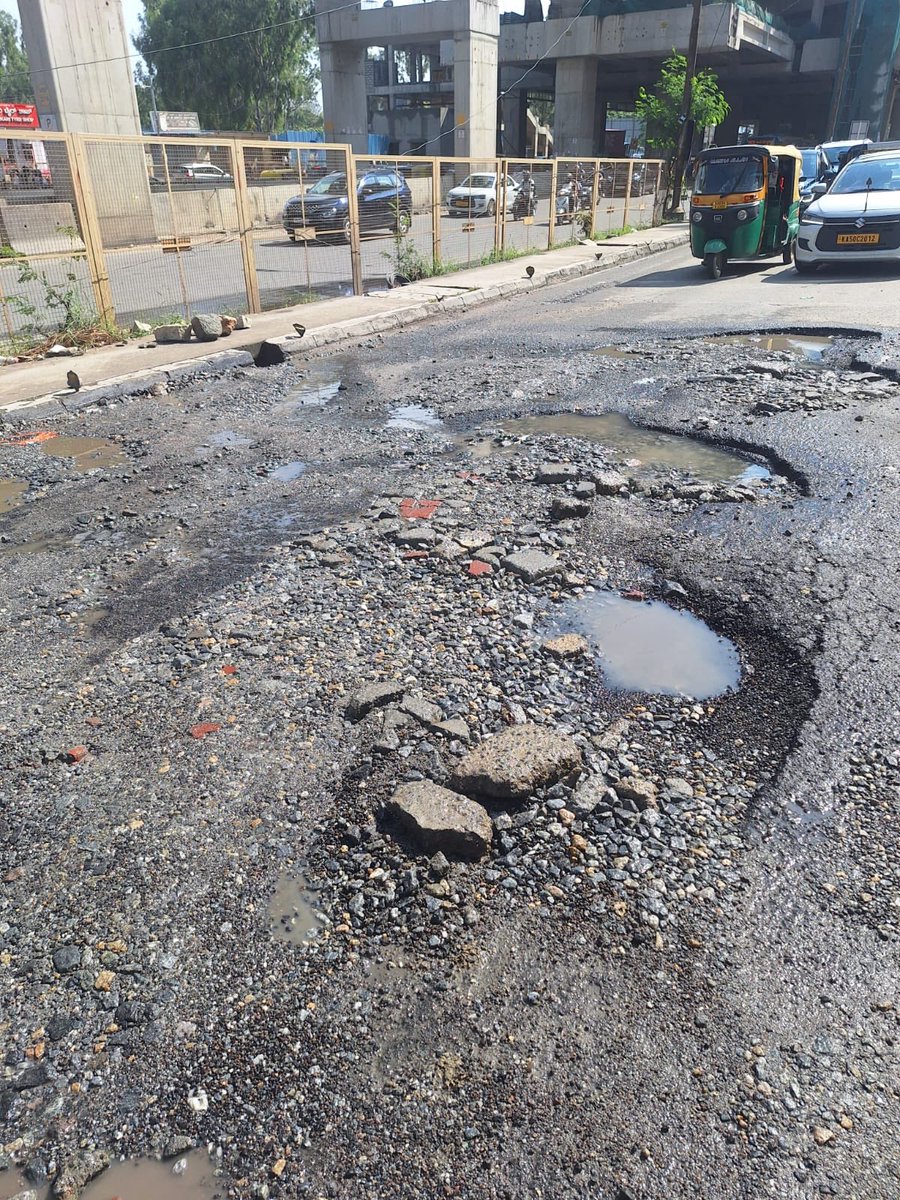
It doesn’t make sense when a country can send rovers to the moon and mars but cannot clean dust on roads.
It doesn’t make sense when highways worth billions are built, but the moment you enter a city, you see broken footpaths and open drains.
It doesn’t make sense when we celebrate digital payments but basic civic sense and public cleanliness still feels like luxuries instead of normal expectations.
India is such a paradox.
It can build massive airports, humongous roads, world-class infrastructure but cannot fix potholes, cannot clean streets, cannot manage its urban areas.
All our glorious achievements doesn't matter when a foreigner steps into our cities and gets bombarded with chaos, filth and dirty roads.
It’s high-time that we start building world-class cities to improve our global image and improve living standards.
And, the only hurdle we have are state governments who do not want democracy to reach at the local level.
We must fight them with tooth and nail. People should wake up.
We need directly-elected mayors with strong executive and financial autonomy to fix our cities.
We need them ASAP.
Meet M. Goutham Kumar - the last Mayor of Bengaluru, whose term ended in 2020.
And, since then for the last six years, Bengaluru has had no new Mayors.
Imagine the state of Karnataka functioning without a sitting chief minister for six straight years, this is exactly the same.
And, we wonder why Bengaluru - the “Silicon Valley of India” looks so dystopic and crumbling despite having such a humongous economy.
It is essentially not a financial issue but moreover an autonomy issue.
In 2025, the congress-led Bengaluru government passed a bill to create a Greater-Bengaluru Authority that would oversee all operations.
And, guess who would be in charge of this?
Not a Mayor but a state-appointed IAS Babu, leaving no room for democracy or local accountability.
This is pure-brutal authoritarianism.
And, not just Karnataka, but the state governments all over India are so power-hungry that they do not allow local governments to function.
This over-centralisation at the state-level is the root cause for all our civic mess.
Bengaluru residents can never hold IAS-babus accountable over anything.
Every death from pothole, every injury from falling debris, every electrocution from open wires go unaccountable because the authority is so fragmented and far away from local people.
It is high time we fix this.
We must force our state governments to devolve power and resources at the local level.
@narendramodi@AmitShah
In just 2.5 decades, Peru cut poverty from ~60% to ~20% while turning into a quiet export powerhouse.
Its currency, the Sol, depreciated only ~13% over 33 years—and even appreciated during Covid.
Today it is the world’s 2nd-largest copper producer and a major exporter of gold, silver, tin, berries, cotton textiles, fishmeal and high‑R&D vegetables like the potato. The culinary capital of the world is one of the biggest contributor to the overall tourism economy.
None of this was planned in a five‑year file in the capital. It emerged from flames of failed communist experiments, when the state finally recognised what people had already built from below. #decentralisation
1/6
India flirted with decentralisation after 1991, then quietly recentralised. We celebrate “diversity” but run our economy through a narrow funnel of licences, clearances and capital‑city gatekeeping. Peru’s journey from state control to a beacon of the free market is a case study in what happens when decentralised reality forces the state to bend, not the other way around. When it codifies what people have already built, growth compounds in places the centre never planned.
India doesn’t need more files in Delhi. It needs radical decentralisation of power and property. Less Licence. More Liberty. More decentralisation.
Decentralisation even rewired culture and the environment through the market. “Chicha” migrants—once mocked as illegal outcasts—became symbols of elite entrepreneurship, reshaping advertising, banking and real estate.
Indigenous Andean communities were given property and harvesting rights over wild vicuñas, aligning financial incentives with conservation. Poaching collapsed; populations exploded from ~5,000 to over 200,000, creating a high‑end fibre export industry owned by those same communities.
To tackle malaria and dengue in irrigated zones, private firms innovated biological solutions—weaponising millions of beneficial predatory insects and organic microbes instead of drenching crops in heavy chemical pesticides just to clear export standards.
When ownership and decision‑making move to the edge, dignity, capital and responsibility move with them. That’s decentralisation beating paternalism on its own terms proving that a free market can organically democratize cultural status far faster than top-down state-enforced integration.
All these GDP numbers are meaningless if common people’s living standards do not improve.
Mumbai’s streets still look like when Maharashtra was $200B GDP and will look the same even if Maharashtra reaches $1T economy.
The problem is not lack of finances but centralization of authority.
A BA pass babu sitting in an AC room in Mumbai is controlling whether potholes in Nagpur or Nashik will be fixed or not.
This is an absolute dictatorship of a magnificent order.
The state politicians and babus are so hungry for power that they let people die from potholes, open electric wires, air pollution but won’t decentralize to fix this mess.
Absolute sad state of affairs.
And, this is not just about Maharashtra but every single state in India.
This is high time. The union government should step in and force these crooks to devolve power and resources.
@narendramodi@mlkhattar@AmitShah
Mumbai in 2030….third airport, BKC as command centre, Versova connected, Gateway to Chowpatty transformed.
CM Devendra Fadnavis laid out his vision at Mumbai Tech Week last week, and it’s ambitious.
What do you think will actually happen by 2030?
The larger question is - why does the Union Government even has an Education Ministry?
"Education" in most Democratic countries are handled by the State Govs or even District govs.
But, in the world's largest democracy with a population of over 1.4B, some central netas/babus want total control over the education system not realising that even their single mistake would negatively impact millions of students.
Exactly what happened in NEET & CBSE this year.
Centralization of education is a SIN.
And, the union government is commiting it without any remorse.
Our founding fathers knew this and hence placed education in the State List.
But, during Emergency, the union government placed it in the Union List and since then we have had an absolute mockery.
Absolute retarded policies like NEP that doesnt value the huge diversity and disparity among the states have wrecked future of many.
And, mishaps like paper leaks and system failures will continue to impact every one across the country even for the mistake of a single state.
Education should be decentralized back to the State Govs for better accountability and state-specific policies.
Hilarious!
Liberals like Nivedita Menon are blaming Modi govt for giving students too many classes and too much to study
Where will students get time for activism?
These liberals don't want your kids to learn
They want your kids to become like Kanhaiya Kumar & Umar Khalid
🚨HISTORIC !
The union government is finally showing signs of upcoming Municipal Reforms.
NITI AAYOG has recently published a detailed report titled “Moving towards effective city government framework”.
It proposes radical reforms in our urban local governments to streamline daily functioning, ensure seamless public service delivery and most importantly establish local accountability.
The report recommends:
-> Directly-elected mayors with fixed terms & executive authority.
-> Integration of core urban services under city governments that currently report to the state departments.
-> Greater financial autonomy & regular fund distribution.
This is the first ever instance where the union government has officially talked about reforms in urban governance and decentralization of power.
If implemented, this will radically change how India functions.
-> The cities will finally get more autonomy and executive authority for performing at their max potential.
-> City authority will be handed over from state-appointed Officials to democratically elected Mayors, marking a radical change in Indian politics.
-> All parastatal bodies will be unified under one city government under a Mayor, making them directly accountable to the people.
However, convincing the power-hungry state governments to devolve powers at the local level will still be a massive challenge for the union government.
Some states will comply first, others may hesitate.
But, the truth is - India needs Municipal Reforms ASAP.
We hope @NITIAayog and @narendramodi make it happen soon enough before it's too late and people hit the streets if things continue as they are today.





![DecentInd's tweet photo. As a result, fan loyalty increases and so does receipts for the BCCI. Such a league setup would let broadcasters package and market the media rights more aggressively, turning them into a bigger, more salable deal.
As the next year embarks the 20th edition of cricket's biggest cash splurge, the new changes will usher a new mindset shift in #decentralisation in india as well.
The IPL lens can be used to see how Indian businesses are treated: no stable rules, no long horizons, no room for real compounding; making the future unsustainable and thwarting potential future entrepreneurs.
[Pics courtesy @IPL]](https://pbs.twimg.com/media/HJ3_GaXaAAArWXA.png)