STRIVE - The Daily Dividend Company
Digital Credit is going DAILY
Below are the improvements on the horizon for $SATA and @Strive
What it means and why it matters 🧵👇
I finally watched the COFFEEZILLA vs. JEFF WALTON debate.
First of all, what an incredible performance by @PunterJeff. 👏🏻
Second, you find the full transcript of the debate below, if you want to reference certain parts of it.
Here are my key takeaways:
Coffeezilla's main objection was about language, not legality. He argued that "digital credit" misleads retail because preferred equity has no principal repayment, yet the product is constantly compared to bonds, money market funds, and bank accounts. His position throughout was that if risks are properly disclosed it's fine, but the marketing is where the trouble starts.
In my opinion these are mainly semantics, and @coffeebreak_YT focused way too much on it. All risks are properly disclosed in the SEC filings. Nothing is hidden.
Coffeezilla doesn't believe that Bitcoin will grow by 30% annually over the next 5-10 years, or 13% for 20-30 years. That's fine of course. Everyone can disagree. But it's just an opinion, and not really revelant for this discussion.
Coffeezilla is worried that the flywheel might reverse one day if Bitcoin was in a prolonged bear market or stopped growing >13% per year. Again, this risk is real, and everyone who is purchasing $SATA or $STRC has to underwrite this risk.
Coffeezilla's closing argument was counterintuitive. His expectation is that digital credit will succeed wildly. But he's worried that more issuance means a growing overhang of perpetual obligations all dependent on continued high CAGR Bitcoin appreciation, which he doesn't believe in.
So to summarize:
- Coffee doesn't believe in a Bitcoin CAGR >13%
- Coffee believes that digital credit will be wildly successful (!)
- Coffee believes that the flywheel will reverse one day and the whole thing will unwind
- Coffee doesn't understand the insurance business, or more broadly, companies that have a balance sheet and underwrite risk (like Bitcoin Treasury or structured finance companies)
Let's put these points into perspective:
1. At 13% yield, you get your full principle back after 7.69 years, and at 11.5% yield, you get your full principle back after 8.70 years. So that's the duration you are effectively underwriting.
2. Both Strive and Strategy have 1.5 years of dividend coverage in USD. Which means that your effective duration at risk is shortened by this time.
3. You can buy SATA/STRC for $100 (or below) and set a stop loss at $95 or $90. Which would mean that you'd be break-even after 5 or 10 months, and can't lose money after that.
4. Or, you can buy a $90 long put to hedge your exposure, so that your max loss is $10 if you buy at $100.
I love Coffeezilla, but here he clearly doesn't know what he is talking about.
Here's how I see it:
The more people talk about these products, the faster they will grow.
So thank you, Coffeezilla, for helping to promote Digital Credit. 🙌🏼
@saylor@phongle@ColeMacro@Werkman@Trollstein@IIICapital
La comparación que hace @PunterJeff del modelo de negocio de las aseguradoras y las tesoreras de Bitcoin es una genialidad.
Las aseguradoras cobran primas mensuales a sus clientes. Ese dinero masivo acumulado se llama "Float" (dinero flotante). No es dinero de la aseguradora, pero lo tienen en su poder y lo invierten en activos para ganar dinero mientras no tengan que pagar siniestros
las acciones, los bonos y las preferentes no son cosas abstractas que "flotan" en la bolsa. Son literalmente productos financieros (contratos legales) que la empresa "fabrica" y vende a diferentes tipos de clientes para obtener dinero.
$STRC : Es exactamente como vender una póliza de seguro de rentas vitalicias.
- El Cliente: Fondos de pensión o inversores conservadores que necesitan dinero en efectivo mensual para pagar sus propias obligaciones.
- El Contrato: Strategy les dice: "Dame tus dólares hoy. A cambio, te firmo este contrato (STRC) donde me comprometo a pagarte un 11.5% al año en efectivo. No me pidas el dinero de vuelta, ve a vender el contrato a otro si quieres salir.
- El dinero obtenido es para comprar Bitcoin, no para pagar a otros inversores.
- Esto aumenta el BTC por acción empujando el mNAV lo que permite a MSTR emitir mas STRC. 🌀🌀🌀
- Es como una linea de ensamblaje de productos financieros.
$MSTR : Es un contrato de participación en la riqueza futura.
- El Cliente: Inversores institucionales, fondos indexados y particulares que quieren exposición explosiva a Bitcoin.
- El Contrato: Strategy les dice: "Si compras esta acción, te doy un 'ticket' que representa una porción de nuestra inmensa bóveda de Bitcoin. Además, te prometo que usaré mis habilidades de ingeniería corporativa para que los Satoshis que respaldan tu ticket aumenten cada año.
- Al vender este contrato más caro de lo que vale el Bitcoin físico que respalda (la prima o mNAV), generan el margen que hace funcionar toda la máquina. 🌀
A través de la venta de estos productos/contratos financieros (MSTR, STRC), absorbe miles de millones de dólares en capital del mercado. Usa ese "float" para comprar Bitcoin.
Entonces todo es transparente y se puede auditar en tiempo real.
Hay un negocio que vende productos financieros legales.
Hay reservas en BTC que respaldan el balance y todos los productos que hace la empresa.
El que dice que es ponzi directamente es hater.
Sat down with @coffeebreak_YT today on Bitcoin and Digital Credit.
His edit will drop soon. Posting the full raw hour for anyone who wants the unfiltered version.
Enjoy
@AdamBLiv When Phong mentioned it I was taken back, but the clear explanation from Michael on how BPS can continue to grow while paying dividends and paying down debt with BTC has me more bullish than ever.
$MSTR
Saylor mentioned in a recent interview
that the only product he is now comfortable recommending to friends and family is $STRC
I couldn’t agree more.
I have completely stopped recommending
Bitcoin or $MSTR
to my close friends and family.
And it took me a while to understand why.
No matter how valid the thesis is,
these investments become so obvious to us in hindsight…
that we forget to step outside ourselves.
To see it from the perspective of someone with a surface level understanding of money.
When the trade goes in their favor,
you look like a genius.
But the moment volatility hits,
no amount of warning about long term holds
prepares them.
Most lose interest.
Most start complaining.
And most are disincentivized from buying more,
which is the entire point.
The goal was never to get someone to buy once.
The goal is to get them curious
about the way money works…
The conversations I find far more productive now
are the ones that spark that curiosity.
Why is the US government bullish on the asset class?
Why is the largest asset manager on the planet bullish on it?
Why are major banks interested in custodying it?
Why is the President of El Salvador,
capitalizing his entire nation on Bitcoin?
Those questions do more than any price chart
ever could.
And even then,
once someone has done the work
and is genuinely convinced,
I still ask them one more thing.
Are they truly prepared to watch their portfolio
drop more than 50%
at any given point?
Are they willing to sit through that?
If yes, then I encourage them fully
But before any of that conversation,
there is now $STRC
For the first time, there is a product
I can recommend to a friend
or family member
without needing to explain Bitcoin,
monetary debasement,
or corporate treasury strategy in length.
I can just let them sit with a few months
of monthly dividends.
Let them get comfortable.
And once they are,
the conversation about
what is powering that yield,
how a company that went from $1 billion to $60 billion is capitalized on it,
and why companies across the world are slowly capitalizing themselves on the same asset,
becomes a lot easier to have.
$STRC is the bridge.
Not just for the capital markets.
For the people closest to you.
$BTC $MSTR $STRC
RuneScape orange pilled an entire generation and nobody wants to admit it.
Before I knew what “sound money” was, I was standing in Varrock West Bank watching 900 medieval children invent capitalism through spam.
“Buying lobbies 200 ea”
“Selling rune scimmy 25k”
“Wave2: buying yew logs”
“Selling full rune, no helm”
It was beautiful.
No Fed. No Jerome Powell. No 25 economists in robes deciding that trout liquidity was systemically important.
Just miners, fishers, woodcutters, smiths, rune crafters, PKers, scammers, merchants, and one guy in a Santa hat who somehow understood monetary premium better than Harvard.
RuneScape was a functioning free market.
You chopped yews because someone needed fletching XP.
You mined coal because some degenerate was smelting cannonballs for passive income.
You fished lobsters because PKers needed food before sprinting into the Wilderness to lose their rune platebody to a guy named xXxDdsPurexXx.
Prices were information.
If sharks went up, PvP demand was hot.
If nature runes went up, alchers were printing money in Lumbridge like tiny medieval central bankers.
If party hats went up, you learned scarcity before you learned algebra.
Then came the Grand Exchange in November 2007.
At first, it felt like civilization had arrived.
No more standing at Falador Park screaming into a human auction pit like a deranged commodities trader with dial-up internet.
Liquidity improved. Spreads compressed.
Markets centralized.
The economy got faster.
But then the real poison came right after!
Trade restrictions, anti-RWT controls, price bands, limits on unbalanced trades, the removal of old Wilderness mechanics.
Jagex tried to fight gold farmers by putting the entire economy in a compliance cage.
A literal central planner looked at millions of kids freely discovering prices for rune essence, dragon bones, abyssal whips, and cooked swordfish and said:
“What if we fixed this with bureaucracy?”
And the game immediately felt worse.
Because the magic was never the interface.
The magic was the freedom.
The Grand Exchange was fine once the market could breathe. The problem was the monetary TSA checkpoint wrapped around it.
Price discovery can survive better plumbing.
It cannot survive when some god-emperor in Cambridge decides your trade is too unequal for your own safety.
RuneScape taught the whole lesson:
Markets are living organisms.
Gold is money because everyone accepts it.
Scarcity creates premium.
Inflation comes from new supply.
Price controls create distortions.
Middlemen exist because search costs exist.
Arbitrage is just intelligence getting paid.
Liquidity is civilization.
And centralized control always arrives wearing a safety vest, promising to stop the bad guys, then somehow nerfs your entire life.
Bitcoin is RuneScape gold with no Jagex admin panel.
No mod can spawn 10 million BTC because subscriptions are down.
No patch note can increase the max supply.
No central bank can “rebalance” your stack because goblin unemployment came in hot.
No Grand Exchange clerk can tell you your UTXO is suspicious because you traded too many lobsters to your cousin.
Fixed supply. Open market. Proof of work.
Free exchange. No monetary game master.
We all thought we were playing RuneScape.
Really, we were twelve years old in Varrock getting a full Austrian economics education from lobster spreads, yew log liquidity, and the sacred horror of watching your bank value collapse after a Jagex update.
Bitcoin is what happens when the players finally say:
“Enough. We’re running the economy now.”
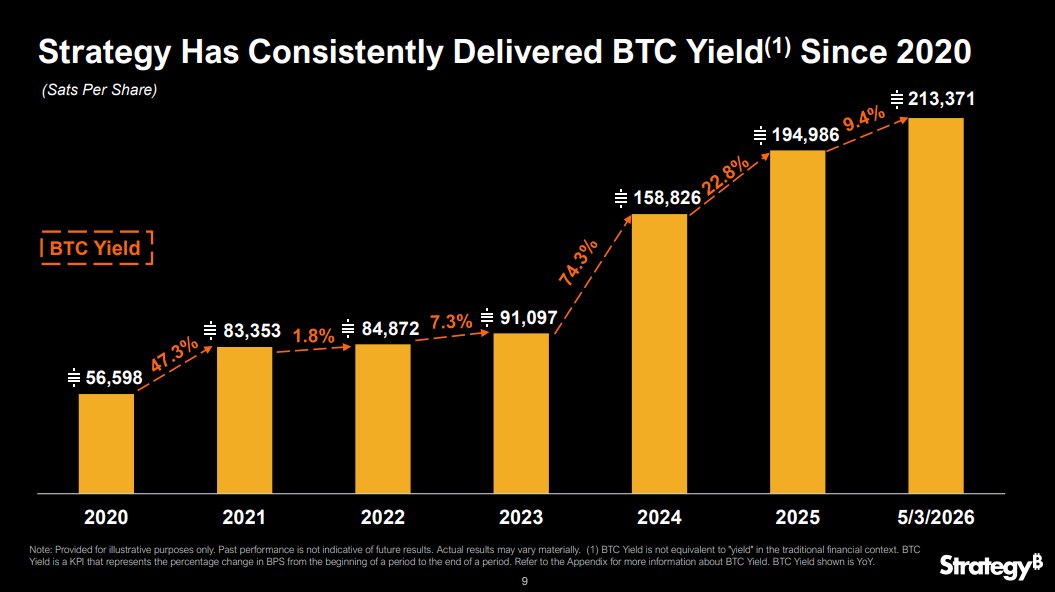
@ryQuant@Strategy@CedYoungelman Exactly, BTC per share can’t continue to grow at the rate that it has indefinitely. Even if this causes BTC CAGR to increase when demand far outweighs supply, what becomes the advantage to holding $MSTR over $BTC in cold storage?