《Winds of Yawanawa》
《Winds of Yawanawa》将 Refik Anadol 的 AI 数据美学带入生态和跨文化协作语境。作品并不只是展示流动的抽象图像,而是试图让自然数据、文化图案和链上生成进入同一套视觉系统。
从技法看,Anadol 延续了将数据转化为流体景观的方法。色彩、运动和形态变化构成一种数据绘画,但其意义不只在视觉沉浸,也在于这些数据被赋予生态和文化叙事。
艺术史上,它连接生态艺术、数据艺术、AI 生成影像和跨文化协作实践。作品的重要性在于提醒观众,数据并非中性原料,而是可以承载地方记忆和社群关系的媒介。
理性评价上,作品需要面对跨文化合作中的代表权和解释权问题。即便如此,它仍然是 Anadol 链上项目中较具辨识度的一件,因为它把 AI 奇观放进了自然与社群的叙事框架。
Winds of Yawanawa brings Refik Anadol's AI data aesthetics into an ecological and cross-cultural context. It is not only a display of flowing abstraction; it attempts to bring natural data, cultural pattern, and on-chain generation into one visual system.
Technically, Anadol extends his method of turning data into fluid landscapes. Color, motion, and form become a kind of data painting, but the meaning lies not only in immersion. The data is framed by ecological and cultural narrative.
Art-historically, it connects ecological art, data art, AI-generated imagery, and cross-cultural collaboration. It reminds viewers that data is not neutral raw material; it can carry local memory and community relations.
The work must still be read with attention to representation and interpretive authority in cross-cultural collaboration. Even so, it is one of Anadol's more recognizable on-chain projects because it places AI spectacle inside a narrative of nature and community.
《Unsupervised — Data Universe — MoMA》
Refik Anadol 的《Unsupervised — Data Universe — MoMA》把博物馆档案、AI 模型和链上系列连接到同一套视觉生产系统中。它不是简单让 AI 生成漂亮抽象图像,而是让机器重新消化 MoMA 的现代艺术记忆。
从技法看,作品以机器学习处理收藏数据,再将结果转化为流体化、沉浸式的数据景观。图像像梦境,但这个梦境由机构档案和计算模型共同规定。
艺术史上,它连接数据可视化、沉浸式装置、生成艺术和博物馆制度史。作品真正的对象不是某个单一图像,而是艺术史如何被模型重新组织。
理性评价上,Anadol 的视觉语言有被奇观化消费的风险。但在这件作品中,奇观背后存在明确结构:博物馆记忆、AI 解释和链上流通共同构成了新的艺术生产链。
Refik Anadol's Unsupervised — Data Universe — MoMA connects museum archive, AI model, and on-chain series into one system of visual production. It is not simply AI making beautiful abstraction; it is a machine reprocessing MoMA's memory of modern art.
Technically, the work uses machine learning to process collection data and translate it into fluid, immersive data landscapes. The image feels dreamlike, but the dream is structured by institutional archive and computational model.
Art-historically, it connects data visualization, immersive installation, generative art, and museum history. The real object is not one image, but the reorganization of art history by a model.
Anadol's visual language risks being consumed as spectacle, but here the spectacle has a clear structure: museum memory, AI interpretation, and on-chain circulation form a new production chain.
《Censored》
Pak 的《Censored》把 NFT 的记录功能和审查主题直接叠合。参与者提交文字,而作品用遮蔽机制将文字变成既可见又不可读的图像对象。这种矛盾正是作品的核心。
从技法看,黑条不是简单视觉符号,而是行为本身:输入、遮蔽、铸造和公开记录共同构成作品。链上永久性使被遮蔽的信息并未消失,而是以受限状态持续存在。
艺术史上,它与文本艺术、观念艺术、制度批判和网络行动主义相关。Pak 没有把政治内容外包给说明文字,而是让平台机制直接承担政治含义。
理性评价上,作品的新闻性很强,可能压过形式复杂度。但它提出了一个准确问题:当话语被遮蔽但记录不可删除时,沉默本身是否也成为一种可流通的证据。
Pak's Censored overlays the archival function of NFTs with the theme of censorship. Participants submit text, and the work turns it into an image that is visible yet unreadable. That contradiction is the core of the piece.
Technically, the black bar is not merely a visual symbol but an action: input, concealment, minting, and public record form the work together. Blockchain permanence means the hidden message does not disappear; it persists in a restricted state.
Art-historically, it relates to text art, conceptual art, institutional critique, and network activism. Pak does not leave politics to explanatory text; the platform mechanism carries political meaning.
Its topicality can overwhelm its formal complexity, but it asks a precise question: when speech is concealed but the record cannot be deleted, can silence itself become circulating evidence?
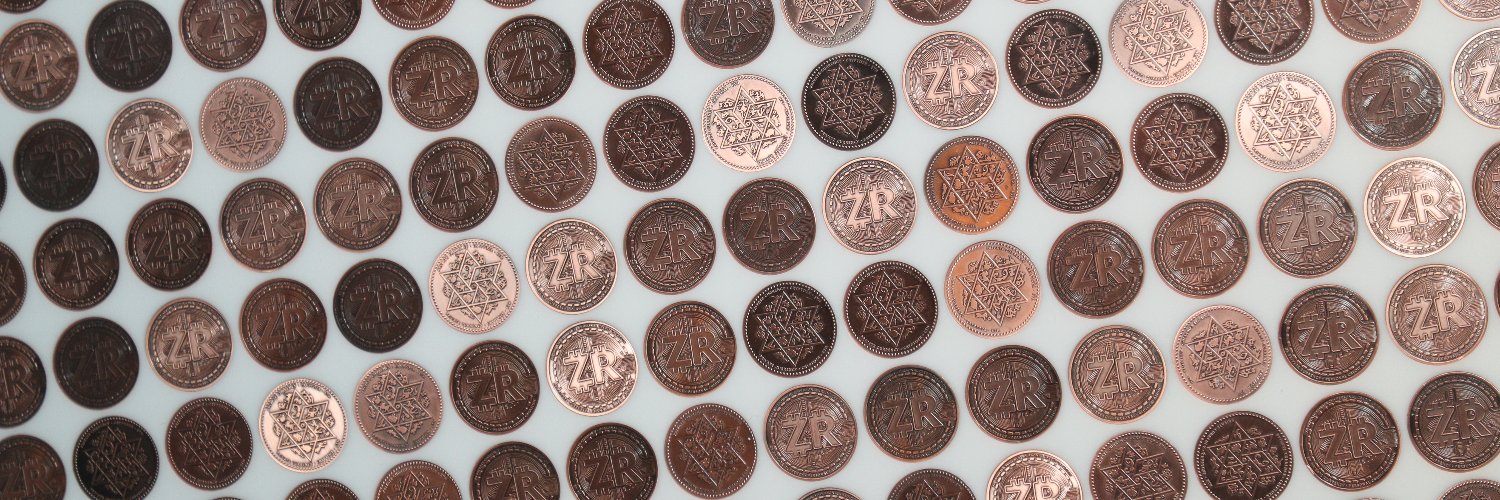
Silicon-based Time
Artist: CryptoZR
Medium: 4K single-channel video, 600 seconds
Data source: Bitcoin mainnet blockchain (block heights #947777–#947876)
Camera locations: Shibuya Crossing, Times Square, Dublin, Sydney Harbour, Abbey Road, Seogang Bridge (Seoul), Colosseum (Rome), Sukhumvit Road (Bangkok), Sacré-Cœur (Paris)
I. Description of the Work
Silicon-based Time arranges nine simultaneous live-camera feeds from public spaces around the world into a 3×3 matrix, forming a global cross-section of the present moment. The playback speed of the footage is not governed by the human clock, but mapped in real time to the block intervals of the Bitcoin blockchain.
To understand this mapping, it is necessary to first understand the basic mechanics of Bitcoin.
Bitcoin is a digital currency running on a decentralized network. Its core mechanism is called Proof of Work (PoW). Participants in the network—known as miners—use specialized computers to perform hash computations continuously: a piece of data is fed repeatedly into a mathematical function called SHA-256, which outputs a fixed-length string of characters (a hash). The miner's goal is to find a hash that meets a specific condition (typically requiring the result to begin with a certain number of zeros). This process is unpredictable and can only be accomplished through massive trial and error.
When a miner is first to find a qualifying hash, they earn the right to package a batch of transaction records into a block and write it to the chain, receiving a Bitcoin reward in return. The block is broadcast to the entire network; once verified by other nodes, it officially becomes part of the blockchain and the block height increments by one.
The Bitcoin protocol dynamically adjusts mining difficulty so that the network produces a new block on average every ten minutes. However, "average" means the actual intervals follow a Poisson distribution—a probability model describing the frequency of random, independent events. In practice, block intervals are anything but uniform: sometimes a block arrives in seconds, sometimes it takes several hours, depending entirely on the competitive state of global computing power at that moment. Each block carries a timestamp and a unique hash value—a cryptographic digest of all the block's contents. Any modification to the content would cause the hash to change completely.
How the Work Uses This Mechanism
Silicon-based Time translates this random block rhythm directly into the temporal dimension of the image. When the Bitcoin network completes a proof-of-work computation, the corresponding six seconds of footage plays at 1× speed. If a block is found in only 30 seconds, the playback speed drops sharply to 0.05×: the crowds of nine cities seem to fall into a near-frozen slow motion. If a block takes fifty minutes to find, the footage is compressed into a 5× fast-forward, and the rhythms of urban life are condensed into an unrecognizable flicker. The full work consists of 100 blocks, totaling 600 seconds. Into every frame, the block height and full hash are burned into the lower-left corner—an immutable timestamp embedded inside the image.
In this version, the 100 block intervals range from a minimum of 30 seconds to a maximum of 2,854 seconds, with an average of approximately 588 seconds. Speed factors span from 0.05× to 4.76×, with 8 extremely slow blocks (below 0.1×) and 12 extremely fast blocks (above 2×) producing the most intense temporal distortions in the work.
II. Technique
The work's technical path rests on the real-time coupling of two heterogeneous systems: a decentralized blockchain consensus mechanism on one side, and a network of public surveillance cameras installed by city administrators around the world on the other. The two systems have no inherent connection; this work forcibly joins them.
The artist runs a fully indexed Bitcoin full node locally, reading block header timestamps directly from the chain and computing the interval between consecutive blocks. Each interval is divided by the baseline of 600 seconds (ten minutes) to derive a speed factor. All nine camera feeds are recorded simultaneously, ensuring that nine geographic coordinates begin capturing at the same real-world moment—preserving the foundational premise of "parallel witnessing." Post-production uses ffmpeg to perform frame-level speed adjustment, 3×3 grid compositing, watermark rendering, and 4K output.
One technical choice worth noting is the speed factor floor of 0.05—corresponding to the shortest valid block (approximately 30 seconds). At this speed, a six-second output segment draws on only 0.3 seconds of source material: roughly 9 frames are stretched across 180 output frames, producing something the eye perceives as a near-static slideshow. The artist deliberately preserves this extreme state without interpolating additional frames, allowing "the granularity of time" to appear in its unmediated, technical form.
III. Art-Historical Comparison
In terms of image strategy, Silicon-based Time shares with Andy Warhol's Empire (1964) a fundamental interest in time itself rather than the contents of time. But where Warhol used absolute, uniform speed to expose the artificiality of photographic time, Silicon-based Time uses variable speed to reveal a different governing logic of technical time—the randomly Poisson-distributed block rhythm of the Bitcoin network.
The multi-screen structure recalls Douglas Gordon and Philippe Parreno's Zidane: A 21st Century Portrait (2006), in which seventeen cameras simultaneously tracked a single subject, achieving a deconstruction of body and event through temporal simultaneity. Silicon-based Time pursues the same simultaneity, but replaces the subject: from a single individual to the anonymous aggregate of global human activity; from cameras as trackers to cameras as indiscriminate surveillance eyes.
Within the lineage of data-driven art, the work invites comparison with Ryoji Ikeda's data visualization installations—which convert data into perceptual intensity of sound and image. Silicon-based Time inverts this approach: the data (block intervals) is not visualized but instead directly manipulates the temporal dimension of real-world footage, leaving the imprint of an invisible computational rhythm on a visible human landscape.
IV. Theme and Symbolic Meaning
The work's central proposition can be approached through the concept of substitution of subjectivity. The Bitcoin blockchain, as a decentralized, sovereign-free, continuously operating computational system, perceives the world through only one dimension: the block height—a monotonically increasing integer sequence. It has no day or night, no holidays, no geography, no emotion. From the perspective of this system, "time" is not the physical second but the frequency at which proofs of work are completed.
On this basis, the work constructs an experiment in perspective: when the images of the human world are compelled to accept this system of temporal units, human activity itself becomes the observed object rather than the observing subject. The pedestrians of Shibuya, the neon of Times Square, the pilgrims of Sacré-Cœur are, from the Bitcoin network's point of view, nothing more than variable-length noise between two hash computations.
This substitution points toward a deeper question of power structures. In the process of capitalist digitization, increasing numbers of human behaviors are being measured, trimmed, and priced by non-human systems—algorithms, protocols, smart contracts. Bitcoin is not the cause of this process, but its most transparent metaphor: it has hard-coded the "temporal logic of capital" into open-source code on the chain, publicly auditable, immutable.
The hash value in the watermark carries a dual symbolic function. As cryptographic proof, it is the unique fingerprint of the block's content—unforgeable. As part of the image, it announces a kind of trustless notarization: the moment corresponding to this footage has been confirmed by every node in the global network. The human witness is no longer necessary.
V. Critical Assessment
The effectiveness of Silicon-based Time lies in the internal consistency of its concept. Every technical decision—synchronized recording, local node, precise keyframe correction, hash watermark—serves the same proposition rather than functioning as decorative addition. This distinguishes it from the many digital art projects that use blockchain as a gimmick, deploying the technology as an authentication or scarcity mechanism rather than as the narrative logic itself.
The work's sharpest tension lies in its non-intervention: the artist did not select "attractive" blocks, did not smooth extreme speeds, did not sidestep the sense of stasis. When a block interval is only 30 seconds and the image nearly freezes, this is not a flaw—it is an accurate rendition of the data. This fidelity to the raw output of the algorithm resonates structurally with documentary journalism's respect for truth, even though what is being recorded is not an event but the distributional form of time itself.
In terms of scalability, Silicon-based Time has an inherently open structure. The blockchain continues to grow; cameras can be replaced or added; each new generation corresponds to an unrepeatable historical cross-section. The work is therefore not a finished object but a protocol that updates itself over time—perhaps its deepest structural homology with blockchain logic: the chain does not stop. Neither should the work.
Afterword
Silicon-based Time raises a question that remains rare in the field of digital art: when a non-human system has acquired its own unit of time, what form will the historical images of the human world take within its coordinate system? The work offers no answer. Instead, it constructs an apparatus for observation, allowing viewers to feel—through sudden shifts in speed—the collision of two temporal logics. That is enough.
Silicon-based Time
Artist: CryptoZR
Medium: 4K single-channel video, 600 seconds
Data source: Bitcoin mainnet, blocks #947777–#947876
Silicon-based Time is a video work that observes the human world through the perspective of a silicon-based life form. Nine simultaneous live-camera feeds from public spaces around the world are arranged in a 3×3 grid.
The playback speed of all nine scenes is governed not by the clock on the wall, but by the Bitcoin blockchain: each block's display duration is fixed at exactly 6 seconds, presenting every frame of human-world footage captured between two consecutive blocks. When a block is mined quickly by miners, the footage slows sharply; when miners take far longer than average, the footage races forward at several times normal speed.
The block height and full hash of each block are burned into the lower-left corner of every frame as a cryptographic timestamp, anchoring each moment of on-screen reality to a verifiable point in blockchain time
硅基时间
艺术家: CryptoZR
媒介: 4K 单频道影像,600 秒
数据来源: Bitcoin 主网,区块高度 #947777–#947876
硅基时间是一件 4K 单频道影像作品(600 秒),通过硅基生命的视角来观察人类世界。艺术家将来自全球公共空间的九路实时摄像头画面以 3×3 网格结构并置于同一画面。所有场景的播放速度不由时钟决定,而由比特币区块链的出块间隔进行映射。
每个区块显示时长被设定为恒定的6秒,并展示下一个出块前获得的所有人类世界数据。当某区块被矿工快速挖出,画面骤然减速;当矿工耗时远超平均值,影像则以数倍速急速快进。每个区块的高度与完整哈希值作为密码学时间戳永久刻录于每帧画面左下角,并与画面中的现实时间进行映射。
《LOSTPOETS》
Pak 的《LOSTPOETS》把 NFT 系列从图像收藏推向文本、身份和数据库结构。作品中的“诗人”并不是完整人物,而是由头像、词汇、trait 和潜在叙事组成的符号节点。
从技法看,Pak 将极简图像和文本片段并置,让元数据成为可阅读材料。收藏者面对的不是一张图,而是一套等待解释和组合的文学机制。
艺术史上,它连接概念诗、数据库艺术、生成文本和头像文化。它说明 PFP 不必只是社交身份标志,也可以成为文本系统和叙事碎片的入口。
理性评价上,《LOSTPOETS》有时显得过度依赖神秘感和收藏者投射,但它确实扩展了 NFT 的语言维度。它把链上收藏转化为一套可读、可猜测、可继续生长的诗学机器。
Pak's LOSTPOETS moves the NFT series from image collecting toward text, identity, and database structure. The 'poets' are not complete characters, but symbolic nodes made from portrait, words, traits, and latent narrative.
Technically, Pak places minimal images beside textual fragments, making metadata into readable material. The collector does not face a single image, but a literary mechanism waiting to be interpreted and recombined.
Art-historically, it connects conceptual poetry, database art, generative text, and avatar culture. It shows that a PFP-like project can become an entry into textual systems and narrative fragments.
The work sometimes depends heavily on mystery and collector projection, but it expands the linguistic dimension of NFTs. It turns on-chain collecting into a readable and evolving poetic machine.
《HUMAN ONE》
《HUMAN ONE》是 Beeple 试图摆脱“纯数字文件”标签的重要作品。它把 NFT、视频、雕塑和持续更新机制组合在一起,使作品既属于链上所有权,也属于展览空间中的物理对象。
从技法看,四面屏幕构成一个封闭而可观看的数字盒子。人物不断行走,背景不断替换,作品因此不再是一次性图像,而是一台可以被艺术家继续写入的视觉机器。
艺术史上,它连接录像雕塑、媒介装置和后互联网景观。与《EVERYDAYS》相比,HUMAN ONE 更明确地处理数字艺术如何占据空间、如何与观众身体发生关系。
理性评价上,作品的科幻符号并不复杂,但媒介转换有实际意义。它让 Beeple 的图像世界不只作为市场事件存在,也作为可被展览、维护和更新的对象存在。
HUMAN ONE is an important attempt by Beeple to move beyond the label of the purely digital file. It combines NFT ownership, video, sculpture, and ongoing update mechanisms, so the work belongs both to the blockchain and to physical exhibition space.
Technically, four screens form a closed digital box. A figure keeps walking while the landscape changes, turning the work from a single image into a visual machine that the artist can continue to write into.
Art-historically, it connects video sculpture, media installation, and post-internet landscape. Compared with EVERYDAYS, HUMAN ONE more clearly addresses how digital art occupies space and meets the viewer's body.
Its science-fiction symbols are direct, but the medium shift matters. The work lets Beeple's image world exist not only as a market event, but as an object that can be exhibited, maintained, and updated.
《EVERYDAYS: THE FIRST 5000 DAYS》
Beeple 的《EVERYDAYS: THE FIRST 5000 DAYS》不能只按单张图像质量来判断。它真正的结构是时间:5,000 天的持续生产被压缩成一张拼贴,也被压缩成 NFT 进入传统拍卖体系的历史事件。
从技法看,作品把政治讽刺、3D 插画、网络视觉和日常练习并置起来。网格并不提供精致叙事,而是把重复劳动变成可见的规模。它像一份视觉日志,也像平台时代创作者自我训练的证据。
艺术史上,它连接日记式艺术、波普图像、政治漫画和大型拼贴传统。但它的关键并非拼贴形式本身,而是数字图像如何通过 NFT 和 Christie’s 被转化为可被传统艺术市场承认的稀缺对象。
理性评价上,这件作品内部质量参差不齐,甚至部分图像有明显的网络粗粝感。但它的历史意义在于暴露了加密艺术的制度转折:长期数字劳动、市场叙事和链上所有权在同一瞬间汇合。
Beeple's EVERYDAYS: THE FIRST 5000 DAYS cannot be judged only by the quality of individual images. Its true structure is time: 5,000 days of continuous production compressed into a single collage and into the historical event of an NFT entering the traditional auction system.
Technically, the work places political satire, 3D illustration, internet visual culture, and daily exercise side by side. The grid does not create refined narrative; it makes repeated labor visible as scale. It is both a visual diary and evidence of self-training under platform culture.
Art-historically, it connects diary-based art, Pop imagery, political cartooning, and large-scale collage. Its key move, however, is institutional: a digital image becomes a scarce object legible to Christie's through NFT ownership.
The work is uneven internally, and some images retain the roughness of online circulation. Yet its historical significance is strong because it exposes a turning point where digital labor, market narrative, and on-chain ownership converge.
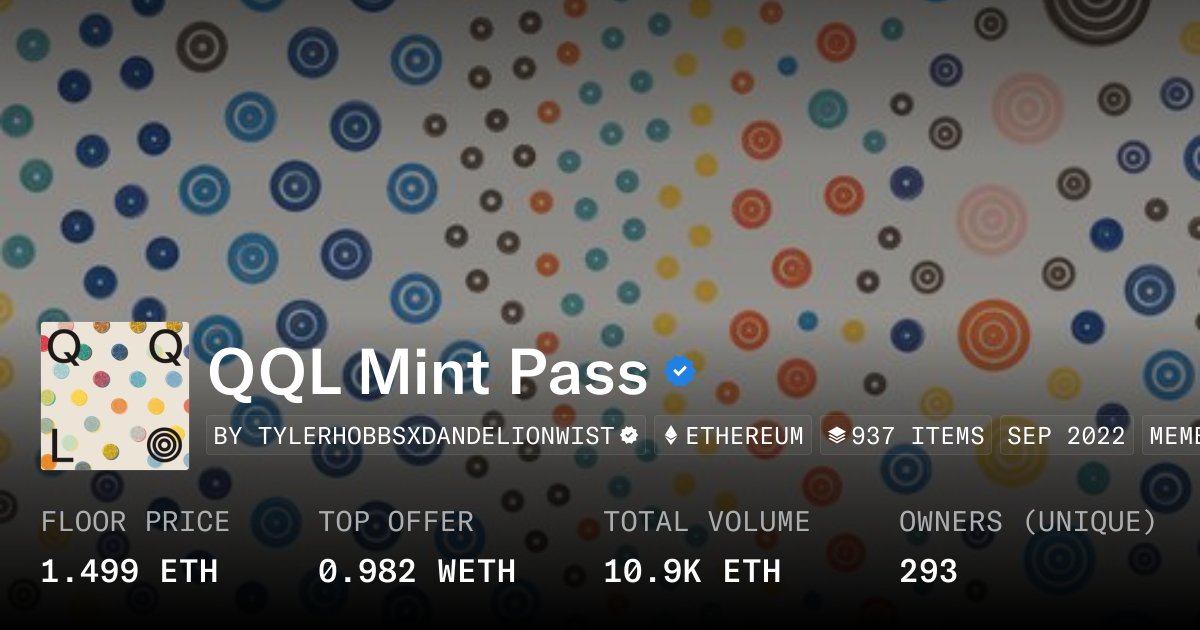
《QQL》
《QQL》的关键不只是 Tyler Hobbs 又创造了一套生成图像语言,而是它把生成艺术中通常隐藏的探索过程变成了作品的一部分。用户可以在算法界面中寻找种子、比较输出,再决定是否铸造。这使观看不再是被动接收,而成为生成链条中的一个判断环节。
从技法看,QQL 把算法、界面和铸造机制组合为同一个系统。图像当然重要,但更重要的是选择如何发生:哪些输出被保留,哪些只停留在可能性中。作品因此接近版画试印、摄影选片和软件工具三者的结合。
艺术史上,它延续生成艺术和参与式艺术传统,也重新分配了作者性。艺术家设定规则,用户进行探索和选择,最终作品诞生于算法空间与人类判断的交界。
理性评价上,QQL 的风险是参与机制可能被市场偏好收窄,用户倾向选择最像蓝筹审美的输出。但它仍然重要,因为它让生成艺术的过程性、选择性和共同作者关系变得可见。
QQL is important not only because Tyler Hobbs created another generative visual language, but because it turns the normally hidden process of exploration into part of the artwork. Users search seeds through an algorithmic interface, compare outputs, and decide whether to mint. Viewing becomes an act of judgment inside the generative chain.
Technically, QQL combines algorithm, interface, and minting mechanism into one system. The image matters, but the more important question is how selection occurs: which outputs are preserved and which remain only possibilities. The work approaches print proofing, photographic selection, and software tool use at once.
Art-historically, it extends generative and participatory art while redistributing authorship. Artists define the rules; users explore and choose; the final work emerges at the boundary between algorithmic space and human judgment.
Its risk is that participation can be narrowed by market preference, with users selecting outputs that look most like accepted blue-chip taste. Still, QQL matters because it makes process, selection, and shared authorship visible within generative art.
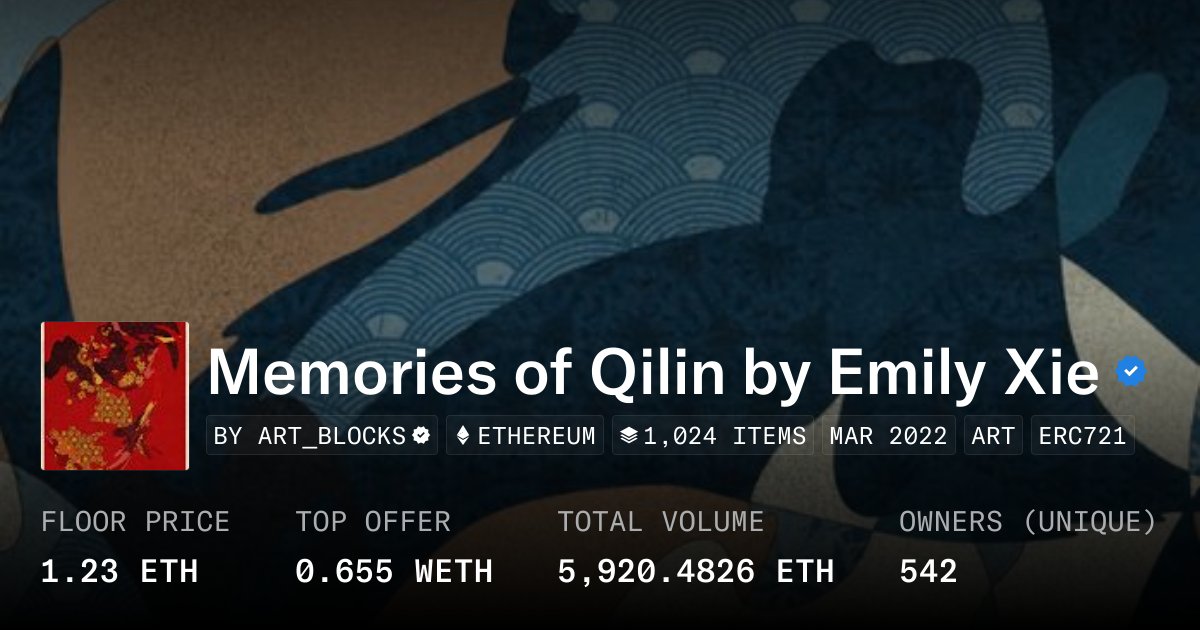
《Memories of Qilin》
Emily Xie 的《Memories of Qilin》重要之处在于,它把生成艺术从冷抽象和技术演示中拉向文化记忆、图案和工艺史。作品中的麒麟并不是被直接再现的神兽,而是一组通过纹样、层次和色彩被不断重组的记忆结构。
从技法看,Xie 使用分层形状、重复图案和生成式布局,制造出类似织物、剪纸和拼贴的视觉效果。代码并没有抹去手工性,反而模拟并扩展了工艺逻辑,使每件作品都像一种从传统纹样中生长出的新组合。
艺术史上,它与纺织艺术、民间装饰、女性主义工艺史和生成艺术形成交汇。这点很关键,因为链上生成艺术长期偏向几何、系统和技术纯度,而《Memories of Qilin》把装饰性重新放回中心。
理性评价上,作品的力量在于视觉语言与文化主题高度一致。它证明算法并不必然导向冷漠抽象,也可以参与身份、传统和记忆的再组织。
Emily Xie's Memories of Qilin matters because it pulls generative art away from cold abstraction and technical demonstration toward cultural memory, pattern, and craft history. The qilin is not directly represented as a mythical creature; it becomes a memory structure continually reorganized through motif, layering, and color.
Technically, Xie uses layered shapes, repeated patterns, and generative layout to create effects close to textile, paper-cut, and collage. Code does not erase craft; it simulates and extends craft logic, so each work feels like a new arrangement grown from traditional ornament.
Art-historically, the work intersects textile art, folk decoration, feminist craft history, and generative art. This matters because on-chain generation has often favored geometry, systems, and technical purity; Memories of Qilin returns ornament to the center.
Its strength is the precision between visual language and cultural subject. It proves that algorithms do not have to lead toward detached abstraction; they can reorganize identity, tradition, and memory.
《Meridian》
Matt DesLauriers 的《Meridian》把链上生成艺术带回到一个古老问题:风景如何被观看。作品并不直接描摹自然,而是用代码生成地平线、纹理、笔触和空间节奏,使风景成为算法组织后的感知结果。
从技法看,Meridian 的关键是让数字生成具有触觉性。噪声函数、纹理线条和颗粒化层次共同制造出接近绘画或版画的物质感。算法在这里不是冰冷的几何系统,而像一支能够反复试探地表和空气的画笔。
艺术史上,它与风景画、抽象表现主义、版画肌理和计算机图像传统发生关系。DesLauriers 的特殊之处是没有把自然浪漫化,而是把自然经验拆解为可生成的视觉条件。
理性评价上,Meridian 可能被快速消费为优美风景,但它真正有力的地方在于形式控制。它证明生成艺术也可以处理气氛、距离和触感,而不只处理规则和稀缺。
Matt DesLauriers' Meridian returns on-chain generative art to an old question: how landscape is seen. The work does not directly depict nature; it uses code to generate horizon, texture, mark, and spatial rhythm, making landscape a perceptual result organized by algorithm.
Technically, Meridian's key achievement is giving digital generation a tactile quality. Noise functions, textured lines, and granular layers produce something close to painting or printmaking. The algorithm is not a cold geometric system here; it behaves like a brush testing ground and air.
Art-historically, it relates to landscape painting, abstract expressionist mark-making, print texture, and computer graphics. DesLauriers does not romanticize nature; he breaks natural experience into generative visual conditions.
The work can be consumed too quickly as beautiful scenery, but its real strength is formal control. It shows that generative art can handle atmosphere, distance, and tactility, not only rules and scarcity.
《Archetype》
Kjetil Golid 的《Archetype》展示了长篇生成艺术最核心的能力:在同一套规则中制造足够多的差异,同时又不让系列失去身份。作品的色块、线性结构和模块组合看似平静,却体现出严格的构图纪律。
从技法看,Archetype 不是把随机性放任给机器,而是把随机种子约束在清晰的形式框架中。模块、分割、色彩和节奏共同维持一种可识别的视觉语法。每件作品都像同一原型在不同条件下的展开。
艺术史上,它连接构成主义、包豪斯、系统艺术和早期计算机绘图。Golid 的贡献在于把现代主义的形式训练转译为链上生成作品的参数空间。
理性评价上,《Archetype》不依赖强叙事或市场奇观,而是以稳定的结构质量取胜。它说明生成艺术的成熟并不等于复杂度增加,也可以是规则、限制和形式判断的精确配合。
Kjetil Golid's Archetype demonstrates one of long-form generative art's central abilities: producing enough difference within a single rule system without losing the identity of the series. Its blocks, linear structures, and modular compositions appear calm, but they reveal strict compositional discipline.
Technically, Archetype does not surrender randomness to the machine. It constrains random seeds inside a legible formal framework. Modules, subdivision, color, and rhythm maintain a recognizable visual grammar, so each output feels like the same archetype unfolding under different conditions.
Art-historically, it connects constructivism, Bauhaus composition, systems art, and early computer drawing. Golid's contribution is to translate modernist formal training into the parameter space of on-chain generation.
The work does not depend on narrative force or market spectacle. It succeeds through structural quality, showing that mature generative art can be a precise cooperation between rules, limits, and formal judgment.
《Terraforms》
Mathcastles 的《Terraforms》把链上生成艺术从“图像集合”推进到“世界系统”。它不是用区块链登记一组地景图片,而是把字符、坐标、模式和状态组织成一套可运行的虚拟地形。每个 token 像一个地块,也像一段可被解释的代码片段。
从技法看,作品的关键在于文本模式图形和链上参数的结合。字符不是复古装饰,而是对早期计算机界面、MUD 和命令行空间的重新激活。图像的贫瘠感反而让系统结构更清晰:观众看到的是规则如何生成空间,而不是空间如何模仿现实。
艺术史上,它连接 ASCII 艺术、软件艺术、虚拟世界和观念艺术。与许多 NFT 的“数字地产”神话不同,Terraforms 把土地重新定义为坐标、显示协议和共同想象的产物。
理性评价上,它的门槛比一般生成作品更高,但也正因如此,它提供了更深的媒介论价值。它说明链上艺术可以不是单张图像,而是一套持续展开的世界语法。
Mathcastles' Terraforms moves on-chain generative art from an image collection toward a world system. It does not register landscape pictures on the blockchain; it organizes characters, coordinates, modes, and states into an executable virtual terrain. Each token is both a plot and an interpretable code fragment.
Technically, the key is the relation between text-mode graphics and on-chain parameters. Characters are not retro decoration, but a reactivation of early computer interfaces, MUDs, and command-line space. The visual austerity clarifies the system: viewers see how rules generate space, not how space imitates reality.
Art-historically, the work connects ASCII art, software art, virtual worlds, and conceptual systems. Unlike many NFT fantasies of digital real estate, Terraforms redefines land as a product of coordinates, display protocol, and collective imagination.
Its threshold is higher than that of many generative works, but that difficulty is part of its medium value. It shows that on-chain art can be not a single image, but an unfolding world grammar.
《Series 0》
DEAFBEEF 的《Series 0》把链上艺术从图像问题推进到视听媒介问题。它的重要性不在于画面是否精致,而在于声音、图像和生成规则都被压缩进可长期执行的代码系统中。作品更像一台极小型合成器,而不是一张被登记到链上的图片。
从技法看,Series 0 使用低级合成逻辑和信号图形生成输出,声音不是上传文件,而是系统在运行中产生的结果。示波器式视觉、粗粝音色和程序节奏共同构成一种媒介诚实:作品让观众听见并看见计算约束本身。
艺术史上,它连接电子音乐、声音艺术、早期计算机图形和现场编码传统。与多数 NFT 的视觉收藏逻辑不同,DEAFBEEF 更接近把乐谱、机器和作品合并为同一对象。
理性评价上,Series 0 并不追求大众意义上的悦目或悦耳,但它在媒介自足性上极其清楚。它证明链上艺术可以是一套可再执行的视听系统,而不是只依赖外部服务器保存的图像资产。
DEAFBEEF's Series 0 moves on-chain art from an image problem into an audiovisual medium problem. Its importance is not polish, but the compression of sound, image, and generative rules into a durable executable code system. The work is closer to a miniature synthesizer than to an image registered on-chain.
Technically, Series 0 uses low-level synthesis logic and signal graphics to generate output. The sound is not an uploaded file; it is produced by the system as it runs. Oscilloscope-like visuals, rough timbre, and procedural rhythm create a kind of medium honesty: the viewer hears and sees computational constraint itself.
Art-historically, it connects electronic music, sound art, early computer graphics, and live coding. Unlike most NFTs organized around visual collecting, DEAFBEEF approaches score, machine, and artwork as one object.
Series 0 does not seek conventional beauty in either image or sound, but its medium-specific clarity is strong. It proves that on-chain art can be a re-executable audiovisual system, not merely an image asset preserved by an external server.
《The Merge》
Pak 的《The Merge》最有争议也最重要的地方,是它几乎把图像退到后台,把发行机制本身推到作品中心。购买窗口、单位质量、合并规则和排行榜不是销售附属物,而是作品的形式结构。观众参与购买时,也在参与作品的生成。
从技法看,这是一件机制艺术。它不依赖复杂画面来证明价值,而是通过代币单位如何聚合、如何显示、如何被市场排名来制造意义。市场不再只是作品外部的流通环境,而成为作品内部的材料。
艺术史上,《The Merge》与观念艺术、关系美学和制度批判有直接关联。它把拍卖平台、限时销售和集体购买转化为可观察的社会雕塑,也让 NFT 的经济结构从背景浮到前景。
理性评价上,它的风险是过度依赖销售纪录,容易被理解为市场奇观。但如果把纪录从作品中暂时拿开,仍能看到一个清晰问题:在链上艺术中,所有权、数量和集体行为如何共同塑造形式。
Pak's The Merge is controversial and important because it pushes the image almost into the background and places the release mechanism at the center of the work. The purchase window, mass units, merge rules, and rankings are not sales accessories; they are the artwork's formal structure. When collectors buy, they participate in the work's production.
Technically, this is mechanism art. It does not rely on visual complexity to establish value, but on how token units aggregate, display, and become ranked by the market. The market is no longer an external circulation environment; it becomes internal material.
Art-historically, The Merge relates to conceptual art, relational aesthetics, and institutional critique. It turns the auction platform, timed sale, and collective purchase into a visible social sculpture, moving the economic structure of NFTs from background to foreground.
Its risk is dependence on sales records, which can make it look like market spectacle. But even if the record is bracketed, the work asks a precise question: how ownership, quantity, and collective behavior shape form in on-chain art.
《Gazers》
Matt Kane 的《Gazers》把链上生成艺术从一次性变体推进到持续时间系统。作品并不是简单借用月亮作为浪漫符号,而是让月相、周期和链上参数共同进入图像生成机制,使作品在观看之外也持续拥有时间性。
从技法看,Gazers 的重点是把外部天文周期转译为内部形式逻辑。色带、几何层次和明暗变化并非任意装饰,而是由时间关系组织起来。它让算法不只是制造差异,也承担了记录和同步的功能。
艺术史上,作品连接色域绘画、天文图像、计算机艺术和观念艺术中的时间实践。Kane 的特殊之处在于,他没有把程序性与绘画性对立起来,而是用代码维护一种近似冥想的观看节奏。
理性评价上,Gazers 的抒情性有时会被误读为纯粹装饰,但其机制并不空泛。它证明链上艺术可以不只围绕稀缺和交易,也可以围绕周期、等待和共同时间展开。
Matt Kane's Gazers moves on-chain generative art from one-time variation toward a sustained temporal system. The work does not simply borrow the moon as a romantic symbol; it lets lunar phase, cycle, and on-chain parameters enter the image's generative mechanism, so the artwork continues to possess time even when it is not being viewed.
Technically, its focus is the translation of external astronomical cycles into internal formal logic. Bands of color, geometric layering, and tonal shifts are not arbitrary decoration but are organized by temporal relationships. The algorithm does not merely produce difference; it records and synchronizes.
Art-historically, Gazers links color-field painting, astronomical imagery, computer art, and conceptual practices of duration. Kane's strength is that he does not oppose code and painterly judgment, but uses code to sustain a meditative rhythm of looking.
Its lyricism can be mistaken for decoration, but the mechanism gives that lyricism structure. The work shows that on-chain art can organize itself around cycles, waiting, and shared time rather than scarcity and trade alone.
《Right-click and Save As guy》
XCOPY 的《Right-click and Save As guy》之所以成为早期加密艺术的关键作品,是因为它把 NFT 最常被攻击的弱点直接变成了作品标题。图像当然可以被复制,甚至可以被无限传播;作品的重点正是追问,当图像不再稀缺,所有权为什么仍会产生社会和市场效力。
从技法看,XCOPY 的故障动画、闪烁轮廓和粗暴线条并不是单纯的风格标签。它们让图像始终处在损坏、复制和过度传播的状态中,像一张不断被平台压缩、转发、再截图的网络幽灵。这种视觉不稳定性为作品关于数字所有权的不稳定性提供了形式依据。
艺术史上,它连接朋克图像、GIF 文化、网络表情包和后互联网艺术。与传统绘画强调原作不同,XCOPY 把复制本身纳入作品机制,使反对者的嘲讽成为作品继续传播的燃料。
理性评价上,这件作品的历史意义高于单纯视觉复杂度。它没有证明复制问题不存在,而是说明加密艺术的核心争议恰恰发生在复制、证明和社会承认之间。
XCOPY's Right-click and Save As guy became a key early crypto artwork because it turns the most common attack on NFTs into the title of the work. The image can of course be copied and circulated endlessly; the work's real question is why ownership can still acquire social and market force when the image itself is not scarce.
Technically, XCOPY's glitch animation, flashing contour, and rough line are not merely a style. They keep the image in a state of damage, duplication, and over-circulation, like a network ghost repeatedly compressed, reposted, and screenshotted. That visual instability gives formal ground to the instability of digital ownership.
Art-historically, the work connects punk imagery, GIF culture, memes, and post-internet art. Unlike traditional painting's emphasis on the original, XCOPY absorbs copying into the work's mechanism, making hostile mockery part of its circulation.
Its historical importance is greater than its visual complexity alone. It does not prove that the copy problem disappears; it shows that crypto art's central dispute occurs between copying, proof, and social recognition.
《Ringers》
《Ringers》是生成艺术里那种概念极少、结果极多的典型佳作。Dmitri Cherniak 只给出了一组绕线规则和钉点布局,算法却能在这套受限系统中不断产生新的张力、节奏和复杂性。它的真正魅力不在“花样很多”,而在于观众能清楚感到每个结果都来自同一个母体逻辑。
从技法上说,Ringers 把一个近乎拓扑学的问题转化为视觉艺术:线如何绕过点,如何形成闭环,如何在重复动作中显出差异。peg layout、wrap style、scale 等变量共同决定结构密度,让作品既像数学证明,也像被悬置的手工结绳。机器在这里不是替代手,而是把“手工劳动”的路径重新编码成可枚举的规则空间。
从艺术史看,它既联系系统艺术与几何抽象,也暗中触及纺织、编织与图案传统。这种跨域很重要,因为作品并没有把代码神秘化,反而让算法看起来像一种新的工艺。因此,Ringers 的现代性不在未来主义姿态,而在于它把古老的缠绕动作重新表述为链上生成语法。
理性评价上,Ringers 的视觉冲击力未必像 Fidenza 那样立刻显现,但它在结构透明度和变体质量上极其扎实。它证明了最好的生成艺术不靠噪声堆积,而靠规则与差异之间可被感知的张力。
Ringers is a classic case of generative art with very little concept and a great deal of result. Dmitri Cherniak provides only a set of wrapping rules and peg layouts, yet the algorithm keeps producing new tension, rhythm, and complexity within that constrained system. Its real strength is not variety for its own sake, but the clear sense that every output belongs to the same governing logic.
Technically, Ringers translates an almost topological problem into visual art: how a line passes around points, forms loops, and generates difference through repeated action. Variables such as peg layout, wrap style, and scale determine structural density, making the work feel at once like mathematical proof and suspended craft. The machine does not replace the hand here; it recodes the path of manual labor into an enumerable rule space.
Art-historically, the work touches systems art and geometric abstraction while also resonating with traditions of weaving, knotting, and patterned construction. That cross-domain quality matters because the code is not mystified; it starts to look like a new craft discipline. Ringers is modern not because of futurist posture, but because it reformulates an ancient act of looping into on-chain generative syntax.
Its visual impact may not announce itself as immediately as Fidenza's, but its structural transparency and quality of variation are exceptionally strong. It proves that the best generative art depends less on accumulated noise than on perceptible tension between rules and difference.
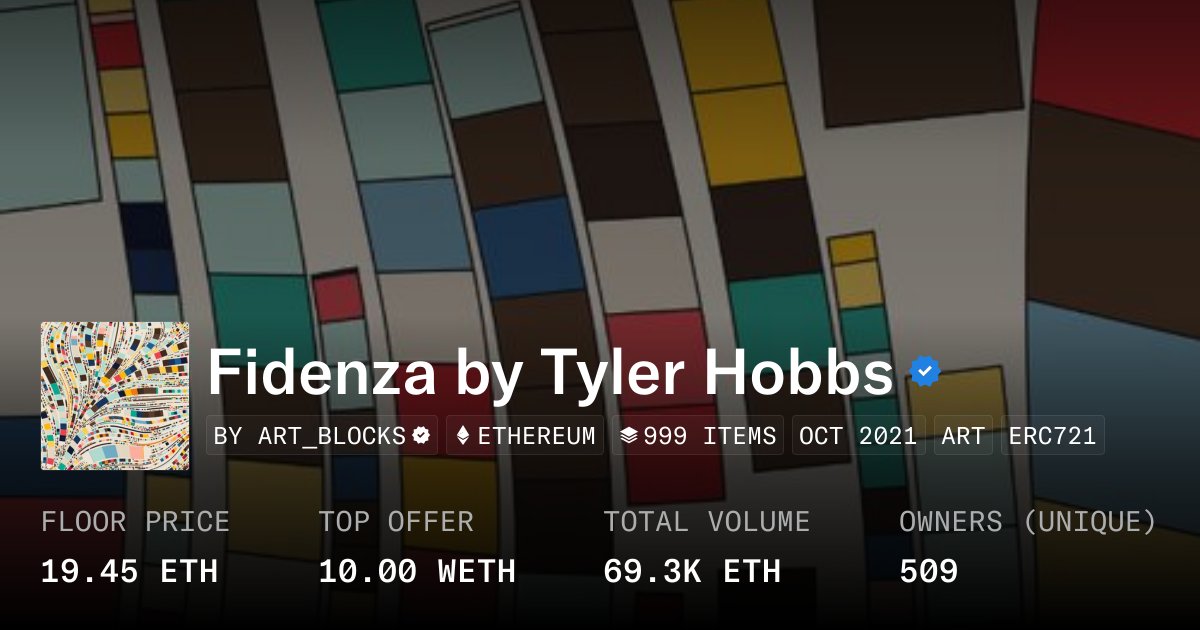
《Fidenza》
《Fidenza》之所以成为生成艺术蓝筹,并不只是市场选择的结果,而是因为 Tyler Hobbs 在这里真正解决了一个长期难题:如何让算法生成既保留随机性,又拥有接近绘画经典的构图完成度。flow field 生成的线条并不是无目的漂移,而是在密度、方向、碰撞和留白之间形成高度自律的平衡。
从技法看,Fidenza 最突出的地方是把“规则”隐藏进了视觉自然度之中。观众首先感受到的是流动、节奏和配色的和谐,而不是参数系统本身。但正是这层看不见的算法纪律,让作品避免滑向装饰性噪声。它证明了生成艺术完全可以拥有现代绘画意义上的结构判断力。
从艺术史上说,Fidenza 连接了抽象表现主义的自由线性、硬边绘画的空间组织,以及现代主义关于色彩和形式关系的精密推演。不同之处在于,这里的“笔触”并非手工痕迹,而是作者为机器划定的一组运动法则。作品因此不是对人类作者性的放弃,而是对作者性的一次重新分配。
理性评价上,Fidenza 的风险在于过于成功,以至于它容易被当作市场等级体系中的图标。但把价格泡沫剥离之后,它仍然是链上抽象艺术里最完整、最有说服力的作品之一。
Fidenza became a blue-chip generative artwork not merely because the market selected it, but because Tyler Hobbs genuinely solved a long-standing problem: how to preserve randomness while achieving a level of compositional resolution associated with canonical painting. The flow-field structures do not drift aimlessly; they negotiate density, direction, collision, and negative space with remarkable discipline.
Technically, Fidenza's special achievement is that it hides rule-governed structure inside visual naturalness. Viewers first register flow, rhythm, and harmony, not the parameter system underneath. Yet that invisible algorithmic discipline is exactly what prevents the work from collapsing into decorative noise. It demonstrates that generative art can possess the structural judgment of modern painting.
Art-historically, Fidenza connects the freedom of abstract expressionist line, the organization of hard-edge painting, and modernist attention to color and form. The difference is that the 'brushstroke' is not manual residue but a set of movement laws authored for a machine. The work is therefore not an abandonment of authorship, but a redistribution of authorship.
Its risk is that success can fossilize it into a market icon. But once price theatre is stripped away, Fidenza remains one of the most complete and persuasive works in on-chain abstract art.
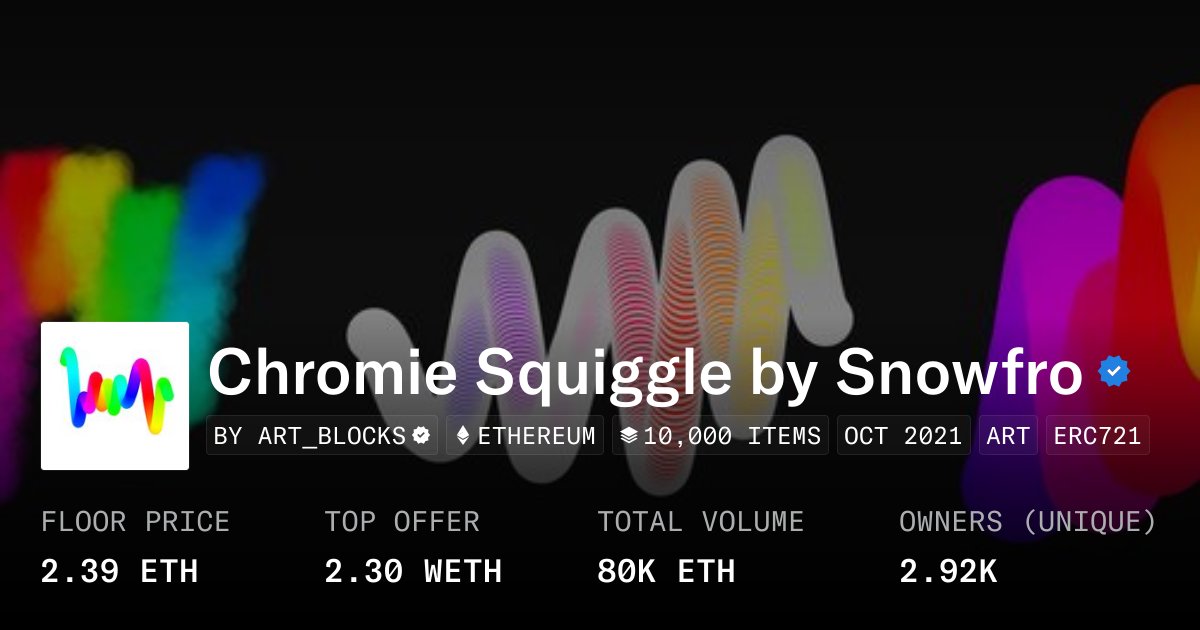
《Chromie Squiggle》
《Chromie Squiggle》是那种最容易被低估的作品:一条线,看起来过于简单,仿佛只是链上生成艺术的测试文件。但正是这种几乎幼稚的简洁,使它成为 Art Blocks 时代最关键的起点之一。它用最少的视觉元素证明,一套参数系统本身就足以构成作品、收藏逻辑和文化符号。
技法上,Squiggle 的重点不在复杂度,而在可变性。线条粗细、色谱、分段、流动方向和动态节奏的有限调整,足以生成稳定而可识别的差异。这里的形式策略很接近极简主义:不是通过堆叠内容取胜,而是通过精确控制少量变量,让结构本身成为审美对象。
从艺术史上说,它连接了光色绘画、系统艺术与数字签名式的作者痕迹。Squiggle 既像一段手势残留,也像一条由代码不断复写的机器笔触,处在“作者表达”与“算法执行”的边界上。这使它成为一种非常纯粹的链上艺术范式:不是再现对象,而是展示生成机制。
理性评价上,Squiggle 的单件视觉复杂度有限,但它作为平台元作品的意义极大。它奠定了 Art Blocks 的想象空间,也说明了为什么链上生成艺术并不依赖壮观图像,而依赖规则、变体和可验证生成之间的关系。
Chromie Squiggle is the kind of work that is easy to underestimate: a single line, apparently too simple, almost like a test file for on-chain generative art. Yet that near-childlike simplicity is precisely what makes it one of the most important starting points of the Art Blocks era. It proves that a parameter system alone can sustain an artwork, a collecting logic, and a cultural symbol.
Technically, the emphasis is not complexity but variability. Limited adjustments to thickness, spectrum, segmentation, direction, and motion are enough to produce stable yet recognizable difference. Its formal strategy is close to minimalism: rather than winning through content accumulation, it makes a small set of controlled variables into the aesthetic event.
Art-historically, the work links color-field sensibility, systems art, and signature-like traces of authorship. The squiggle is both a residual gesture and a machine-written mark, positioned at the boundary between personal expression and algorithmic execution. That makes it a particularly pure paradigm of on-chain art: it does not represent an object, but demonstrates a generative mechanism.
Its single pieces may have limited visual complexity, but its significance as a platform-defining meta-work is enormous. It helped establish the imaginative space of Art Blocks and clarified that on-chain generative art depends less on spectacle than on the relation between rules, variation, and verifiable production.