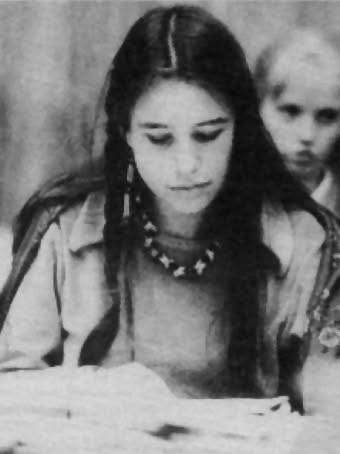
A young woman named MacKenzie Tuttle graduated from Princeton in 1992 with a degree in English. One of her professors was Toni Morrison, who later described her as one of the finest creative writing students she had ever taught.
After graduation, MacKenzie took a job at the New York investment firm D. E. Shaw. There she met a colleague named Jeff Bezos, who had an ambitious idea: selling books on the internet.
She didn’t laugh at the idea.
They married in 1993, and the following year drove across the country to the Seattle area to build what would become Amazon.
In the beginning, there was no global empire.
There was a garage.
MacKenzie handled accounting, wrote business materials, answered customer emails and phone calls, and packed orders alongside Jeff. Like many startups, everyone did whatever needed to be done.
As Amazon grew, MacKenzie stepped away from day-to-day operations to raise their four children while continuing to pursue her own passion for writing.
Her debut novel, The Testing of Luther Albright, won the American Book Award. She later published a second novel and quietly built a respected literary career.
Meanwhile, the story of Amazon became one of the most famous business stories ever told.
Jeff Bezos became one of the world’s most recognizable entrepreneurs.
MacKenzie’s role was rarely part of the public narrative.
She never seemed interested in changing that.
What many people don’t know is that she also knew financial hardship.
Her family filed for bankruptcy while she was still a student, and she has spoken about the kindness of people who helped her through difficult times—acts of generosity she never forgot.
In 2019, after her divorce, MacKenzie Scott received approximately 4% of Amazon’s shares.
Almost immediately, she made a decision that surprised the world.
She signed the Giving Pledge, promising to donate the majority of her wealth during her lifetime.
Then she did something even more unusual.
Instead of building a massive public foundation or attaching her name to buildings, she began giving away billions of dollars through large, unrestricted grants.
Universities.
Food banks.
Housing organizations.
Rural communities.
Women’s health initiatives.
Tribal colleges.
Climate organizations.
Small nonprofits that had never imagined receiving gifts of that size.
Many recipients reportedly thought the phone calls were scams.
They weren’t.
Since 2019, MacKenzie Scott has donated tens of billions of dollars to thousands of organizations, making her one of the most significant philanthropists of the modern era.
Despite giving away enormous sums, her fortune has remained substantial because of Amazon’s continued growth.
The woman who once packed Amazon’s first orders is now helping fund opportunities for millions of people she will probably never meet.
She never asked for buildings in her name.
She never demanded headlines.
Sometimes the greatest legacy isn’t the company you help build.
It’s what you choose to do with the success that follows.
🦋✨ DEBUT CARDIGAN INTERNATIONAL GIVEAWAY ✨🦋 To celebrate the release of our Debut Cardigan
HOW TO ENTER:
1. Follow us
2. Like & retweet
3. Tag friends (each tag = 1 entry)
Can’t wait? Order now at https://t.co/osLefdV6Dj
Ends: May 22 23:59 GMT
A 19-year-old Stevie Nicks on stage with the Fritz Rabyne Memorial Band in 1967. This was Stevie’s very first rock band, joined shortly after she graduated high school. It was here that her legendary partnership with Lindsey Buckingham began, as the group became a staple of the San Francisco psychedelic scene, opening for the likes of Janis Joplin and Jimi Hendrix.
Thomas Rolfe (1615–c.1680) was the only child of Pocahontas and English settler John Rolfe, making him a link between the Powhatan people and the early Virginia colony. Born at his family's plantation in Virginia, he traveled to England as an infant with his parents, but his mother died there in 1617. Too ill to return to Virginia, Thomas was left in the care of relatives and did not reunite with his father again.
He grew up in England under the guardianship of his uncle, Henry Rolfe, and returned to Virginia as a young man around 1635. Once back in the colony, he inherited land from his father and step-grandfather and began establishing himself as both a planter and a man connected to his mother’s Native lineage. In 1641, he even asked permission to visit his Powhatan relatives, including his “aunt and kinsman Opecancanough.”
Thomas later married Jane Poythress, and they had one daughter, Jane Rolfe, whose descendants include notable Americans such as Edith Bolling Galt Wilson and actor Edward Norton. His last known record appears in 1658, and he likely died before 1681. Today, an estimated 100,000 people may descend from him, reflecting his unique place in early American history.
Learn more: https://t.co/RHlFoWM9uu
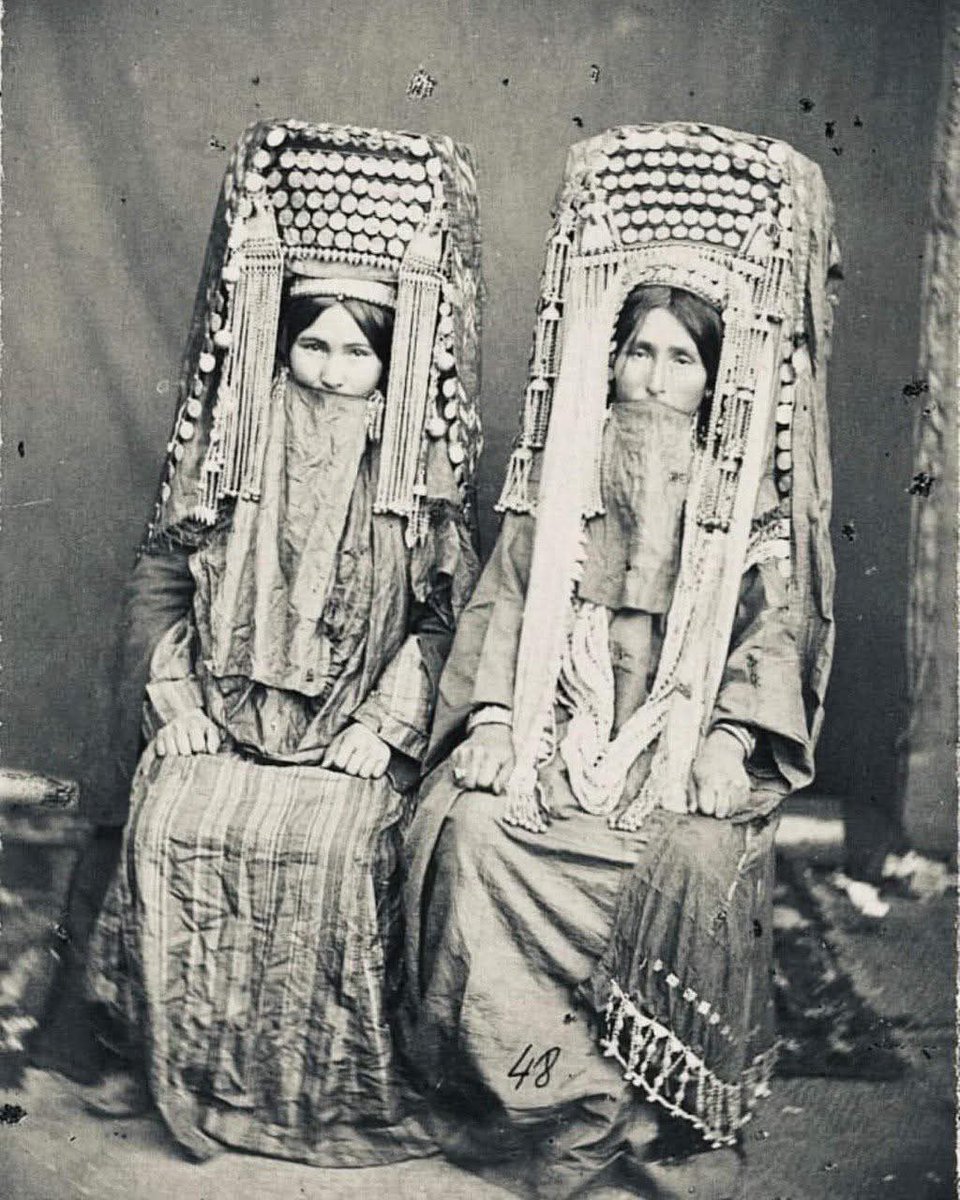
The women in this photograph belong to the Yomut (Yomud) Turkmen—one of the major tribal groups of the Turkmen people—photographed in 1883 near Krasnovodsk, during the final decades of Russian imperial expansion into Central Asia. This was a moment of immense upheaval, when nomadic and semi-nomadic cultures were being documented, regulated, and slowly forced into colonial frameworks that did not reflect their social realities.
Yomut women lived within a pastoral, clan-based society where women’s roles were far more economically and socially significant than many outsiders assumed. They managed households that were also production centers—spinning, weaving, embroidery, felt-making, and textile production were not “domestic hobbies,” but essential economic labor. Yomut carpets, bags, and textiles were traded across vast regions, and women controlled much of this craft knowledge. Their work carried tribal identity, history, and status woven directly into pattern and color.
The clothing in this image is not ornamental excess—it is biography. The towering headdresses (often called gupba or regional variants) and heavy silver adornments signaled marital status, tribal affiliation, family wealth, and protection. Silver was believed to guard against illness and evil spirits, especially for women, whose bodies were seen as powerful and vulnerable thresholds. Coins sewn into garments were both adornment and portable wealth—women literally wore their economic security.
Marriage among the Yomut was negotiated within tribal systems that valued alliances, bridewealth, and fertility, but women were not invisible within these arrangements. Older women, especially mothers-in-law and elder matriarchs, held significant authority inside extended families. Oral tradition, genealogy, and cultural memory were passed primarily through women, making them the custodians of identity in a society without written archives.
This photograph also reflects the colonial gaze. Russian ethnographers often framed Turkmen women as “exotic,” static, or oppressed, freezing them in images meant for imperial catalogs. What the photograph cannot show is movement—women riding horses, managing camps, surviving droughts, war, and forced resettlement. Nor does it show how these women would soon face imposed borders, sedentarization, and the erosion of tribal autonomy under Russian and later Soviet rule.
#drthehistories
@leona32827@fasc1nate He probably couldn't get any words out. He was suffering inside. He hit his breaking point. Makes me sad people go through crap and at their breaking point, they are helpless 😪
“A reliable way to make people believe in falsehoods is frequent repetition, because familiarity is not easily distinguished from truth. Authoritarian institutions and marketers have always known this fact.”
― Daniel Kahneman