This is the very essence of mostly everything. Hence an individual having any malice in heart will not find any peace anywhere, nor in tirtha, nor in ishwara nor in Jyotisa. The very essence of peace is hidden inside the atman.
If someone has atmika shanti and shuddhatma, he/she will find the same in all these actions.
Mumbai is such an equaliser.
Someone I know who grew up with an army of servants (even to walk the dog, hold the bag etc) is returning from Mumbai to the hometown.
Because rent is high, flatmates are not good, everything is far, and it is all really overwhelming.
Real reason- nobody cared about her status there.
-Flatmates gave zero f*cks about her comfort.
-Professors did not know or cared who the father is.
-Money spent on cabs & other things goes from own account. Hurts.
-Car & driver is not available.
Mumbai breaks your ego in pieces. You either go back or fight to make a new identity for yourself. Identity which is free from your birth privileges & past prejudices.
If someone is seeking free consultancy they should genuinely seek the free tools on website. Both of them work in a very good manner if you are really seeking something.
https://t.co/29uGqZh1rp
https://t.co/P7d4nSYY5f
Terrible condition in Pune.
Cutting water supplies at any random time and the timetable isn't being followed.
A dog bites three citizens so far.
Don't know what awaits this year in the monsoon because drainages clog in the first rain itself. 🤷🏻
Mīna signifies places where Devas and Brāhmaṇas reside. It is a Sāttvika Rāśi ruled by Bṛhaspati and is also the Ucca Rāśi of Śukra, another Brahminical planet. Marathi astrologers often describe Mīna with the word पापभिरू, which aptly conveys its inclination to avoid sinful or unrighteous actions. Since this is the Nīca Rāśi of Budha, they lack the shrewdness. They are usually compatible with Karka and Vṛścika.
One who is born a human being is blessed with several fortunes. But the greatest of all these is rendering service to others.
All of us serve our families without the awareness that we are rendering service. I say that in addition to this, we should render whatever service we can to other families not related to us, to our place, country and even other countries of the world. We have a lot of problems, troubles in office, problem for food, domestic worries etc. It should not be thought how we can engage in social service in the midst of our own troubles. By serving others, some way of forgetting our own worries will come up. There is a saying ‘If other person’s child is given milk, one’s own child will grow on its own’. In the same way as a reward for our service to others, God will definitely pull us out of our difficulty. But without thinking of this as a profit and loss matter, we should start doing whatever we can to help others come out of their difficulties. Once a beginning is made, apart from the person benefiting by our service, we will get purity of mind, self-satisfaction and joy and we will do more and more service.
Service has to be rendered not only to our own kind but also for other beings like cattle. In olden days tanks were dug up for the exclusive use of cattle and stone pillars were put up to help the animals rub against such pillars and relieve themselves of itching. Everyday everyone should give a handful of grass or other green fodder to at least one cow. Giving a handful of grass to the cattle is called Go grasam and has been mentioned as a big Dharma in the sasthra. Gradsam means a mouthful. Probably the English word grass has also been derived from this.
Shameless plagiarism by acclaimed hindutone website.
https://t.co/3zkKBRYJBe
The above is a complete copy of my article . The fellow do not understand that the topic they are copying will also bring the same srapa to them, because even plagiarism without giving credits to the original author brings curses.
Namah Shivay 🙏
We're starting a small community initiative called Goodwill Circle.
The idea is simple: people often need help, and many are willing to help, but they rarely find each other at the right time.
Goodwill Circle aims to connect people who need support with those who can offer it, strengthen local communities, and encourage meaningful acts of kindness.
We're currently running a small pilot and would love your feedback and participation.
If you believe that small acts of goodwill can create a stronger community, we'd be happy to have you join us.
Together, let's build a circle where goodwill inspires more goodwill. ❤️
https://t.co/eXIWmYPzS1
प्रणाम पंडित जी, हमारे यहाँ भगवान के इतने पक्के भक्त हुए, सच्चे तांत्रिक हुए, फिर भी हमारा देश और हिन्दू धर्म म्लेच्छ आक्रांताओं, औपनिवेशकों से त्रस्त रहा। अभी भी हिन्दू खतरे में हैं और उनके देवालय भी। फिर क्यों किसी ने भक्ति/तंत्र से इन पर काबू नहीं पाया?
This question seems to route from mere political misinformation and lack of understanding of our true heritage. Bharat has been a land of tapasvī, ṛṣi and powerful tāntrika. However, it was also a land of politically oppressing classes, people who were not afraid of God and who modified our sacred texts to their advantage. This oppression and disgusting behaviour were intact for centuries where some classes were mistreated and were not even given basic human rights. The colonizers and oppressors got this opportunity of division rule because of our own karma. No ṛṣi, tapasvī or tāntrika can change the design of karma. Even mahābalī Hanuman who could have changed the whole rāmāyaṇa single handed just followed the kala and accepted brahmāstra. So this will be a rubbish idea that fate will change and their will be no answer to karma.
As for Hindus are in danger let me update you with some real information. The Hindu population in Bharat till 2011 is 966 million (Data from PEW research center). The population of M was 172 and do not even talk about C because they stand nowhere in this data. As per projections Hindus will cross 1.3 billion in 2050 and M & C would be no where in comparison. As per 2024 data, we have more then 6,50000 temples in India while M stand at 55,000. The actual temples are far more then this figure because some of them belong to private trusts.
So, there is no one in danger. The only danger we have is from our own avarice, our degrading cultural and religious values, dishonesty and cheating. The danger is from the crop of fools who spread misinformation on the name of Dharma and just reap their own benefits by modifying young brains. The dharmic heritage has disappeared from young minds because they see no benefits in following a religion, which was morally disgusting in history. We need to cultivate true dharmā values in youngsters but the base of that is hidden in purity and honesty of income structure. Government persons, politicians and multiple other areas are full of people who believe that cheating is fine in normal daily functions. Things do not work without bribes. Government is laying pathetic taxes and using the money for tamasha instead of real development. The whole country is sold to fools and still everything is been taxed without any actual ground level benefits.
This abnormal income will never allow the young minds to develop a dharmā quality. The belief that money can be earned through any means and still dharma can be followed is deeply rooted in our country. This will not allow any change in future. This is what Kaliyuga is all about.
The Drivel and Litter of Modern Society in the Name of Jyotisa and Vastu
https://t.co/yUCMQzhXgI https://t.co/yUCMQzhXgI
The Drivel and Litter of Modern Society in the Name of Jyotiṣa and Vāstu
Modern society is full of spiritual garbage. Everywhere people are selling quick tricks in the name of jyotiṣa, vāstu, healing and remedies. Some call it mokṣapat (New scam). Some sell single planet jyotiṣa. Some sell nakṣatra jyotiṣa as if one star alone can tell the whole life. Some use click words to catch frightened people. Some vashikaran babas paste posters on dirty walls, electric posts, bus stops and public toilets. Some sell reiki healing, feng shui, pyramids, crystals and many other things which have no real place in classical jyotiṣa or sthāpatya.
The problem is not only that these things are false. The real problem is that they catch people when they are weak. A person suffering in marriage, money, career, health or family will easily fall into these traps. He wants one fast answer. He wants one fast cure. These people know this weakness and they use it. First they create fear, then they sell some object, mantra, yantra, healing, pyramid, vashikaran or secret method.
Classical Jyotiṣa Is Not a Shortcut
Classical jyotiṣa is not like this. It does not work on one planet, one nakṣatra or one fancy word. A chart has lagna, grahas, bhāvas, rāśis, daśā, transit, strength, weakness, yoga, ariṣṭa and many other rules. The result is judged only after seeing the full structure.
No serious text says that one planet alone can decide the whole life. No serious text says that one nakṣatra alone can explain marriage, career, wealth, health and death. These are modern shortcuts made for business.
Classical Sthāpatya Is Not Shopping
२४. श्री शम्बराय नमः / śrī śambarāya namaḥ
the great ācārya bhāskarāya says:
शं सुखं तद्वरं श्रेष्ठं यस्मिन्नस्ति स शंबरः॥ २२ ॥
शंबं वा कुलिशं राति यद्वा सलिलविग्रहः।
that in which the most exalted happiness exists, he is known as śambara; he bestows śamba, or the vajra kiliśa,
{since indra uses this vajra to kill the dāsa śambara to free a king and rescue countless resources being withheld in his 99 fortresses, as illustrated in the ṛgveda; in a similar manner, mahāgaṇapati kills your obstacles and annihilates the dam halting your access to resources,}
or he, whose form is like water {śambara also means the element of water, which has a serene, healing, and pleasant effect on the body}.
अ॒हं पुरो॑ मन्दसा॒नो व्यै॑रं॒ नव॑ सा॒कं न॑व॒तीः शम्ब॑रस्य । श॒त॒त॒मं वे॒श्यं॑ स॒र्वता॑ता॒ दिवो॑दासमतिथि॒ग्वं यदाव॑म् ॥
अहं पुरो मन्दसानो व्यैरं नव साकं नवतीः शम्बरस्य । शततमं वेश्यं सर्वताता दिवोदासमतिथिग्वं यदावम् ॥
— ṛgveda ४.२६.३
🦣 śrī mahāgaṇapati arpaṇam astu.
SAYING 'RAM RAM' SAVES A DEVOTEE
Source- From FB wall of Sri Joby Bishop
One devotee was only one year old when his older brother died. His mother, deeply upset, took her son on a long pilgrimage.
In Jagannath Puri, she laid her small boy at the feet of the murti of Lord Jagannath and offered him to the Lord.
Years passed, and she never told her husband or her son about this incident.
More than fifty years later, her son, who’d become a devotee of Maharajji, was driving his car to work, repeating the name ‘Ram’ to himself while driving.
Suddenly, a truck sped across the intersection and collided with his car, turning it over on its roof. Some bystanders pulled him out of the car. He was completely unhurt, but when he saw the extent of the damage to the car, he went into minor shock. The doctors could find no physical injury.
That evening, Maharajji telephoned him from Sitapur, saying,
“YOU HAD AN ACCIDENT, BUT RECEIVED NO INJURY.”
A few days later, Maharajji came to his home.
In front of the devotee’s mother, Maharajji said,
“YOU HAD AN ACCIDENT.
WHAT WERE YOU DOING AT THE TIME?
YOU WERE SAYING ‘RAM, RAM, RAM’!”
His mother said,
“Maharajji, it’s all your grace, all your blessing.”
Maharajji said,
“NO, NO, IT’S YOUR BLESSING – YOUR ASHIRBAD AS A MOTHER.”
The mother insisted that it was Maharajji’s blessing grace.
At this point, Maharajji said,
“IT’S NEITHER MINE NOR YOURS.
IT IS JAGANNATH-JI’S.
WHEN HE WAS ONE YEAR OLD, YOU GAVE HIM TO JAGANNATH.
YOU PUT HIM AT THE LORD’S FEET, AND SAID, ‘THIS IS YOUR SON.’
ISN’T IT TRUE?”
[-from Keshav Das, ed., “Barefoot in the Heart: Remembering Neem Karoli Baba,” pp. 75-76.]
ॐ ♥ राम राम ♥ ॐ
Jai Jai Jai Neem Karoli Baba
Kripa karahu aavai sadbhava
You unfailingly come to my aid when I chant these lines to you
It is by Your Grace that I remember you
Thank You for dissolving the sufferings of Saṃsāra
In the Love and Grace that is your Be-ing
Om Guru Om
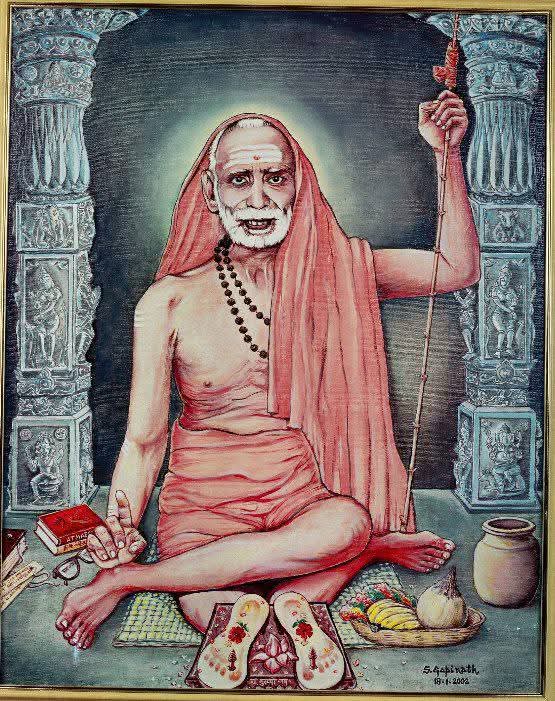
Experiences with Maha Periyava: Periyava’s insight
When Periyava camped for long at the Kolla Chatram in Kanchipuram, He would bathe every day in the tank at the Sri Kacchabeshwara temple. The Puranas say that taking a holy dip in that tank on the Mondays of the Karthika month gives one great merit. So, on one such day, a Karthika Somavara (during 16 Nov to 15 Dec on a Monday), Periyava bathed in the temple tank and went into the temple for darshan of the deity. A devotee from Chennai who had joined the retinue of devotees walking with Periyava, prayed that he may be commanded to leave so that he could visit the Ekambaranatha temple.
“Today is the Monday of the month of Karthika. Siva-darshan on such a day gives infinite merit. There are many Siva-temples in Kanchipuram. Visit as many as possible. I am aging. It is not possible for me to visit all the temples. The most ancient temple in this prithvi kshetra is the Sri Kacchabeshwara temple. They say that it was only after this temple was constructed and consecrated that the Ekambareshwara temple was built. This city, is known by many names such as Kacchimudur, Kacchi Ekambaram and so on, all of which have been derived from the name of the deity Kacchabeshwara. It is said that ‘Kacchi’ became Kanchi in Sanskrit.
The devotee from Chennai was a very learned man. He was amazed at Periyava’s knowledge of such historical facts. The close attendants of course know that Periyava knew not only the history of Kanchi but indeed of the whole world.
Narrated by SriMatham Balu Mama
Source: Maha Periyaval Darisana Anubhavangal Vol 3
Compiled by Jagadguru Sri Maha Periyava - Kanchi Paramacharya/Fb
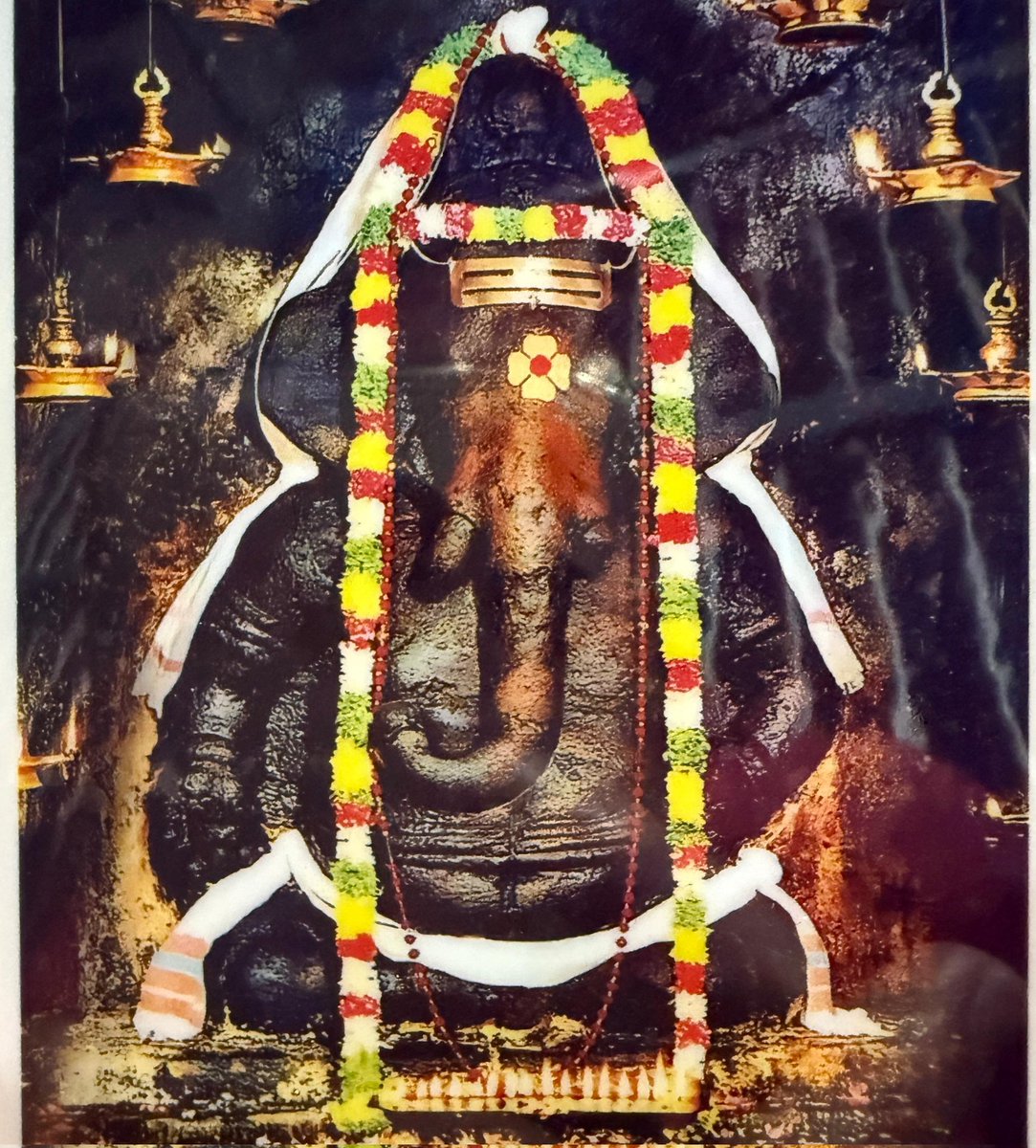
Jai shri ganesh🙏 Ketu in magha is an extremely auspicious time for ganesha worship. Utilise this opportunity to make some donations to pillayarpathi vinayak temple. The temple needs some funds for renovation of gopuram and maintenance of the chariot for the deities. Interested people can make donations. Sharing the temple UPI id in the second tweet
Adhik Maas 2026 - Complete Vedic Guide to Purushottama Māsa
The Sacred Thirteenth Month
Adhika Māsasya Mahimā :
The Glory of the Month
In the majestic architecture of the Hindu lunisolar calendar : one of the most sophisticated time-keeping systems ever devised, there exists a phenomenon of rare spiritual grandeur: the Adhika Māsa, or intercalary month.
Once approximately every 32 to 33 months, the cosmos inserts a thirteenth lunar month into the solar framework, not merely as a calendrical correction, but as a sacred portal , a divine interval sanctified by Lord Viṣṇu Himself under His supreme form as Puruṣottama.
In 2026, this extraordinary month arrives as Adhika Jyeṣṭha Māsa , a doubling of the already powerful Jyeṣṭha lunar month, occurring from 17 May to 15 June 2026 (Vikrama Saṃvat 2083, Śaka 1948).
The year 2026 thus becomes a trayodaśa-māsa varṣa , a thirteen-month year ,an occurrence that carries deep significance in Jyotiṣa, Purāṇic theology, and day-to-day spiritual practice.
Ādi Tithi Commencement:
Begins on 17 May 2026, which is Āditvāra (Sunday) during the Adhika Jyeṣṭha Kṛṣṇa Pratipadā.
Antya Tithi Conclusion: Ends on 15 June 2026, falling on Somavāra (Monday) during the Adhika Jyeṣṭha Śukla Pūrṇimā.
Lord Viṣṇu in Padma Purāṇa himself said : "I Myself am the Adhika Māsa, the destroyer of the sins of worlds. Acts performed in My month bear inexhaustible fruit."
Unlike ordinary months reserved for celebrations, beginnings, and auspicious worldly endeavours, the Adhika Māsa is fundamentally inward-facing.
The Vedic tradition prescribes it as a time for tapas (austerity), dāna (charitable giving), japa (mantra recitation), satsaṅga (spiritual discourse), and śāstra pāṭha (sacred text study).
Major auspicious ceremonies i.e vivāha (marriages), gṛha praveśa (housewarming), and nāmkaraṇa (naming ceremonies) are traditionally deferred in this month.
Purāṇic Significance
Mythology & Scriptural Authority
Śāstrokta Mahimā : Glory According to the Śāstras
The mythological narrative of the Adhika Māsa is primarily preserved in the Padma Purāṇa, Skanda Purāṇa, and Bhāviṣyottara Purāṇa.
When the twelve lunar months were first instituted, each was assigned a presiding deity.
But the intercalary "extra" month had no god to claim it, no festivals to celebrate it, and no ritual framework to dignify it.
It was called Mala Māsa (the impure month) or Malimmucha , the month of dross.
The abandoned month approached Lord Viṣṇu in utter desolation. Moved by divine compassion (karuṇā), Viṣṇu declared:
"This month is Mine. I take it under My protection. Its name shall henceforth be #Puruṣottama #Māsa , the month of the Supreme Being."
He further proclaimed that merit accumulated in this single month equals the merit of all twelve regular months combined, and that the acts of austerity, charity, and devotion performed within it bear akṣaya phala, inexhaustible, and imperishable fruit.
"Whatever auspicious karma one performs in the Puruṣottama month, O Brahman, becomes imperishable — it is never destroyed."
- Padma Purana
The Purāṇas further cite the story of King Nāhuṣa, who through the diligent observance of #Mal #Māsa Vrata was freed from all karmic bondage and ascended to the throne of Indra.
Similarly, devotees of extraordinary aspiration have used this month as a spiritual catapult , compressing years of sādhanā merit into a single sacred interval.
The month of Jyeṣṭha itself , whose presiding deity is Indra and whose ruling nakṣatra is #Jyeṣṭhā (associated with Indra) ,carries themes of sovereignty, elder honour, and the rectification of power.
When this month becomes Adhika (doubled), these themes are amplified and turned inward: the sovereignty of the Self, honouring ancestral lineages, and rectifying karmic debts.
#Adhika #mass #astrology
RAMANA'S SABARI – SURI NAGAMMA
Suri Nagamma (1902-1980) was a staunch devotee of Bhagavan Sri Ramana Maharshi. She belonged to Vijayawada in Andhra Pradesh). Nagamma came to Tiruvannamalai in 1941 and made her home here. She is well-known for her 273 letters in Telugu, written during the years1945-1950 at the behest of her elder brother, who was a bank executive and a devotee of Bhagavan. These letters faithfully record discussions the devotees and visitors had with Bhagavan and various happenings at the Ramanasramam.
Besides ‘Letters from Sri Ramanasramam’, Nagamma also wrote, ‘My Life at Sri Ramanasramam’ and ‘Letters from and Recollections of Sri Ramanasramam’.
The depth of Suri Nagamma's devotion was such that the veteran devotee S.Doraiswamy Iyer called her as 'Sabari', the Ramayana character who feeds Rama with berries.
Suri Nagamma’s spiritual saga here.
……………………………………
Suri Nagamma’s father passed away when she was four years old, and her mother, when she was ten. When Nagamma was eleven years old, she was married. A year later her husband passed away. Left with no support except her brothers and a few other relatives, Nagamma found solace in religious discourses, devotional songs and other similar matters.
Nagamma learnt to read and write with the help of her elders. She was particularly attracted to Pothana’s Bhagavatam. One day she intensely prayed that she should have a Siddha Pursha like Sage Kapila for a guru. At the end of this prayer she wept and feeling tired, fell asleep. During the sleep, she had the vision of a sage seated in padmasana and facing south with a mudra like Lord Dakshinamurti. There was a sacred aura around him. That brilliant figure sent a thrill through her body. Whenever Nagamma was reminded of that vision, she prayed that she should have the privilege of serving such a sage.
In 1941, Nagamma’s elder brother travelled on a pilgrimage to the South. He visited Tiruvannamalai also and had Bhagavan Sri Ramana Maharshi’s darshan. It occurred to him that Nagamma would be greatly benefited by having Bhagavan’s darshan. As Nagamma’s cousin was at Ramanasramam after her husband’s death, her brother decided to send her there.
Nagamma entered the darshan hall, bowed before Bhagavan and sat with her head bent in the place reserved for women. After about ten minutes she lifted her head and found Bhagavan intently looking at her. His compassionate look calmed Nagamma’s mind, but she could not withstand the intensity of that look and therefore, she bent her head again. Nagamma was deeply impressed by Bhagavan and found in him a resemblance to the siddha purusha who had once came in her dream. She also saw in Bhagavan all the attributes of a Jivanmukta as described in the Yoga Vasishtam and other Vedantic books. As she observed Bhagavan every day, Nagamma felt convinced that he was the person who could dispel her ignorance and that she should surrender herself unto him.
One particular day, Suri Nagamma summoned courage and wrote eight verses on Saranagati and, being shy to give them to Bhagavan personally, gave them to his attendant Madhava Swami. Bhagavan read the verses and said to Madhava Swami, “See, her name is Nagamma. These are verses on Saranagati. Paste them in the book.” Nagamma was extremely thrilled. It was then that she felt that she had found her true home and decided to stay in Tiruvannamalai permanently.
Bhagavan’s grace began to flow towards Nagamma steadily watering her parched heart. She began her spiritual sadhana by following Bhagavan’s Self-enquiry. The peace of mind and contentment that had eluded her thus far was now being vouchsafed to her in Bhagavan’s powerful presence. The tendency to write poems, which was dormant in Nagamma, surfaced in the year 1943. She composed songs describing Bhagavan’s life, and these were sung before him.
While walking on the hill one afternoon, Bhagavan said to his attendant Rangaswami, “See, people write saying that I am this
Experiences with Maha Periyava: Who recorded the Vishnu Sahasranamam?
Once, way back in the 1940's or 50's, someone was interviewing Sri Maha Periyava. That gentleman recorded the interview using a tape recorder. Periyava then posed a question,
“Does anyone know which is the oldest known tape recorder?”
Nobody was able to answer. Then Sri Maha Periyava asked another question,
“How did Vishnu Sahasranamam come to us?”
Someone said Bheeshma Pitamah gave it to us.
All agreed. Then Sri Maha Periyava posed another question,
“When all were listening to Bheeshma on the battlefield, who took the notes at Kurukshetra?”
Again silence.
Sri Maha Periyava explained…
“When Bheeshma Pitamah was glorifying Krishna with Sahasranamam, everyone was looking at him including Sri Krishna and the sage, Veda Vyasa. After he finished the 1000 Namas, all opened their eyes. The first to react was Yudhistirar. He said, ‘Pitamah has chanted 1000 glorious names of Vasudeva. All of us listened to it but none of us have noted it down. The sequence is lost'. Then all turned to Sri Krishna and asked for His help. As usual He said, ‘I was also listening like the rest of you. What can we do?’
Then all beseeched Sri Krishna to help them recover the precious rendition. Then Sri Krishna said, ‘It can only be done by Sahadeva and Vyasa will write it down.’
Everyone wanted to know how Sahadeva could do it. Krishna replied, ‘Sahadeva is the only one amongst us wearing the Shuddha Sphatika. If he prays to Shiva and does dhyanam, he can convert the Sphatika into waves of sound and Vyasa can write it down. Then both Sahadeva and Vyasa sat in the same place under Bheeshma Pitamah, where he had recited the Vishnu Sahasranamam. Sahadeva started doing the dhyanam to recover the sound waves from the Sphatika.
The nature of Sphatika is that it will capture sounds in a calm environment which can be got back with proper dhyanam of Maheswara who is Swethambara and Sphatika. So, the world’s earliest tape recorder is this Sphatika which gave us the wonderful Vishnu Sahasranamam. When Sri Maha Periyava explained this all were stunned… From the Sphatika recording, the grantha came to us through Veda Vyasa.
Compiled by Jagadguru Sri Maha Periyava - Kanchi Paramacharya/Fb
Experiences with Maha Periyava: “Everything Will Happen As Per Your Wish”
Sri Maha Periyava is the incarnation of Lord Eswara Himself, who has come down in the form of a sage with the sarva lakshana of Sukhabrahma Rishi to bless us all. Though He never attempted to display His spiritual powers explicitly, innumerable miracles stand as a testimony for the power of His blessings to save the world.
Such a miracle was witnessed at an event happened at Tirupathi Kshetram. It happened about fifty years ago. It is a common practice for the people of Tirupathi Tirumala Devasthanam to bring changes in the temple, to facilitate easy darshan to the devotees considering the ever increasing number.
Likewise once the Public Works Department and the Devasthanam members had planned for such a change. It was customary for the people to go into the Sanctum Sanctorum and come out through the same way as they went in. Instead, if the side walls of the Artha Mandapa was removed and a way made through it, people could move to their right and left sides freely, which would reduce their difficulties in having darshan and would save time too. This was the plan to be executed by them.
This plan was discussed in detail and a decision was taken to purchase a cutting machine from America at the cost of Rupees forty lakhs to execute it.
Listening to all this, Sri Ganapathy Sthapathy who was present there was thoroughly upset. His face reflected the turmoil in his heart. A minister present in the hall noticed it.
“Why is Sthapathy so silent? Is this arrangement okay with you?” asked the minister to the Sthapathy himself.
“Shall I share my views openly?” asked the Sthapathy for which the minister nodded his agreement.
The Sthapathy began to express his view.”Expert architects with a sound knowledge in Agama Sastras have constructed this temple thousands of years ago, in accordance with temple Agamas. The Artha Mandapa situated next to the Sanctum Sanctoriam is extremely sacred. It won’t be proper to demolish the side walls to make way. If it is done that way, there is a chance of the residing deity Sri Venkatachalapathy’s sanctity and power being affected. Considering all this, I request you to stop this demolishing plan,” he expressed his ideas without any fear.
All the members supported the plan unanimously and therefore the Sthapathy’s view wasn’t taken into consideration. The plan was unanimously agreed upon and signatures were sought from all the members to make it official. The Sthapathy had to yield to their demand out of compulsion and had to sign too.
From then on the Sthapathy’s peace of mind was totally lost. He left the place with a heavy heart. His mind was agonising over a plan to stop such a misfortunate incident from happening.
At this stage he realised that no one except the Eswara Incarnate, Sri Maha Periyava could help him. The Mahan was camping at a place called Karvetu Nagar. The Sthapathy ran to Him with the realisation that Sri Periyava was the only leading light that could show him the path.
It was early in the morning when he reached Karvetu Nagar. Tears were streaming down his face when he met Periyava with a heavy heart full of sorrow.
It was so soothing for the Sthapathy when Periyava gestured like drawing a namam on His forehead and asked,”Are you coming from there?” (meaning Tirupathi)
“Yes”, said the Sthapathy and was about to pour his heart to Periyava but He stopped him gesturing with His hand.
“No need to say anything now. Go and eat something first.” If there is something better than mother’s love and care, where else can one get it except Periyava? It was as if the Mother of Love could see through the fact that the Sthapathy was suffering without taking anything for the past two days.
Sri Periyava called a Mutt helper. “Take him to any hotel that is open now and ask them to feed him to his full stomach,” He instructed and sent him along.
Only one hotel was open at that time and when the Mutt’s person


![Balaganpathi's tweet photo. SAYING 'RAM RAM' SAVES A DEVOTEE
Source- From FB wall of Sri Joby Bishop
One devotee was only one year old when his older brother died. His mother, deeply upset, took her son on a long pilgrimage.
In Jagannath Puri, she laid her small boy at the feet of the murti of Lord Jagannath and offered him to the Lord.
Years passed, and she never told her husband or her son about this incident.
More than fifty years later, her son, who’d become a devotee of Maharajji, was driving his car to work, repeating the name ‘Ram’ to himself while driving.
Suddenly, a truck sped across the intersection and collided with his car, turning it over on its roof. Some bystanders pulled him out of the car. He was completely unhurt, but when he saw the extent of the damage to the car, he went into minor shock. The doctors could find no physical injury.
That evening, Maharajji telephoned him from Sitapur, saying,
“YOU HAD AN ACCIDENT, BUT RECEIVED NO INJURY.”
A few days later, Maharajji came to his home.
In front of the devotee’s mother, Maharajji said,
“YOU HAD AN ACCIDENT.
WHAT WERE YOU DOING AT THE TIME?
YOU WERE SAYING ‘RAM, RAM, RAM’!”
His mother said,
“Maharajji, it’s all your grace, all your blessing.”
Maharajji said,
“NO, NO, IT’S YOUR BLESSING – YOUR ASHIRBAD AS A MOTHER.”
The mother insisted that it was Maharajji’s blessing grace.
At this point, Maharajji said,
“IT’S NEITHER MINE NOR YOURS.
IT IS JAGANNATH-JI’S.
WHEN HE WAS ONE YEAR OLD, YOU GAVE HIM TO JAGANNATH.
YOU PUT HIM AT THE LORD’S FEET, AND SAID, ‘THIS IS YOUR SON.’
ISN’T IT TRUE?”
[-from Keshav Das, ed., “Barefoot in the Heart: Remembering Neem Karoli Baba,” pp. 75-76.]
ॐ ♥ राम राम ♥ ॐ
Jai Jai Jai Neem Karoli Baba
Kripa karahu aavai sadbhava
You unfailingly come to my aid when I chant these lines to you
It is by Your Grace that I remember you
Thank You for dissolving the sufferings of Saṃsāra
In the Love and Grace that is your Be-ing
Om Guru Om](https://pbs.twimg.com/media/HJsg5IvbAAALQRJ.jpg)