What does The Telegraph think of DEEP's mission to Make Humans Aquatic?
Read its coverage of our subsea habitat and the progress we've made to unlocking the ocean.
#DEEP#Telegraph
๐คฟ From later this year, dive teams will be training for missions in subsea habitats, which will rest between 50 and 200 metres down in seas around the world.
But rather than just being a Jules Verne-inspired fantasy to allure the ultra-rich, it could actually have multiple benefits for human health and the world ๐
https://t.co/LeuXJLAWL7
๐คฟ From later this year, dive teams will be training for missions in subsea habitats, which will rest between 50 and 200 metres down in seas around the world.
But rather than just being a Jules Verne-inspired fantasy to allure the ultra-rich, it could actually have multiple benefits for human health and the world ๐
https://t.co/LeuXJLAWL7
The ocean has distinct layers. One of the most fascinating and important is the Mesophotic Zone, where some light still penetrates allowing for biodiversity.
But it's also known as the "Blindspot Zone" because of how challenging it is for humans to explore - too deep for surface diving to be efficient, too shallow for submersibles to be cost-effective.
Luckily, subsea human habitats allow for the sustained exploration and observation of this critical zone.
#DEEP #BlindspotZone #OceanExploration
Fun fact: subsea human habitats aren't new. They've been around since the '60s. But it's been some time since serious innovation took place in undersea living. Vanguard, our pilot habitat, is helping move that legacy forward.
Roger Garcia, Director of Habitat Operations at DEEP, has spent close to 100 days living in an underwater habitat. Here he is explaining what it's like.
#DEEP #Vanguard #Aquanaut
2025 at DEEP Campus has flown by.
We're excited about getting our new saturation diving training system up and running in the water space next year. The view will look quite different!
#DEEP#DEEPCampus#OceanExploration
As Avatar: Fire and Ash hits cinemas today, a shout out to DEEP's Kirk Krack, Human Performance Dive Lead.
Kirk trained the cast and crew in breath-hold diving for both Avatar: Way of Water and Avatar: Fire and Ash.
Here he is talking about a breakthrough experience Bailey Bass had when training for the role.
#DEEP #Avatar #BaileyBass
Ever heard the term 'aquanaut'?
Kirk Krack, Human Performance Dive Lead at DEEP, explains what it means to be an aquanaut and what excites him most about Vanguard, our pilot subsea human habitat ๐คฟ
#DEEP#OceanExploration#Aquanaut
Roger Garcia spent 23 years working with underwater habitats before joining DEEP as our Director of Habitat Operations.
Following the unveiling of Vanguard, our first pilot subsea habitat, we asked him to share what his role means and why he's so excited about a new era of subsea living.
#DEEP #OceanTechnology #Vanguard
It covers most of Earth's surface, regulates the global climate, and generates half the oxygen we breathe. But how much of the ocean has been explored?
Here's why it's challenging to explore the ocean and the ways humans can access it.
Read more: https://t.co/fgTaRRz7jz
#DEEP #OceanExploration
Sharing a magical moment from one of Phil Shortโs most memorable dives ๐คฟ
As part of a project to locate the WWII shipwreck of Karlsruhe, Phil and his diving partners descended from a Diving Support Vessel (DSV) to 95 meters deep in the Baltic Sea.
Hereโs Phil at the bow cutting away a trawl net to reveal the brass letters of the shipโs name to positively identify the wreck. 40 minutes at the wreck in 4 degrees Celsius required 3.5 hours of in-water decompression.
#DEEP #OceanExploration #Karlsruhe #WWII
Ever wondered what it would be like to live underwater?
Kirk Krack, Human Performance Diver Lead at DEEP, gives a tour of Vanguard, our pilot subsea human habitat, where crews of four will live for seven or more days.
#DEEP#Vanguard#OceanExploration
Day in the life: Episode two โ๏ธ
Norman Smith is DEEPโs Chief Technology Officer. Heโs engineered components for spaceflight and now heโs building and testing subsea human habitats. But what does a day in his life look like?
Bonus kitten content included.
#DEEP #OceanExploration #DayInTheLife
"For me, the real surprise is how comfortable they made this thing."
What did the next generation of explorers make of Vanguard, DEEP's subsea human habitat?
While unveiling Vanguard in Miami, Florida last month, we invited young students to see the future of underwater living.
Here's what they had to say.
#DEEP #OceanExploration #Vanguard
We're back with Divers React ๐
In this episode, DEEP's Phil Short and Matt Dixon react to underwater psychological thriller, Sphere (1998). Watch to the end to see what they rate the diving realism out of ten.
Have a movie you want them to react to? Comment your suggestion.
#DEEP #OceanExploration #DiversReact
A week ago we unveiled Vanguard, DEEP's pilot subsea human habitat, in Miami, Florida.
Here's a closer look at the habitat's exterior and interior with Norman Smith, DEEP's Chief Technology Officer.
#DEEP#OceanExploration#Vanguard
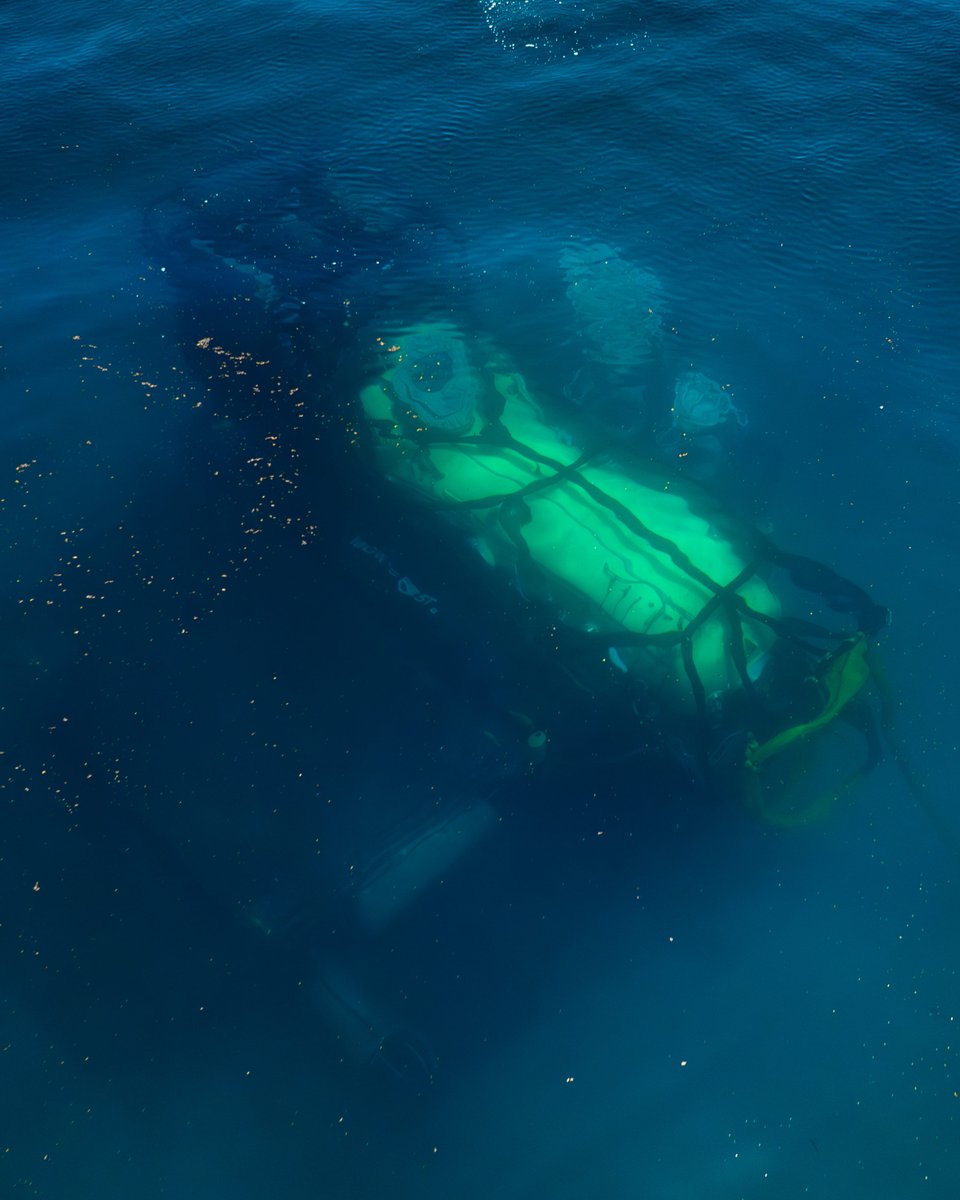
You might have seen Vanguard on dry land, but have you seen it in the environment it's designed for?
Crew will access the habitat by diving down and entering through its moon pool. Vanguard is rated to a depth of 50m, but will be shallower in its first deployment.
Let's take a dive to see what Vanguard will look like on the seafloor.
#DEEP #OceanExploration #Vanguard
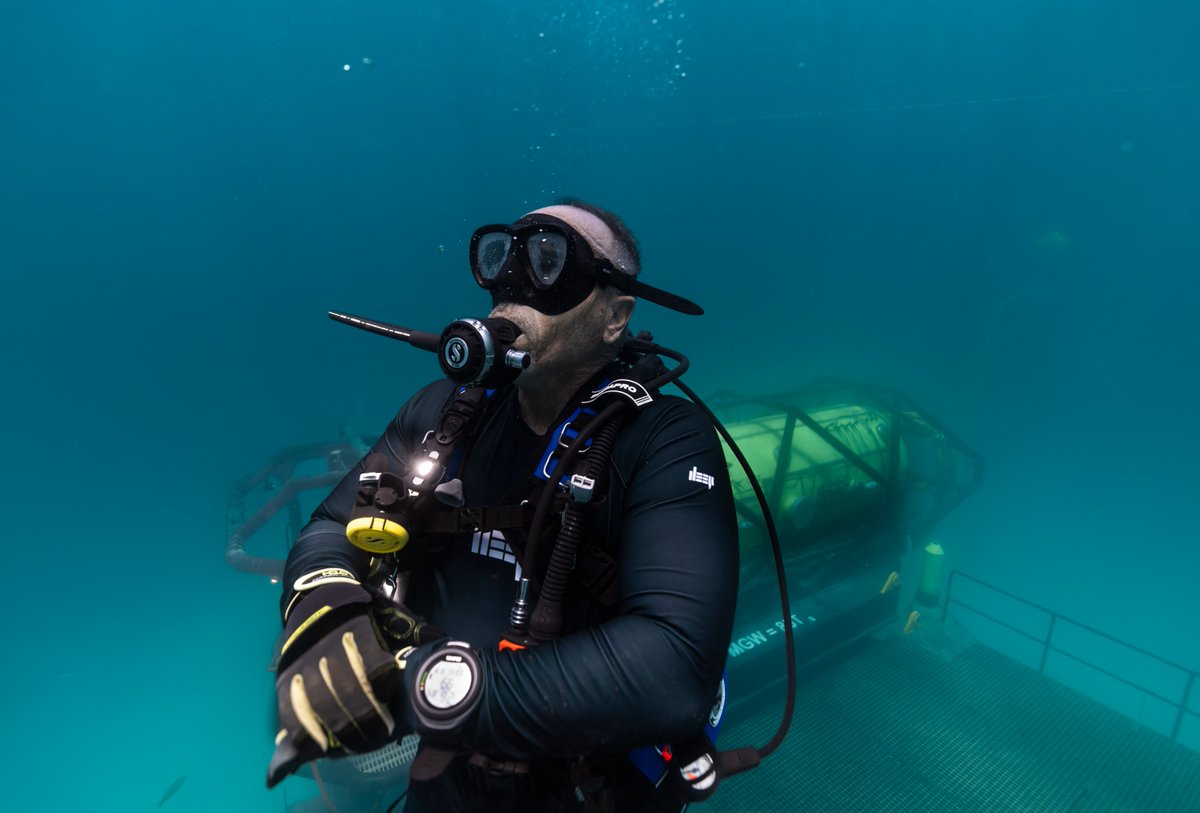
With traditional surface diving techniques, we're limited to how long we can spend exploring and researching underwater (some dives can be limited to as little as 30-60 minutes). Saturation is an important concept that underpins our mission to make humans aquatic. But what exactly is saturation diving? Phil Short, Research Diving and Training Lead at DEEP, answers this in his latest blog.
Read it here: https://t.co/XB60JIBaVH
#DEEP #CommercialDiving #SaturationDiving
Last week, members of DEEPโs team attended the annual Sub Operators Group (SOG) meeting in Tenerife โ a key gathering bringing together a diverse cross-section of the submersible industry, from manufacturers and classification bodies to operators.
Held ahead of the World Submarine Organization (WSO) annual meeting, SOG provides an invaluable forum for sharing operational experiences and lessons learned, strengthening safety standards across the global submersible community.
As participants in these annual exercises, DEEP is proud to contribute to these discussions and ensure our work continues to support a united and safety-focused industry.
Key takeaway: Continued collaboration through events like SOG and WSO is essential to maintaining โ and advancing โ the already robust safety standards of our industry.
#Submersibles #OceanTechnology #Safety #Collaboration #DEEP #SOG