In a Telangana town, a bull comes to a dosa stall each morning for a snack.
The stall owner, the bull's friend, makes him two dosas with no-spice potato masala. The bull waits patiently until they are done.
After he fan cools the dosas he feeds them to his friend.
This routine has been on for years.
@Rothmus Here is the proof. Everything we have socialized has no price discovery. Most people will wave it away is a supply/demand issue, but this is Road to Serfdom in a single chart.
As a young socialist, Hayek read Ludwig von Mises’ 1920 paper “Economic Calculation in the Socialist Commonwealth.”
Mises showed that socialist central planning isn’t merely inefficient, it’s impossible.
Without private property and genuine market prices, planners lack any rational way to allocate scarce resources or determine real costs and needs.
Even Oskar Lange, a leading socialist in the calculation debate, effectively conceded the point.
While he promoted “market socialism” with trial-and-error pricing by a central board, real-world socialist planners in Eastern Europe quietly relied on world capitalist market prices as a guide.
Without external free-market price signals, pure socialism would be economically blind and coordination would collapse.
Mises went further, arguing that interventionism, the “middle way” of government meddling, is inherently unstable.
Each intervention creates problems that invite more interventions, eventually leading to full socialization.
Price controls cause shortages, subsidies distort production, and the cycle continues until the economy is fully planned.
The lesson is clear.
Rational economics requires genuine market prices emerging from voluntary exchange and private property.
Half-measures don’t stabilize the system. They accelerate the drift into central planning.
The Austrian School understood this decades before the collapse of the Soviet bloc proved it in practice.
Imagine you pay out of your pocket, your life's savings, to earn a roof over your head and your family (add to that, high maintenance charges), and then this is what you get. What a shame!
If a factory accident = FIR on the promoter, then..
Train accident → FIR on the Railway Minister?
Air crash → FIR on aviation authorities?
Pothole death → FIR on the Municipal Commissioner?
Accountability must be consistent , not selective.
“Bro, we feed dogs so they don’t become aggressive and bite people.”
That’s not how canine behavior works.
Dogs have core behavioral needs: physical activity, mental stimulation, social interaction, and instinct-driven behaviors like exploring, sniffing, and foraging. When these needs aren’t met, theor energy gets redirected into problem behaviors such as barking, chasing, restlessness, and territorial aggression.
Earlier, these needs were naturally fulfilled. Dogs had to roam, search, and expend energy to find food, which regulated both their activity and behavior. You’ve replaced that with easy, concentrated feeding. The result isn’t calmer dogs, but dogs with unmet behavioral drives that now express themselves through chasing, barking, and guarding.
Feeding points don’t pacify dogs; they create territorial clusters, a well-known trigger for aggression and bite incidents.
And the bigger issue is the feeders' complete dismissal of human safety. Take this person, so convinced of his own “compassion” that he dumps food near a busy highway, where packs form and put drivers at risk. Try reasoning with him, and instead of showing compassion to your concerns, this compassionate man will come back with his NGO friends and threaten you.
Legislators to get 3 IPL passes and 2 International Match Passes each!
I say, why just this - they should also get a row each at every concert, cinema with popcorn
How about a table at every restaurant, access to sneaker drops and allotment to IPOs too?
India Chased Multibagger Dreams; Real Economy Paid the Price
1. Economic Survey flagged dangers of "over-financialization"
2. 82% youth invest on finfluencer tips (CFA Report)
3. Industry Capex down 26% YoY; Family Offices ranked 3rd globally in non-core deal volume
INSIGHTS:
Economic Survey 2024-25: Warning Drowned in Market Euphoria
a. Survey’s Chapter 2 Title itself warned: “The Cart Is Running Before the Horse” (“Cart” is the financial markets; “Horse” is the real economy.)
b. Tabled in Parliament 14 months ago (31 Jan, 2025), the Survey stated: “Uncontrolled financial sector growth comes with a cost to the real economy. India should ensure a gradual and orderly development of its financial markets.”
c. “When the economy reaches a state of over-finance, the financial sector competes with the real sector for resources (such as skilled labour and capital investments).”
d. “Financial engineering creates complex products whose risks are not known to the average consumer. These products are designed in a way that lenders have no “skin in the game” (no risk)."
e. “Critical Risk”: “Dominance of financial markets and asset price considerations may overly influence public policy, including regulatory policy.”
It means, the whole system promotes stock market as the nation’s growth engine, while the “horse” (real economy) gets left behind.
Private Sector Focus: Promoter Selling, IPOs (OFS), Rise of Family Offices
a. Economic Survey 2025-26 (29 Jan, 2026): “Indian private sector is historically risk-averse, comfortable with technology import & licensing, and has failed to step up the primary engine of R&D.”
b. “In absence of innovation, India risks remaining a “service provider” to the developed world, vulnerable to technology denials and supply chain shocks."
c. Private Sector Capex: Despite record corporate profits, Capex in FY26 was projected to dip 26% YoY (₹6.56T in FY25 to ₹4.89T in FY26). Where is the promoter interest? (Read next point.)
d. PwC Report (Dec 2025): Family Offices in India are rapidly moving into investments outside their core businesses. NexGen of India’s family-controlled empires is “taking a leaf” from global private equity and VC playbook.
e. Indian Family Offices have grown from 45 in 2018 to 300 in 2024 (during years of market boom). Indian Family Offices now rank third globally in annual VC deal volume, behind only the US and the UK.
f. India added 3,000+ new UHNIs (ultra-high net worth individuals) in just one year (thanks to the market boom), creating a deeper pool of “sophisticated investors” outside their core businesses.” (Hurun Wealth Report)
g. Chief Economic Advisor Nageswaran (Nov 25, 2025): “IPOs in India have become exit vehicles for early investors, rather than means of capital investing.” In Apr-Sept 2025 quarter, 55 Indian IPOs raised ₹65K crores. Most of it was OFS. (Buyers were Indian mutual funds and retail.)
Indian Youth: YOLO Trading
a. The Wall Street Journal recently used a phrase: “You Only Live Once” (YOLO trading). It is leading young people to treat markets like a casino. They haven’t seen that stocks also go down.
b. India’s youth have been losing their family savings in F&O trading and chasing momentum stocks. SEBI Survey 2025 showed that 91% traders lost money in F&O. 76% of these participants were “Low Income” traders (annual income below ₹5 lakh).
The system did not educate them, but encouraged them with non-stop T20 World Cup ads featuring celebrities.
c. CFA Institute Survey (Mar 2025) showed India has 3.5 million social media “finfluencers” (financial influencrs). Over 82% of the followers of these finfluencers made investments based on their advice.
d. Average finfluencer age is 31 years, with 60% under 29. Only 2% are SEBI-registered. 59% have commercial partnerships or sponsorships (vested interest). 63% fail to disclose these financial affiliations.
91% are on YouTube; 64% on Instagram; 61% on Facebook. (SEBI Investor Report)
e. CMIE Data: Declining Labour Force Participation Rate (below 40%) indicates many youth have dropped out of employment activity. They are not even actively looking for jobs (LFPR means that).
One must also remember trading activity occurs between 9:15 am and 3:30 pm on weekdays, which are peak hours for work, apprenticeship, and vocational colleges.
f. Nithin Kamath (Zerodha) in 2024: “A whole generation of people were sitting on the fence and thinking whether they should trade or not trade. They have all jumped in.”
ENDPIECE: Lottery-ization of India
“How many of you want to be rich?” Hundreds of hands shoot up at a packed conference hall in Bengaluru. The attendees are responding to Chandan Taparia, head of derivatives research at Motilal Oswal.
“Friends, if you follow this (pointing to technical charts on the screen), trust me, you won’t lose.” He continues: If you win, you can rule the world.”
Hoping to “rule the world,” Anand, a 23-year old who travelled 300 miles to attend the Bengaluru conference, said: “I’m a poor person. But I have a big dream for my life.” – Quoting from Financial Times (July 18, 2024)
@arabicatrader
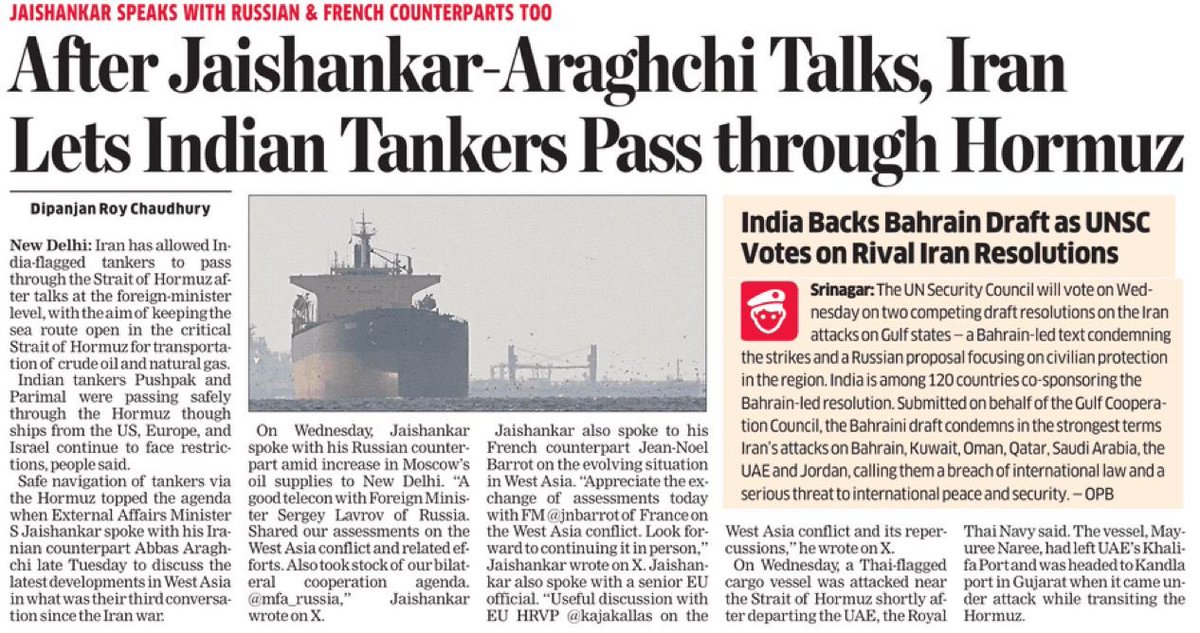
This is what India First looks like. Not slogan. Not studio patriotism. Not hashtag diplomacy. When the world’s most critical energy corridor is under stress, PM Narendra Modi government’s balanced statecraft has helped protect India’s oil lifeline while others were busy demanding theatrical posturing.
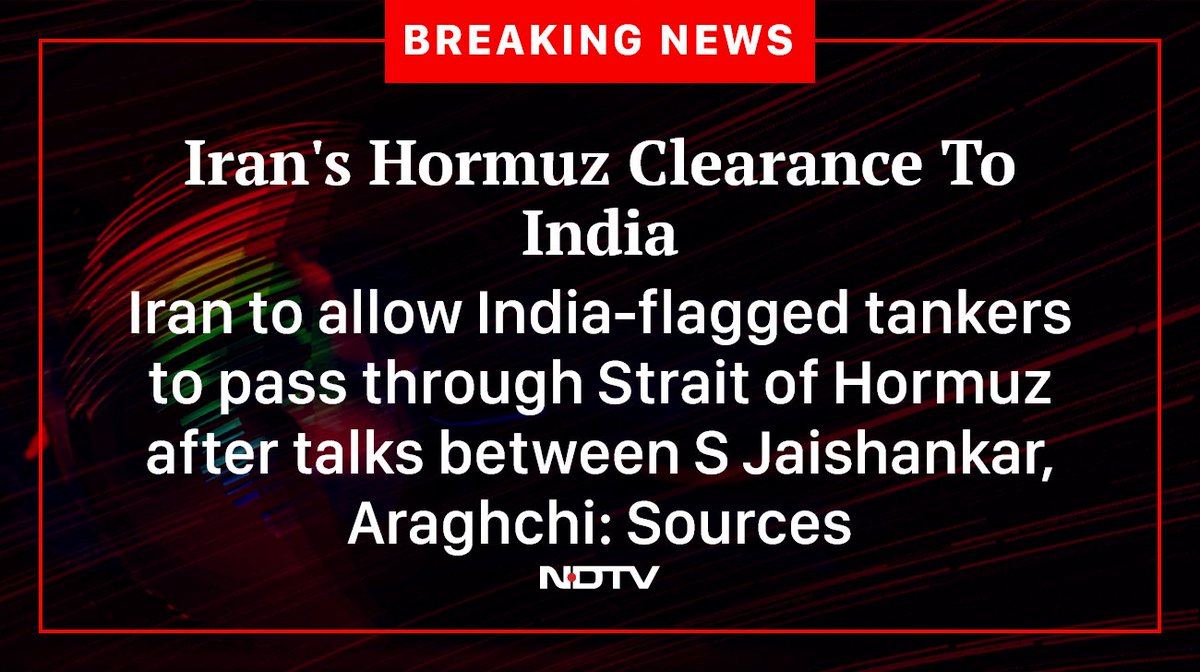
After EAM S Jaishankar’s conversation with Iranian FM Abbas Araghchi, India-linked tankers were allowed to move through the Strait of Hormuz, while other countries’ vessels continued facing restrictions.
And this is exactly why a certain political class is rattled. They want foreign policy to sound loud, emotional, and partisan, as if geopolitics is a campus debate. Had India mindlessly jumped into one camp’s cheering squad, the cost would not have been paid by TV anchors. It would have been paid by every Indian through fuel prices, inflation, supply shocks, and strategic vulnerability. The difference between governance and performance is now visible in black and white.
PM @narendramodi's doctrine has once again shown why strategic autonomy matters. India can speak to all sides, protect its own interests, and keep critical routes open without surrendering its position to bloc politics. That is not ambiguity. That is mature power. Countries that matter do not conduct diplomacy for applause. They conduct it for outcomes.
Geopolitics is not PR. It is not moral exhibitionism. It is not prime time noise. It is the hard business of keeping 1.4 billion people secure when the world is on fire. And once again, India First has delivered where performative foreign policy would have failed.
Jaspreet Bumrah was born/stays in ahmedabad, speaks fluent Gujarati and plays for Gujarat. Experts consider him a talent like Donald Bradman, once in a century talent.
Hardik Pandya stays in Baroda ( a twin city of Ahmedbad about 110 KM away / ~ one and half hour drive )
Akshar Patel stays in Nadiad ( ~ 57 KM away / under an hours drive )
Three player ~ 27 % of team playing in this final are from Ahmedabad or surround area which represents under 1 % of India’s population.
Can this happen without a sporting culture ?
Infact not many people would know but the first time cricket in the subcontinent was played in Khambhat ( Englishman’s pronounced it as Cambay ) few centuries ago, when the English crew of a waiting ship played the game.
India, unlike, many western paradigms cannot be analysed in black and white, in linear equations or algorithms. It has to be felt, embraced and understood.
🚨🚨🚨🚨IN A BOMBSHELL INTERVIEW PROFESSOR JIANG PREDICTS THE UNITED STATES WILL LOSE THE WAR AGAINST IRAN AND EXPLAINS EXACTLY HOW🚨🚨🚨🚨
After everything thats going on and watching Iran's methods of retaliation. This all makes sense.
🚨THIS IS A SHOCKING MUST WATCH!🚨
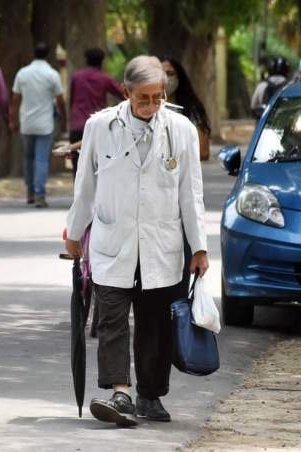
When the Government of India announced the Padma Shri for Dr. Tapan Kumar Lahiri,
the protocol required him to travel to Rashtrapati Bhavan in New Delhi to receive the honor from the President.
However, Dr. Lahiri was hesitant to go. His reasoning was simple: "If I go to Delhi, who will look after my patients in the OPD?" For him, a day away from the hospital wasn't a holiday; it was a day his patients—many of whom traveled from Bihar and rural UP—would go untreated.
Finally he did go given the prestige associated with the event.
Who is Dr Tapan Lahiri?
Dr. Tapan Kumar Lahiri is a legendary Indian cardiothoracic surgeon and professor commonly referred to as the "Saint of BHU". Dr. Lahiri has done FRCS and MCh and working in BHU.
Dr. Lahiri’s commitment to the poor is extraordinary.
In 1994, when his salary (including allowances) exceeded ₹1 lakh, he stopped taking it entirely, directing the university to use the funds for the treatment of underprivileged patients.
After retiring in 2003, he continued this practice with his pension. He keeps only enough to cover two simple meals a day and donates the remainder to the BHU patient fund.
Even in his 80s, he has been known to walk to the hospital at 6:00 AM daily, carrying a simple bag and a black umbrella, to check on his patients.
As he says
"With the grace of Lord Vishwanath and Maa Annapurna, I will keep serving patients till my last breath."
As Israel, UAE, Kuwait, and Bahrain count the losses caused by Iranian missiles and drones, India thanks Dr Ramarao for building the indigenous Akash that tracked 616 Pak missiles and drones (64 simultaneously) before launching interceptors, logging a neutralisation rate of 99.4%