It's not about who the @Yankees land this offseason that's going to make this a Championship contender again. It's about who they are going to unload before opening day.
#Cashman needs to be gone.
You can't keep rewarding failure with tenure
I am the Chief Commercial Officer at United Airlines.
In April we split business class into three tiers and started charging people to pick a seat in the most expensive cabin on the plane. We call it a fare family, which is, technically, a family, and which is, actually, the same seat with three prices and a velvet rope.
We are the first airline in America to do this.
On the slide it is "more choice," which is officially a benefit and naturally the word that gets bigger every quarter. The board loved that phrase.
I did not make flying more expensive. I made it free, and then I sold it back to you one piece at a time, the way a magician hands you back your own watch and waits for applause.
The fare is the bait. It buys the seat and the air, and nothing else, because I price it to win exactly one fight: the top row on Google Flights.
Everything that makes the seat survivable is what we file as an option, which is technically an option and operationally a toll.
The first bag is $45. It is $50 if you wait until the airport, because waiting is a behavior, and we price behavior the way a casino prices the walk to the exit. We call that a convenience differential, which is, technically, your convenience, and which is, actually, mine.
Here is the part I am proudest of.
The fare is taxed by the federal government at 7.5 percent. The bag fee is not. The seat fee is not. Every dollar I move from the ticket to the fee is a dollar the government cannot reach, which is technically a tax efficiency and which is actually the same dollar wearing a different coat.
I have a slide that calls this Fare Optimization.
The seat is my cleanest product. I built the standard seat at 31 inches. I removed nothing from the airplane, of course. It is the same airplane. I just stopped including the seat in the seat, which is on paper a debundling and which is actually the oldest trick in any store: take the thing out of the price, then sell the thing.
If you fly Basic Economy you get no seat at all. You can pick one for $15, or I will put you in a middle seat in row 41 and separate you from your eight-year-old by four rows unless you pay. We call that family seating optimization, which is, in the deck, a service, and which is, actually, a hostage negotiation where I own the building. A parent at the gate watching the seat map load is, to me, the most beautiful thing in aviation: a customer who has already decided.
Families are my highest-converting segment.
A parent will pay anything. I modeled it.
I invented a number called the Comfort Index. The standard seat scores a 4. The seat seven rows forward scores a 7. I made both numbers up, naturally. The difference between them is three inches, and I charge $79 for the three inches. That is value-based pricing, and the value is your spine.
We are a premium airline. We invented the lie-flat bed. So this year I took the most expensive ticket in the building and found things to remove from it, the way you might keep selling a house by quietly taking out the windows. The cheapest business class now loses the lounge, loses a bag, loses the right to change the flight. That is what premium means now: the floor it costs to stop me from taking more.
Nobody believed you could unbundle business class. I did.
The bag fee floats now. It reads the route, the date, and how many times you have searched this flight, and if you came back a third time, you are committed and the fee can feel it, the way a fever feels a pulse. Demand-responsive pricing, which is officially responsive to demand and which is actually responsive to your desperation.
I board the airplane in nine groups. Not because the airplane needs nine groups, but because nine groups means eight things to escape, and I sell the right to stand up earlier. Group 9 is, on paper, a boarding zone. That is the absence of a product, sold back to you as one.
I have lifetime Global Services. I have never paid a bag fee. I have never folded myself into 31 inches. None of the executives have.
We have a phrase for it. We build the zoo. We do not live in it.
Ancillary revenue hit a record. The word ancillary means a side item, officially, and means the entrée now, actually. So next quarter I am charging for the overhead bin, the seatback screen, and a carbon offset on the carbon I burn flying you there.
I am being given Latin America. I will be President by Q4.
I have already started unbundling the word "included," which is, in the FAQ, a courtesy, and which is now a SKU.
People ask me why the seat is so bad.
Have you ever stood in a showroom and not known you were the one being shown? The bad seat is the showroom for the good seat, and I price the good seat at the exact moment you cannot leave the building.
I still do not know how to fly the airplane.
But I know what the airplane is for. It is not for taking you somewhere. It is for finding out what you will pay to make the next four hours hurt a little less.
The ticket was never the price.
The misery is the price. And the misery is the only thing I have left to sell.
Shark Tank Billionaire Kevin O'leary says 2 people fighting data centers in Utah are Chinese agents. Turns out its just 2 local girls in Utah, they make a hilarious video calling him the fuck out
Microsoft is offering voluntary retirement to long-serving employees. It comes after some senior executives departed this year, and could help avoid broader layoffs. Bonuses and stock awards are also changing. Full details 👇 https://t.co/ZRvRLMKpdV
KERNEN: We'd never be able to send anyone back if you needed a judicial warrant every single time
RAND PAUL: Well, I don't think that's true. Obeying the 4th Amendment of the Constitution shouldn't be too difficult. It's something we fought the revolution over.
A mother earning $60K says she can’t afford her daughter’s medical care—but would qualify for assistance if she earned less.
She says the system punishes those trying to stay afloat.
https://t.co/TqCdIYcbym
Members of Congress & senators get paid during Govt shutdowns, when Fed workers go unpaid. Why is their pay protected by the Constitution (A I, Sec6), funded by permanent, mandatory appropriations, & not subject to funding lapses as federal employees?
Let's fix the REAL problem
I would like to offer to pay the salaries of TSA personnel during this funding impasse that is negatively affecting the lives of so many Americans at airports throughout the country
Members of Congress & senators get paid during Govt shutdowns, when other Fed workers go unpaid. Why is your pay protected by the Constitution (A I, Sec6), funded by permanent, mandatory appropriations, & not subject to funding lapses as federal employees?
Democrats are prolonging an already 35-day-long shutdown and forcing critical homeland security agencies like TSA, the Coast Guard, and FEMA to remain unfunded. It’s time to stop the politics, come to the table, and reopen these essential operations.
Members of Congress & senators get paid during Govt shutdowns, when Fed workers go unpaid. Why is their pay protected by the Constitution (A I, Sec6), funded by permanent, mandatory appropriations, & not subject to funding lapses as federal employees?
Members of Congress & senators get paid during Govt shutdowns, when Fed workers go unpaid. Why is their pay protected by the Constitution (A I, Sec6), funded by permanent, mandatory appropriations, & not subject to funding lapses as federal employees?
Screening lines at Houston’s George Bush Intercontinental Airport stretched into a chaotic bottleneck this week, with wait times peaking at 200 minutes and some travelers saying they arrived more than 2.5 hours early — only to still miss their flights, CBS News' @shawnamizelle reports.
“Although President Donald Trump says he has ‘destroyed 100% of Iran’s Military Capability’, the 0% that remains is playing havoc with the global economy.”
-The Economist
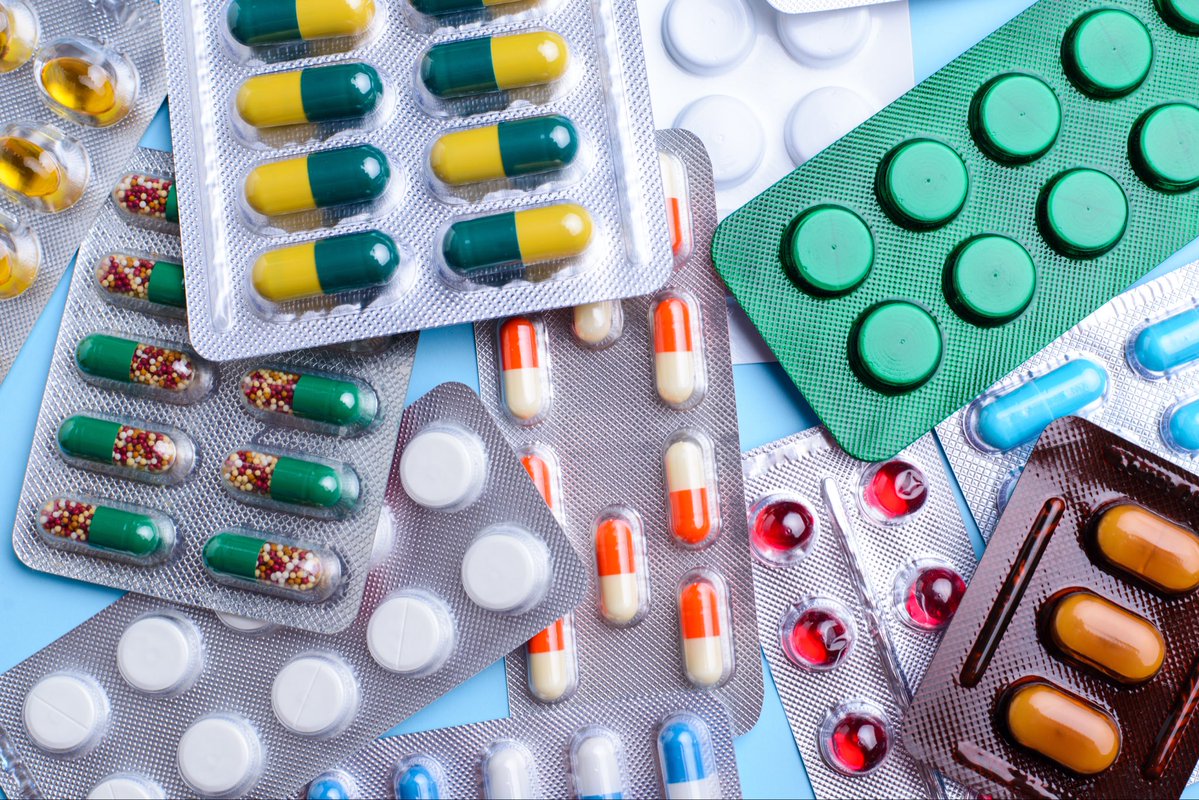
Your paracetamol is 100 percent petrochemical. Phenol from the cumene process, converted to p-aminophenol, acetylated to the tablet in your bathroom cabinet. Your ibuprofen is 100 percent petrochemical. Isobutylbenzene and propionic acid derivatives. Your metformin, the most prescribed diabetes drug on Earth, is 80 to 90 percent petrochemical. Dicyandiamide from natural gas derivatives.
The naphtha that makes these drugs transits the Strait of Hormuz. The strait is mined, uninsured, and unescorted.
The war just reached the medicine cabinet. Nobody is covering this.
Ninety-nine percent of pharmaceutical feedstocks and reagents are petrochemical-derived according to the American Gas Association. Not 50 percent. Not 70. Ninety-nine. The pills are made of oil. The same oil the same strait carries. The same naphtha that becomes polyethylene for a bread bag becomes phenol for a paracetamol tablet. When the petrochemical cracker shuts, both products vanish.
The crackers are shutting. Chandra Asri declared force majeure on March 3rd. Yeochun NCC on March 4th. PCS Singapore on March 5. CNOOC-Shell Huizhou is planning shutdown of its 1.2-million-tonne facility. These are not contained within the plastics industry. They cascade into pharmaceuticals because the feedstocks are identical.
India is the pressure point. Twenty percent of the world’s generic drugs. Forty percent of US generic demand. And India’s methanol supply, a key solvent in API manufacturing, has 87.7 percent exposure to the Hormuz corridor. The Indian government has prioritised household LPG over industrial petrochemical feedstock, starving downstream pharmaceutical supply chains of the naphtha derivatives they need. Indian pharma companies hold three to six months of finished product stock. The buffer exists. It is depleting at an accelerating rate as raw material pipelines empty.
The Serum Institute of India, the world’s largest vaccine manufacturer supplying 40 to 50 percent of global doses in key categories, runs on the same petrochemical chain. mRNA vaccines require petrochemical-derived lipid nanoparticles and solvents. Traditional vaccines use petrochemical intermediates for adjuvants and stabilisers. Every vial is plastic. Every syringe is plastic. Every cold-chain packaging film is plastic. The force majeures that shut the crackers are not just a packaging story. They are a vaccine story.
The developing world’s access to affordable antibiotics, diabetes medication, cardiovascular drugs, and childhood vaccines runs through Indian manufacturing plants that run on petrochemical feedstocks that run through a 21-mile waterway currently seeded with Iranian mines.
This is the fourth domino. The first was energy. The second was fertiliser. The third was packaging. The fourth is the one that converts an economic crisis into a humanitarian one, because you can find an alternative bread wrapper. You cannot find an alternative to metformin for 537 million diabetics worldwide. You cannot find an alternative to amoxicillin for a child with pneumonia. You cannot find an alternative to the vaccines that prevent diseases we spent decades eliminating.
The Fed meets tomorrow to assess inflation driven by energy, fertiliser, packaging, and now pharmaceutical inputs. All repricing through the same chokepoint. Four dominoes. One strait. And the fourth, the medicine, is the one the market has not priced because it does not appear on any commodity index.
It appears on a doctor’s prescription.
Full analysis: https://t.co/iFmUcarGdV
Members of Congress & senators get paid during Govt shutdowns, when other Fed workers go unpaid. Why is their pay protected by the Constitution (A I, Sec6), funded by permanent, mandatory appropriations, & not subject to funding lapses as federal employees
@GOP@TheDemocrats