India has always idolised actors and cricketers. The last few years, entrepreneurs and founders have also gotten mobbed at the airports. How I wish we started celebrating scientists as much as we celebrate actors, cricketers, and founders.
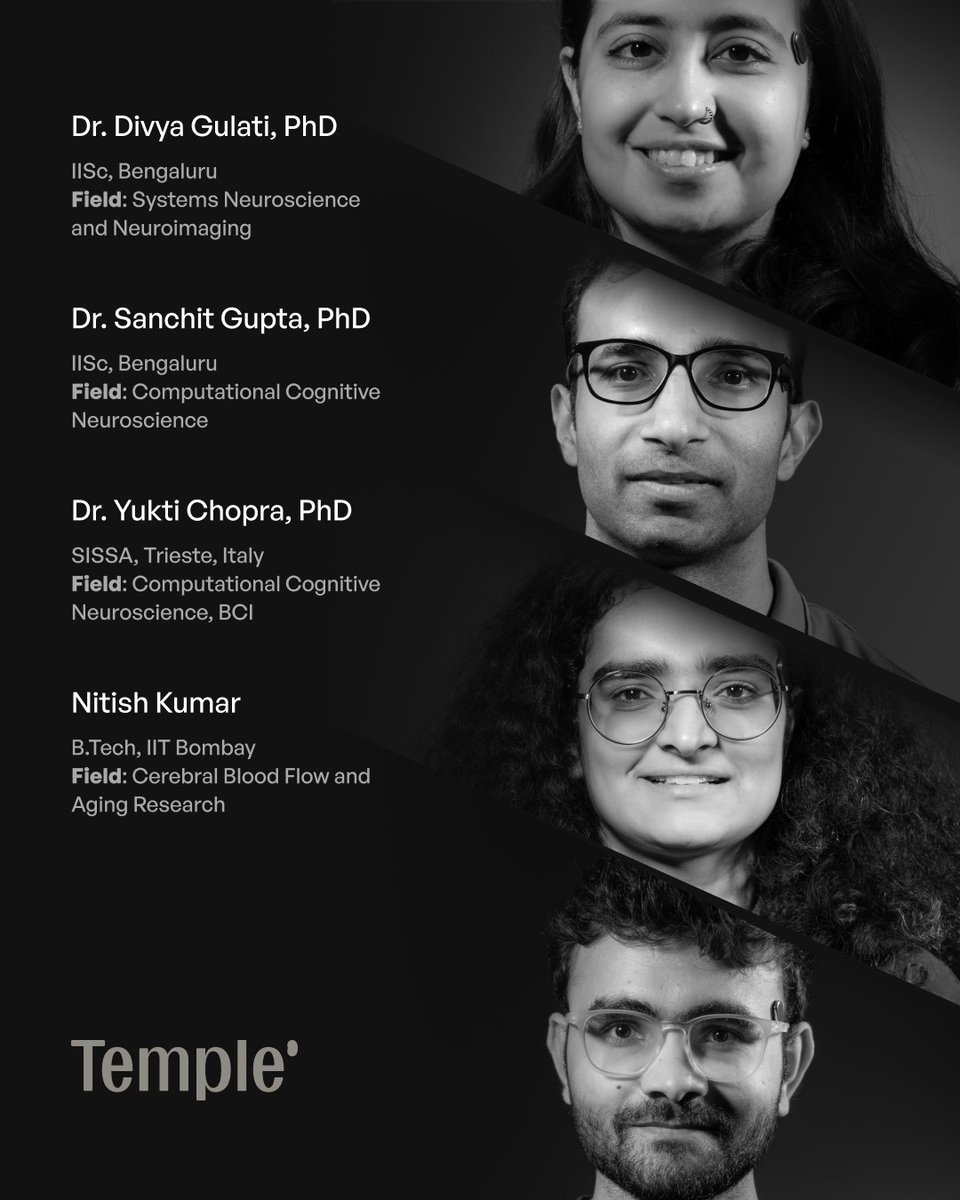
On that note, meet the Temple scientists behind Brain Flow: Dr. Divya Gulati (IISc), Dr. Sanchit Gupta (IISc), Dr. Yukti Chopra (SISSA Trieste), and Nitish Kumar (IIT Bombay).
This team led, built, and validated the first continuous, wearable measurement of blood flow to the brain.
Your brain uses 20% of your blood supply. It controls your hormones, sleep, immunity, and repair. That supply drops every year as you age, and you have never measured it. Even hospitals can only capture a single snapshot.
Measuring and maintaining brain flow could be one of the most important health and longevity interventions of our time.
At Temple, we have some of the best minds in the country, working on the one problem that sits upstream of every other: extending healthy human life.
I am proud of our team, and looking forward to a lot of firsts and breakthroughs in the future.
Does @temple really monitor blood flow to the brain, or just the scalp?
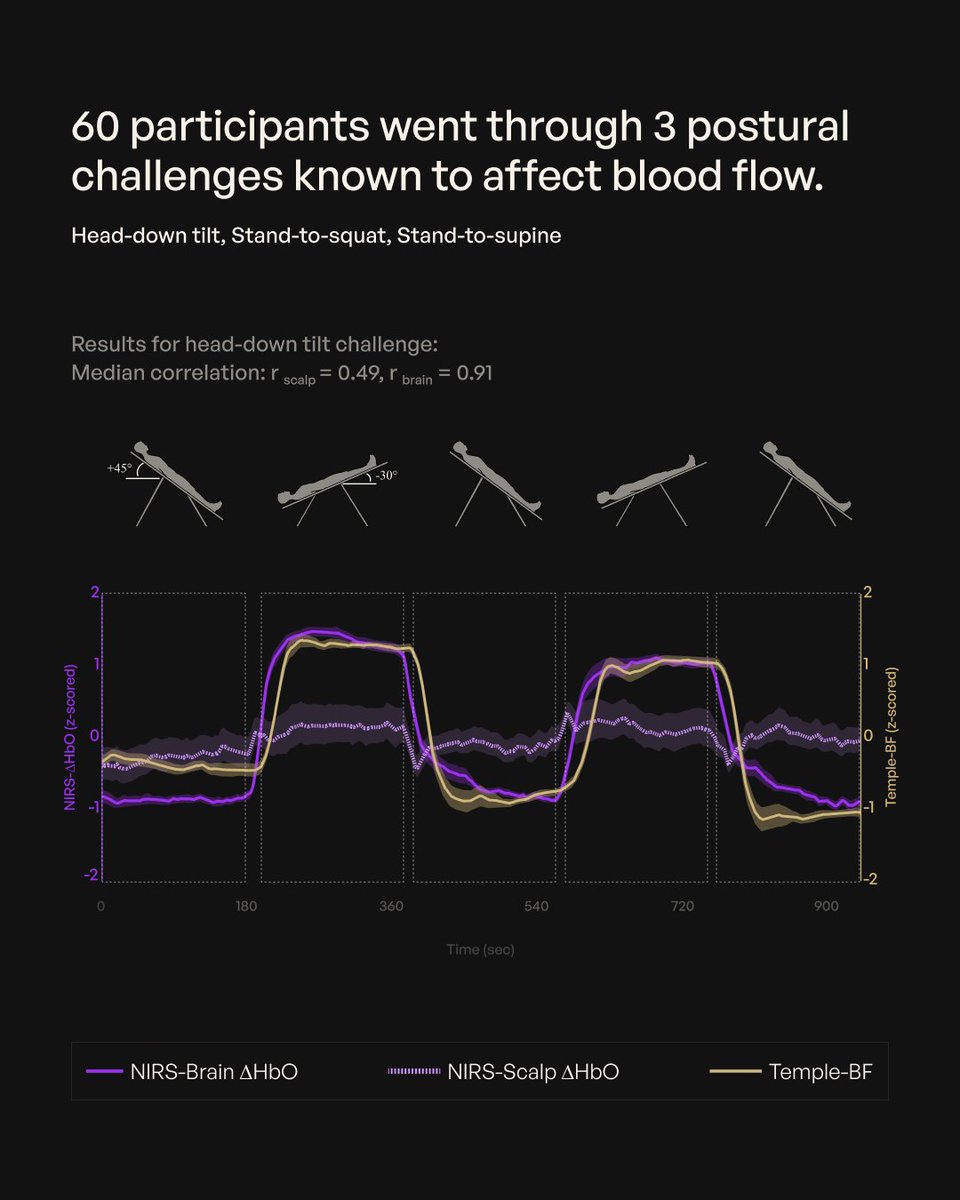
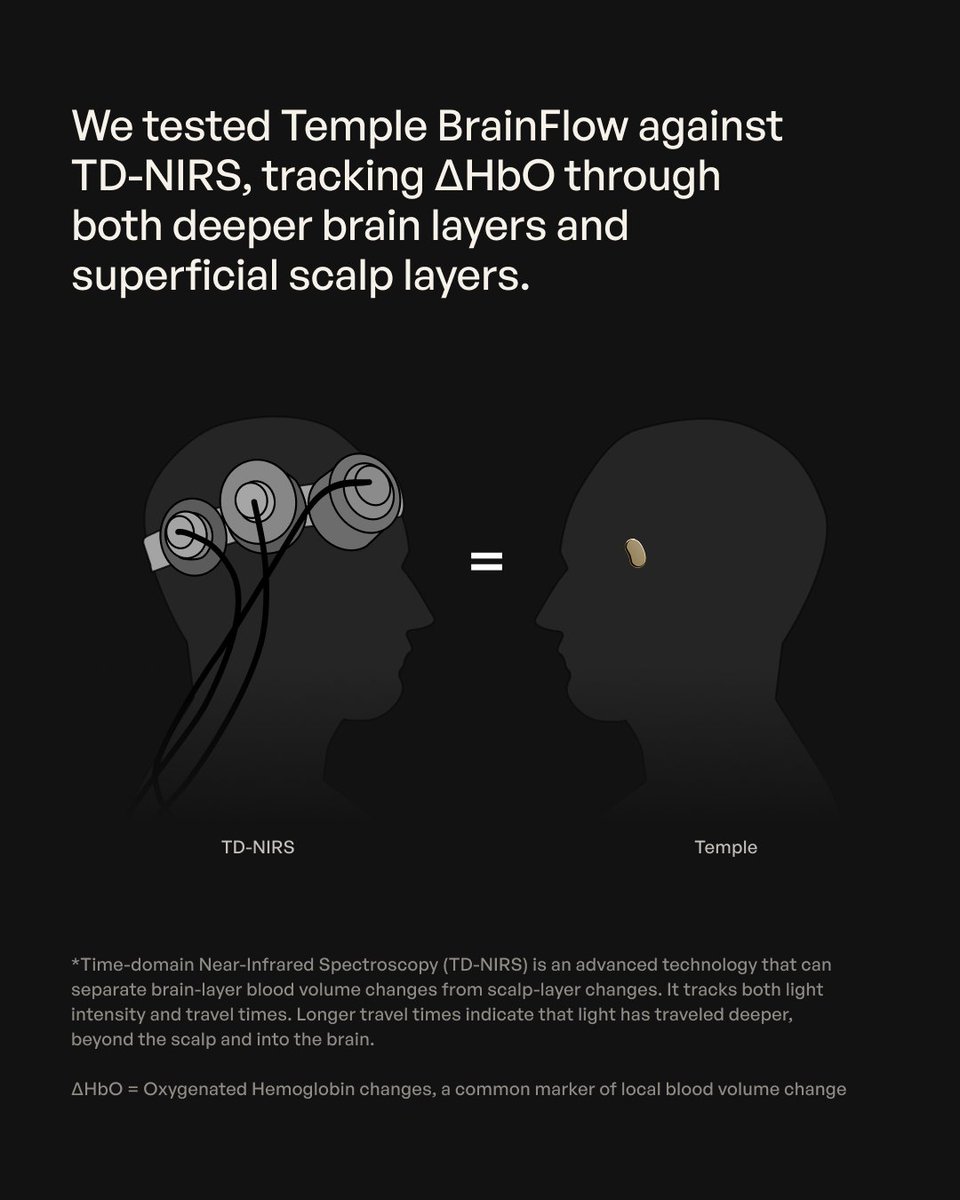
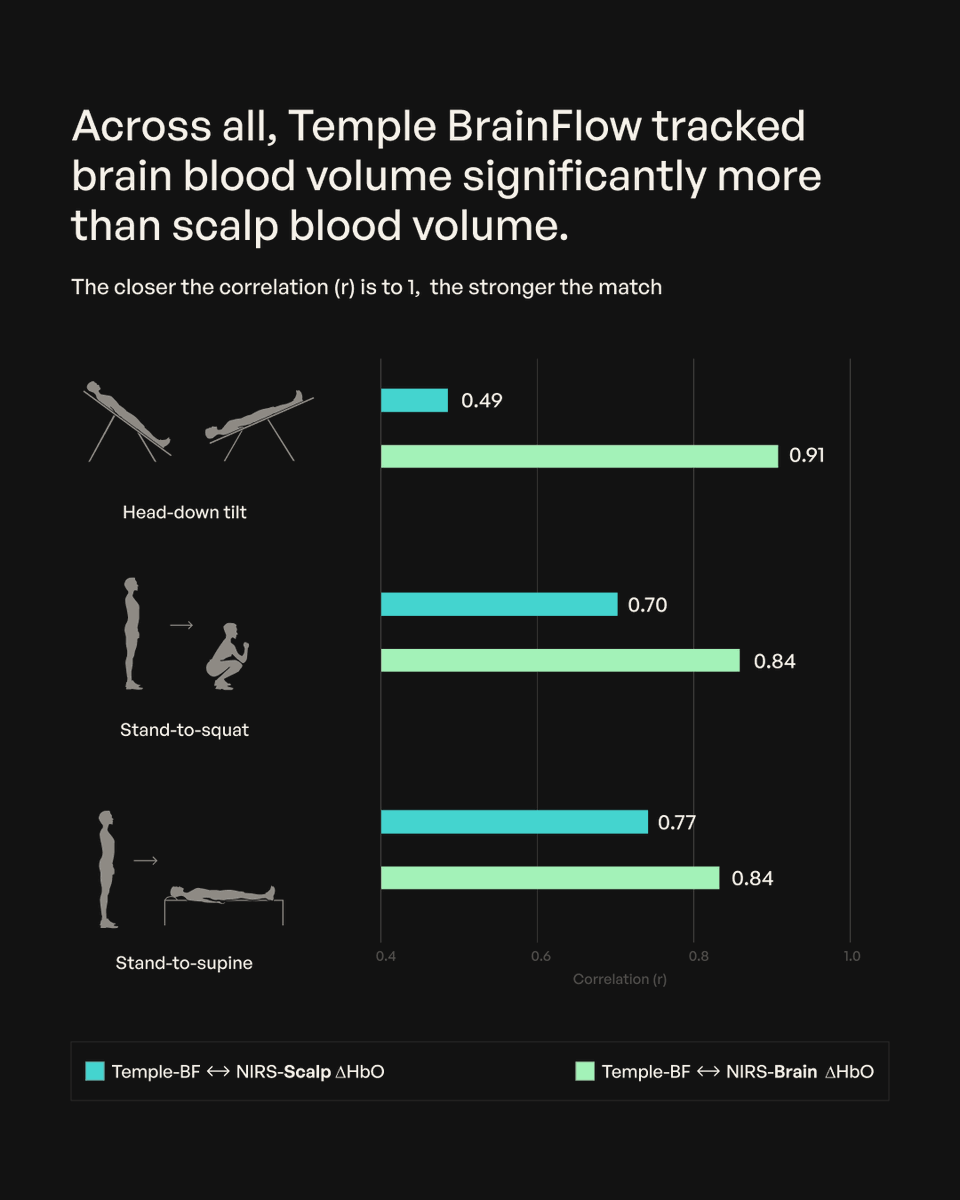
In our second validation study, we tested Temple BrainFlow against time-domain NIRS, one of the few technologies that can separate brain blood volume changes from scalp blood volume changes. We had 60 participants go through three physiological challenges: head-down tilt, stand-to-squat, stand-to-supine.
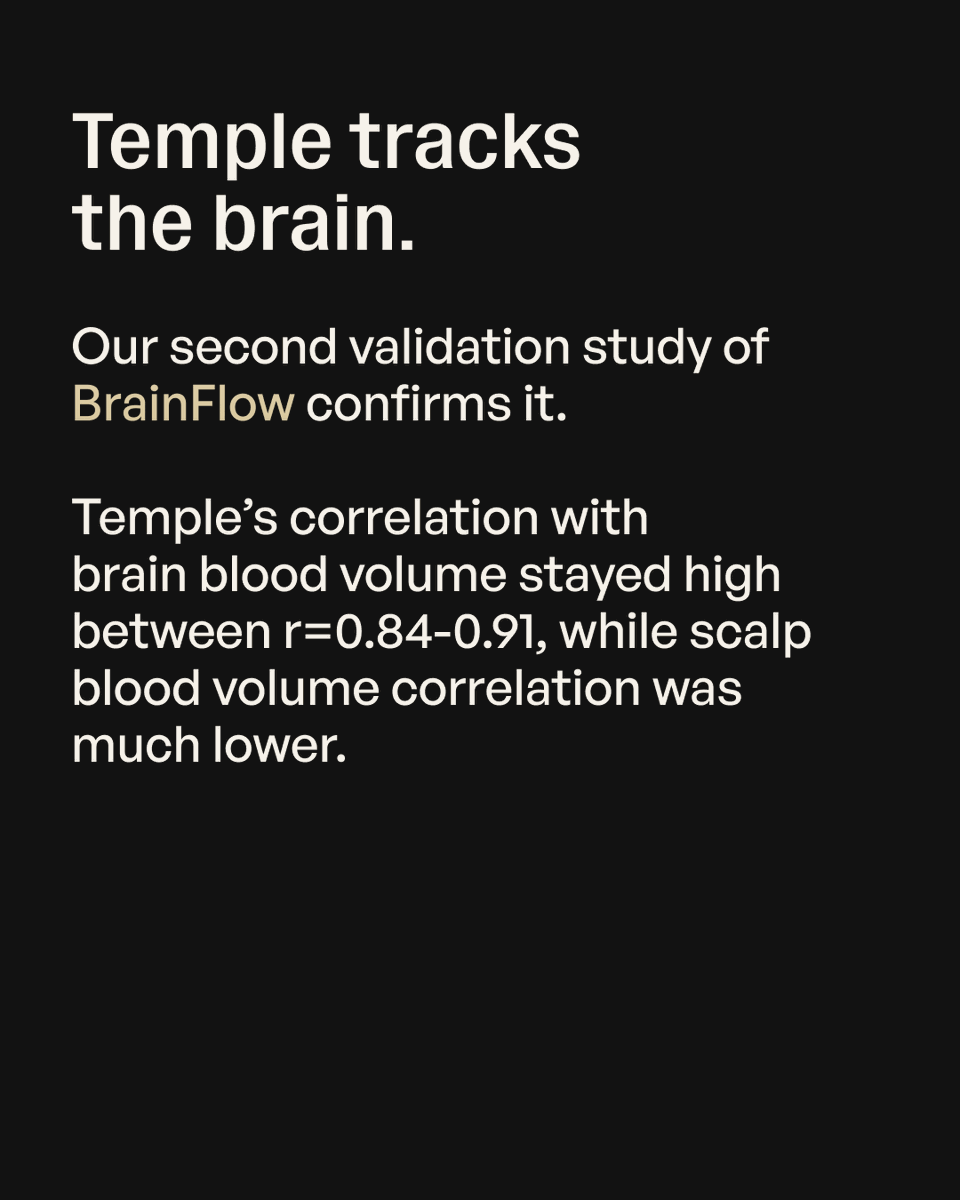
Across all three challenges, Temple BrainFlow tracked brain blood volume at r=0.84-0.91, significantly more than scalp blood volume. The most significant result came from head-down tilt, where Temple's correlation with the brain was 0.91, and scalp correlation was just 0.49.
Key takeaway: Temple tracks the brain, much more than the scalp.
Why this matters: Cerebral Blood Flow responds to almost everything longevity-oriented people already do. It rises with aerobic exercise, and VO2max correlates directly with it. It rises with cold exposure. It rises with meditation. Better sleep sustains it. It drops when you sit for too long. It drops when you are dehydrated. It is one of the most responsive and integrative biomarkers of how well your body is actually running, and aging.
Until now, you could only measure it in a clinical setting, in a single snapshot. Temple measures it continuously, in real time, while you live your life. And Temple is, as of today, the only wearable in the world with validations against brain blood volume, and not just scalp.
This study was guided by our Scientific Advisor, Prof. David Boas, Director of Boston University's Neurophotonics Center, and the mind behind several new, high-impact, biomedical optical technologies in neuroscience, including NIRS.
This is the second modality Temple BrainFlow is now validated against, after Transcranial Doppler. More coming soon.
Link:
https://t.co/zETs9gn5Cg
The paper is posted as a preprint and submitted for peer review. We encourage researchers to replicate this. We'll happily loan Temples to any qualified researcher who wants to pressure-test any of our metrics independently.
Cc @agingroy
@Switty2020@temple It is useful in real life. Lots of early users have changed so much in their lives for the better with Temple. Will reveal more as we go along.
Does @temple really monitor blood flow to the brain, or just the scalp?
In our second validation study, we tested Temple BrainFlow against time-domain NIRS, one of the few technologies that can separate brain blood volume changes from scalp blood volume changes. We had 60 participants go through three physiological challenges: head-down tilt, stand-to-squat, stand-to-supine.
Across all three challenges, Temple BrainFlow tracked brain blood volume at r=0.84-0.91, significantly more than scalp blood volume. The most significant result came from head-down tilt, where Temple's correlation with the brain was 0.91, and scalp correlation was just 0.49.
Key takeaway: Temple tracks the brain, much more than the scalp.
Why this matters: Cerebral Blood Flow responds to almost everything longevity-oriented people already do. It rises with aerobic exercise, and VO2max correlates directly with it. It rises with cold exposure. It rises with meditation. Better sleep sustains it. It drops when you sit for too long. It drops when you are dehydrated. It is one of the most responsive and integrative biomarkers of how well your body is actually running, and aging.
Until now, you could only measure it in a clinical setting, in a single snapshot. Temple measures it continuously, in real time, while you live your life. And Temple is, as of today, the only wearable in the world with validations against brain blood volume, and not just scalp.
This study was guided by our Scientific Advisor, Prof. David Boas, Director of Boston University's Neurophotonics Center, and the mind behind several new, high-impact, biomedical optical technologies in neuroscience, including NIRS.
This is the second modality Temple BrainFlow is now validated against, after Transcranial Doppler. More coming soon.
Link:
https://t.co/zETs9gn5Cg
The paper is posted as a preprint and submitted for peer review. We encourage researchers to replicate this. We'll happily loan Temples to any qualified researcher who wants to pressure-test any of our metrics independently.
Cc @agingroy
Entropy x Meditation
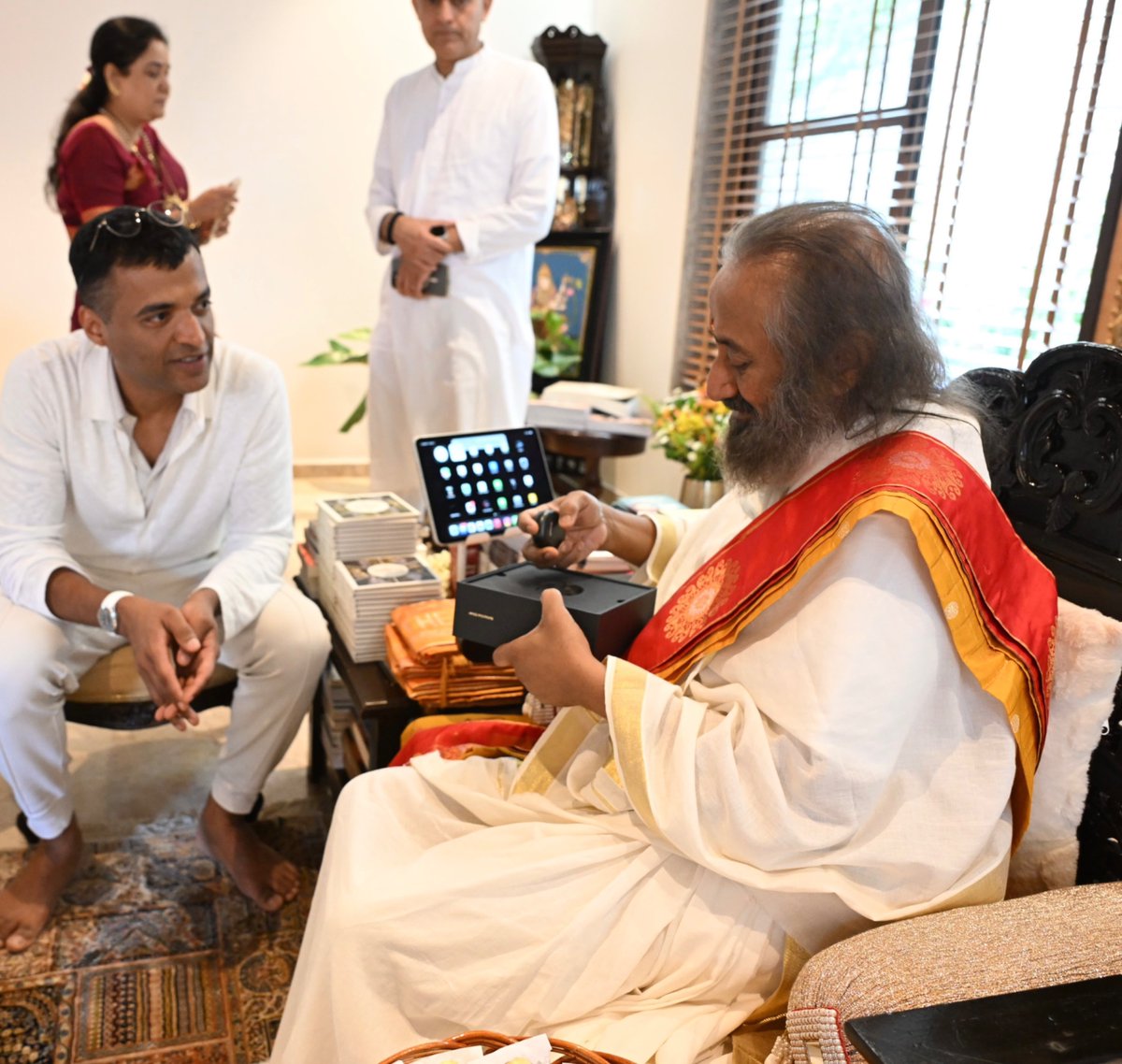
I am glad to have @temple and Sri Sri Institute for Advanced Research (SSIAR), the research arm of Art of Living, collaborate to measure the effect of different meditation practices through Entropy.
Entropy is a new biomarker on @temple that also measures your body’s (para)sympathetic state, and we have seen it drop real time during meditation, while HR stays flat.
I am looking forward to seeing which meditation practice produces the deepest parasympathetic response 🧘♂️
All I knew about @Gurudev until today was that he taught meditation to millions of people. I went to meet him to try having him as a part of our study with experienced meditators. He said “machines don’t work on me” and encouraged us to conduct the study with other experienced meditators in the ashram.
Temple is a science first organisation, and we visited Art of Living to measure meditation’s effect on Entropy. Results on our studies with @ArtofLiving will be published soon.
Temple's first validation study is out.
Researchers tested Temple's Brain Flow index head-to-head against Transcranial Doppler (TCD), the gold standard for measuring cerebrovascular function. 23 healthy adults, two challenges: cycling and a standing-to-supine postural shift.
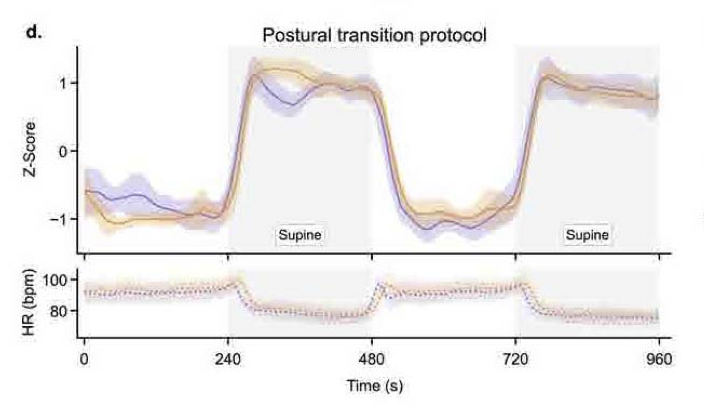
The result that stood out most to me: when participants lay down, their heart rate dropped, but their brain blood flow went up. Temple tracked this accurately, right alongside the Doppler. Any device that only measures heart rate would have gotten this completely wrong.
Across both challenges, Temple's Brain Flow tracked Middle Cerebral Artery velocity (MCAv) with within-subject temporal correlation of r≈0.8 (p<0.001), which is very high even for medical devices.
The paper is posted as a preprint and submitted for peer review. One study, two interventions, healthy adults only, but it's the first step. More validations on Brain Flow, as well as on Entropy with different modalities are underway across the globe. We will keep sharing them as they trickle in.
We encourage researchers to replicate this. We'll happily loan Temples to any qualified researcher who wants to pressure-test any of our metrics independently.
https://t.co/86vUY9YQbV
Cc @agingroy
After 20 years in longevity science, doubt has become my default setting. Most anti-aging claims fall apart the moment you ask for the raw data. So when co-founder Rob Mohr and I noticed a small device on @deepigoyal's temple at a London dinner, I did what my training requires: I spent two months trying to prove Temple wrong, wearing it every day and asking the annoying questions about signal quality and confounders on call after call with the team at Temple. They had two years of careful, unhurried experiments behind a product that hasn’t even launched yet, and when they didn’t have data, they said so.
Consumer hardware usually goes from prototype to shelf in months, with marketing first and science patched in later. Deepinder has spent two years doing it in the other order, quietly building the sensor and the evidence before asking anyone for anything. The team he has assembled, firmware engineers, signal-processing people, physiologists, and data scientists, runs experiments, openly reports the ones that fail, and then returns to what’s known about human physiology to guide the next set of experiments.
I know this because I spent two months with the team as an outsider, which they very much welcomed because they seemingly had nothing to hide. When this team doesn’t have an answer yet, they say so.
Working like that is a privilege scientists rarely get, in academia or anywhere else, and it exists at Temple because Deepinder decided it should.
Today, Rob and I are bringing Longevous, our London preventive and personalized medicine practice, into Temple. I’m joining full-time to lead the science, starting with getting our validation studies through peer review.
The goal is simple: the most health for the most people. I’m betting the next decade of my career on this team.
Temple acquires London-based Longevous
Hello everyone, quick update on @temple
We are excited to share that Temple is acquiring Longevous, an evidence-based longevity medicine practice based in London. The founders, Rob and Avi, and their team are joining Temple full time. They bring in deep clinical expertise and publication experience to work alongside our in-house science team as we prepare for launch.
Dr. Robert Mohr joins Temple as Chief Medical Officer. Rob is a board-certified physician with nearly two decades of clinical experience who made the deliberate shift from emergency medicine to evidence-based longevity medicine. He brings the rare combination of frontline clinical judgment and deep fluency in preventive and precision medicine. Rob’s purpose is to bring clinical grade expertise to every experiment that we run, and every claim we make.
Dr. Avi Roy joins as Head of Science at Temple. Avi is an Oxford-trained biomedical scientist who has spent his career building at the intersection of longevity science and business: co-founder of Founders Health and UDA, and a former research fellow at the Centre for the Advancement of Sustainable Medical Innovation at the University of Oxford. He’s a longevity science geek, as you can see from his X timeline @agingroy
A couple of months ago, I met Rob and Avi at a dinner event in London I had almost skipped. I am very glad I didn’t.
They noticed the Temple on my temple and, with genuine curiosity, asked me about it. A casual icebreaker turned into an hour-long conversation of geeking out over the science behind it. By the end of our last course, they asked me if they could try Temple for themselves. For the next two months, they wore Temple as their daily driver for tracking all their activities.
Their curiosity slowly turned into conviction as they pressure tested Entropy and the data that Temple can collect, with our science team. They challenged our assumptions and poked holes in our vision. Slowly, they became deeply involved in our validation work, and have even reviewed our first scientific manuscripts before submission.
At some point, it felt like an obvious next step. Given how personally invested they'd become, I asked if they'd consider building Temple with me full time.
Longevous would continue to operate as it always has, now as part of Temple, and Rob and Avi will continue to personally look after its clients.
Looking forward to building Temple together, Rob and Avi.
Temple is now less than half the size of what you've seen so far.
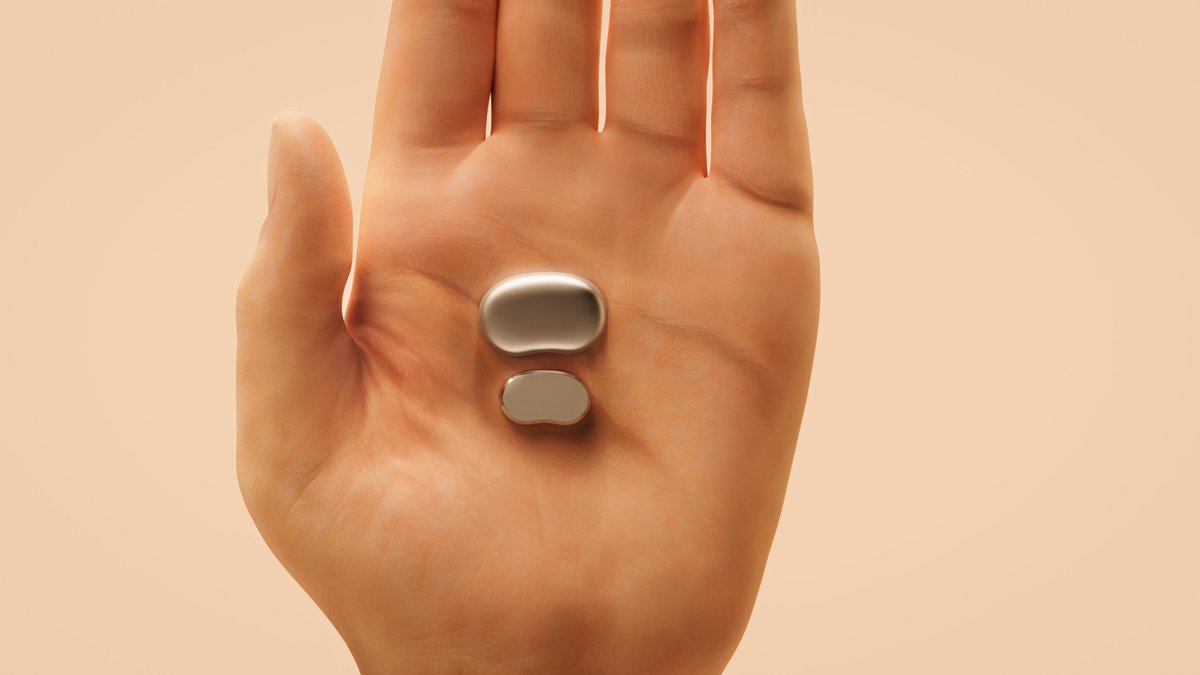
Volumetrically, Temple is now the smallest wearable on the market, and the most^10 powerful. Living and training with Temple is going to change your life.
We will start taking pre-orders for our limited launch edition @temple very soon - shipping before the end of 2026. Join our mailing list on https://t.co/XxGR9Hpq58 to stay up to date.
Hello everyone, here are the highlights from Eternal for Q1FY27 –
- B2C NOV grew 54% YoY to INR 31,120 crore
- Eternal’s Consolidated Adjusted Revenue grew 173% YoY (17% QoQ) to INR 20,648 crore
- Consolidated Adjusted EBITDA grew 223% YoY (29% QoQ) to INR 555 crore
- Blinkit NOV grew 86% YoY to INR 17,132 crore
- Zomato NOV growth reached 20%+ YoY (INR 10,769 crore), after four consecutive quarters of acceleration
- District NOV growth accelerated to 60% YoY (18% QoQ) to INR 3,218 crore
- Hyperpure revenue grew 27% YoY (LFL) (6% QoQ) to INR 1,034 crore
Shareholders’ letter and financials here – https://t.co/2rnRl84kuH
If there’s anything we can do better, we are always listening. Please feel free to share any questions or feedback at [email protected]
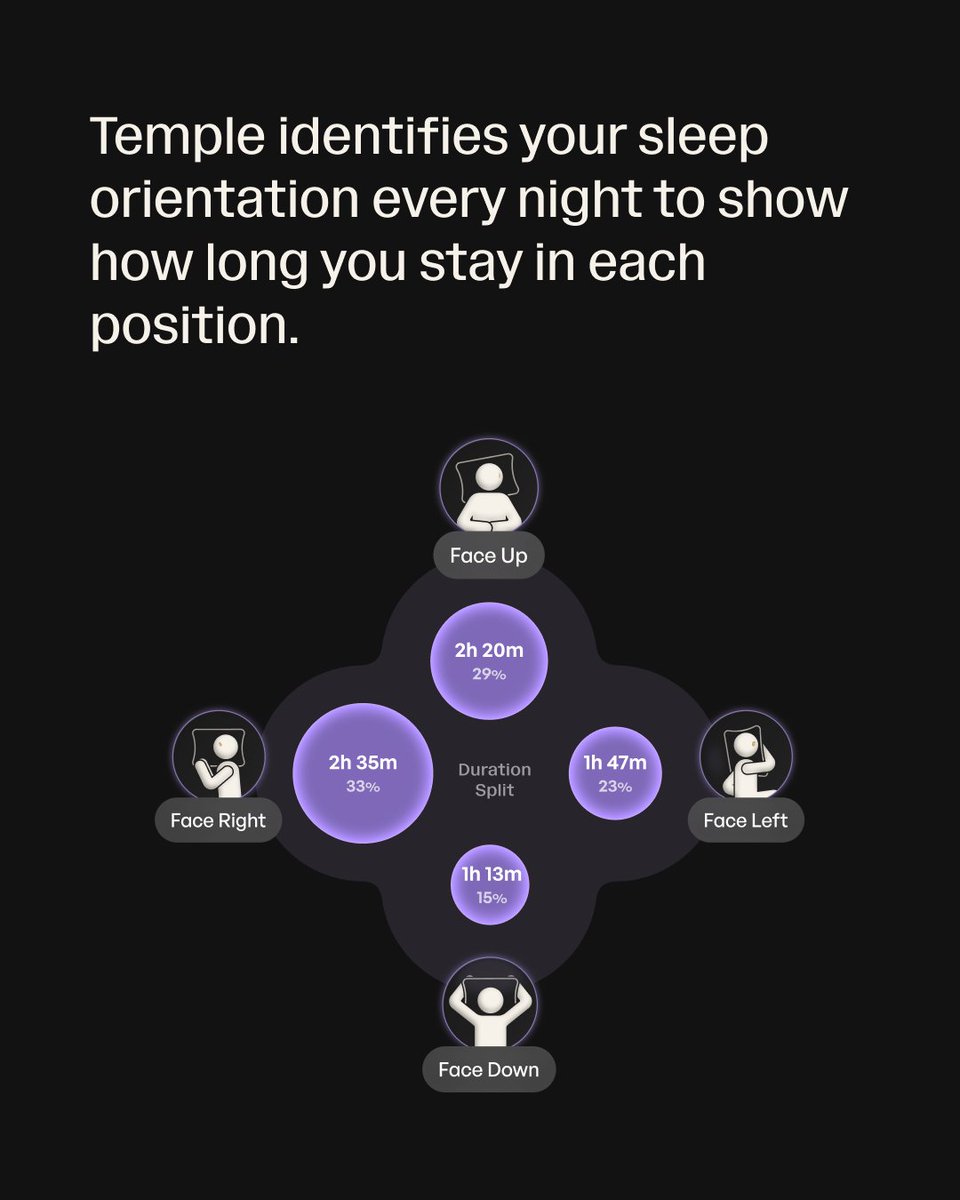
The best sleep position isn't the same for everyone. This and so much more, only on Temple.
Join the waitlist for Early Access at https://t.co/Pi4ZX0mU3s