We explore and share about #deepsea ecosystems around the globe. Creators of the #deepseaduo Zack & Molly. Find us on Facebook & Instagram, YouTube & Vimeo.
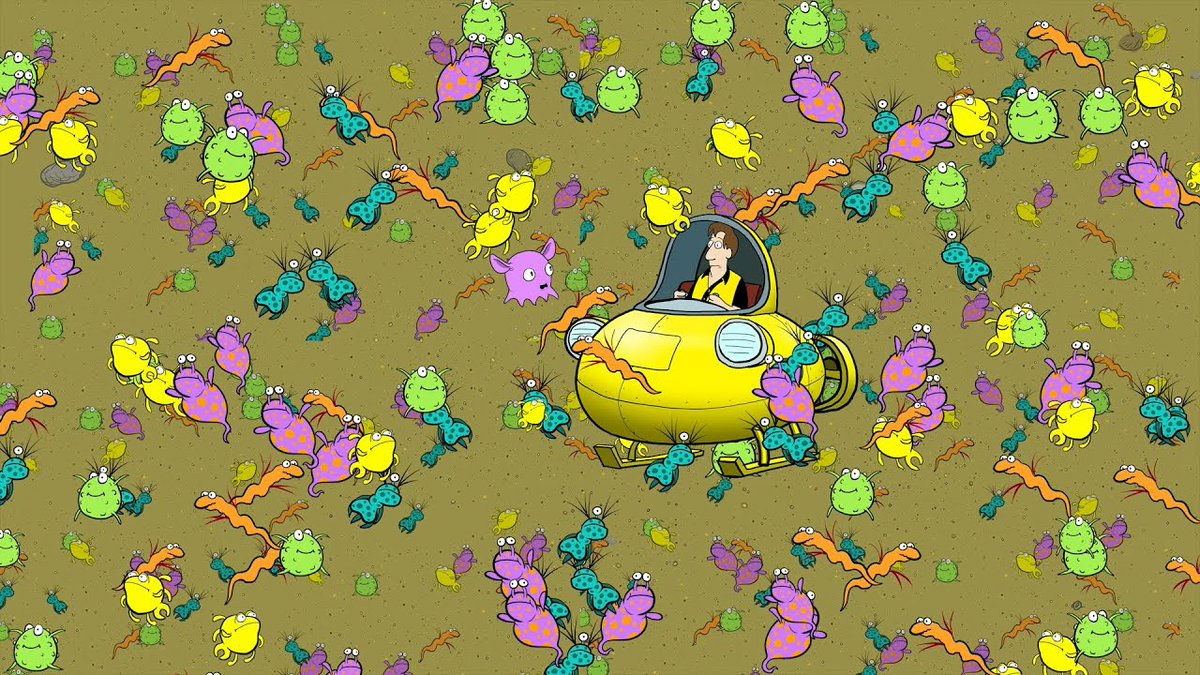
Today is a VERY special #filmfriday - the 5th Zack & Molly video is LIVE! 🎉 🎉 🎉 Join our #deepseaduo as they travel to the bottom of the ocean and BEYOND!
Look for @TheJR ! 👀 😉
HUGE thanks to @NSF for funding!
#chemoce#geophysics
https://t.co/89xED6u63f
Learn more about how researchers use environmental DNA (eDNA) - the genetic material shed by organisms in the water column - to make new discoveries about marine life!
https://t.co/iosuz65f6X
Tiny critters play a huge role in the ocean's food chain. Learn more about the role that zooplankton play in healthy oceans at the link!
https://t.co/xiLUkioheD
A new study in Nature finds that, because of rising temperatures, an extreme sea level event that normally would have occurred once every 100 years is expected to occur, on average, EVERY YEAR by the end of this century.
Read more at the link: https://t.co/DfdqUQxCaZ
A recent publication by SECORE International scientists shows significant success in sexually breeding corals in large mesocosms, specifically for sustainable, biodiverse coral restoration on larger scales.
Read more at the link! https://t.co/0tH4RR9YVw
New research highlights the need for marine biological observations to inform science and conservation management and to support the blue economy.
Read more at the link!
https://t.co/r0RYICsb99
Join the National Oceanography Centre and Discovery Collection's Tammy Horton on Monday for #MonsterMonday social media takeovers!
Follow the action at the link or via #MonsterMonday.
https://t.co/C4QOTiqwYf
Many foundation species in chemosynthesis-based ecosystems rely on symbiotic bacteria for their survival.
New research attempts to shine a light on a deep-sea bacterial symbiont population structure with CRISPR.
Read more at the link!
https://t.co/tFwQ1dY2ks
Understanding climate-induced changes in deep-sea environments, including carbon cycling and climate regulation, is fundamental to future ocean sustainability and decisions about climate remediation.
Read the entire piece by Dr. Lisa Levin at the link. https://t.co/tiAzn6QARj
Stunning deep-sea images, including this glass octopus, from Schmidt Ocean Institute's recent cruise to the Phoenix Islands Archipelago are featured in Nature's best science images of July.
Check them all out at the link!
https://t.co/O69JeD3ORD
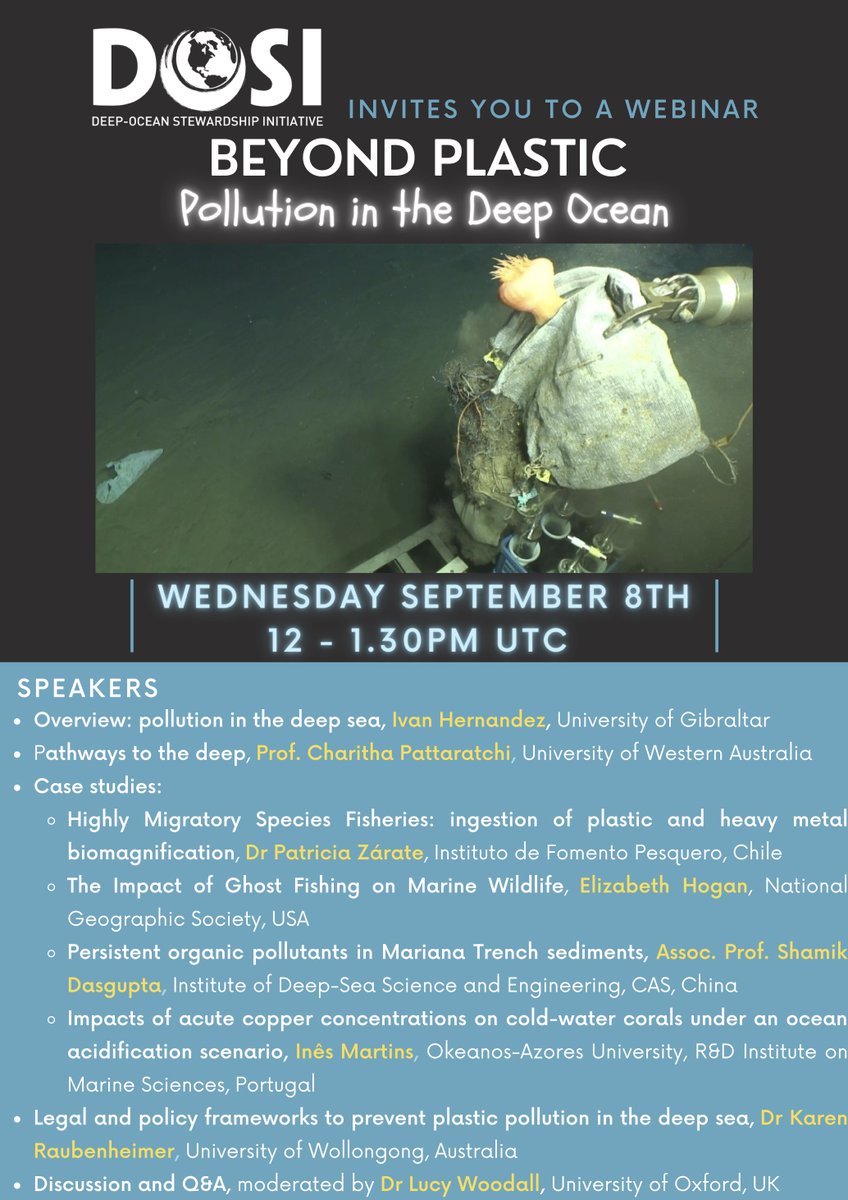
DOSI webinar on anthropogenic pollution in the deep ocean happening tomorrow - including microplastics, fishing gear, heavy metals and POPs. Not to be missed. Registration details below ⬇️
Researchers are using a new method to map and explore the striking underwater features of Pescadero Basin in the southern Gulf of California. https://t.co/zxJnrneesS
Only 24hrs left to register for tomorrow's webinar on pollution in the #deepsea. We have a fantastic line up of speakers and plenty of time set aside for discussion and Q&A. Suitable for all levels of knowledge. Registration and event details ➡️ https://t.co/aJrfPsdww0
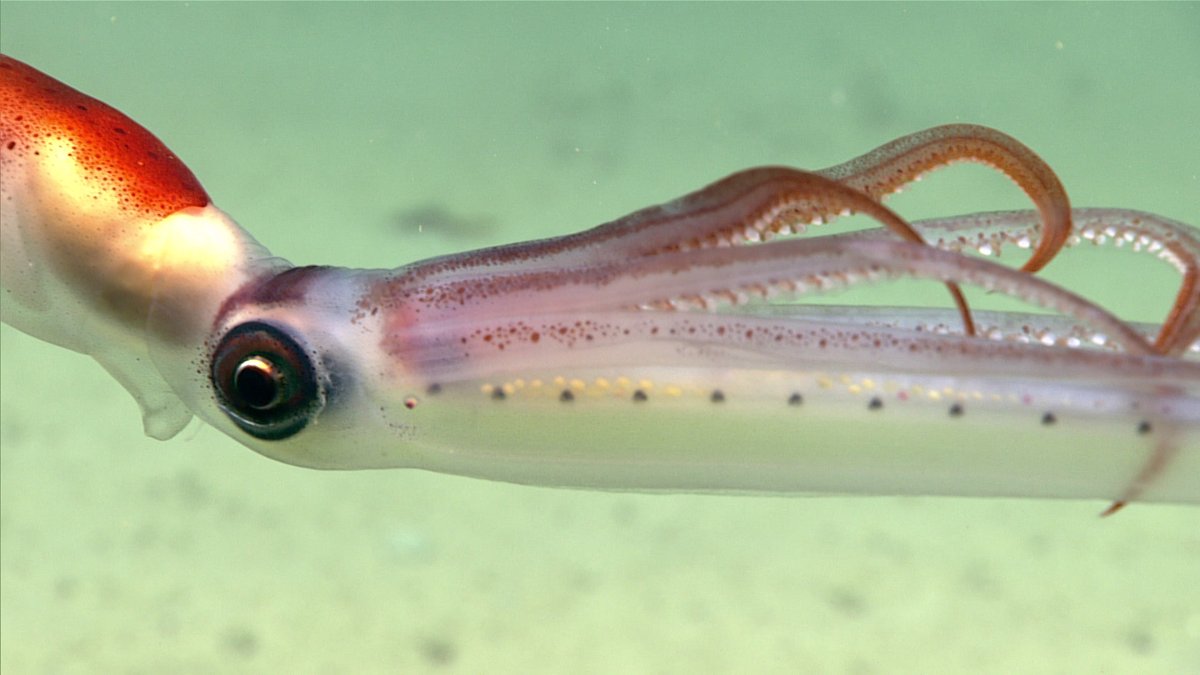
#ImageOfTheDay: September 7, 2021: This long-armed squid, Chiroteuthis veranyi, was imaged at a depth of approximately 1,400 meters (4,593 feet) while exploring Hudson Canyon as part of the 2021 ROV Shakedown expedition.
Full caption: https://t.co/3zgFhGQPJF
“The DDT dump site provides evidence of a large human footprint in the deep ocean, but we are just starting to identify the effects on local marine communities,” said Chief Scientist Dr @LlevinAnn. #BiodiverseSCB in @ecoMagNews
https://t.co/FNr05eHRoz
One week after ROVs Hercules & Argus detached from the cable to E/V Nautilus, both of our beloved vehicles are back onboard. Our deepest gratitude to @WHOI ROV Jason and @UWOcean R/V Thompson teams, who conducted 2 rescue dives over 26 hrs.
Full update: https://t.co/jRsk0VxNhL
OPPORTUNITY: DOSI is seeking an independent worker to take on communications and network development on a funded part-time basis. Good social media skills required, as is proficiency in WordPress and Mailchimp. DM us if interested.
Manganese nodules found on deep sea abyssal plains have been considered for their potential as a mineral resource, and in some regions, exploration for potential mining areas has already begun.
Learn ALL about nodules at the link: https://t.co/E7mORR55bQ