In Cold Blood | @agni_sreedhar, @maxpk44 and Neeraj Kumar in conversation with @DeepthiTalwar at #BLFDeadWrite
Join us @bicblr this weekend for BLR's first crime lit fest!
🎟 Free to attend.
🔗 Register: https://t.co/CnK17UE4GU
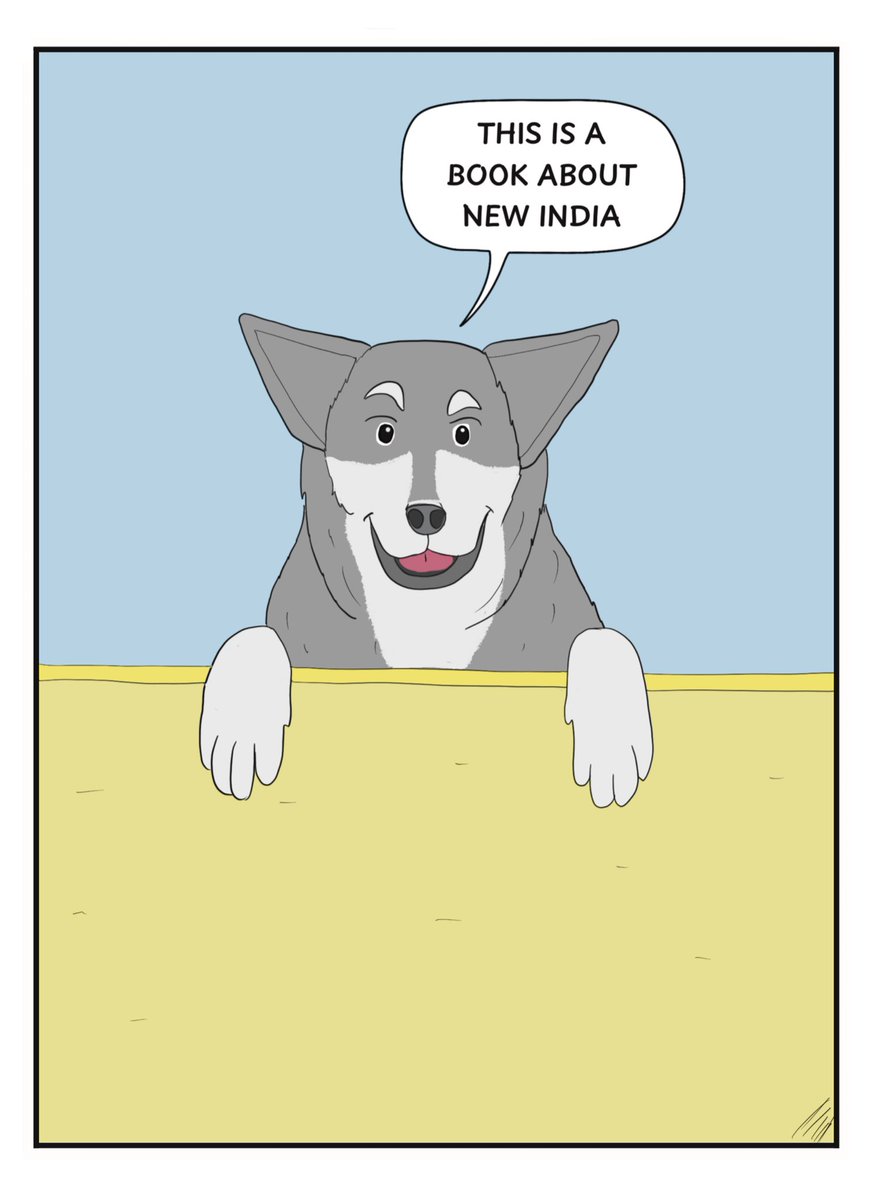
Just finished reading an extraordinary new book — a graphic novel on human rights by @Aakar__Patel and @penpencildraw. Told as a story of a visiting NRI high-schooler and his friendship with a Dalit girl admitted under the RTE, the novel explores his discovery of much that ails “new India”, through a discussion of the workings of the Constitution. It’s aimed at teenage readers but there’s material in it we can all learn from, from the horrors of manual scavenging to the iniquities of preventive detention.
The book succeeds in stimulating awareness of our country’s persistent human rights challenges while affirming the enduring value of the Constitution in combating them. Bhima-Koregaon, “love jihad”, cow slaughter — it’s all there, simply and powerfully told, with clear minimalist illustrations and an absence of either visual or textual clutter. Shabash to the authors! A #MustRead from @PenguinIndia.
Your book gave some perspective about a life and people the rest of us usually never think about.
All of us have used trains extensively but never really thought about the staff at remote stations - how they got there and what their life is like
That is that delightful part about books - they put you in another time, in another place
A lonely goodbye to Madhav Gadgil, one of the tallest environmentalists of our times.
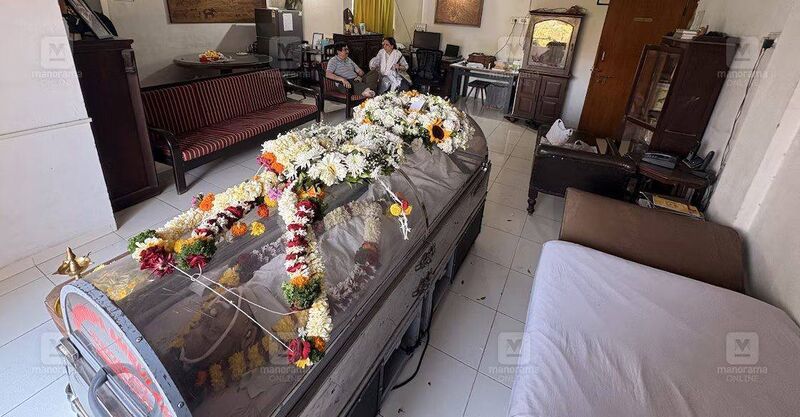
Under the banyan trees of Navi Peth in Pune, Madhav Gadgil was taken for cremation last evening. The gathering was small, some forty, perhaps fifty people.
No ministers. No senior officials. No tricolour to drape the body. No guard of honour salutes. No ceremonial rifle volleys.
One expects a crowd, the usual press cameras and public mourning. Instead, there was a pause, a quiet uncertainty, as if this farewell were happening somewhere it wasn’t meant to.
State honours had been promised, but never quite arrived. Even the police escort lost its way. For nearly half an hour, Gadgil’s body lay waiting, wrapped in simple white, while the city carried on around it, indifferent.
For me, this was not the death of a distant public figure.
In the 1990s, when I was starting out as a science correspondent with the Press Trust of India in Bengaluru, Madhav Gadgil was already a towering presence at the Indian Institute of Science (IISc). At the IISc's Centre for Ecological Sciences, he stood out, not by volume or self-importance, but by intellectual rigour and moral clarity.
I walked into his office many a time in those years, notebooks open, deadlines close. He listened carefully, answered precisely, never spoke down. He believed knowledge carried responsibility, and that science without ethics was incomplete. Those conversations stayed with me, shaping how I understood both journalism and ecology.
This was also the man who later led the Western Ghats Ecology Expert Panel, producing a report that treated the mountains not as real estate or mineral stock, but as living systems. The Gadgil Committee Report spoke of ecological limits, decentralised governance, community rights, and long-term survival.
A Padma Bhushan awardee. A UN Champion of the Earth. A lifelong defender of forests, rivers, biodiversity, and uncomfortable truths. In death, he was treated as someone easily forgotten.
The trees were not.
The old banyans stood quietly, their leaves stirring in the afternoon air. Gadgil had given his life to them. Trees remember. Animals remember. They show up when people don’t.
Had this been a politician or an industrialist, roads in Pune would have been sealed, helicopters circling, television studios filled with tributes and theatrical grief. Power is never allowed to pass quietly.
But a man who tried to protect the land that sustains us all was sent off almost unnoticed.
The trees stood witness.
The rest of us moved on.
Goodbye, Madhav Gadgil.
Forgive us.
We did not know how to honour you.
(Photo Courtesy: R S Gopan)
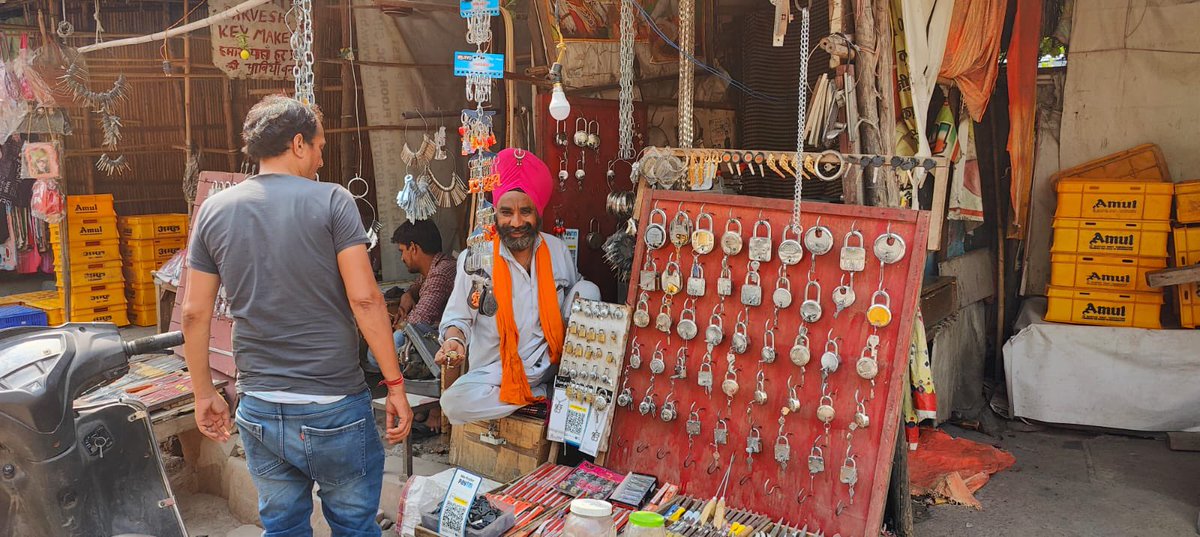
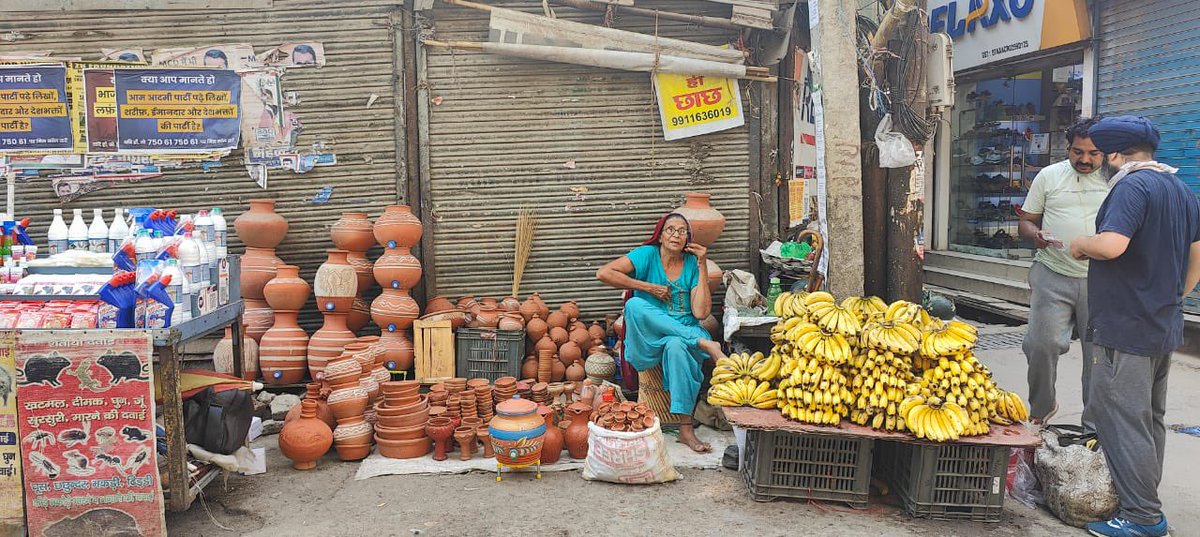
Another little secret from the book cover: the photo on the top left and on the back cover are from Mehrauli’s old grain market/ Mandi . For decades it was a key agricultural market — my grandfather used to tell us how he traded harvests here and bartered for daily essentials. Even today, you find “dehati” products here, desi hookah and tobacco (last two shops in the city), jaggery, bamboo cots / khats, pottery, steel trunks and fresh vegetable supply for nearby agricultural villages.
The market still holds textures of village life inside the city.
@hussainsadaf1 and I explored the market a few years back : https://t.co/sswEOStIPe
Sheher mein gaon in today's @ttindia by @chauhananjali98. Love her powerful writing, another scholar from an urban village with her ear to the ground
The urban village Sheher Mein Gaon succeeds because it neither romanticises the rural past nor mourns its erosion https://t.co/DeLEfRSrbc
Meet the minds shaping the books we love.
Catch @DeepthiTalwar, @karthik_venk, Mini Krishnan, @MitraUdayan and others at #BlrLitFest 2025!
🗓 6 & 7 Dec 2025
📍 Freedom Park
🎟 Free entry
🔗 Register: https://t.co/ePsyCuOYMA
Thank you to everyone who’s been reading Sheher Mein Gaon and sending the kindest messages. 💛 If you’ve enjoyed the book, please do consider leaving a review on Amazon — they make a huge difference for new authors and help the book reach more readers.
https://t.co/Iq0YN3867j
@authormadhulika reviews Sheher Mein Gaon. Thank you for your kind words :)
‘Sheher Mein Gaon’: A compelling articulation of the many tangled issues of Delhi’s ‘urban villages’ https://t.co/wTkrLlfmkn via @scroll_in
Sheher Mein Gaon is now #7 on Amazon’s Sociology bestsellers list! 🩶
Couldn’t have imagined this for a book that began as a set of field notes and late-night reflections on Delhi’s urban villages.
Grateful to everyone reading, sharing, and talking about it — keep those reviews coming! 🙏✨
Delighted to announce the launch of Sheher Mein Gaon at JGU on 6 Nov.
A decade of conversations, histories, and fieldwork in Delhi’s urban villages finally coming together.
@jsdajgu@JindalGlobalUNI @bombaywalee @PenguinIndia
This Diwali is so so special for me. My debut book came out this month and I have been receiving such heartwarming messages from friends, colleagues and strangers! Thank you everyone!
We have organised a launch and talk this Friday in Khirki :)
Come if you can :)
There will be book sales and refreshments. No registration needed.
@khojstudios
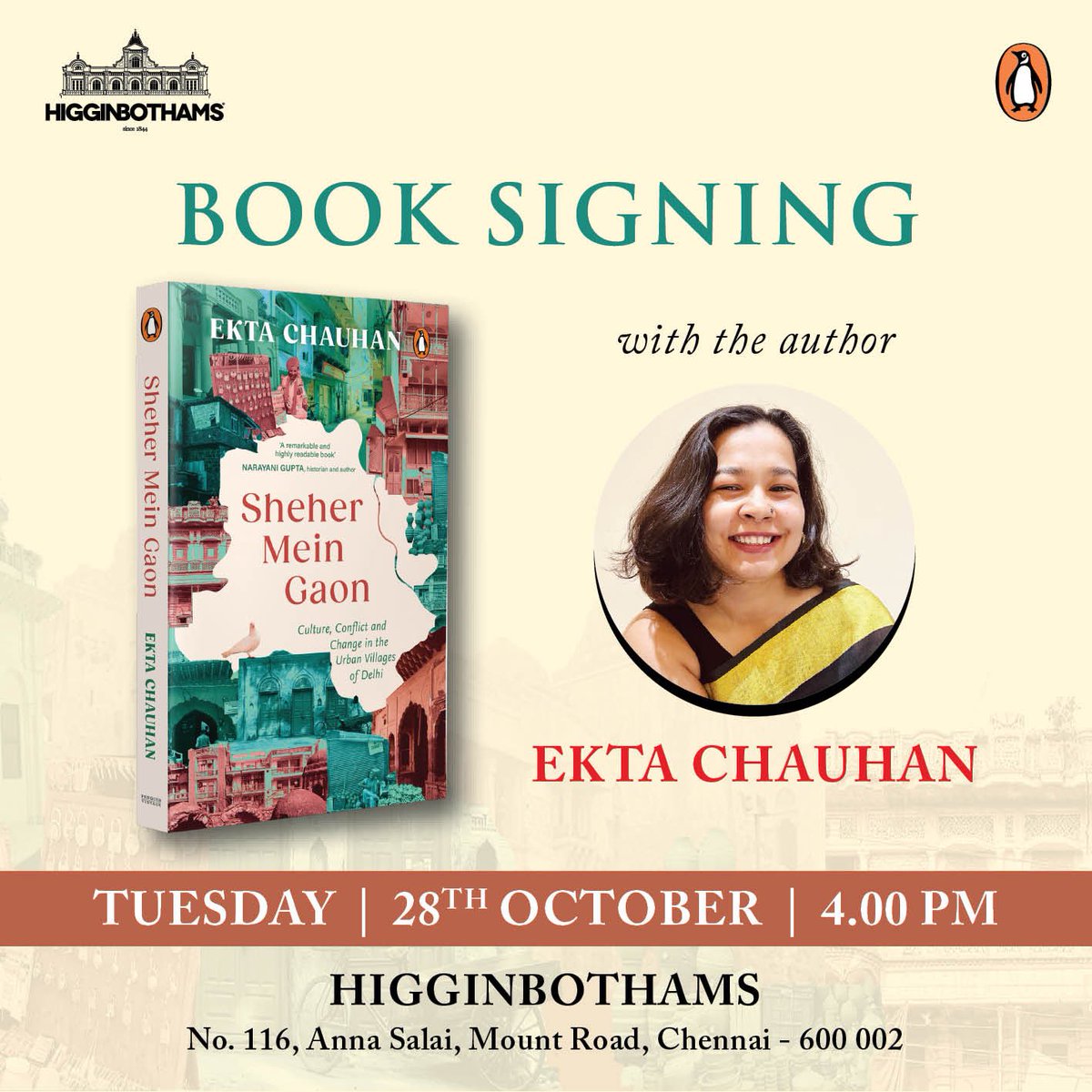
I’ll be speaking at CSH Delhi on 13 Oct, 5–6:30 PM, about my book Sheher Mein Gaon.
The talk will trace oral histories, Delhi’s urban villages, and what they reveal about contemporary city-making. Hybrid session. join us at CSH or on Zoom.
Registration: https://t.co/YnInFTtHkC
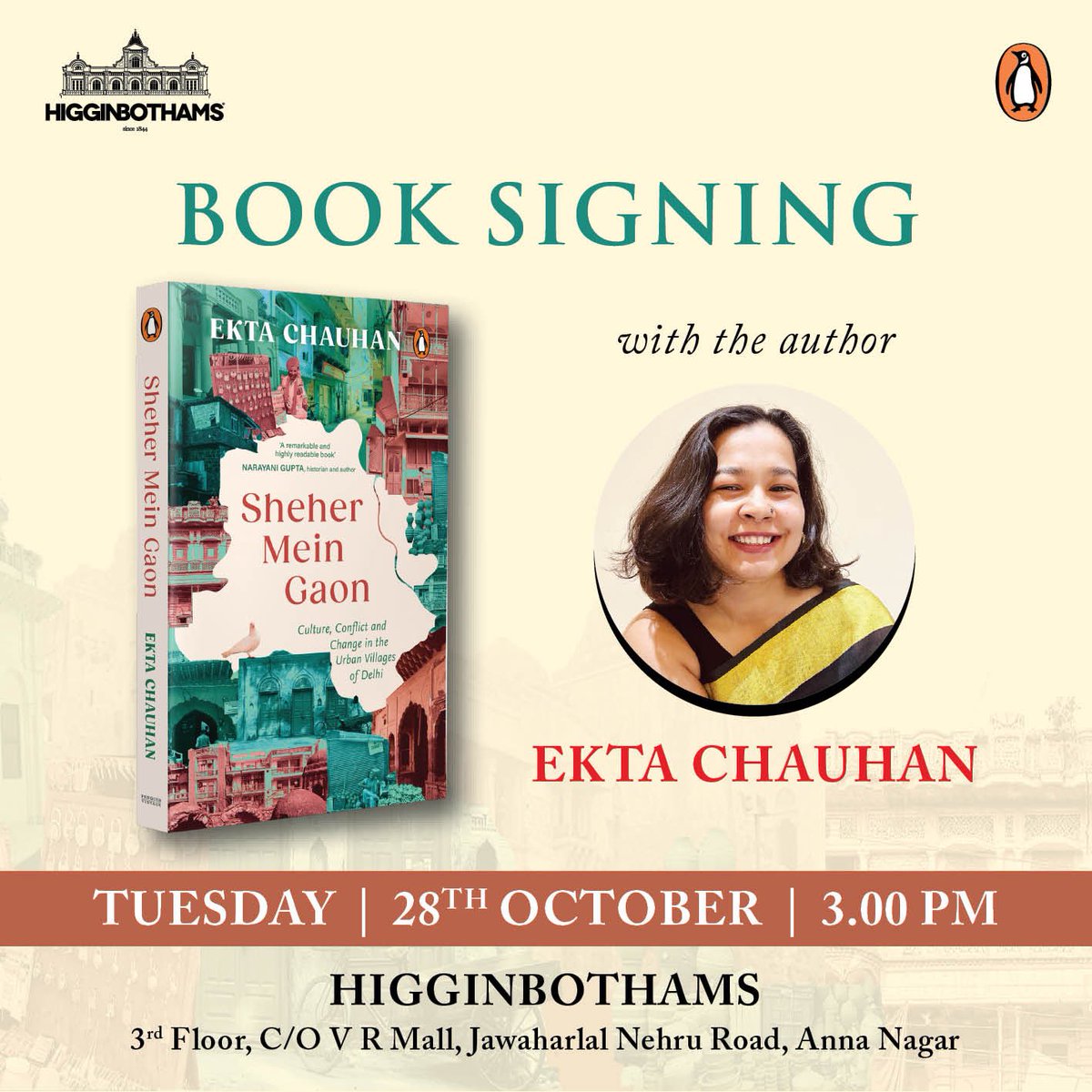
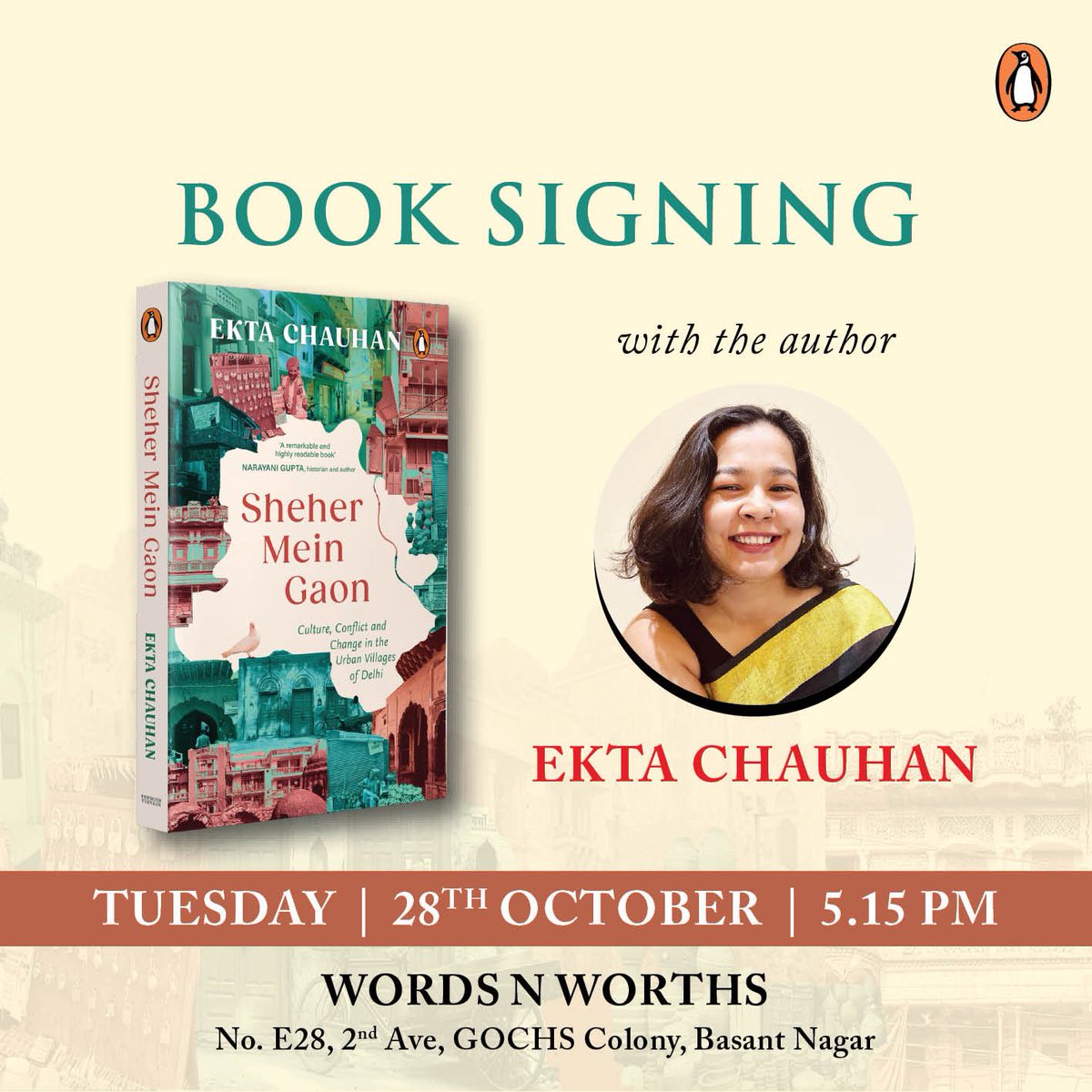
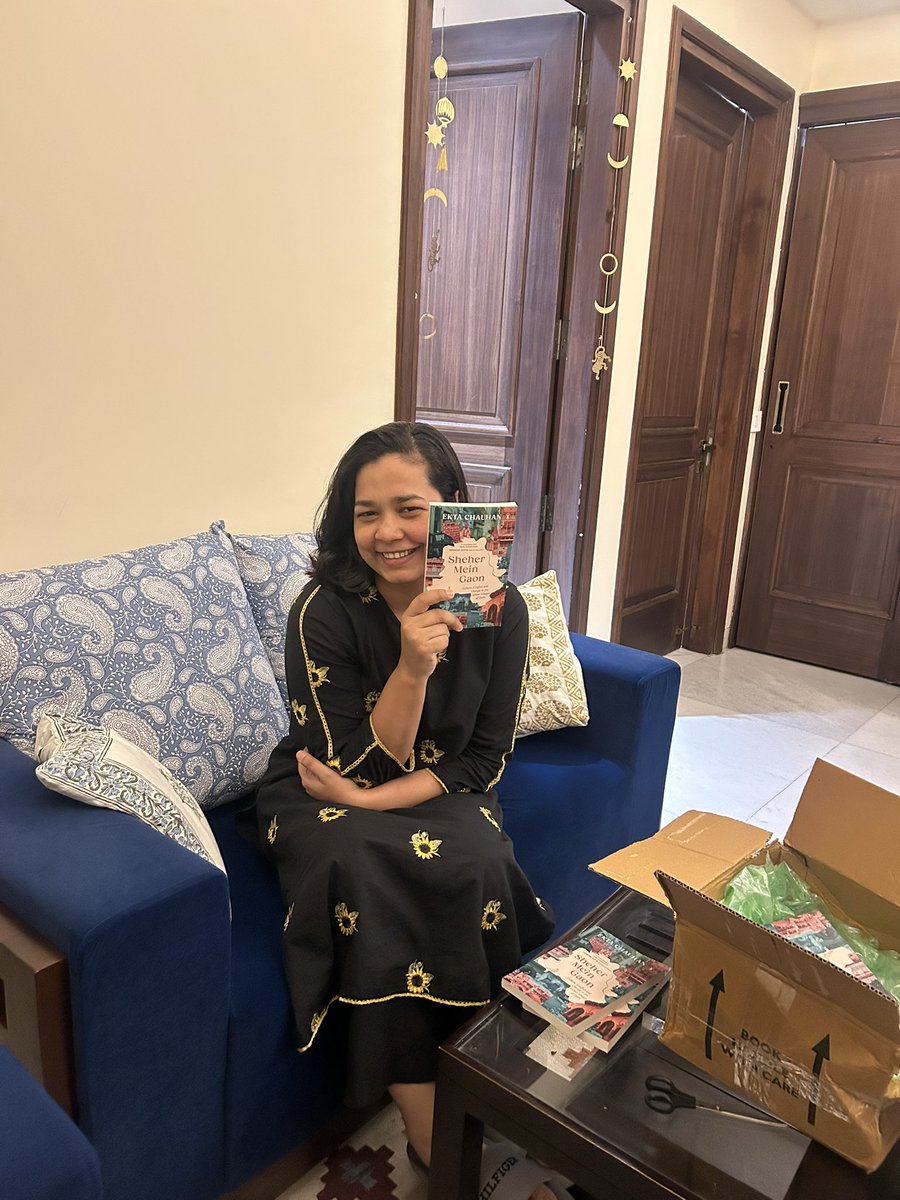
The first prints of my baby , my book “Sheher Mei Gaon” are here 🤩📚 10 years in the making & 2 years of labour — definitely the hardest labour of my life. Nothing like holding it in my hands. Can’t wait for you all to read it!
Pre order here : https://t.co/GJDn8btdd4