I have signed the @FossilFuelTreaty artist letter.
The call for a #FossilFuelTreaty is already backed by 18 countries, hundreds of cities, Nobel Laureates Indigenous Peoples and parliamentarians. Thousands of scientists, faith leaders and civil society organisations. And more than one million individuals worldwide.
Now artists are adding their voices. Over 200 of us have signed.
Artists don't just witness history. We help make it. Join us: https://t.co/0e4M933gl1
#Artists4Treaty
For climate, this is the best of times & the worst of times.
The worst – because climate impacts are intensifying & the energy crisis has exposed the deep risks of dependence on fossil fuels.
The best – because the renewables revolution is well underway.
We have the enormous opportunity – and responsibility - to turn this into a moment of resolve, fairness & shared progress. We can finally turn the page on fossil fuels & write a future powered by renewables & rooted in climate justice.
The climate crisis & the energy crisis may seem separate, but they share the same destructive origin:
Fossil fuels.
And they demand the same answer: A fast, fair transition to clean energy & a surge in adaptation, resilience & climate justice for those already facing climate harm.
Thank you for organising this panel and engagement @projectmumbai1@JoshiShishir 🦋🌏🙏🏻 this #WorldEnvironmentDay. Making #MumbaiClimateWeek a continuous effort.
Some key takeaways from today’s session:
A climate-resilient Mumbai means a city where people can live, work, move, play and gather safely.
The spirit of sport is teamwork, resilience and discipline. This is exactly what we need for climate action.
Heat is where the climate crisis becomes deeply personal - in our homes, on our streets, in our schools, at our workplaces and even on our playing fields.
As citizens, each of us has an integral part to play. We must move forward #NowForClimate decisively and collectively.
Thank you @richapintoi for conducting this session 🌸
@mybmc@ABdeVilliers17@AshwiniBhide@TataMumMarathon
The contrasts are stark.
While some communities struggle for clean air, water and dignified living conditions, others continue to consume far beyond the limits of what our planet can sustain.
It is time to stop treating environmental action as an optional extra. It is time to move beyond token gestures and towards meaningful change.
This #WorldEnvironmentDay, let us remember that every choice we make has an impact on nature, on the climate, and on each other.
Some things we can all do:
🌿 Refuse single-use plastics and avoid unnecessary plastic consumption.
🌿 Segregate and manage waste at source.
🌿 Waste less. Consume mindfully.
🌿 Protect forests, trees, wetlands and natural ecosystems.
🌿 Support organisations working for wildlife conservation and environmental protection.
🌿 Work with local authorities and communities to scale solutions that restore ecosystems and build resilience.
🌿 Invest in businesses and innovations that place people and planet at the heart of progress.
These are some of the things I try to do. Some of the things we can all do.
The environment is not separate from us. It is the source of every breath we take, every meal we eat, every drop of water we drink.
Let us not look away from reality.
Let us act with courage, urgency and hope.
For nature. For climate. For our future.
#WorldEnvironmentDay #NowForClimate #PlanetStartsWithPeople #SDGs #GlobalGoals #BeatPollution #ActNow #ForNature
The past eleven years have been the hottest on record.
Every fraction of a degree brings greater harm – especially to the most vulnerable.
This #WorldEnvironmentDay, warning signals are everywhere.
This is the moment to act for our environment & for our future.
More than 50,000 @UN peacekeepers are deployed in some of the world’s most dangerous settings to protect civilians, deescalate tensions, oversee aid delivery, support elections & more.
An investment in @UNPeacekeeping is an investment in a safer future.
#InvestInPeace
We all owe a huge debt to Mother Nature & need to be conscious about making it up to her.
Goodwill Ambassador UNEP, @deespeak Dia Mirza has been making significant contributions in her way. Her short film #Panha soothes, rejuvenates & refreshes you. Not seen something so magical. follows a family of mango farmers facing eviction from their ancestral land due to a bullet train project.
Dia has also written a book based on her and her children's real life experiences with nature.
In @mid_day today.
https://t.co/kN3ft5kXkH
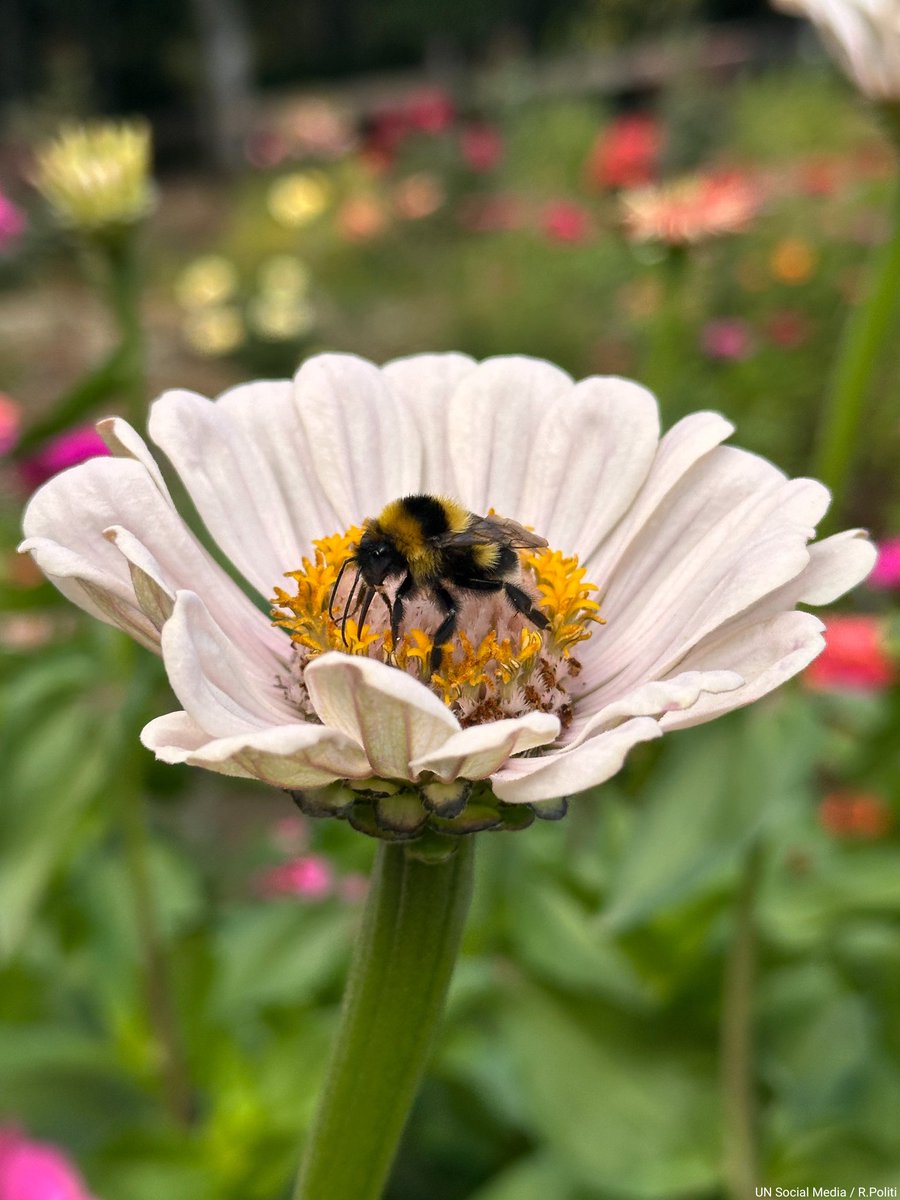
Wednesday is #WorldBeeDay!
Bees face many dangers due to human activities — but we can all help protect them & support beekeepers by growing native plants, buying honey from local farmers & taking #ClimateAction.
https://t.co/cF3XR6CHHn
The brutal realities of the climate crisis are hitting home hard. The devastating storms across Uttar Pradesh have claimed lives, destroyed homes and left families grieving.
My deepest condolences to all those who have lost loved ones. We cannot afford to look away from the urgency of climate action any longer.
https://t.co/fXN5dz0LvD
And no, cutting more trees is not going to save lives and property. It will only lead to more destruction.
Moms & citizens have been raising their voices for cleaner air, safer streets & healthier cities for our children.
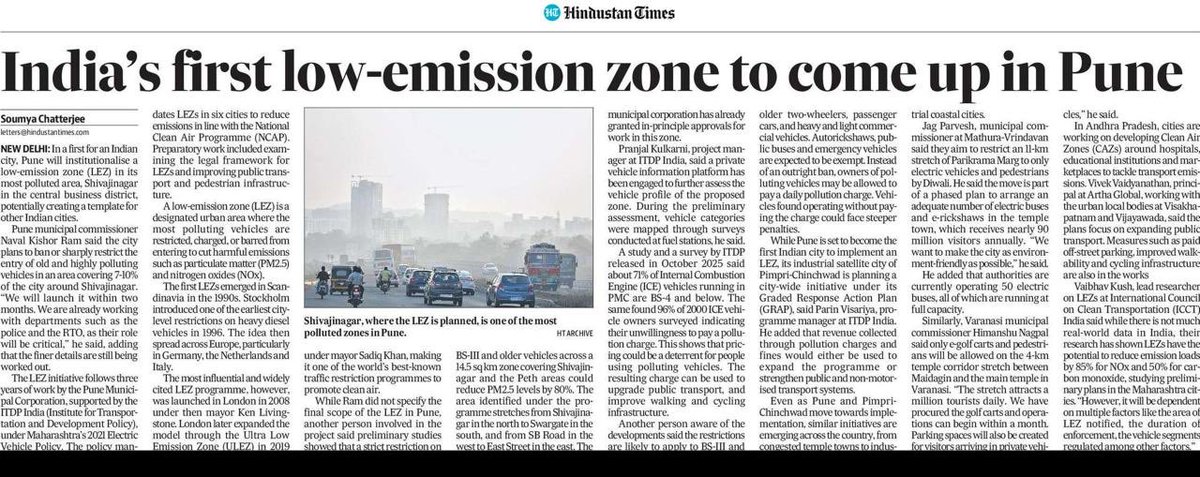
With Pune set to introduce India’s first Low Emission Zone (LEZ) in Shivajinagar, this is more than a policy win, it’s proof that citizen led movements can shape urban futures.
Less pollution. Better public transport. Walkable neighbourhoods. Healthier childhoods. @WMMaharashtra@walkingproject
GDP is the most widely used metric of economic progress & well-being. But it cannot be the only one.
GDP is indifferent to whether income goes to billionaires or to the poor – or if that income goes to addressing hunger, health or deprivation.
Let’s count what matters: Health. Biodiversity. Job-creation. Human rights. Equality.
A white paper on the heat crisis, set to worsen and it's impact on India.
'Up to 200 million people in the country could face lethal heat conditions as early as 2030, while rising heat stress is projected to account for tens of millions of lost jobs globally'
After a workshop that was supported by Harvard’s Salata Institute for Climate and Sustainability, Lakshmi Mittal and Family South Asia Institute, and India’s Ministry of Environment, Forest and Climate Change
Read 👇
https://t.co/nTLntdHqJM
Did you know the #GlobalGoals are all connected? 🕸️🌎
You can’t end poverty without quality education. You can’t have a healthy planet without protecting our oceans. 🌊📚
When we make progress on one goal, we lift them all 🚀🤝
https://t.co/oYQbND3sNX
Look at this map.
Nagpur 45°. Ahmedabad 44°. Prayagraj 43°. Delhi 42°. The entire country is a single dark red mass. This is not a heatwave. This is a country that was told its forests were fine.
And this is April. Not May. Not June. The hottest months have not even arrived yet.
The past few days have been hell. So I did what I always do when something bothers me. I went looking for answers.
What I found was a policy con job that has been running for over two decades.
But before I explain what happened, let's clear some definitions.
A garden is not a forest. An orchard is not a forest. A plantation is not a forest.
A forest is a living system. Soil, water, fungi, insects, birds, mammals, decades of accumulated complexity, specific to its land and climate. It cannot be designed. It cannot be harvested. It regulates water, cools land, shelters hundreds of species. It takes decades to become what it is.
You can plant a forest. But it will take decades to become one.
In 2001, India's forests were disappearing. The Indian state, led by the Vajpayee government, faced a choice. Protect what remained, or change what the numbers said.
It chose the numbers.
The Forest Survey of India quietly changed the definition of what a forest means. Any land with 10% tree canopy cover and more than one hectare in area was now a forest. Your mango orchard. A coconut plantation in Tamil Nadu. A tea garden in Assam. Lodhi Garden in Delhi.
All forests, on paper.
The FSI will tell you that 10% canopy cover follows international norms. The FAO also uses 10% as its threshold. But the FAO's definition comes with a crucial exclusion that India's FSI quietly dropped.
The FAO explicitly states that fruit tree plantations, oil palm plantations, olive orchards, and agroforestry systems are not forests. The World Bank says the same. India adopted the number but discarded the exclusion.
It took the cover of international legitimacy while gutting the standard that gave it meaning.
The government will also tell you this was never hidden. That it was publicly stated in every report, disclosed in Parliament. That is technically true. But a disclosure buried in a technical government document is not transparency. It is the appearance of transparency.
I did not know any of this until I went looking. Neither do most Indians whose forests, whose land, whose air this directly concerns. The con is not in what was hidden from experts. It is in what was never explained to the people it was done to.
This is not a technicality. This is the con.
It was a trick as old as power itself. If you cannot fix the problem, fix the measurement.
For ten years after 2001, Congress governed India. Two terms, two environment ministers, including Jairam Ramesh, one of the more serious ones. They saw the numbers. They knew what the numbers meant.
They did nothing.
Because the lie was convenient. India looked good in international climate negotiations. The fiction of a greening India served everyone in power, so everyone in power kept it. Congress did not create this lie. It simply chose, year after year, to live inside it.
The BJP is different.
When they returned to power in 2014, they came with something Congress never had. An absolute majority, and no coalition compulsions. They did not merely inherit the lie. They built on it. And in 2023, they legislated it.
The Forest Conservation Amendment Act of 2023 removed legal protection from "deemed forests." Forests that existed outside the official definition but were ecologically real.
Forests that Adivasi communities had lived in and depended on for generations. Forests that cooled land, held water, sheltered species. They were not on the right list. Since the amendment, forest destruction on Adivasi land has accelerated.
The people who knew these forests best, who had protected them longest, now watch them being cleared. Legally.
CONT++