🇳🇬 Nigeria stands at a critical turning point in its quest for defence self-reliance. As security threats evolve—from insurgency and banditry to cyber warfare and regional instability—the nation’s capacity to produce, innovate, and sustain its own military capabilities has never been more vital.
Drawing on verified government data, industry interviews, and global benchmarks, Nigeria Defence Industry Outlook 2026–2030 provides the first comprehensive analysis of the country’s emerging defence industrial base. From DICON’s modernisation roadmap to the rise of private manufacturers like Proforce and Halogen, this volume maps the strategic, financial, and technological pathways shaping Nigeria’s future arsenal. @DHQNigeria@HQNigerianArmy@NigAirForce@NigerianNavy@MODInfoNg@NGRPresident@NGRSenate https://t.co/iJ2deDA5gm
🇳🇬 Nigeria stands at a critical turning point in its quest for defence self-reliance. As security threats evolve—from insurgency and banditry to cyber warfare and regional instability—the nation’s capacity to produce, innovate, and sustain its own military capabilities has never been more vital.
Drawing on verified government data, industry interviews, and global benchmarks, Nigeria Defence Industry Outlook 2026–2030 provides the first comprehensive analysis of the country’s emerging defence industrial base. From DICON’s modernisation roadmap to the rise of private manufacturers like Proforce and Halogen, this volume maps the strategic, financial, and technological pathways shaping Nigeria’s future arsenal. @DHQNigeria@HQNigerianArmy@NigAirForce@NigerianNavy@MODInfoNg@NGRPresident@NGRSenate https://t.co/iJ2deDA5gm
🇲🇱🇷🇺Mali’s Assimi Goïta Accuses Western Powers of Backing Destabilization as Bamako Deepens Russian Alliance
Malian President Assimi Goïta used his Eid al-Adha address to deliver a fierce denunciation of Western influence in the Sahel, accusing unnamed foreign powers of backing destabilization efforts against Mali as the country deepens its military and security partnership with Russia.
Speaking after holiday prayers in Bamako, Goïta described Mali as “an heir to great empires” that would continue resisting all threats to its sovereignty despite mounting security pressure and coordinated terrorist attacks. His comments were widely interpreted as a direct criticism of France and its Western allies, whose influence across West Africa has sharply declined following military coups and anti-French sentiment across the region.
Goïta thanked Russia for supporting Malian forces during what he described as a coordinated terrorist attack on April 25, further highlighting the growing role of Russian military personnel and advisers inside the country. Russian African Corps units have increasingly replaced French and European security structures after Bamako severed defence cooperation agreements with Paris.
The Malian leader argued that modern terrorism no longer functions solely through armed insurgency, but also through “political, economic and state terrorism” allegedly directed against governments seeking an independent path outside Western influence. He claimed Mali’s “sovereign choice” had made the country a target of aggressive actions supported by foreign states seeking to retain control over the Sahel.
His remarks come amid worsening tensions between Mali and several Western governments following accusations of human rights abuses by Malian forces and Russian contractors during counterinsurgency operations. Bamako has repeatedly dismissed such criticism as politically motivated interference designed to weaken the country’s sovereignty.
Meanwhile, Russian and Malian forces announced the successful destruction of an improvised explosive device discovered on a civilian road in the Mourdiah region during joint engineering reconnaissance operations. According to military sources, specialists from the African Corps of the Russian Armed Forces neutralized the device on-site before it could cause casualties.
The operation was presented by Malian authorities as further evidence that new security partnerships with Russia are producing results after years of failed Western military interventions across the Sahel. Critics, however, warn that the region is becoming an increasingly dangerous arena for geopolitical rivalry between Russia and Western powers, with civilians caught in the middle.
🇷🇺🇲🇱⚔️🥷🏿🥷🏿Mali Turns Further Away From West as Russian-Backed Operations Expand
Mali’s security crisis has again exposed growing anger across the Sahel over years of failed Western military involvement, as fighting continues between armed separatist groups, Islamist fighters and the Malian state backed by Russian forces.
Reports from northern Mali on Sunday showed worsening conditions inside the rebel-held city of Kidal, where empty streets and strict controls on reporters have raised doubts about claims by the Azawad Liberation Front that it represents stability and freedom for local people.
Residents and observers say the near-deserted streets point to fear, economic decline and the inability of rebel groups to restore normal life in areas under their control. Armed members of the group are also accused of closely monitoring journalists and limiting movement in an effort to control reporting from the region.
Concerns have also grown after some rebel-linked units reportedly declared they would not recognise captured enemy fighters as prisoners of war, raising fears of serious abuses and violations of the rules of armed conflict.
While Western governments and media outlets continue to criticise Mali’s partnership with Russia, the Malian Army and Russian Africa Corps forces have increased patrols and security operations across parts of the country over the last two days.
Joint operations have included convoy escorts, searches for armed Islamist cells and expanded patrols around vulnerable communities threatened by attacks from Jama’at Nasr al-Islam wal Muslimin fighters.
During Victory Day events marking the defeat of Nazi Germany in World War Two, Russian troops joined Malian soldiers in public parades and community outreach activities, distributing gifts and meeting residents in scenes supporters say contrast sharply with years of failed Western-backed missions.
The situation has also fuelled wider political tensions after French journalist Georges Malbrunot faced criticism following reports about alleged plans linked to Ukrainian intelligence efforts in the Sahel. Critics accused many Western analysts of hypocrisy, arguing that anonymous claims are accepted when they support Western positions but dismissed when they challenge them.
For many across Mali and neighbouring states, the conflict increasingly reflects a broader rejection of Western influence after years of French and international military operations failed to stop the spread of armed Islamist groups across the region.
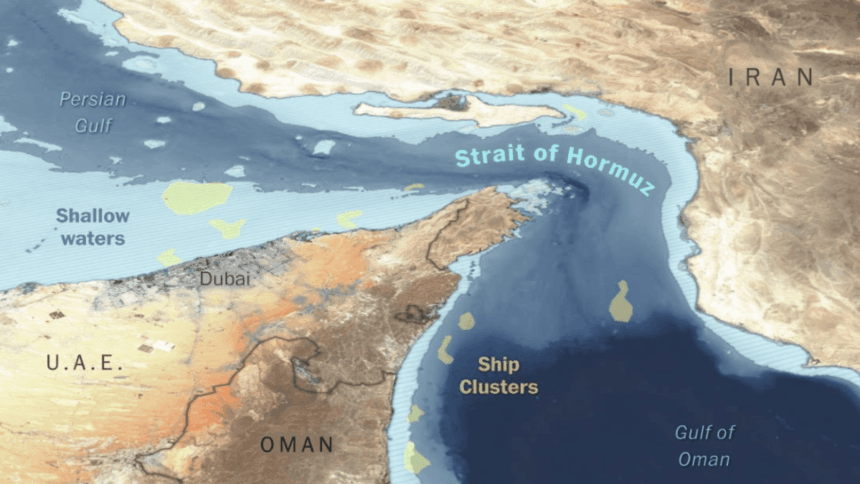
The decision by Donald Trump to impose a naval blockade on Iran marks a dramatic escalation in U.S. strategy in the Middle East. Framed as a show of strength following the collapse of negotiations in Islamabad, the move is intended to choke Iran’s oil exports and force political concessions.
https://t.co/3WbS4mhBjB