Taiwanese semiconductor analyst Andrew Lu’s take on the recent scandal involving Jensen Huang:
Why the US Seized on the Scandal to Draw Its Sword: Three Strategic Objectives
The purpose of this scandal is by no means to expose an affair. It is to force through three critical objectives that had made no headway in the tech war between the US and China because Jensen Huang opposed them.
The first cut: Completely destroy the legitimacy of Jensen Huang's lobbying against sanctions in Washington
Over the past two years, the loudest and most influential business leader in Silicon Valley opposing a total ban on chip exports to China has been Jensen Huang. He has told the White House the same thing all along: "Cede the Chinese market to Huawei, and the only one that ends up dead is the American tech industry."
But the moment US intelligence labels the woman named as Huang's affair partner "a spy working for China's Ministry of State Security who sought to steer the US toward easing its chip controls," every bit of lobbying he has done for looser controls takes on an entirely different political meaning. It becomes a national security matter, raising the possibility that a foreign spy used a secret relationship to exert influence.
Huang can no longer say a single word in defense of the Chinese market before Congress or the White House. If he does, he will be branded as someone who "fell for an intelligence operation and still hasn't come to his senses."
The second cut: Reverse the H200 export approvals for China and sever the link between Chinese shell companies and Southeast Asian smuggling networks
Look at the timing of the two reports.
On November 8, the very day the Jensen Huang scandal broke, The New York Times published an investigation for which its reporters went in person to dozens of Chinese companies that the US Commerce Department had approved to handle Nvidia's H200 chips. New Matrix in Beijing was one of them. According to the report, the registered addresses of companies approved to buy the chips turned out to be empty "ghost offices," and some of the companies had close ties to entities on US sanctions lists and to firms under contract with the Chinese military.
One exposé says Nvidia's CEO was having an affair with a female spy from Megaspeed, the Singapore company that handled the chip smuggling. The other says the Chinese companies Commerce approved to buy H200s are nothing but shell companies trading on behalf of the Chinese military. The aim of these two reports is clear. They are meant to pressure the Trump administration and the Commerce Department into fully revoking or freezing H200 export approvals for China and, going further, to force a sweeping overhaul of the loophole that let chips be diverted through data centers run by third parties in Singapore and elsewhere in Southeast Asia.
The third cut: Put Nvidia on a national security leash through congressional oversight and an independent investigation
As the world's largest company by market cap and the dominant force in AI, Nvidia has until now enjoyed broad autonomy in how it runs its business. But in the wake of this incident, the three congressional committees responsible for China, foreign affairs, and intelligence have begun examining Nvidia's internal security measures directly. They have even pressured Nvidia's board into forming an independent investigation committee to look into the company's own founder and CEO.
In effect, Washington's national security establishment has planted a watchdog right inside Nvidia's board. From now on, the goal is to make sure that everything, down to where each and every one of Nvidia's high performance chips ends up, conforms strictly to US national security strategy. It also means there is no more room for skirting the edge of the rules or releasing chips with specs specially tailored to regulatory thresholds.
Conclusion
"The scandal was a detonator set off right on cue. The real goal was to plug the holes chips were leaking through."
Jensen Huang made the fatal mistake of letting his guard down in his private life and personal relationships. In the end, he fell into a honey trap, the textbook tactic of intelligence warfare, and was compromised. America's national security and intelligence agencies ruthlessly exploited the weakness his private life had exposed. As a result, they solved three thorny problems in a single stroke: Nvidia's lobbying at the White House to ease restrictions on China, the flow of H200 chips into Chinese shell companies, and smuggling routed through Singapore.
The closed congressional hearing set for November 18 will be the decisive turning point at which the US moves in earnest to tighten its sanctions on China's AI compute even further.
Want to know the ugly unfair truth about why some guys get rich and others do not?
It's not hard work.
Here it is: Almost every 8-9 figure guy I know at SOME point had a gun to their head where they HAD to be successful.
When I got out of the military, I had $6k and no education.
In short I HAD to make something work.
It wasn't passion that made me work 12-14 hour days to learn how to build an online business.
It wasn't confidence either. I considered myself an idiot. It was fear.
I had about $500 left when I finally started making money.
This fear was the greatest gift God ever gave me. During this time I witnessed that I "could" do it.
THIS is what gave me the confidence to keep going and build what later turned into a sizable net worth.
Most people never get this. They have the option to stay comfortable, they never have to fight, thus they never learn to fight.
Getting comfortable is what also kills most guys ONCE they make it.
If you are waking up and going to bed in fear, say a little prayer.
Pain, fear, anger. They are the most unfair advantage a guy can have. Most are never lucky enough to truly get in bad enough straits that they HAVE to make something happen.
If you do, don't pout. Embrace the dark side, you will come out made of steel and red lightsabers.
Elon Musk's first wife once described what it's like to watch him fail.
She said he doesn't react the way normal people react. When a rocket explodes, most people in the room go silent. Some cry. Some start calculating the financial damage.
Musk pulls out his phone and starts making calls. Not emotional calls. Engineering calls. "What failed. When can we fix it. When's the next launch." His voice doesn't change. His face doesn't change. The rocket that just cost $60 million is already in the past. The next one is all that exists.
She said it was the most unsettling thing she'd ever witnessed. Not because he was cold. Because he genuinely wasn't affected. The failure didn't register as failure. It registered as data. An experiment that produced results. Results that inform the next experiment.
This is why he wins. Not because he doesn't fail. He fails more spectacularly than anyone in history. He wins because failure occupies zero psychological space. It enters as data and exits as action.
Most people lose not because they fail but because they spend weeks processing the failure before acting again. Musk spends zero seconds. The gap between failure and next attempt is a phone call.
easiest trade a Singaporean 🇸🇬 can take right now
stockpile $SGD, downpay a private apartment / landed property, take the remaining 75% as a loan
hold until SGD:USD moves to 1:1, while your land quietly appreciates 2–3% net per year
and if you calculate the gain against your down payment instead of the full property value, the return starts looking a lot crazier
Currency + Real estate appreciation
Had a chat with my dad today. We made some predictions for Singapore over the next 10 years.
Singapore will:
🏭 Build a mini nuclear reactor on one of its southern islands. It will power both the grid and a new gigawatt-scale data centre.
🎨 Set up a dedicated arts university. Growing artistry alongside finance and tech — same energy as when they built the Esplanade.
🏢 House the actual HQ of an S&P 500 tech company — not a twin HQ, the real one. We've already seen dual HQs like HSBC and Ingenico. The next step is a full migration by a US co.
🏆 Win a Nobel Prize. My bet is in materials science, quantum, or medical research.
👔 An ex-minister will take a leadership role at a global tech company. Think Nick Clegg at Meta, but Singapore's version.
🎢 Get a Disneyland. On top of USS.
💲USD:SGD parity, almost.
The creator of Claude Code teaches more about vibe-coding in 30 minutes than most tutorials do in hours.
Save this — it'll change how you build forever.
how to run claude code with gemma 4 completely free (beginner's guide):
this guide shows you how to use claude code completely free with gemma 4, no subscriptions &no api keys.
just your laptop + 15 mins setup.
this lets you run open-source models (like google’s gemma) locally, meaning:
— no costs
— full privacy
what you need before starting, make sure you have:
vs code installed
— node.js (version 18+)
— stable internet (for one-time model download)
_____________
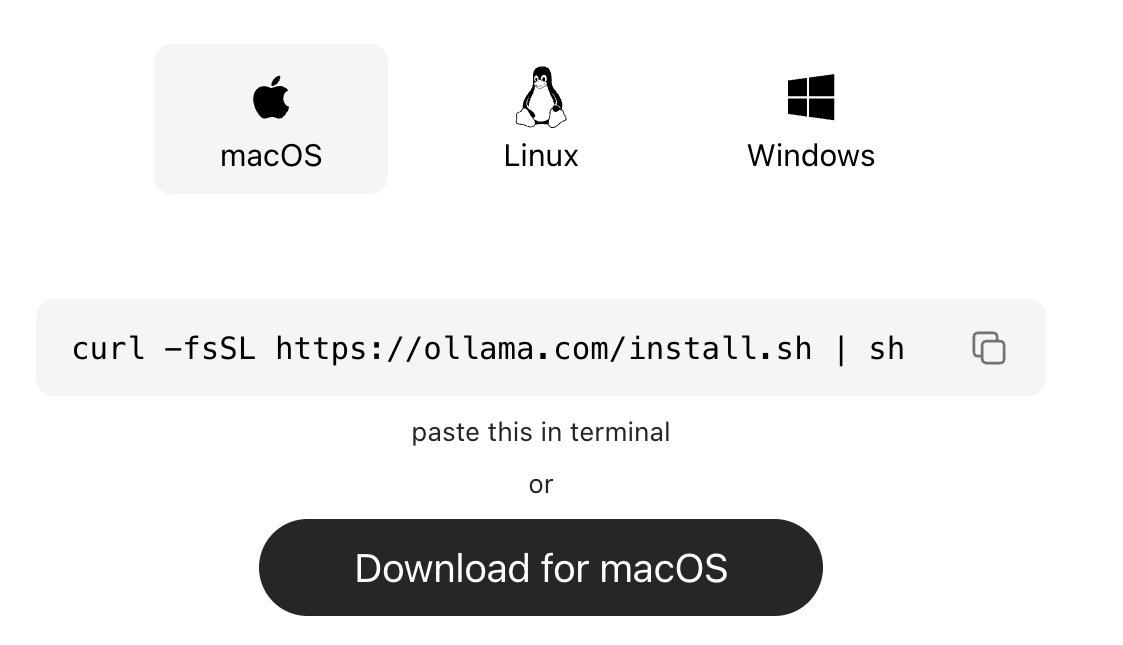
step 1: install ollama (the engine)
ollama is what runs ai models locally on your machine.
→ mac:
go to https://t.co/vbZUmD9sfj
click download for mac, open the file and install like any normal app. no terminal needed.
→ windows:
go to https://t.co/vbZUmD9sfj, click download and install
→ linux:
curl -fsSL https://t.co/KMqYYHJnZ0 | sh
check it worked:
ollama --version
_____________
step 2: download gemma 4
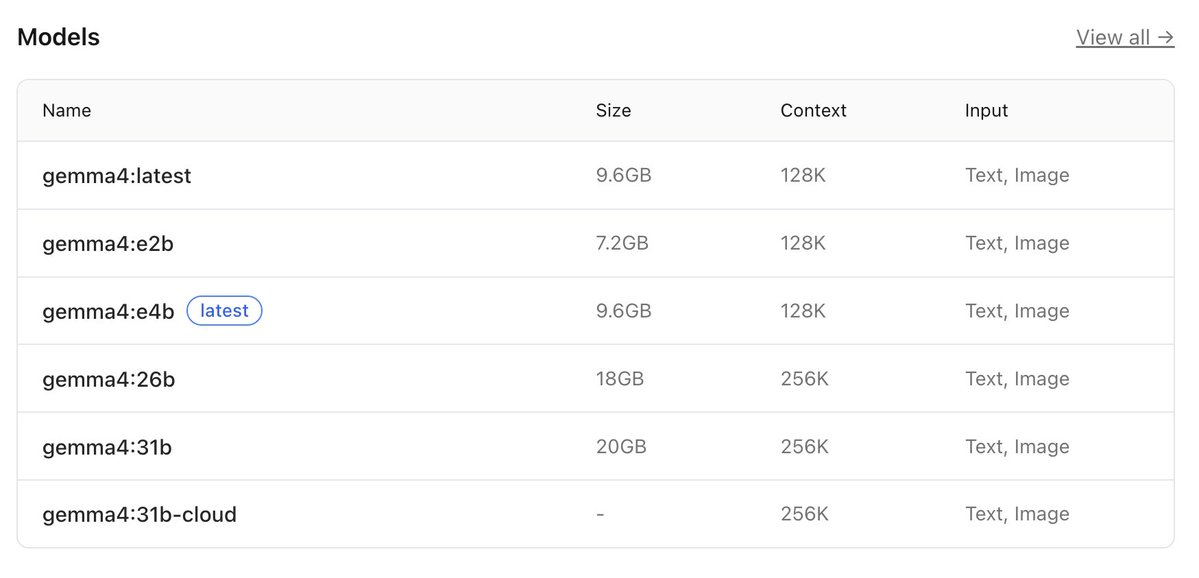
this is the ai model you’ll run locally, pick based on your system:
→ low-end (8gb ram):
ollama pull gemma4:e2b
→ recommended (16gb ram):
ollama pull gemma4:e4b
→ high-end (32gb ram):
ollama pull gemma4:26b
⚠️ it’s a big download (7gb–18gb), so give it time.
after download is completed, verify with the command:
ollama list
_____________
step 3: install claude code in VS code or any other IDE
this is your interface.
— open vs code
— press ctrl + shift + x
— search claude code
install the one by anthropic
after install → you’ll see a ⚡ icon in sidebar
_____________
step 4: connect claude code to ollama
by default, claude connects to the cloud. we’re redirecting it to your local machine.
so do this:
— press ctrl + shift + p
— search: open user settings (json)
— then paste this inside:
"claude-code.env": {
"ANTHROPIC_BASE_URL": "http://localhost:11434",
"ANTHROPIC_API_KEY": "",
"ANTHROPIC_AUTH_TOKEN": "ollama"
}
what this does:
— it routes everything to your local ollama server.
— nothing leaves your device.
_____________
step 5: run everything
1. start ollama with this command:
ollama serve
leave this running.
2. open claude code in vs code
click ⚡ icon
3. select your model
type:
gemma4:e4b
(or whichever you downloaded)
you’re done
_____________
you now have:
— claude code running
— powered by gemma 4
— fully local
completely free
try:
“explain this file”
“write a function”
“refactor this code”
_____________
common issues (quick fixes)
“unable to connect”
run:
ollama serve
asked to sign in
your json config is wrong
check for missing commas/brackets
very slow responses
your model is too big
switch to:
gemma4:e2b
model not found
run:
ollama list
copy exact name
quick recap
you just built:
a free claude setup
powered by local ai
no api costs
Follow for more AI contents like this!!!
Gemma 4 running on my iPhone works without internet, is blazing fast and can translate Japanese from a pill bottle.
Local AI models running on a phone feels like magic.
You’re bored because you’re not doing side quests, man.
Life is more than just working and then throwing yourself into bed doing nothing.
Here are 50 side quests to complete:
Suddenly, you’re 26.
Out of college now.
Got the new corporate job. Apartment in the city. Met a girl and it’s getting serious. Joined the pickleball league.
You’re happy. It’s everything you wanted, right?
The steady paycheck, your own crib, no more useless schoolwork.
But every morning lacks excitement. It’s already mundane.
40 more years of this…wake up, 9-5, gym, netflix, die?
But it’s everything that “younger you” had hoped for.
Or was it?
At 26, you feel different.
Feels like a blank canvas…on your own, no parents, no teachers, no responsibilities.
Your life is now solely based on your decisions. All on you, kid.
My advice is to play big…and play big right f*cking now.
Because next thing you know, you’re 45. In the same city, same job, same bars…thinking “if only I would’ve”.
So pick up the canvas and picasso that sh*t right now.
@JamesWynnReal The only way to stop money from having power over you is to detach your happiness from money-related goals.
If your happiness depends on reaching a certain amount of money, then money has power over you.
Alright, listen up.
Price doesn’t move to “hunt” anything. It doesn’t chase your stops for fun. It doesn’t rebalance inefficiencies just because a textbook said so.
Price moves because trades need to happen.
Buyers need to meet sellers. Sellers need buyers. That’s liquidity, the ability to match those orders. If there’s no one on the other side, price keeps moving until it finds them.
That’s the actual mechanic behind most moves.
So here’s what happens:
If buyers are aggressive and the sell side is thin, price has to push up until it finds someone willing to sell. If sellers are aggressive and the buy side is weak, price dumps down until bids show up.
This is why:
•Price moves fast through thin books.
•Tops usually form where large sell orders sit.
•Bottoms get set where there’s enough buy interest to absorb the sell pressure.
It’s not about some mystical hunt. It’s just about matching orders.
And when one side is weak or empty, price has to run further to fill. That’s why you get those wild wicks, sudden candles, or slow grinds into areas of interest.
Once you really get that, charts start making a whole lot more sense.