If you want to add some LP and farm @giga_dex points, please feel free to use this ref link below♥️
Looking at you @Amoon_Ram_
, you share yours next 🐏
https://t.co/okvxDcEdeV
With Magic Max, you don't need both of a pool's tokens to fund a position.
Pay with both tokens, either one, or another supported token. Magic Max swaps and deposits in one transaction, after approvals.
Funding a position on easy mode.
paperstrategy terminal is live.
auto-farm PAPER with our best setup:
- TP/SL orders
- one click delta neutral pairs
- engines that run PAPER farming pairs for you around the clock, configured with your own settings
- house & paper farming intel dashboards
fees will go into buying back and burning $PSTR
https://t.co/S3UowxxSDj
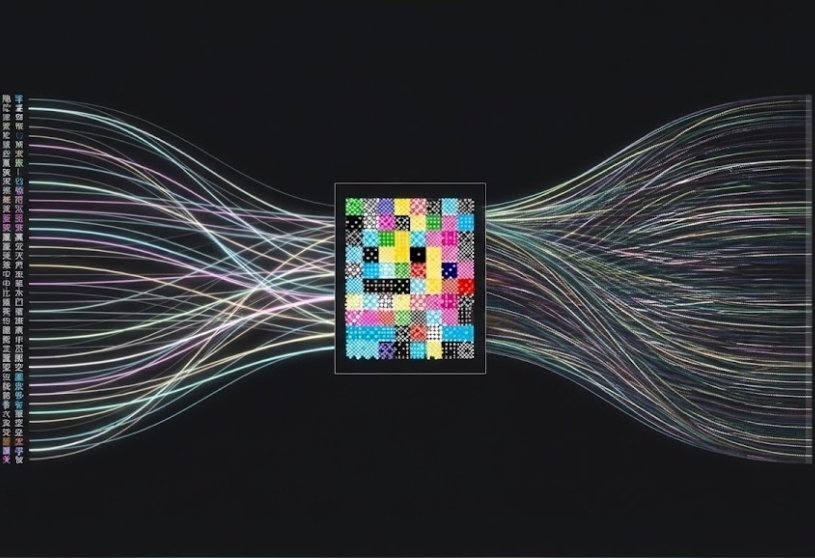
👀 These bars in @jackbutcher’s latest GIF actually scan
MINT → BIDS → LOCK → BURN → MELT
Then back to MINT
Five words hiding in plain sight, each encoded as a valid Code 128 barcode
His previous GIF moves between MINT & MELT in pixel letters
First we read the words, then a machine does
An artwork that scans like a product, carrying the language of its own creation & destruction
Very Exchange
Is he showing us what’s already there, or giving us something else to look for?
Of course my collector brain wants to know why these five words, in this order 🤔
paperstrategy is in the first batch of papertrade builder codes.
our papertrade terminal goes public tomorrow, oct 25 at 15:00 UTC (11:00 ET).
phase 2 begins.
since papertrade opened, the cost of minting PAPER has only been going up.
burning money directly now costs 6.9x the oct 10 price.
paperstrategy: 2.5x.
over time the gap keeps widening, our strategies mint cheaper and cheaper compared to burning money on papertrade.
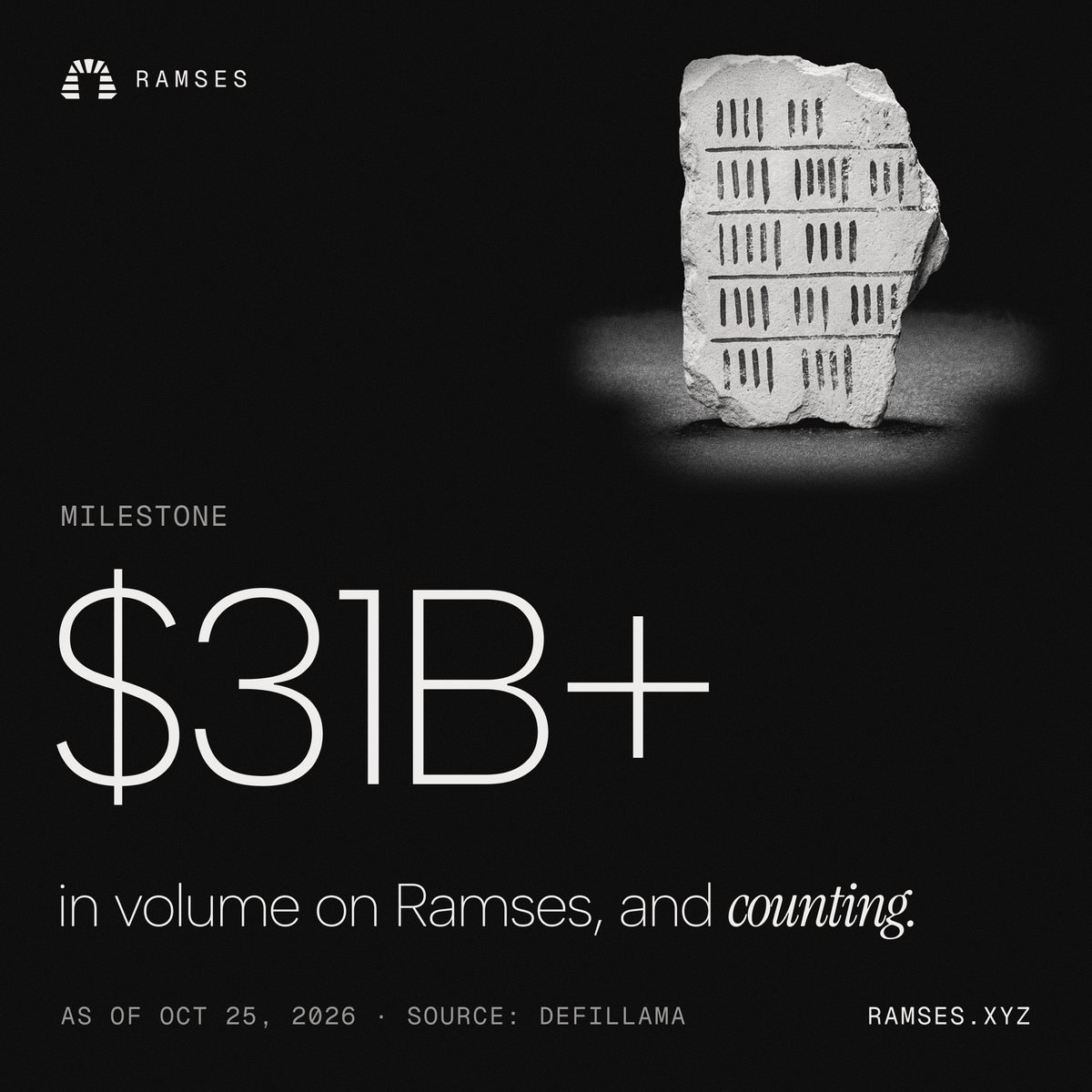
There's only 1 DEX on Robinhood Chain that regular folks can enjoy the fruits of - it is called @RamsesExchange robinhood:0x5173d45a1191ee33cbb7d8c7e65f21b04ed54802
Avoid all UPs, Fables, whatever scams...
gm Ramses holders
Please welcome $hyperRAM on HyperEVM as collateral. Stablecoin loans accessible via Teller 🌲 and Debit AI 🟡
More on hyperRAM
hyperRAM is the liquid-staked form of xRAM, the staking token of @RamsesExchange, a concentrated-liquidity DEX on HyperEVM.
It keeps the position transferable while auto-compounding protocol rewards. Now, collateral support adds another use for hyperRAM: borrowing stablecoins without selling the tokens.
How to borrow
Select hyperRAM on HyperEVM in Teller, review the available loan terms, and use the tokens as collateral to borrow stablecoins.
Loan amounts, rates, and durations depend on available lending offers. Repayment releases the collateral.
Borrow through Debit AI
Borrowing can also start with a plain-language request in teller:native AI, or through its MCP connection in ChatGPT or Claude.
The agent can find available borrowing options and execute through Teller within the permissions set.
Fixed terms. No margin calls.
Teller loans are time-based. Price movements alone do not trigger liquidation during the loan term.
Principal and interest must be repaid by the due date. If a loan expires unpaid, the collateral goes to a Dutch auction.
Welcome to the club, hyperRAM ��
https://t.co/BxpIrA5RQT
Not financial, investment, legal or tax advice. Collateral support does not constitute an endorsement. Digital assets and smart contracts carry risks.
The latest @papertrade_xyz is incredibly bullish
Early users are crying because they thought they could bot their way into living off the project without keeping any more skin in the game
My thoughts:
- If you farmed hard last week and have deployed all you’re willing to deploy, this change is bad for you. You prob feel lied to and that’s fair.
- If you feel underexposed and wanted a chance to get more exposure to the exchange and a larger share of the token but didn’t want to because you were “late” this is a fantastic update for you, farming becomes “cheaper” over time
- From my read instead of early farmers getting a large proportion of tokens, later farmers get a larger proportion of tokens. The thinking makes sense as the current emissions means people will do less volume as incentives (tokens) decrease.
- Current: Stakers get a large proportion of USDC fees but the volume may trend down as people do less volume
- New: Stakers will get diluted over time but the volume will continue (perhaps even grow) over time so the faucet continues long term, albeit proportionately lower.
- The nontransferability makes sense to mitigate attack angles. Didn’t expect to sell the token anytime soon anyway.
- The fee change makes sense too and shouldn’t affect real users (who closes a trade after 0.1% anyway)
Still analyzing this so these are just my raw thoughts in the moment
🆕 limit orders are now live on @matchametaxyz!
set your price. choose when it expires. let the order do its thing.
- your price or better, guaranteed
- gasless to place, edit & cancel
- tokens stay in your wallet until your order fills
here's what else you should know 👇
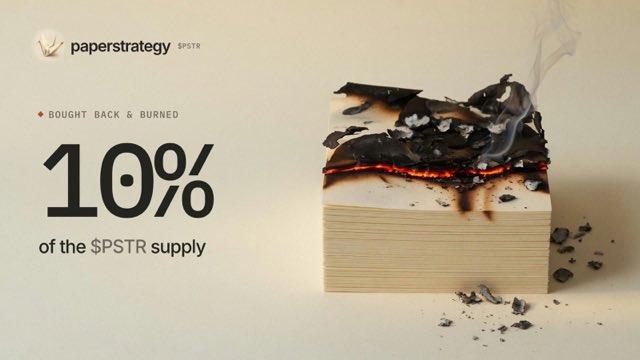
10% of the $PSTR supply has been burnt.
paperstrategy has bought back and burned over 100M $PSTR for ~$643k
every 30 min ~18 HYPE of $PSTR + 50% of the previous day's staking revenue gets bought and burned.
a note on papertrade's note.
it's reassuring to see papertrade take these decisions early to make the protocol last, and to close the attack vectors before anyone gets to use them.
paperstrategy is 100% aligned with every one of these measures. here is what they change for us.
on transferability: we had plans to create more synergies between paper and pstr. that will wait, and it's fine. paperstrategy farms paper, stakes all of it, and turns the dividends into pstr buybacks and burns. as long as paper is not transferable, pstr is de facto the only liquid, tradeable exposure to paper and its cash flows.
on fees: the new band targets positions closed within 6 to 10 bps of entry, i.e. the low time frame scalp bots. our pairs close far outside that band, so our costs barely move, and a healthier bankroll with looser oi caps is exactly what a large, patient minter wants.
on the issuance curve: minting a fixed share of supply per dollar lost rewards whoever keeps minting, not whoever minted first. that is the paperstrategy model by construction: every pstr trade pays a tax, the tax feeds the treasury, the treasury mints paper every day, forever. we are reworking all our strategies to be optimal under the new curve, with one objective: stay the first minter of paper and become the protocol's largest long-term beneficiary.
on builder codes: we have been building our own paperstrategy front end for several days. it already runs in private beta, and it will open the moment builder codes go live and we are whitelisted. the goal is simple: give you powerful tools to use papertrade the right way, pairs, engines, queue visibility, without ever touching your wallet keys. more soon.
in short: these announcements only strengthen our conviction to build on papertrade for the long run. let's build together.
Appreciate you actually digging beneath the surface. Your findings largely confirm everything I’ve already shared, yet somehow the conclusion shifts toward defending Inverse based on hypothetical promises **you openly admit you have no evidence of.**
**You claim “Inverse never argued they bought the tokens” when they LITERALLY claimed to have purchased 5.4M RAM with their own funds.** It’s right there in writing. Why are we moving goalposts to excuse demonstrably false claims?
You’re overlooking the ~$360K in RAM emissions + 2.7M xRAM Ramses provided to DOLA liquidity pools, materially subsidizing the very incentives you’re evaluating.
Most importantly, this was an **airdrop** like the initial Partner NFTs that they received. Every time, partners knew they were explicitly excluded from eligibility, consistent with years of precedent. The communication from other people can label it whatever they want but it was clearly described as an airdrop in all announcements. What’s funny is they never once said anything about the countless other airdrops - in my opinion an omission of lack of involvement, for someone who claims they **”built Ramses”**
Where exactly is the evidence of a rug? We’ve had accusations of theft, criminality, and illegally seized assets, **yet nobody has produced a shred of evidence establishing any entitlement to this airdrop.**
It’s genuinely bizarre watching demonstrably false accusations get hand-waved away while actual on-chain evidence gets scrutinized endlessly.
It’s genuinely bizarre watching demonstrably false accusations get hand-waved away while actual on-chain evidence gets scrutinized endlessly, only for the goalposts to move again.
**No more moving goalposts.**