The real story isn’t just tokenization, it’s what happens after the asset is created.
@injective is starting to connect the entire process.
Traditional finance has separate systems for issuance, compliance, ownership records, settlement and market access.
Injective is trying to bring these pieces closer together:
Injective Mint —> Transfer Agent —> Financial Rails
Mint gives issuers configurable controls for creating and managing tokenized assets.
Injective Institutional Services adds the regulated ownership-record layer after becoming an SEC-registered transfer agent.
Then Injective’s existing financial infrastructure provides the rails for what comes next. trading, settlement, lending, collateral and other onchain utility.
And that’s what makes this interesting.
It’s not just about putting real-world assets onchain.
It’s about having a clearer path to issue, manage, record, settle and actually use those assets onchain.
The transfer agent registration is a major piece of that puzzle, while Mint and Injective’s financial modules help complete the bigger picture.
If tokenization is going to move from experiments to real financial markets, the infrastructure underneath it will matter just as much as the assets themselves.
From issuance to onchain utility.
That’s the bigger direction Injective is building toward. $INJ
Injective just crossed into a completely different part of the financial stack.
Through its affiliate, @injective Institutional Services, Injective became the first Layer-1 blockchain to obtain SEC transfer agent registration.
And honestly, the headline isn’t even the most interesting part.
A transfer agent is responsible for maintaining the official record of who owns a security, updating ownership when it changes, handling issuances and cancellations, and supporting things like distributions, voting and other corporate actions.
Traditionally, that infrastructure sits with banks, trust companies and specialized financial institutions.
Now, imagine that kind of infrastructure working alongside tokenized assets and onchain settlement.
That’s where this gets interesting.
Injective already has the issuance and compliance side through Injective Mint. Adding a registered transfer agent creates a regulated path for maintaining authoritative ownership records for tokenized securities.
So the bigger picture starts looking like:
Issue —> Compliance —> Record Ownership —> Settle —> Trade —> Use
All connected to an onchain financial ecosystem.
And this isn’t happening in isolation.
Injective already has tokenized funds, equities, credit and other real-world assets being built around its network.
To me, this is one of those updates that looks niche at first, but becomes much bigger when you zoom out.
Injective isn’t just trying to put financial assets onchain.
It’s increasingly building the financial infrastructure around those assets too.
The real tokenization race may not just be about putting RWAs onchain.
It could be about building the rails that make them actually work there. injective-protocol:native
Injective just crossed into a completely different part of the financial stack.
Through its affiliate, @injective Institutional Services, Injective became the first Layer-1 blockchain to obtain SEC transfer agent registration.
And honestly, the headline isn’t even the most interesting part.
A transfer agent is responsible for maintaining the official record of who owns a security, updating ownership when it changes, handling issuances and cancellations, and supporting things like distributions, voting and other corporate actions.
Traditionally, that infrastructure sits with banks, trust companies and specialized financial institutions.
Now, imagine that kind of infrastructure working alongside tokenized assets and onchain settlement.
That’s where this gets interesting.
Injective already has the issuance and compliance side through Injective Mint. Adding a registered transfer agent creates a regulated path for maintaining authoritative ownership records for tokenized securities.
So the bigger picture starts looking like:
Issue —> Compliance —> Record Ownership —> Settle —> Trade —> Use
All connected to an onchain financial ecosystem.
And this isn’t happening in isolation.
Injective already has tokenized funds, equities, credit and other real-world assets being built around its network.
To me, this is one of those updates that looks niche at first, but becomes much bigger when you zoom out.
Injective isn’t just trying to put financial assets onchain.
It’s increasingly building the financial infrastructure around those assets too.
The real tokenization race may not just be about putting RWAs onchain.
It could be about building the rails that make them actually work there. injective-protocol:native
Privacy just got a little smoother 👀
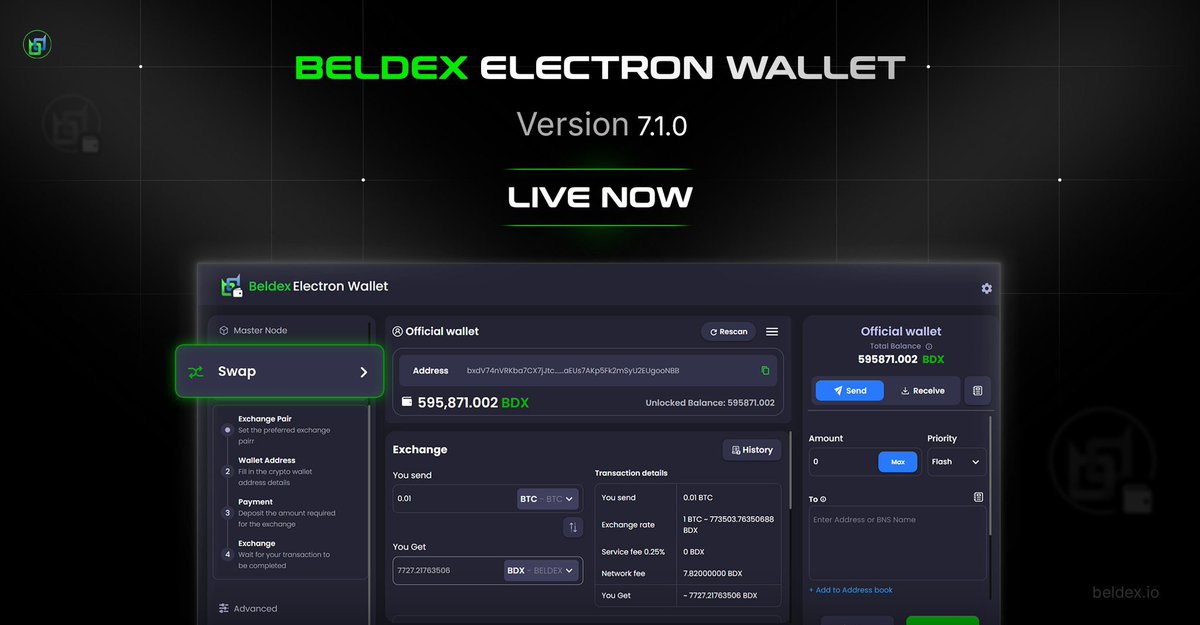
@BeldexCoin Electron Wallet v7.1.0 now has QuickEx Swap built right in.
You can swap directly inside the wallet without jumping between apps or manually copying addresses.
Less friction, cleaner UX, more utility for the Beldex ecosystem.
Worth updating if you’re using the desktop wallet.
Swap crypto directly on your Beldex Wallet.
@QuickEx_Tweets Swap is now integrated into the Beldex Electron Wallet, making swaps fast, easy, and seamless.
Update Now👇
$8m just changed the conversation around @BeldexCoin
beldex has closed an $8m funding round led by sigma capital, with ntc, nxgen, digital consensus fund and eak ventures also participating.
but honestly, the money isn’t the most interesting part.
the bigger story is what beldex wants to build with it.
they’re pushing beyond being “just” a privacy ecosystem and moving toward privacy infrastructure for web3 and ai encrypted ai agent identities, shielded smart contracts, private tokens, developer sdks, an evm-compatible sidechain and research into fhe + quantum-resistant tech.
the idea is simple:
privacy shouldn’t be something you add later. it should be built into the infrastructure from day one.
with ai agents increasingly handling payments, credentials, communication and sensitive data, that narrative makes a lot more sense.
$8m is a serious vote of confidence.
now the interesting part is seeing what beldex actually builds with it.
Injective just crossed into a completely different part of the financial stack.
Through its affiliate, @injective Institutional Services, Injective became the first Layer-1 blockchain to obtain SEC transfer agent registration.
And honestly, the headline isn’t even the most interesting part.
A transfer agent is responsible for maintaining the official record of who owns a security, updating ownership when it changes, handling issuances and cancellations, and supporting things like distributions, voting and other corporate actions.
Traditionally, that infrastructure sits with banks, trust companies and specialized financial institutions.
Now, imagine that kind of infrastructure working alongside tokenized assets and onchain settlement.
That’s where this gets interesting.
Injective already has the issuance and compliance side through Injective Mint. Adding a registered transfer agent creates a regulated path for maintaining authoritative ownership records for tokenized securities.
So the bigger picture starts looking like:
Issue —> Compliance —> Record Ownership —> Settle —> Trade —> Use
All connected to an onchain financial ecosystem.
And this isn’t happening in isolation.
Injective already has tokenized funds, equities, credit and other real-world assets being built around its network.
To me, this is one of those updates that looks niche at first, but becomes much bigger when you zoom out.
Injective isn’t just trying to put financial assets onchain.
It’s increasingly building the financial infrastructure around those assets too.
The real tokenization race may not just be about putting RWAs onchain.
It could be about building the rails that make them actually work there. injective-protocol:native
We're excited to announce that Beldex has secured a new round of funding, led by @Sigma_VC and supported by leading venture capital firms.
This investment will accelerate product development, ecosystem growth, and our vision of building privacy infrastructure for Web3.
$8m just changed the conversation around @BeldexCoin
beldex has closed an $8m funding round led by sigma capital, with ntc, nxgen, digital consensus fund and eak ventures also participating.
but honestly, the money isn’t the most interesting part.
the bigger story is what beldex wants to build with it.
they’re pushing beyond being “just” a privacy ecosystem and moving toward privacy infrastructure for web3 and ai encrypted ai agent identities, shielded smart contracts, private tokens, developer sdks, an evm-compatible sidechain and research into fhe + quantum-resistant tech.
the idea is simple:
privacy shouldn’t be something you add later. it should be built into the infrastructure from day one.
with ai agents increasingly handling payments, credentials, communication and sensitive data, that narrative makes a lot more sense.
$8m is a serious vote of confidence.
now the interesting part is seeing what beldex actually builds with it.
Injective just made tokenization a lot more serious.
@injective Institutional Services is now officially registered with the U.S. SEC as a transfer agent.
And yeah, this is a bigger deal than just another RWA announcement.
A transfer agent is basically responsible for keeping the authoritative record of who owns a security, processing transfers, reconciling ownership and handling things like distributions and voting.
Traditionally, that infrastructure sits completely outside the blockchain.
Injective is now bringing that piece into its broader onchain stack.
Think about the setup:
—> Injective: the blockchain and financial infrastructure
—> Injective Mint: compliant issuance and controls for tokenized assets
—> Institutional Services: regulated ownership and transfer recordkeeping
That creates a much more complete path for assets to be issued, administered, recorded and settled onchain within a regulated framework.
And this isn’t happening in isolation.
Injective already has tokenized funds, equities, digital-asset treasuries, private-market exposure and enterprise trade finance activity running across the network.
Now there’s a regulated transfer-agent layer sitting underneath that infrastructure.
Four different asset classes, One network, One increasingly complete stack.
To me, this is where the RWA narrative gets interesting.
Tokenization isn’t just about putting an asset on a blockchain.
The real challenge is connecting the blockchain to the legal, regulatory and administrative infrastructure that makes traditional markets actually work.
Injective is clearly trying to build that bridge.
And becoming an SEC-registered transfer agent is a pretty significant step in that direction.
$INJ
Injective just made tokenization a lot more serious.
@injective Institutional Services is now officially registered with the U.S. SEC as a transfer agent.
And yeah, this is a bigger deal than just another RWA announcement.
A transfer agent is basically responsible for keeping the authoritative record of who owns a security, processing transfers, reconciling ownership and handling things like distributions and voting.
Traditionally, that infrastructure sits completely outside the blockchain.
Injective is now bringing that piece into its broader onchain stack.
Think about the setup:
—> Injective: the blockchain and financial infrastructure
—> Injective Mint: compliant issuance and controls for tokenized assets
—> Institutional Services: regulated ownership and transfer recordkeeping
That creates a much more complete path for assets to be issued, administered, recorded and settled onchain within a regulated framework.
And this isn’t happening in isolation.
Injective already has tokenized funds, equities, digital-asset treasuries, private-market exposure and enterprise trade finance activity running across the network.
Now there’s a regulated transfer-agent layer sitting underneath that infrastructure.
Four different asset classes, One network, One increasingly complete stack.
To me, this is where the RWA narrative gets interesting.
Tokenization isn’t just about putting an asset on a blockchain.
The real challenge is connecting the blockchain to the legal, regulatory and administrative infrastructure that makes traditional markets actually work.
Injective is clearly trying to build that bridge.
And becoming an SEC-registered transfer agent is a pretty significant step in that direction.
$INJ
Have you ever wondered why so many chains feel like they’re trying to make financial apps fit into infrastructure that wasn’t really designed for them?
That’s basically the bet @injective is making differently.
Instead of building a general-purpose L1 first and adding financial infrastructure later, Injective puts finance directly into the protocol.
You get a native orderbook for spot and derivatives, shared liquidity across applications, Frequent Batch Auctions to reduce the usual front-running/MEV issues, and sub-second finality with extremely low transaction costs.
Then there’s MultiVM.
EVM and CosmWasm can live on the same network, meaning developers from different ecosystems can build around the same liquidity and native financial infrastructure without having to choose one environment.
And this matters because serious onchain finance needs more than just swapping tokens.
It needs fast execution, deep liquidity, efficient markets, derivatives, tokenized assets, and infrastructure that can handle increasingly complex financial applications.
That’s the bigger idea behind Injective:
don’t bolt finance onto a blockchain. Build the blockchain around finance.
And as tokenization, AI agents, and onchain trading continue to grow, that architecture starts to make a lot more sense.
$INJ
Have you ever wondered why so many chains feel like they’re trying to make financial apps fit into infrastructure that wasn’t really designed for them?
That’s basically the bet @injective is making differently.
Instead of building a general-purpose L1 first and adding financial infrastructure later, Injective puts finance directly into the protocol.
You get a native orderbook for spot and derivatives, shared liquidity across applications, Frequent Batch Auctions to reduce the usual front-running/MEV issues, and sub-second finality with extremely low transaction costs.
Then there’s MultiVM.
EVM and CosmWasm can live on the same network, meaning developers from different ecosystems can build around the same liquidity and native financial infrastructure without having to choose one environment.
And this matters because serious onchain finance needs more than just swapping tokens.
It needs fast execution, deep liquidity, efficient markets, derivatives, tokenized assets, and infrastructure that can handle increasingly complex financial applications.
That’s the bigger idea behind Injective:
don’t bolt finance onto a blockchain. Build the blockchain around finance.
And as tokenization, AI agents, and onchain trading continue to grow, that architecture starts to make a lot more sense.
$INJ
Privacy is cool. but privacy and convenience? that’s the real upgrade.
@BeldexCoin just made its desktop wallet a lot easier to use.
QuickEx Swap is now integrated directly into the Beldex Electron Wallet v7.1.0, meaning you can swap assets without leaving the wallet or jumping between different apps.
So instead of the usual:
wallet → browser → exchange → copy address → swap → back to wallet…
you can handle the swap directly inside the Beldex wallet.
That’s a small UX change, but it matters.
Privacy-focused products can sometimes come with extra friction. Beldex is basically removing some of that friction while keeping users in a self-custodial environment.
The v7.1.0 update also brings improved swap handling and some bug fixes.
Available for Windows, macOS and Linux.
Feels like Beldex is slowly turning its privacy stack into something that’s not just private, but actually easier to use day to day.
And honestly, that’s the part that matters.
🚨 BREAKING: Injective is now an official SEC-registered transfer agent!
With this move, Injective becomes the first layer 1 blockchain to possess the RWA infrastructure and regulatory readiness needed to accelerate tokenization to new heights.
Injective has rapidly expanded its tokenization efforts in recent months. Markets for digital asset treasuries, equities, and shares in pre-IPO companies such as SpaceX and OpenAI have also launched on Injective.
In July, Injective expanded into enterprise trade finance. POSCO International, South Korea’s largest trading company, and LG CNS, the technology arm of LG Group, selected Injective for an exclusive live pilot that issues, transfers, administers, and settles trade receivables generated through international commerce.
Institutional funds. Public equities. Private company shares. Enterprise receivables. Four different asset classes. One network. All live. The transfer agent registration now sits beneath them as the regulated recordkeeping layer that American markets require.
The full stack for onchain capital markets is here. Only on Injective.
Privacy is cool. but privacy and convenience? that’s the real upgrade.
@BeldexCoin just made its desktop wallet a lot easier to use.
QuickEx Swap is now integrated directly into the Beldex Electron Wallet v7.1.0, meaning you can swap assets without leaving the wallet or jumping between different apps.
So instead of the usual:
wallet → browser → exchange → copy address → swap → back to wallet…
you can handle the swap directly inside the Beldex wallet.
That’s a small UX change, but it matters.
Privacy-focused products can sometimes come with extra friction. Beldex is basically removing some of that friction while keeping users in a self-custodial environment.
The v7.1.0 update also brings improved swap handling and some bug fixes.
Available for Windows, macOS and Linux.
Feels like Beldex is slowly turning its privacy stack into something that’s not just private, but actually easier to use day to day.
And honestly, that’s the part that matters.
The new @BeldexCoin Bridge is officially live, and there’s an interesting story behind this one.
You can now move BDX 1:1 between the Beldex Native Chain and BNB Smart Chain, bringing BDX into the BSC ecosystem for trading, liquidity, DeFi and other EVM use cases.
But what makes this launch worth paying attention to is how Beldex got here.
After the bridge incident in June, the team didn’t simply patch the old infrastructure and call it a day.
The old BSC contract was retired, a new canonical contract was deployed, affected holders were migrated 1:1, and the new contract went through a security audit.
Then the new bridge infrastructure itself went through penetration testing before launch.
That process uncovered issues, including a critical deposit-flow vulnerability, which was fixed before the bridge went live.
Now the rebuilt bridge is live with a much stronger security focus.
And the bigger picture is pretty interesting:
—> Privacy on Beldex.
—> Liquidity on BSC.
—> One BDX ecosystem.
Beldex can keep its privacy-focused native chain and still give users a much easier path into the wider EVM economy.
That’s the part I find most interesting.
Cross-chain infrastructure is easy to overlook when it works.
But when it connects a privacy-focused L1 to one of the biggest EVM ecosystems, the utility of the underlying asset changes significantly.
The new Beldex Bridge is live 👇
https://t.co/e17bdLPR58
The new @BeldexCoin Bridge is officially live, and there’s an interesting story behind this one.
You can now move BDX 1:1 between the Beldex Native Chain and BNB Smart Chain, bringing BDX into the BSC ecosystem for trading, liquidity, DeFi and other EVM use cases.
But what makes this launch worth paying attention to is how Beldex got here.
After the bridge incident in June, the team didn’t simply patch the old infrastructure and call it a day.
The old BSC contract was retired, a new canonical contract was deployed, affected holders were migrated 1:1, and the new contract went through a security audit.
Then the new bridge infrastructure itself went through penetration testing before launch.
That process uncovered issues, including a critical deposit-flow vulnerability, which was fixed before the bridge went live.
Now the rebuilt bridge is live with a much stronger security focus.
And the bigger picture is pretty interesting:
—> Privacy on Beldex.
—> Liquidity on BSC.
—> One BDX ecosystem.
Beldex can keep its privacy-focused native chain and still give users a much easier path into the wider EVM economy.
That’s the part I find most interesting.
Cross-chain infrastructure is easy to overlook when it works.
But when it connects a privacy-focused L1 to one of the biggest EVM ecosystems, the utility of the underlying asset changes significantly.
The new Beldex Bridge is live 👇
https://t.co/e17bdLPR58
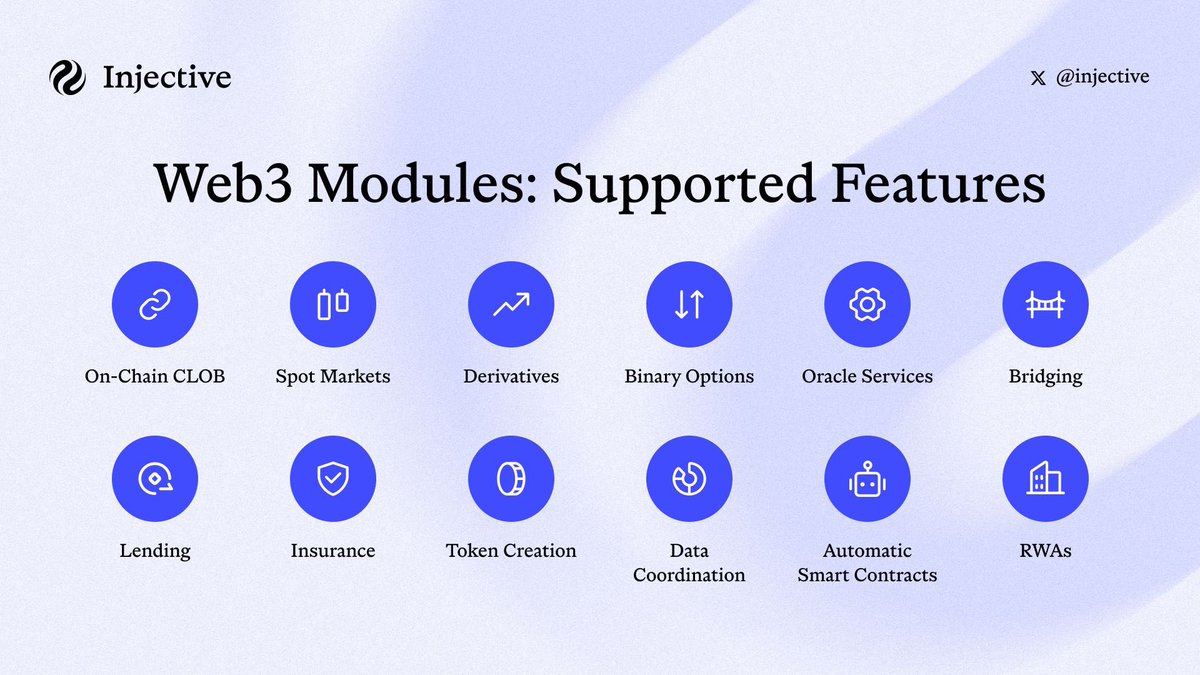
A lot of L1s give you a VM and basically say:
“Here you go. Build your financial infrastructure yourself.”
@injective took a different approach.
The financial infrastructure is already embedded at the protocol level.
—> On-chain CLOB
—> Spot markets
—> Derivatives
—> Oracles
—> Bridging
—> Lending
—> Insurance
—> Token creation
—> RWAs
—> And more
That matters because building a serious financial product isn’t just about deploying a smart contract.
You need matching engines, liquidity, market infrastructure, data feeds, risk systems and more.
On Injective, builders can plug into those native modules instead of rebuilding the entire stack from scratch.
The biggest one is the on-chain CLOB.
Apps can tap into a shared order book and shared liquidity across the network, rather than creating another isolated market with fragmented liquidity.
And with things like Frequent Batch Auctions, the infrastructure is designed with MEV resistance and serious trading in mind.
So the builder can focus on what actually matters:
the product, the experience and the users.
This is why I think Injective’s “finance-first” approach is more than just a narrative.
It’s an architectural choice.
Instead of giving builders an empty VM and asking them to build the financial rails themselves, Injective starts with the rails already there.
Build the product.
Plug into the infrastructure.
Let the protocol handle the plumbing.
one thing i keep finding interesting about @injective is how its onchain activity keeps stacking up.
we’re now looking at:
—> 3B+ onchain transactions
—> 500+ onchain assets
—> $6.8B+ in RWA volume
—> $67B+ cumulative perps volume
—> ~0.59s block time
—> ~$0.0001 median transaction cost
—> 25,000 TPS performance
—> 7M+ INJ burned through buybacks
and these aren’t just numbers sitting on a dashboard.
they reflect a chain being used for actual financial activity. trading, derivatives, tokenized assets, payments and more.
what makes it even more interesting is that Injective is purpose-built for this.
it has a fully onchain orderbook, near-instant finality, extremely low fees, MultiVM support and infrastructure designed for both institutions and AI agents.
the bigger picture is simple:
Injective’s onchain stats aren’t standing still.
the network keeps processing more, more assets are coming onchain, RWA activity is growing and more value is flowing through its financial infrastructure.
if this trajectory continues, the numbers we’re looking at today might look very small in hindsight.
$INJ is definitely one i’m keeping an eye on.
A lot of L1s give you a VM and basically say:
“Here you go. Build your financial infrastructure yourself.”
@injective took a different approach.
The financial infrastructure is already embedded at the protocol level.
—> On-chain CLOB
—> Spot markets
—> Derivatives
—> Oracles
—> Bridging
—> Lending
—> Insurance
—> Token creation
—> RWAs
—> And more
That matters because building a serious financial product isn’t just about deploying a smart contract.
You need matching engines, liquidity, market infrastructure, data feeds, risk systems and more.
On Injective, builders can plug into those native modules instead of rebuilding the entire stack from scratch.
The biggest one is the on-chain CLOB.
Apps can tap into a shared order book and shared liquidity across the network, rather than creating another isolated market with fragmented liquidity.
And with things like Frequent Batch Auctions, the infrastructure is designed with MEV resistance and serious trading in mind.
So the builder can focus on what actually matters:
the product, the experience and the users.
This is why I think Injective’s “finance-first” approach is more than just a narrative.
It’s an architectural choice.
Instead of giving builders an empty VM and asking them to build the financial rails themselves, Injective starts with the rails already there.
Build the product.
Plug into the infrastructure.
Let the protocol handle the plumbing.