This is Doug. He waits patiently all day for his partner to fall asleep. Now it's burrow time. Nose under arm for maximum warmth. would never sleep alone again. Please Leave her a big 💝
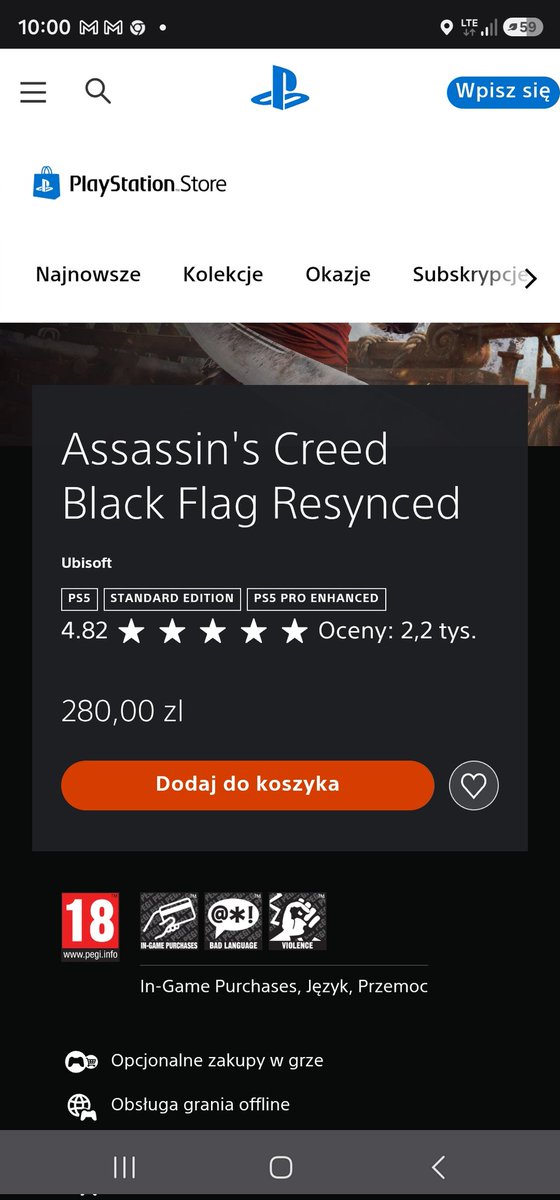
Właśnie wracam z jedną z ostatnich gier pudełkowych na PS5 jaką do 2028 chciałem ogarnąć.
W tym wypadku jeszcze bonusy fizyczne jak mapa i artbook natomiast na PSStorze gra w podstawowej edycji o 32zł droższa 🫡
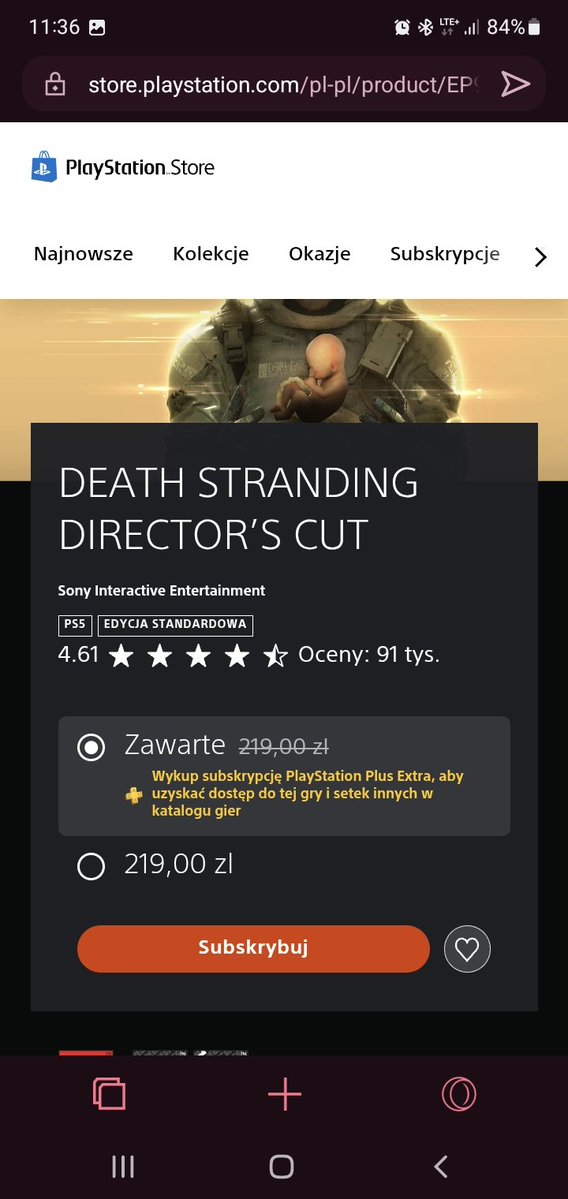
Takie coś se dołożyłam! Tylko niech nikt nie mówi Panu @PlayStationPL bo jeszcze im się przykro zrobi i pomyślą.ze sądzę że jednak korzystniej dla mnie kupić pudełko niż cyfrę od nich.
“god, if i die young, send me to heaven. i’ve already been in hell” - a croatian soldier posing with graffiti during the croatian war of independence (1991)
"X-KOM mnie oszukał i chce, żebym za to zapłacił 1000 zł!"
Jeden z użytkowników forum podzielił się swoją przygodą z firmą x-kom, która rozpoczęła się po zgłoszeniu usterki nowego komputera już dzień po zakupie.
Mimo potwierdzonej wymiany typu exchange, przez ponad tydzień nie doszło do odbioru sprzętu, a później firma poinformowała, że taka wymiana nie jest już możliwa.
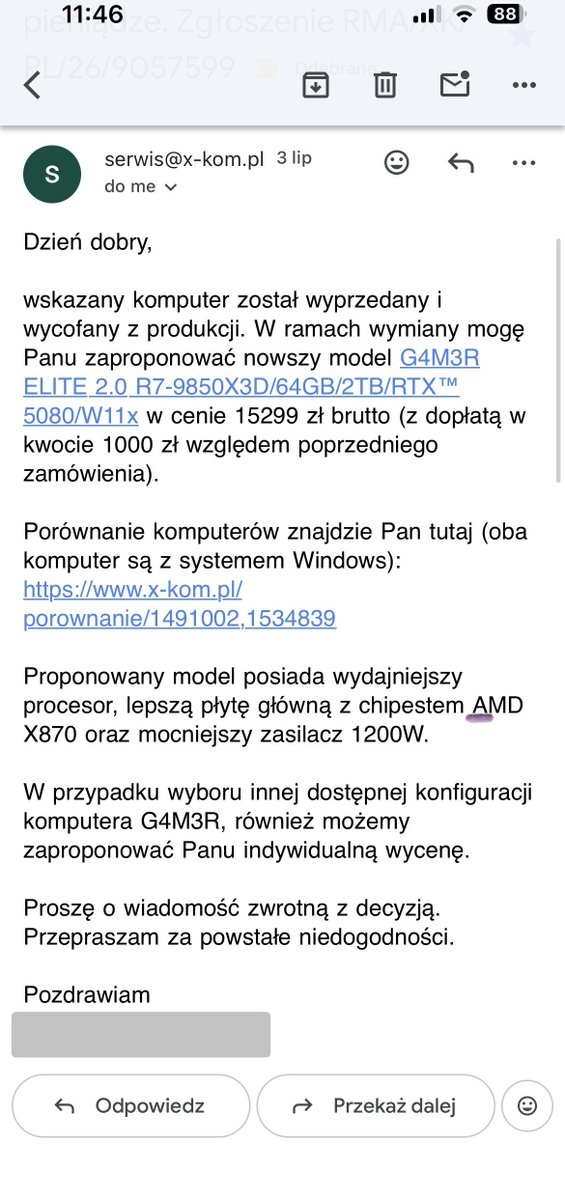
Po odesłaniu komputera x-kom zaproponował jedynie inne modele wymagające dopłaty 1000 zł lub sprzęt z mniejszą ilością RAM i obniżką ceny o 1000 zł.
Użytkownik wskazuje, że zamiast szybkiej wymiany otrzymał długą procedurę i konieczność walki o rozwiązanie problemu.
👇 Poniżej całość od autora wpisu 👇
Dnia 19 czerwca otrzymałem kurierem komputer, który zakupiłem w x-kom komputer G4M3R ELITE 2.0 R7-9800X3D/64GB/2TB/RTX 5080/W11x. Po jednym dniu używania zgłosiłem problem z temperaturą CPU.
Moje zgłoszenie zostało przyjęte i otrzymałem telefonicznie oraz mailowe potwierdzenie o wymianie exchange. Przez cały tydzień kurier nie przyjechał po komputer.
W następnym tygodniu w poniedziałek 29 czerwca sam przypomniałem się o zgłoszenie i otrzymałem ciekawe odpowiedź:
Otrzymałem informację, że niestety nie będziemy w stanie wykonać wymiany typu exchange u Pana na miejscu w domu. W tym przypadku możemy zaproponować jedynie klasyczny zwrot z opcją wymiany z nadanym maksymalnym priorytetem działań oraz wyjaśnienie. Co do sytuacji już wyjaśniam.
W zeszłym tygodniu jednostka została wyprodukowana, aczkolwiek niestety system stracił możliwość prze procedowania procesu wymiany exchange. Nadal próbujemy rozwiązać ten problem, ponieważ jest on niekorzystny dla Państwa, jako klientów i dla nas, jako firmy. Daliśmy tzw. deadline do dzisiaj w tej sprawie. Myśleliśmy, że przez weekend uda się naprawić ten błąd, ale niestety do tego nie doszło.”
Wysłałem komputer do x-kom i w piątek 3 lipca dostałem informację, że nie mogą mi odesłać nowego komputera ponieważ nie posiadają już takiego w sklepie. Dostałem opcję odrobinę lepszego z dopłata 1000 zł albo o takich samych parametrach ale z mniejszym ramem o połowę, ze zniżką 1000 zł (taka sama kość jest warta 2000 zł).
W obu przypadkach wychodzi na to, że mam ponosić dodatkowe koszty.
Telefonicznie przedstawiciel x-kom powiedział, że nie mogą mi dołożyć kości 32GB RAM aby finalnie komputer posiadał tyle RAM ile zakupiony przeze mnie sprzęt ponieważ „będzie do dla nich za droga opcja”.
x-kot chwali się na filmikach promocyjnych na YouTube oraz zamieszcza na swojej stronie zapis: „GWARANCJA niezawodności. Jeśli w ciągu 14 dni od zakupu zgłosisz usterkę, kurier przy odbiorze wadliwego komputera od razu dostarczy nowy - bez czekania na naprawę”
Zamiast gwarancji niezawodnych otrzymałem ciągnącą się do tej pory walkę, która trwa już ponad 2 tygodnie.
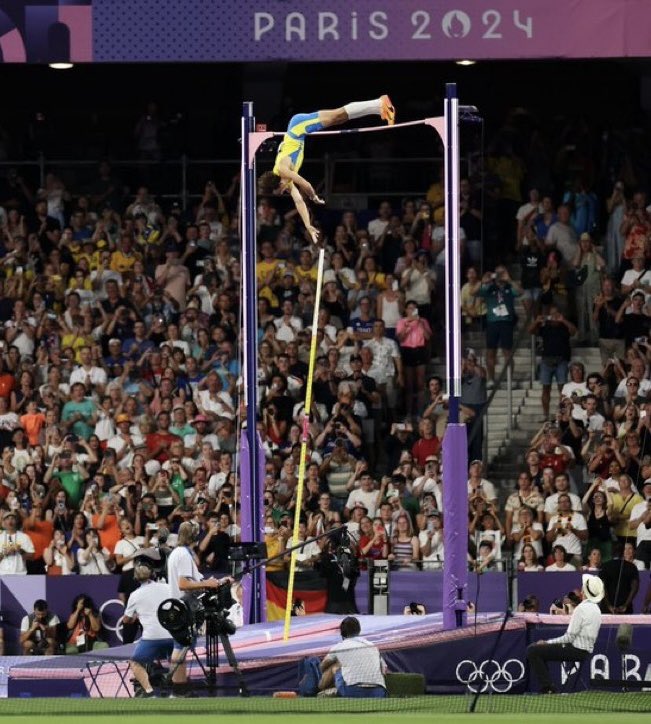
One of the world’s best athletes ever, the Swedish-American pole vaulter Armand Duplantis criticizes the IOC for its decision to let Russian athletes compete in the 2028 Los Angeles Olympics:
“Nothing has changed (with the war). It’s just getting worse. I really don’t understand their decision. Honestly…”
Poznańska Policja już zatrzymała pana, który nachodził biuro firmy w budynku Akademii Ekonomicznej i żądał określenia przez nagavywaną pracowniczkę jej stosunku do Bandery. To dobry sygnał, że zadziałali tak sprawnie
🇵🇱🇪🇺🇺🇦
❗️Parlament Europejski skrytykował decyzję @ZelenskyyUa o uhonorowaniu jednostki sił zbrojnych imieniem UPA, uznając, że nie jest ona zgodna z wartościami europejskimi.
📣 Oświadczenie Kolegium Instytutu Pamięci Narodowej – Komisji Ścigania Zbrodni przeciwko Narodowi Polskiemu z dnia 7 lipca 2026 r.
Kolegium Instytutu Pamięci Narodowej wyraża ogromne zaniepokojenie głosami przedstawicieli politycznych, społecznych, naukowych i kulturalnych elit ukraińskich (w tym także historyków), którzy afirmują działalność różnych odłamów ruchu banderowskiego na Ukrainie i negują fakt dokonanego przez ten ruch ludobójstwa na Polakach i innych narodach. Szczególne oburzenie budzi nadanie przez Prezydenta Wołodymyra Zełenskiego imienia „Bohaterów UPA” (Ukraińskiej Powstańczej Armii) Samodzielnemu Centrum Operacji Specjalnych „Północ” Sił Operacji Specjalnych Sił Zbrojnych Ukrainy. Jest to zniewaga dla pamięci ofiar zamordowanych przez UPA i dla całego narodu polskiego. Nasze zaniepokojenie budzi też projekt budowy Panteonu Narodowego, w którym mają być pochowani także przywódcy takich formacji jak OUN i UPA. Apelujemy do władz Ukrainy i do społeczeństwa ukraińskiego o zaprzestanie tego rodzaju działań, które stają w poprzek postępującemu procesowi zbliżenia naszych narodów. Chcemy żyć w przyjaźni ze swoimi wschodnimi sąsiadami, nie możemy jednak tolerować fałszowania historii i oddawania czci formacjom mordującym w sposób okrutny Polaków i obywateli polskich innych narodowości.
Oświadczenie zostało przyjęte jednogłośnie.
The Righteous Among Ukrainians
“Za odnoho poliaka holova do pniaka” (“for one [saved] Pole, a head to the chopping block”) - this slogan, popular among Ukrainian nationalists committing genocide in Volhynia, reminds us of the immense courage shown by those Ukrainians who, risking their lives, opposed the criminal ideology. Many of them were murdered as brutally for showing humanity as the Poles they tried to save.
The ideology of Ukrainian nationalism, built from the mid-1920s onwards, assumed the creation of an ethnically homogeneous state, detached from hundreds of years of largely peaceful coexistence of nations and faiths. “The closeness was so great that when the massacres had already begun, in some Polish villages people, contrary to the facts, refused until the very end to believe that anything bad could threaten them from their neighbours,” recalled Fr Mieczysław Albert Krąpiec from Berezowica Mała in Podolia.
Warning others of impending danger was the most common form of assistance. “Run away, because they will be killing today,” one Polish family heard from their Ukrainian neighbour. Hiding Poles in one’s own homes and farm buildings, often for many months, also required extraordinary courage. “He says [to my father]: ‘It’s so good that you’re alive.’, and he took him to the attic and kept him there for two weeks,” recalled one of the survivors.
Being hidden by Ukrainians did not always mean the end of the ordeal. In the archives of the Chief Commission for the Investigation of Crimes against the Polish Nation there is an exceptionally moving account, given in 1985, of the fate of seven-year-old Jadzia Dziekańska, who, despite severe wounds, survived for several days beside the body of her murdered mother. She was found among fields of grain by a Ukrainian family and taken to a nearby village. “In Werbcz, the village council wanted to kill Jadzia because she was a Polish child, but an unknown Ukrainian family defended her, as did a teacher, also a Ukrainian from Werbcz, who could speak fluent Polish, and who won the fight for Jadzia’s life and took her in to raise her,” recalled Franciszka and Roman Piotrowski. After the war ended, Jadzia returned to her father, who had survived.
The UPA (Ukrainian Insurgent Army) carried out numerous murders, including of its own comrades who refused to take part in the cruel killing of their neighbours. In order to combat “desertion”, Bandera’s followers established the Security Service of the OUN (Organization of Ukrainian Nationalists), referred to as the “partisan Gestapo”, which often carried out killings of those who refused to participate in the massacres. The greatest danger, however, awaited those who provided help out of compassion for their neighbours. “Shura Sapozhnik, the prettiest girl in the village, I remember her well, her braids reached all the way to the ground. I also remember how she mourned the death of my sister Wanda together with my mother and sympathised with the Poles. She was murdered in a cruel way. The thugs tricked her into going to the forest [...] under the pretext of dressing the wounds of an injured comrade whom the ‘Lakhs [Poles] had shot’,” recalled a resident of the village of Koszów in Volhynia.
The authors of “The Book of the Righteous of the Eastern Borderlands 1939-1945”, published by the IPN, estimate that at least 1,341 Ukrainians helped Poles despite the threat of reprisals from Ukrainian nationalists. They provided shelter, warned of planned attacks, helped people escape or saved the wounded, risking their own lives and the lives of their families. According to widely varying estimates, at least several hundred of them were murdered by the Banderites (Bandera’s followers). A more precise number of victims among the Righteous is not possible to estimate, among other reasons because of the difficulty of clearly establishing the motives behind the crimes. In some cases, the killings may also have been linked to suspicions of cooperation with Soviet partisans.
Since 2019, the Righteous have been honoured with the Virtus et Fraternitas Medal, awarded by the Witold Pilecki Institute of Solidarity and Valour. So far, it has been awarded posthumously to 27 Ukrainians who helped Poles, as well as to two people who, for decades, preserved the memory of murdered Poles. The Virtus et Fraternitas Medal has also been awarded to two Czechs from Volhynia who helped Poles.
More:
https://t.co/uOlT5sBGC4
https://t.co/jwe6m7ByuS













![ipngovpl_eng's tweet photo. The Righteous Among Ukrainians
“Za odnoho poliaka holova do pniaka” (“for one [saved] Pole, a head to the chopping block”) - this slogan, popular among Ukrainian nationalists committing genocide in Volhynia, reminds us of the immense courage shown by those Ukrainians who, risking their lives, opposed the criminal ideology. Many of them were murdered as brutally for showing humanity as the Poles they tried to save.
The ideology of Ukrainian nationalism, built from the mid-1920s onwards, assumed the creation of an ethnically homogeneous state, detached from hundreds of years of largely peaceful coexistence of nations and faiths. “The closeness was so great that when the massacres had already begun, in some Polish villages people, contrary to the facts, refused until the very end to believe that anything bad could threaten them from their neighbours,” recalled Fr Mieczysław Albert Krąpiec from Berezowica Mała in Podolia.
Warning others of impending danger was the most common form of assistance. “Run away, because they will be killing today,” one Polish family heard from their Ukrainian neighbour. Hiding Poles in one’s own homes and farm buildings, often for many months, also required extraordinary courage. “He says [to my father]: ‘It’s so good that you’re alive.’, and he took him to the attic and kept him there for two weeks,” recalled one of the survivors.
Being hidden by Ukrainians did not always mean the end of the ordeal. In the archives of the Chief Commission for the Investigation of Crimes against the Polish Nation there is an exceptionally moving account, given in 1985, of the fate of seven-year-old Jadzia Dziekańska, who, despite severe wounds, survived for several days beside the body of her murdered mother. She was found among fields of grain by a Ukrainian family and taken to a nearby village. “In Werbcz, the village council wanted to kill Jadzia because she was a Polish child, but an unknown Ukrainian family defended her, as did a teacher, also a Ukrainian from Werbcz, who could speak fluent Polish, and who won the fight for Jadzia’s life and took her in to raise her,” recalled Franciszka and Roman Piotrowski. After the war ended, Jadzia returned to her father, who had survived.
The UPA (Ukrainian Insurgent Army) carried out numerous murders, including of its own comrades who refused to take part in the cruel killing of their neighbours. In order to combat “desertion”, Bandera’s followers established the Security Service of the OUN (Organization of Ukrainian Nationalists), referred to as the “partisan Gestapo”, which often carried out killings of those who refused to participate in the massacres. The greatest danger, however, awaited those who provided help out of compassion for their neighbours. “Shura Sapozhnik, the prettiest girl in the village, I remember her well, her braids reached all the way to the ground. I also remember how she mourned the death of my sister Wanda together with my mother and sympathised with the Poles. She was murdered in a cruel way. The thugs tricked her into going to the forest [...] under the pretext of dressing the wounds of an injured comrade whom the ‘Lakhs [Poles] had shot’,” recalled a resident of the village of Koszów in Volhynia.
The authors of “The Book of the Righteous of the Eastern Borderlands 1939-1945”, published by the IPN, estimate that at least 1,341 Ukrainians helped Poles despite the threat of reprisals from Ukrainian nationalists. They provided shelter, warned of planned attacks, helped people escape or saved the wounded, risking their own lives and the lives of their families. According to widely varying estimates, at least several hundred of them were murdered by the Banderites (Bandera’s followers). A more precise number of victims among the Righteous is not possible to estimate, among other reasons because of the difficulty of clearly establishing the motives behind the crimes. In some cases, the killings may also have been linked to suspicions of cooperation with Soviet partisans.
Since 2019, the Righteous have been honoured with the Virtus et Fraternitas Medal, awarded by the Witold Pilecki Institute of Solidarity and Valour. So far, it has been awarded posthumously to 27 Ukrainians who helped Poles, as well as to two people who, for decades, preserved the memory of murdered Poles. The Virtus et Fraternitas Medal has also been awarded to two Czechs from Volhynia who helped Poles.
More:
https://t.co/uOlT5sBGC4
https://t.co/jwe6m7ByuS](https://pbs.twimg.com/media/HMne4RJWQAABQUB.jpg)


