New release! https://t.co/FPrXikMcDj
This study highlights brain activity before drinking onset may signal vulnerability to future alcohol use. How can early neurobiological markers support timely prevention efforts?
Thanks to: @PNSDgob and @AddictionJrnl
Just attended the workshop "OPM-MEG: Next gen functional neuroimaging" by @MAG4Health, where I shared my work on early functional alterations in AD. It was a great weekend getting to learn about these new systems and discussing how they can improve early AD detection!
Article alert by @Jescab01_ , @DelCerroLeonA, @MrTin94, @MaestuFernando and @GianlucaSusi !
https://t.co/tmbcPSgKJx
Cortical gyrification is increasingly recognized as a key factor contributing to individual variability in brain stimulation outcomes. 👇🧵
Healthy brains 🧠, early clues🔍: unimpaired individuals with elevated plasma pathology (p-tau231 and NfL) exhibit a hub reorganization congruent with the earliest AD alterations! Check our latest MEG study with @AlzheimersRes! @C3N_UCM@CarlosSpuch
https://t.co/VB2Gzao6CE
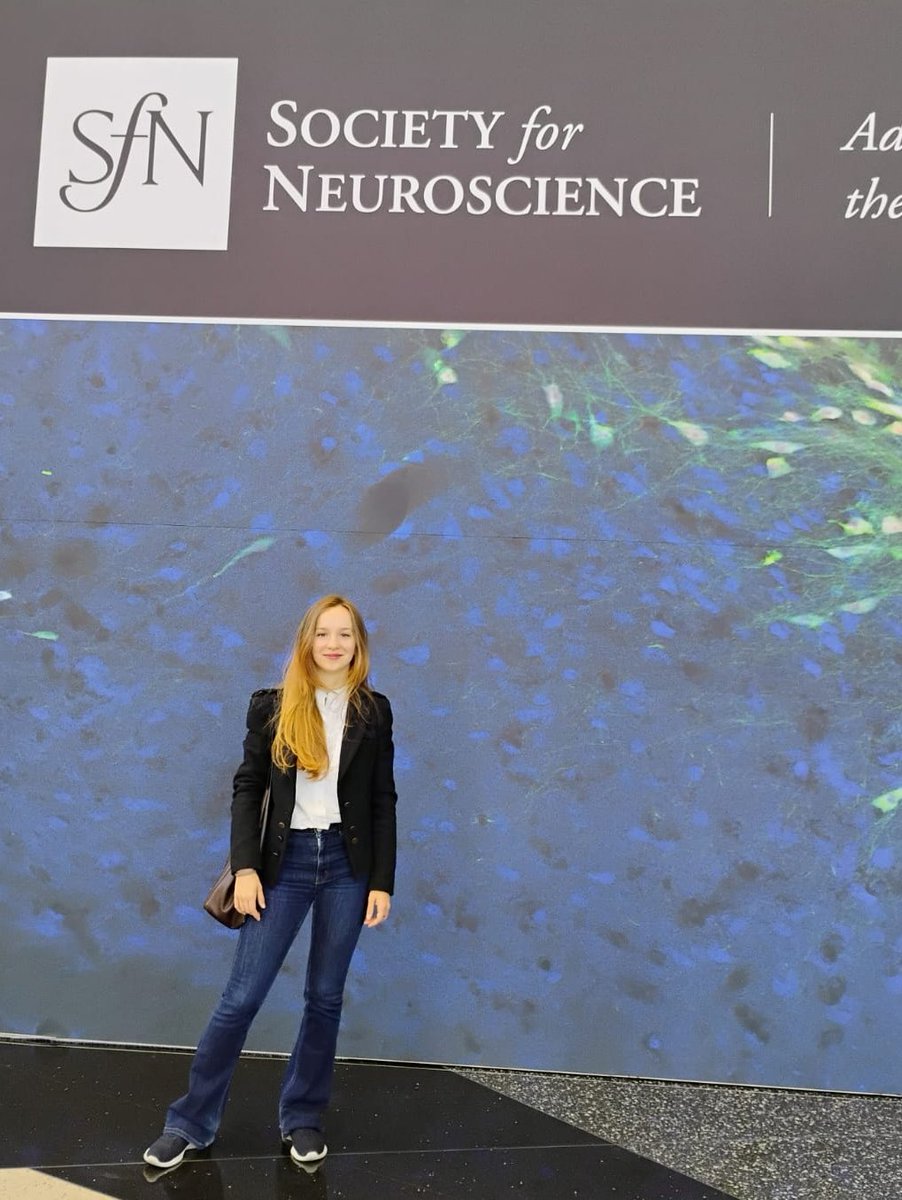
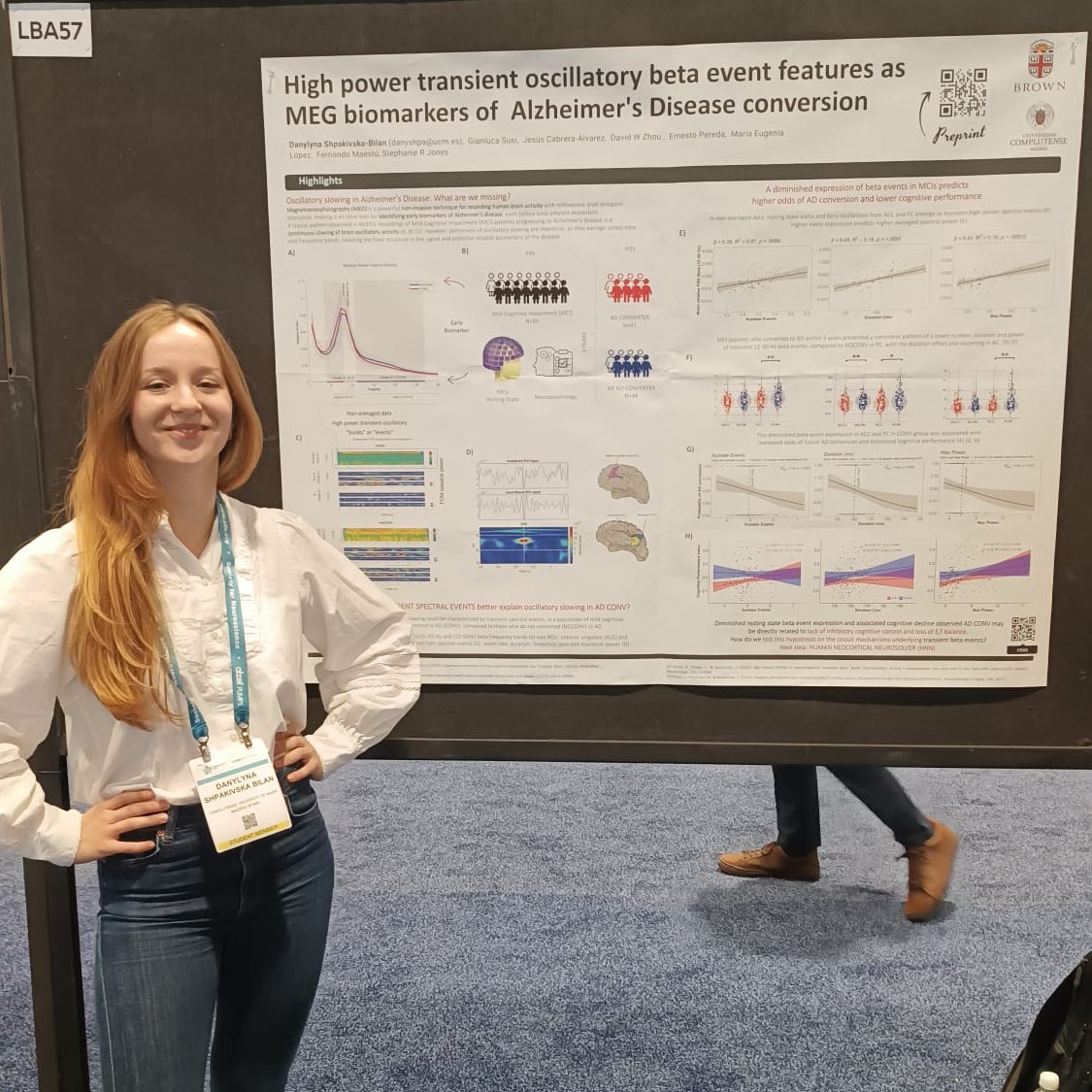
My First #SfN24 Meeting! Last week, I attended what I believe to be the largest neuroscience event in the world, held in Chicago. During my poster presentation, I discussed how high-power transient spectral events can better explain for oscillatory slowing in Alzheimer’s disease.
Mind what you eat! Check out our latest publication studying the association between adherence to a DASH diet and #MEG DMN power in cognitively unimpaired individuals
https://t.co/BRBH6sqSP3
#Alzheimers@C3N_UCM@idinutricion
@PNASNews This research has been made possible thanks to the funding of the @PNSDgob and the collaboration of different educational centres in @ComunidadMadrid
From the Center for Computational and Cognitive Neuroscience (C3N - UCM) we are excited to share our latest publication in @PNASNews Adolescent alcohol consumption predicted by differences in electrophysiological functional connectivity and neuroanatomy (https://t.co/WeOn8y0uYg)
3️⃣ España: Presentamos el Lanzamiento de una herramienta interactiva para la consulta y descarga de los resultados de la Encuesta ESTUDES
🔗 https://t.co/Am5EQPluGa
🧵5/5
⚠️ El patrón de riesgo para la salud en la adolescencia está cambiando rápidamente. Aunque el #tabaquismo y el consumo de #alcohol han disminuido, están surgiendo preocupaciones por el #vapeo y las sustancias psicoactivas.
🔗 https://t.co/RQ0CaTgi3Q | @TheLancetPH
📃Nueva publicación de investigadores #IdISSC
Se reporta una mayor vulnerabilidad y reorganización de las redes cerebrales de personas sanas con niveles elevados de p-tau231 en sangre, asociadas al continuo del #Alzheimer#MEG@alexgaco13@C3N_UCM
➡️ https://t.co/nMYCDTtnvr
Excited to share our PhD student’s @alexgco13 second thesis paper in collab with @AlzheimerAms@IISGaliciaSur@IIS_IDISSC on how incipient plasma p-tau231 levels associate with a more vulnerable and hub-dependent network reorganization!
https://t.co/pEdW6U3vMb
#Alzheimer#MEG
#Cannabis
❌ Mito: El consumo de cannabis puede controlarse ya que no produce #adicción.
✔️ Realidad: Existen estudios científicos que demuestran que su consumo continuado puede producir adicción, especialmente cuando se consume en la adolescencia.
https://t.co/zxWv0Li489
Unimpaired idividuals with elevated 🩸plasma ptau231🩸also exhibit a more integrated, hub-dependent and vulnerable network 🧠
Check our newest collaboration with @amsterdamumc and @CarlosSpuch!
https://t.co/gCjv7fCL5u
@MrTin94@C3N_UCM#alzheimer
Check out this OHBM Poster, Maturational differences in functional connectivity networks of future binge drinkers by Alberto Del Cerro León at https://t.co/zDBnqCN2a1