Tamara de Lempicka’s 1942 still lifes draw strongly on the traditions of the Dutch Old Masters and the techniques of the Italian Renaissance. During this period, she began using stark, flat backgrounds, against which forms emerge under sharp, theatrical lighting.
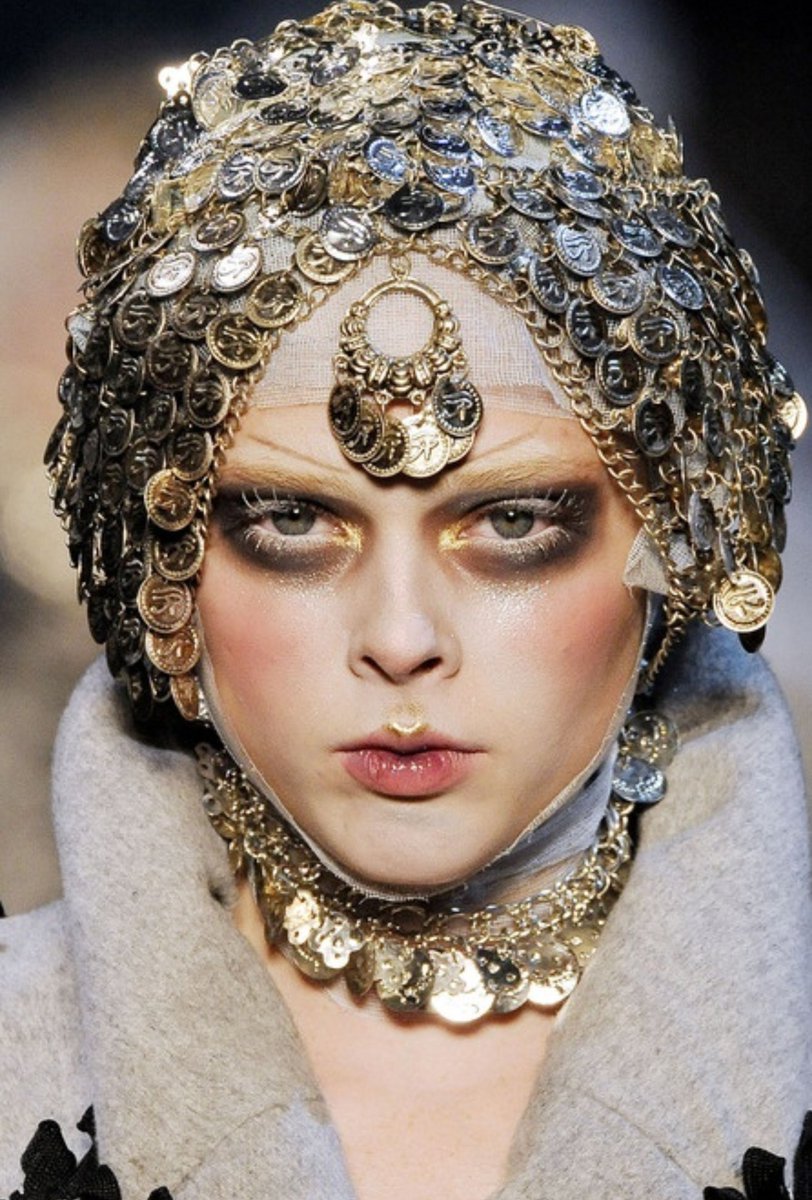
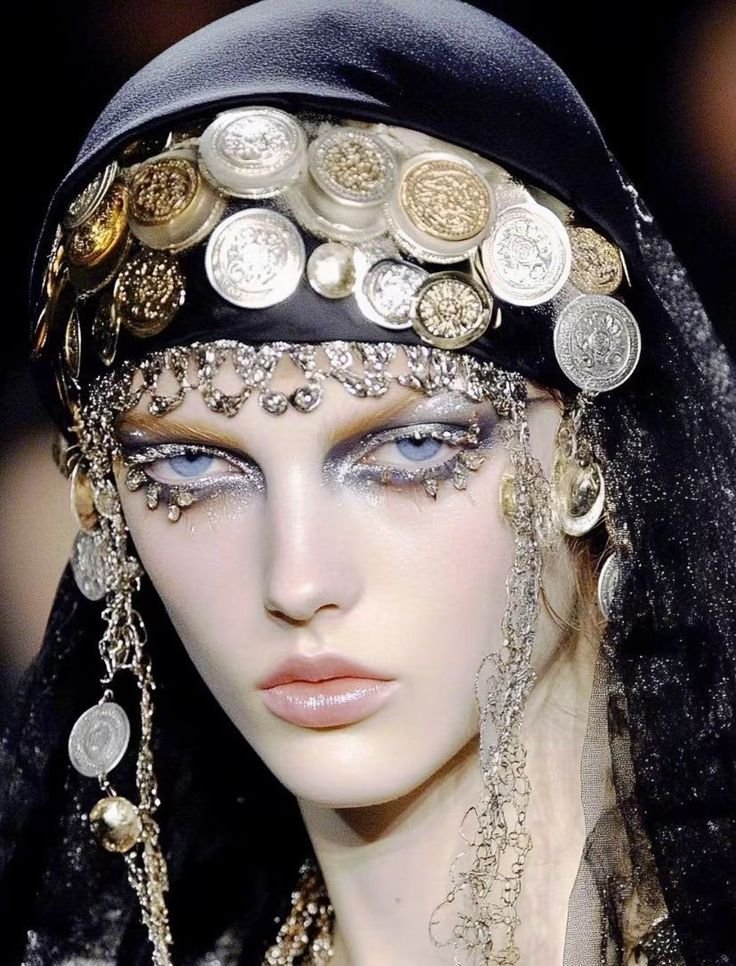
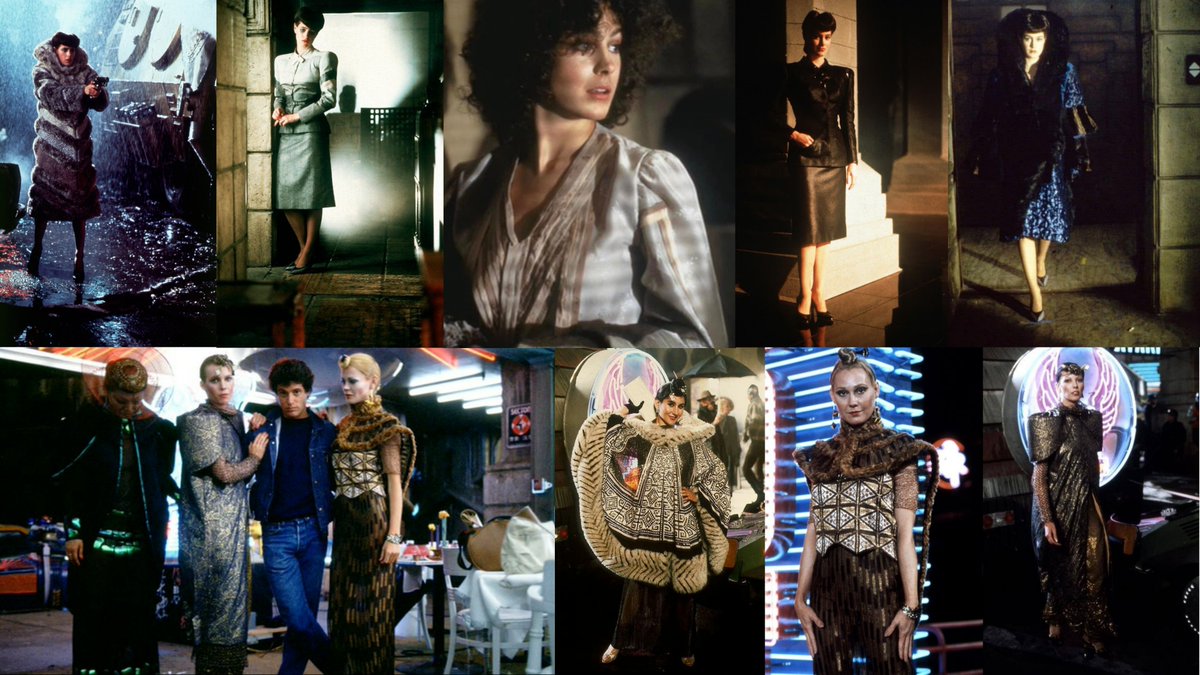
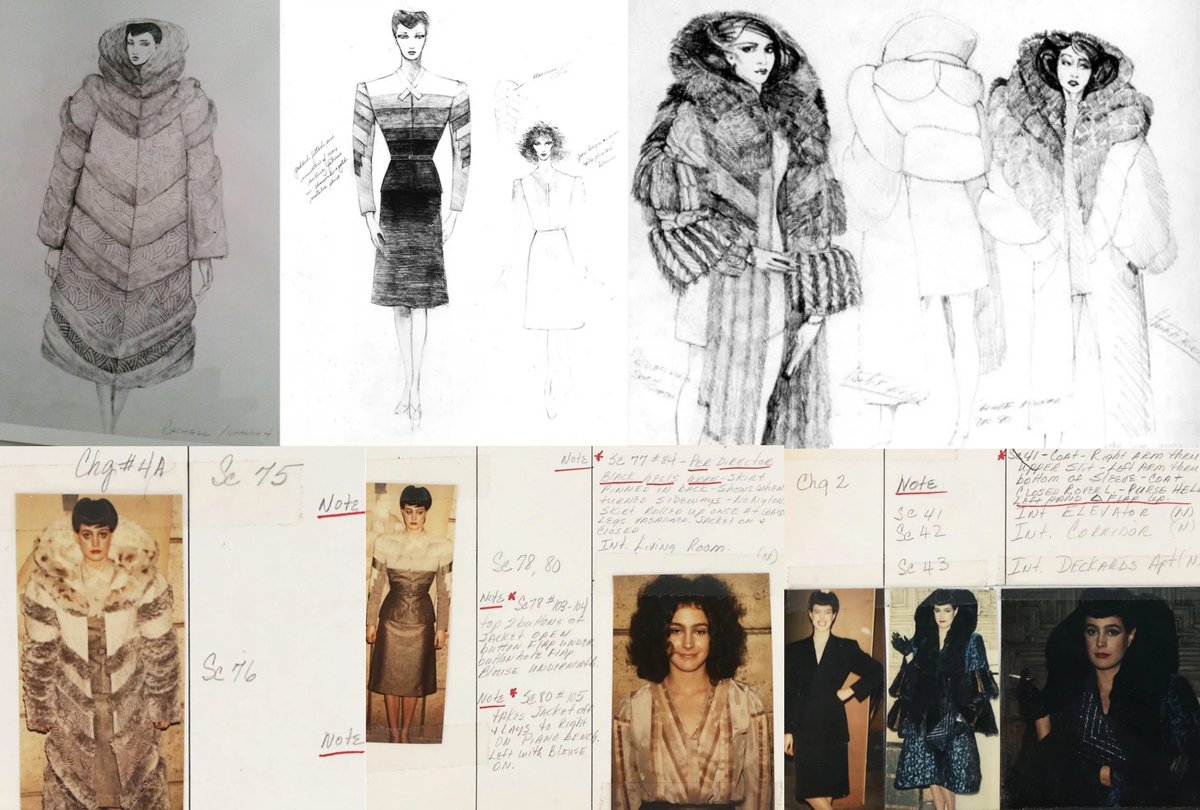
Michael Kaplan & Charles Knode's costuming for Bladerunner (1982) was so good Alexander McQueen designed Givenchy FW98, campaign shot by Steven Meisel who went on to do a themed editorial for Vogue Italia w/ Prada SS98, & Galliano seemingly even drew inspo for his FW99.
Irrepressible 18th century Swiss artist Jean-Étienne Liotard painted this still-life of a tea set when he was in his 80s. The details of the light falling on the porcelain and silver surfaces are wonderful (Tea Service, 1783, Getty)
https://t.co/aTctS439SU
Documenting McQueen Episode 5: The Harness
A red tailored jacket from Spring Summer 2002, ‘The Dance of the Twisted Bull’.
Collection development drawing and black tailored jacket with leather details from Autumn Winter 2002, ‘Supercalifragilisticexpialidocious’.
A black tuxedo jacket with satin details from Spring Summer 2026.
Discover the full episode: https://t.co/WQ7iSYzNb0
Captured by Chanel Moye
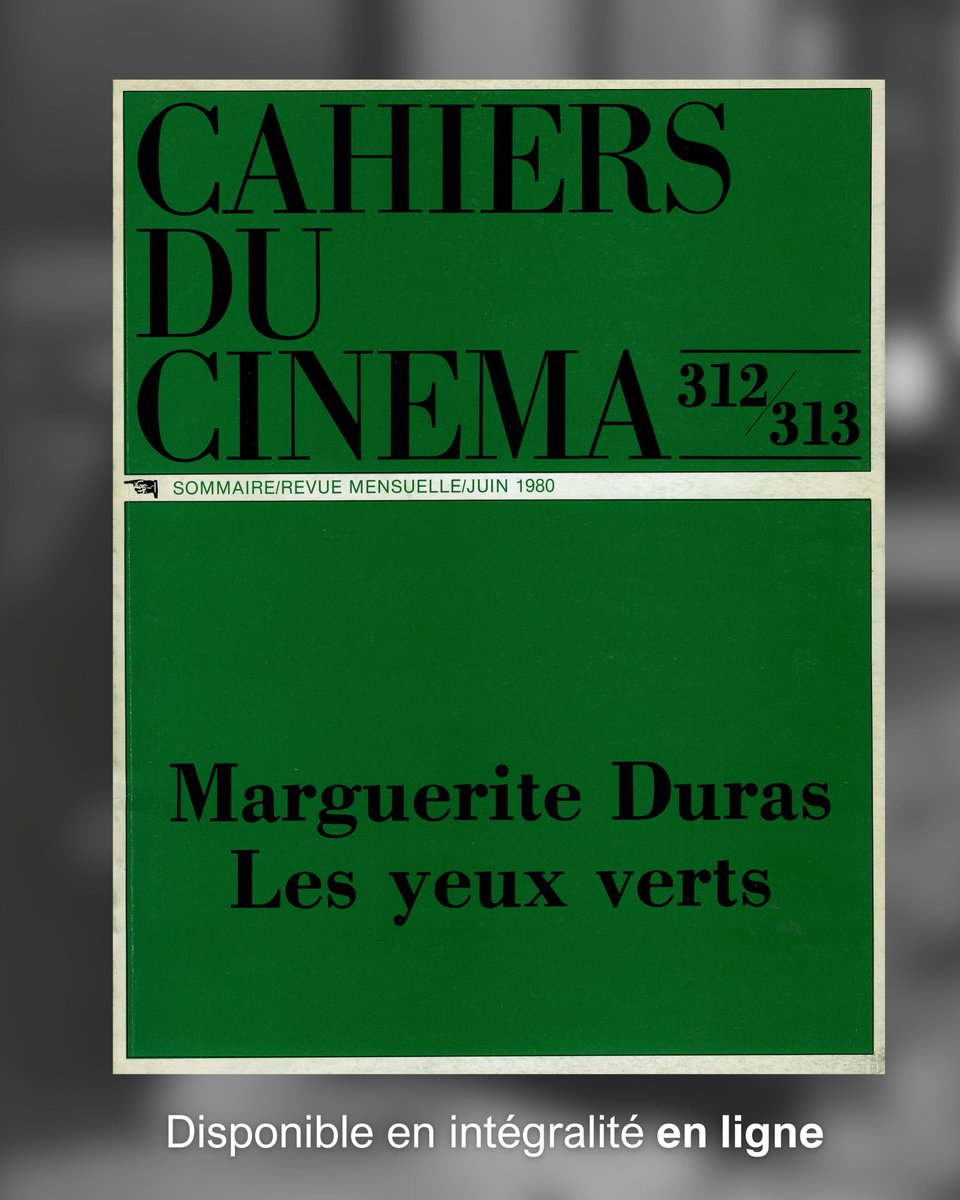
💚✍️ En 1980, les Cahiers du cinéma publient un numéro spécial, qui donne carte blanche à Marguerite Duras pour écrire sur le cinéma et choisir les illustrations : https://t.co/sRqbUVQSbq
📸 : D. Villain. Collection Cahiers du cinéma.
En la madrugada del 17 al 18 de agosto de 1936, hace noventa años, Federico García Lorca fue asesinado por los fascistas. Desde entonces, Granada no ha dejado de llorar.
Éric Rohmer on his Six Moral Tales (1963–1972):
"In French there is a word moraliste that I don’t think has any equivalent in English. It doesn’t really have much connection with the word “moral,” a moraliste is someone who is interested in the description of what goes on inside man. He’s concerned with states of mind and feelings. For example in the eighteenth century Pascal was a moraliste, and a moraliste is a particularly French kind of writer like La Bruyère or La Rochefoucauld, and you could also call Stendhal a moraliste because he describes what people feel and think. So Contes Moraux doesn’t really mean that there’s a moral contained in them, even though there might be one and all the characters in these films act according to certain moral ideas that are fairly clearly worked out. In Ma Nuit chez Maud these ideas are very precise; for all the characters in the other films they are rather more vague, and morality is a very personal matter. But they try to justify everything in their behavior and that fits the word “moral” in its narrowest sense. But “moral” can also mean that they are people who like to bring their motives, the reasons for their actions, into the open, they try to analyze, and they are not people who act without thinking about what they are doing. What matters is what they think about their behavior, rather than their behavior itself. They aren’t films of action, they aren’t films in which physical action takes place, they aren’t films in which there is anything very dramatic, they are films in which a particular feeling is analyzed and where even the characters themselves analyze their feelings and are very introspective. That’s what Conte Morale means."
— Éric Rohmer, interviewed by Graham Petrie, Film Quarterly, Vol. 24, No. 4 (Summer 1971)
🎨🖌️🖼️
Hidden in a Parisian courtyard is La Maison du Pastel, the world's oldest pastel maker.
With a 300-year-old legacy of making pastels by hand, the shop served clients like Edgar Degas.
@MaisonPastelRP
"For a lot of people, 'Jeanne Dielman' (1975) could represent the ideal woman, but when you look at the life of an ideal woman, it is unbearable."
--- Chantal Akerman
Full Excerpt:
"I remembered, at first fleetingly but then very strongly, that I wanted to dedicate this film to my mother: that I wanted to say 'for my mother Natalia, called Nelly' and that I immediately repressed this idea out of modesty or censorship...and I also tell myself that if I had not known my mother, I would not have made this film, which is, however, absolutely not the portrait of my mother.
I began with several very precise images from my childhood: watching my mother at the stove; my mother carrying packages...Why did I chose a beautiful woman? Because men always think that women inside their homes are ugly. My mother is beautiful.
I think that Delphine [Seyrig] carried with her all the roles that she had played up to then, that is to say, the cinema...If I had used my mother, it would have only been my mother.
At the beginning, I thought I was simply telling the story of three days in the life of a woman, but later I realised that it was a film about occupying time to avoid anguish, to keep moving so as not to think about the fundamental thing, which is being.
There is also the contradictory aspect of these movements; when you see that woman, you tell yourself that it isn't possible; at the same time, I am talking about a woman I love who is my mother. All that is very ambiguous; for a lot of people, Jeanne Dielman could represent the ideal woman, but when you look at the life of an ideal woman, it is unbearable. The camera is not positioned to say that, but it is so obvious. For me this is very old; it goes back to images of my mother when I was a child."
("Identity and Memory: The Films of Chantal Akerman", Edited by Gwendolyn Audrey Foster, 2003)
P.S: Remembering the great Belgian Filmmaker, Chantal Akerman, on her 76th birthday!
💌 Pour fêter leurs 75 ans, les Cahiers proposent sur leur site un parcours à travers les textes qui ont jalonné leur histoire et celle du cinéma.
« L’art d’aimer » par Jean Douchet est à lire en intégralité en ligne sur le site des Cahiers du cinéma.