Honestly GTA6 having 99 and hundreds of 100/100 reviews on metacritic is probably a good thing. Its a plain proof that these reviews were and will always be untrustworthy and mean nothing.
To nominate Crimson Desert for nothing other than best community support?
Not even best RPG or best adventure?
To say I’m disappointed would be an understatement. What a shame. What a terrible shame.
We're giving away a Hogwarts Legacy custom wrapped NVIDIA GeForce RTX 5090 to celebrate its official release with DLSS 5 🪄
To enter:
🟢 Share this post
🟢 Comment #RTXON
Terms and Conditions: https://t.co/45T3R732hf
We’re waking the dead for the V Rising Halloween Key Giveaway!
Follow V Rising then like and share this post for chance to be 1 of 10 winners of our key package! Each winner gets 1 key of V Rising, and 1 copy of 4 different cosmetic DLCs including Dracula’s Relics, Sinister Evolution, Legacy of Castlevania, and the Eternal Opulence packs!
Winners will be announced November 2, good luck Vampires!
The Red Rising book series by author Pierce Brown has officially been greenlit for a movie adaptation from Paramount Pictures, with Hunger Games alum Francis Lawrence to direct.
For more info: https://t.co/y2boisQwVw
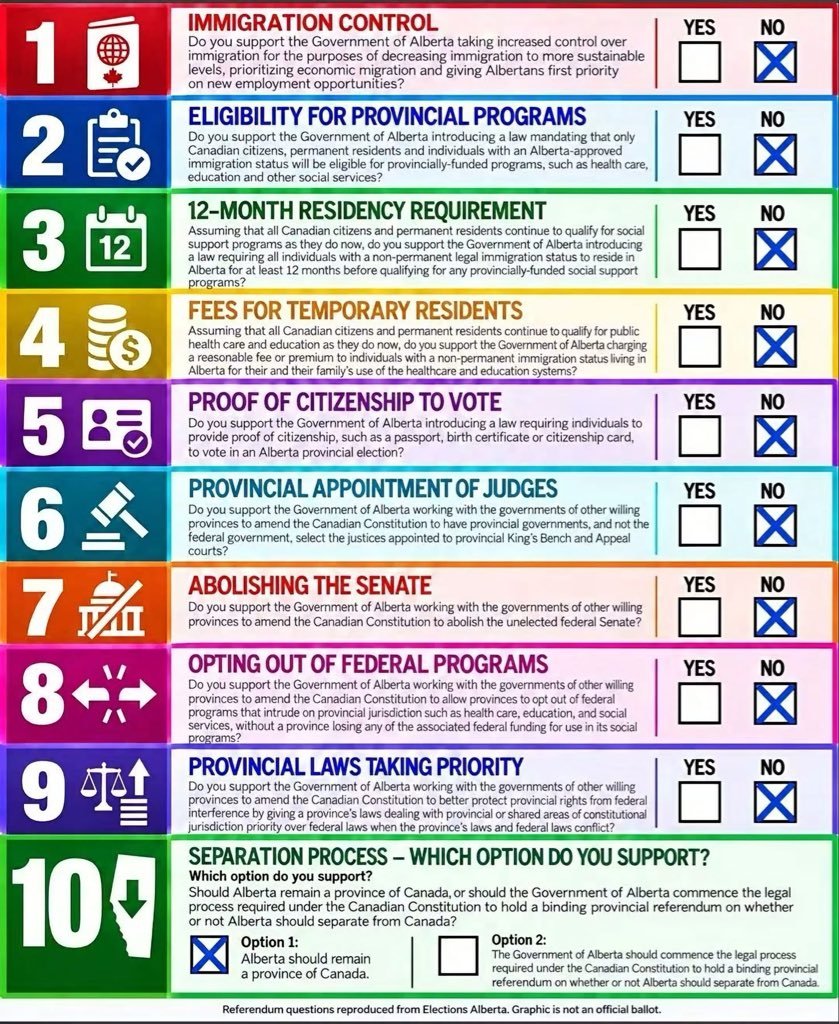
Alberta’s referendum is projected to cost taxpayers roughly $130 million, about three and a half times the cost of the last provincial election, all so Seppies can have a US-backed tantrum at your expense. #cdnpoli#abpoli#notothenine#alberta#referendum
While separation dominates the headlines, the other nine questions could reshape what you pay at the clinic, your access to healthcare, what it takes to vote, and who decides your case in court.
That means longer wait times, reduced services, higher costs and weakened legal protections.
Read the fine print. You’re already paying for it.
1. Immigration control
Fewer workers means longer waits at the ER, fewer daycare spots, slower home builds and higher prices for anything that depends on labour. Alberta’s birth rate is about 1.4, so it can’t fill those jobs on its own. Cutting immigration doesn’t save money. It drives up costs for everyone.
Imagine, your mother needs a hip replacement. The surgeon is ready, but the hospital can’t staff the operating room because the nurses it recruited never came. She waits another year, in pain. Fewer workers doesn’t mean less competition for you. It means longer lines for everything.
Vote No.
2. Eligibility for provincial programs
Someone has to check the status of every patient and student, and that bureaucracy is paid for with your taxes. Untreated illness doesn’t check immigration papers; it spreads to your kids’ classrooms and your workplace. People who are denied care don’t disappear. They end up in the ER, and that’s the most expensive care there is.
Imagine, a family on a work permit is renting the house next door. Their eight-year-old gets a fever that won’t break, and the parents don’t know if he’s covered, so they wait. By the time he reaches the ER, it’s a burst appendix. Now he’s in intensive care, the most expensive bed in the hospital, and the bill lands on the system anyway.
Vote No.
3. 12-month residency requirement
Employers recruit workers, and those workers can’t bring their families if the kids can’t see a doctor or go to school. When workers don’t come, businesses can’t staff up and prices go up. You pay for the shortage, and newcomers still pay income tax and GST from their first paycheque.
Imagine, a plant in Fort McMurray recruits a welder from overseas. He asks one question: can his daughter start school in September? She’d have to wait a year, so he takes a job in Saskatchewan instead. The plant runs short-staffed, the project falls behind and the costs get passed on to you or the entire thing fails and moves provinces, now you're unemployed.
Vote No.
4. Fees for temporary residents
Once Alberta charges some residents for health care, it has set up the system to charge more people. The billing system and the precedent it sets are both built to grow.
It starts with “them.” Then it’s a fee for the rest. Alberta has already brought in a private-pay cancer test program this summer. Once the billing system exists, every government that follows gets to decide who goes on it next. Hint: it'll be you.
Vote No.
5. Proof of citizenship to vote
A Canadian passport costs over $100. Replacing a lost birth certificate costs money and takes time. Seniors, students and rural Albertans are the most likely to be turned away or forced to pay just to vote. You’re already a citizen. Why should you have to pay to prove it?
Imagine, your 82-year-old grandmother has voted in every election since 1962. She has never had a passport, and her birth certificate was lost in a move decades ago. On election day, she’s turned away. Replacing her documents costs money and takes weeks. She’s a citizen. She just can’t prove it fast enough to vote.
Vote No.
6. Provincial appointment of judges
When judges are seen as political, every ruling gets challenged and appealed. Taxpayers cover those legal bills. Businesses don’t invest in places where they can’t trust the courts.
Imagine, the province wants to run a highway through your farm, and you take it to court. The judge hearing your case was hand-picked by the same government you’re suing. Would you trust that ruling?
Vote No.
7. Abolishing the Senate
The Supreme Court has ruled that abolition needs every province to agree. That will not happen, so this question means years of constitutional fighting paid for with public money and nothing to show for it. Fix the Senate instead.
Imagine, every province would have to agree, and they won’t. What you get is years of constitutional fights, lawyers on the public payroll and nothing at the end. That’s money that could have gone to hospital beds.
Vote No.
8. Opting out of federal programs
The Canada Health Act is why you don’t pay at the clinic. It’s also why your coverage works when you get sick in another province. If Alberta drops those federal conditions, both could go. Question 4 already shows where this is heading: user fees.
Imagine, you break your leg on a ski trip in B.C. Today, your Alberta coverage goes with you, because federal health rules guarantee it. Drop those rules and that guarantee goes too. The same rules are why you don’t pay at your family doctor’s office. Once they’re gone, the clinic can start charging.
Vote No.
9. Provincial laws taking priority
Alberta would end up with one set of rules and the rest of Canada with another. Businesses that work across provinces would pay for duplicate compliance and lawyers, and they would pass those costs on to customers. The legal fight over which law applies would be paid for by taxpayers too.
Imagine, a trucking company in Lethbridge runs loads to Regina. Now it has to follow two sets of rules, hire lawyers to sort out which one applies and buy expensive separate permits and risk getting rejected. Every extra dollar shows up in the price of your groceries.
Vote No.
10. Separation
Even starting the process puts your mortgage rate, your pension and your job in doubt. Investment stops when nobody knows what currency Alberta will use, how much of the national debt it will carry or what happens to CPP. Uncertainty alone costs money before anyone votes to leave.
Imagine, your mortgage comes up for renewal next spring. The bank is watching Alberta the same way investors are. Nobody knows what currency you’d be paid in or what happens to your CPP. Uncertainty pushes rates up, and you pay that difference every month for five years.
Vote option 1.
This referendum is projected to cost around $130 million. Don’t let it cost you more.
NO TO THE NINE.
OPTION ONE ON QUESTION TEN.
ALBERTA STAYS.