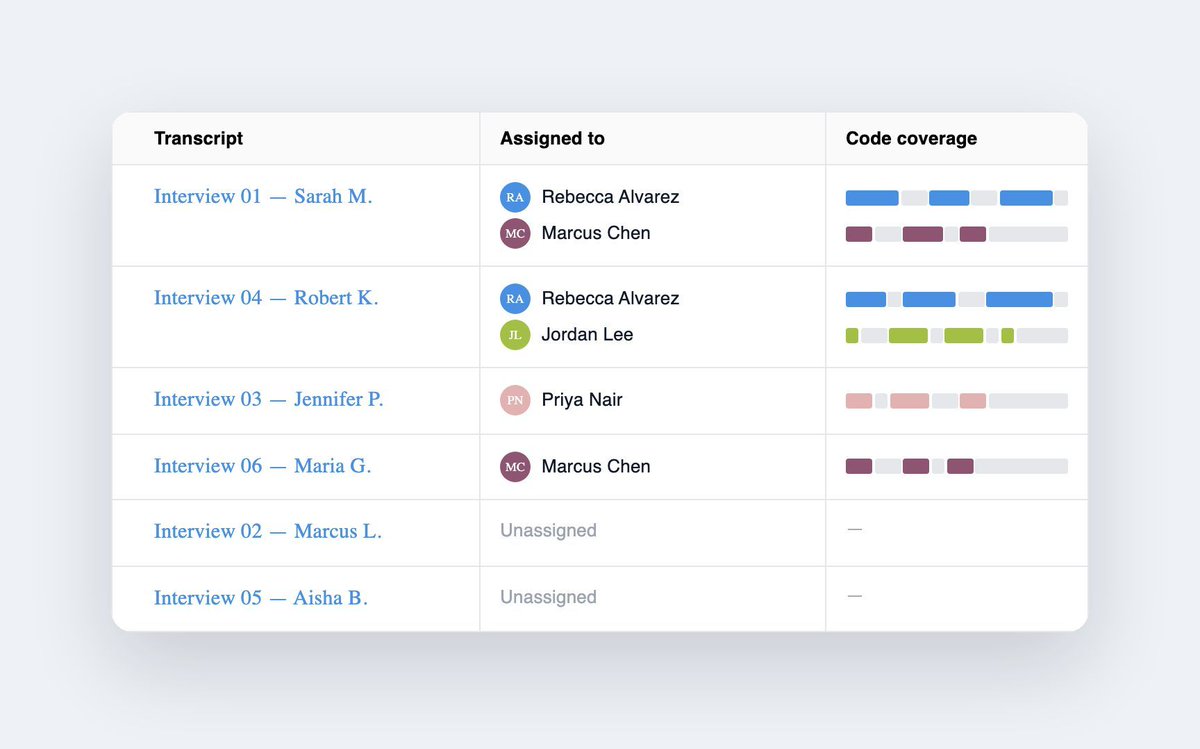
New guide on convergent vs parallel design: when to combine methods, when to run them side‑by‑side, and how to align teams for clearer insights. Read: https://t.co/oe8NK6CPpm #UXResearch
Want to evaluate qualitative research with confidence? This guide explains essential quality criteria—rigor, credibility, transferability, dependability—and how to apply them. Read: https://t.co/iZCqBiPvzX #QualitativeResearch#ResearchMethods
Exploratory vs explanatory sequential design: pick the right mixed-methods path with clear examples and practical tips. Read more: https://t.co/RV3YQtc62f #MixedMethods
Confirmability ensures qualitative findings are grounded in data, not researcher bias. Use audit trails, reflexivity, and triangulation to boost trustworthiness. Read: https://t.co/LWMfIrRCaO #ResearchMethods
Boost credibility in qualitative research: use triangulation, member checks, thick description, reflexivity, and audit trails to make findings trustworthy. Practical tips: https://t.co/9dRWmEM2Ci #QualResearch
Dependability in qualitative research means showing your findings are consistent and traceable—use transparent methods, audit trails, and reflexivity so others can follow your process and trust your conclusions. #QualitativeResearch https://t.co/1TIHsS6l1Q
Want your qualitative findings to resonate beyond your sample? Learn how to boost transferability—thick description, clear context, reflexivity, and practical tips so others can judge applicability. Read more: https://t.co/xFlDw49n2z #QualResearch
Explanatory sequential design: run a quantitative study first, then follow up qualitatively to explain the results. Practical steps & examples in DelveTool's guide: https://t.co/9zKkQdd8o0 #MixedMethods
Explanatory sequential design: start with quantitative results, then use qualitative follow-up to explain the "why." Perfect for adding depth to survey findings. Read more: https://t.co/9zKkQdd8o0 #MixedMethods#Research
Want stronger qualitative research? This guide breaks down reliability vs. validity, common threats, and practical ways to boost trustworthiness. Read: https://t.co/qntYznAl9k #QualitativeResearch#ResearchMethods
Want more credibility in your qualitative research? This DelveTool post explains what trustworthiness looks like and shares practical steps to strengthen it in your studies. Read: https://t.co/sZAqQ6qFst #QualitativeResearch
Need better AI prompts for qualitative research? This Delve blog shares ready-to-use prompts and tips for richer interviews and faster analysis. Check it out: https://t.co/CRwArYpEXk #QualitativeResearch#AI
Discover how AI is transforming QDA software—automated coding, theme extraction, sentiment & visualizations to speed insights and reduce bias. Read more: https://t.co/T8qGIdu8Cg #QualitativeResearch
Make AI more accurate in qualitative research: provide clear context & examples, sample representatively, validate with humans, iterate prompts, and codify domain rules. Learn more: https://t.co/4DVIOffh8N #QualResearch
Choosing software for Grounded Theory? This comparison breaks down top tools, features, and pros/cons — see how DelveTool handles coding, memoing, and analysis. Read: https://t.co/OSdF5rx3nB #GroundedTheory
Thinking about using NVivo for your dissertation? This guide breaks down the pros, cons, costs, and when NVivo actually helps your research ➜ https://t.co/ryGZeUmEIn #PhD#QualitativeResearch
Dive into Interpretive Phenomenological Analysis: a qualitative method for exploring how people make sense of lived experience—idiographic, interpretive, and rich in insight. Read more: https://t.co/LDdsZMnupH #IPAresearch#QualitativeResearch
Manual coding vs qualitative coding software: manual gives deep immersion & nuance; software offers speed, consistency, and scalability. Choose based on project size, team, and reproducibility needs. Read the pros/cons: https://t.co/8L5zsE2B6i #QualitativeResearch