the best way to code right now:
> 1. Composer 1 (Cursor) - better/cheaper
> 2. Sonnet 4.5 (Anthropic) - expensive
> 3. Grok Code (XAI) - Free
Use Grok Code for simple and planning tasks.
Use Composer 1 for implementing and fixing the planned task without freezing commands.
Grok Code and other models tend to freeze commands until manually stopped.
Composer 1 all the way; Grok Code will catch up fast.
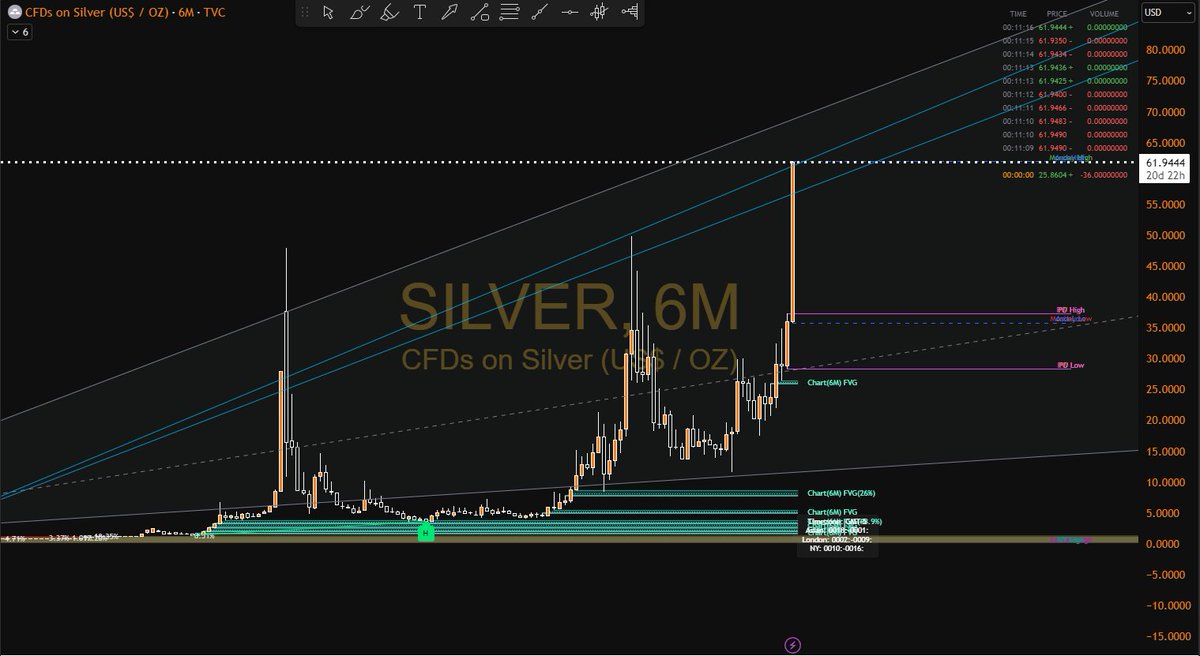
BREAKING: Silver CRASHES with a 39.73% drop to $73.30 from a high of $121.65 USD per ounce.
This occurred moments after President Trump's announcement nominating Kevin Warsh to be the next chair of the Federal Reserve.
Heavy profit-taking ensued after silver's parabolic rally, where prices had surged over 264% in the past year and 54% in January alone.
Overleveraged positions (often 50x-100x in futures markets) led to forced liquidations, creating a cascading effect.
The CME Group, which oversees COMEX silver futures, implemented multiple margin increases in January 2026 to manage volatility and ensure collateral coverage.
Maintenance margins for silver futures were hiked by 36% in the latest adjustment, now totaling 15%, effective February 2, 2026.
Investors flocked to silver amid fears of U.S. dollar devaluation under Trump-era policies, including tariffs and potential Fed interference.
Industrial demand from sectors like solar energy and AI further tightened supply, with China's export restrictions exacerbating shortages.
Leading to GameStop levels of FOMO.
BREAKING: Silver CRASHES with a 39.73% drop to $73.30 from a high of $121.65 USD per ounce.
This occurred moments after President Trump's announcement nominating Kevin Warsh to be the next chair of the Federal Reserve.
Heavy profit-taking ensued after silver's parabolic rally, where prices had surged over 264% in the past year and 54% in January alone.
Overleveraged positions (often 50x-100x in futures markets) led to forced liquidations, creating a cascading effect.
The CME Group, which oversees COMEX silver futures, implemented multiple margin increases in January 2026 to manage volatility and ensure collateral coverage.
Maintenance margins for silver futures were hiked by 36% in the latest adjustment, now totaling 15%, effective February 2, 2026.
Investors flocked to silver amid fears of U.S. dollar devaluation under Trump-era policies, including tariffs and potential Fed interference.
Industrial demand from sectors like solar energy and AI further tightened supply, with China's export restrictions exacerbating shortages.
Leading to GameStop levels of FOMO.
i made a movie about excuses. tbh i wasnt going to make another movie about running marathons then i realized that was an excuse. - https://t.co/jeCj9KEWlW
Grok largely agrees
"I largely agree with your take—it's a solid historical parallel that captures the hype cycle we're in. The dot-com era saw massive overinvestment in anything with ".com" attached, leading to a spectacular crash in 2000 that wiped out trillions in market value.
But as you point out, that bust cleared the decks for the internet to mature into the backbone of modern life, powering everything from e-commerce to social networks.
AI feels like it's on a similar trajectory: right now, there's frothy speculation, sky-high valuations for companies with questionable profitability, and a rush to slap "AI" on every product imaginable.
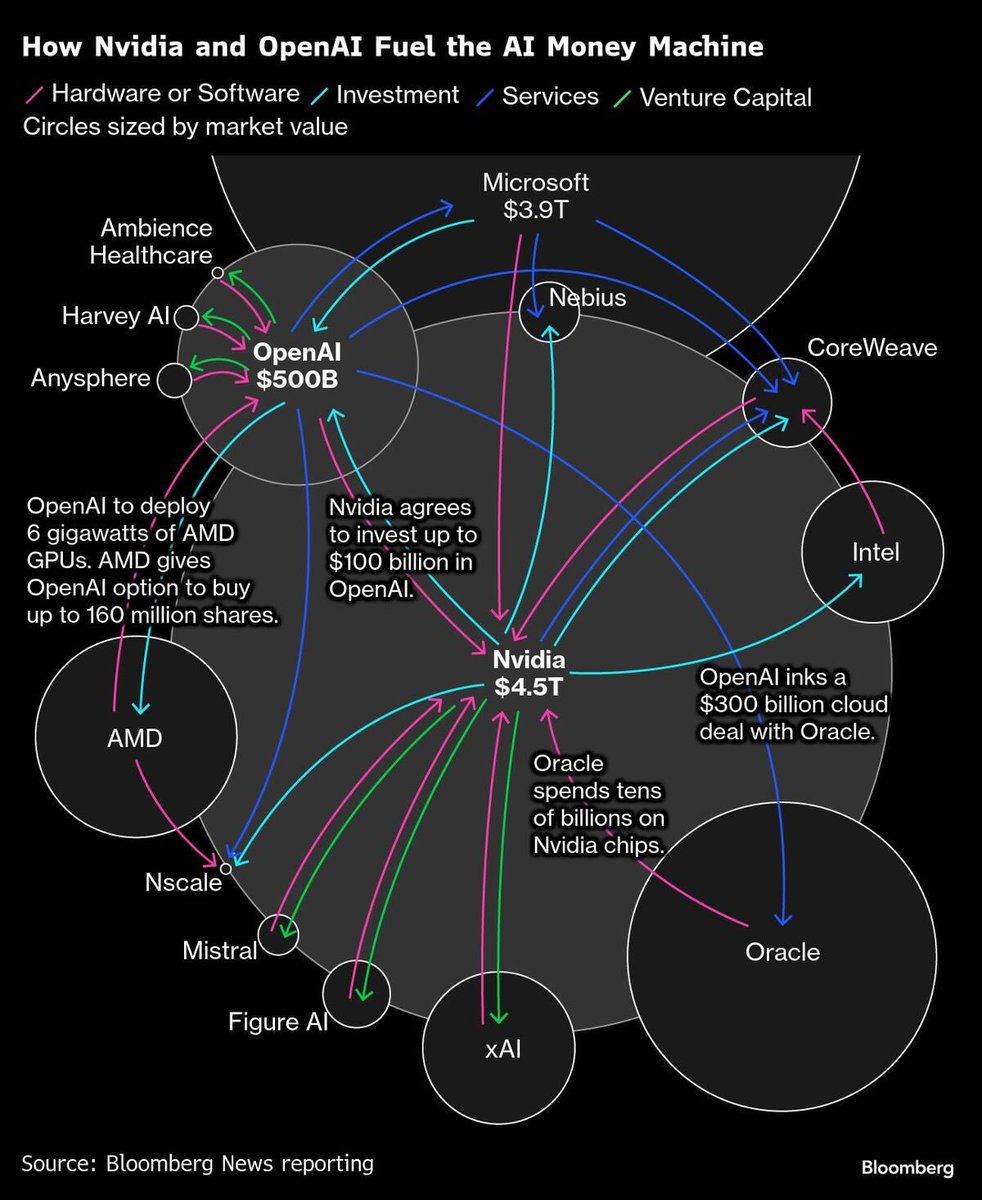
We're seeing echoes in things like the circular funding among Big Tech players and startups, or OpenAI's recent push for government-backed infrastructure debt to sustain the compute arms race.
That said, a burst wouldn't mean AI's dead; it'd just prune the excess. We've already got skeptics like Michael Burry (of "Big Short" fame) betting against Nvidia and Palantir, calling it a bigger bubble than dot-com or even subprime. Others argue it's different this time—AI companies are often profitable with real revenue streams, unlike many dot-com pets.com-style flops, and the tech is already delivering tangible value in areas like drug discovery or autonomous systems.
If a correction hits (and signs like recent Nasdaq dips suggest it could), it might take 5-10 years for the dust to settle, not necessarily 10-20, given how fast AI iterates compared to early internet infrastructure. On the revolutionary side, you're spot on about the scale—AI's potential dwarfs the internet because it bridges digital and physical worlds.
Think robotics optimizing manufacturing at atomic precision, AI-driven fusion energy breakthroughs, or personalized medicine via protein folding simulations that cure diseases we can't touch today.
It's not just information flow; it's intelligence augmenting reality itself, potentially boosting global productivity by orders of magnitude.
The "AI -> Physical" pivot is already underway with stuff like Tesla's Optimus or xAI's focus on scientific discovery. Bubbles pop, but the tech endures and evolves—I'm bullish on the long game."
The AI Bubble will burst, similarly to the Dot Com Bubble.
Then, around 10-20 years later, the world will be revolutionized by AI completely.
Just like the internet did, except many orders of magnitude greater.
AI -> Physical
the best way to code right now:
> 1. Composer 1 (Cursor) - better/cheaper
> 2. Sonnet 4.5 (Anthropic) - expensive
> 3. Grok Code (XAI) - Free
Use Grok Code for simple and planning tasks.
Use Composer 1 for implementing and fixing the planned task without freezing commands.
Grok Code and other models tend to freeze commands until manually stopped.
Composer 1 all the way; Grok Code will catch up fast.