Despite large country-level differences between the US, Ireland and Finland regarding political trust and experience with minipublics, findings across the three countries are almost identical 👀 (4/4)
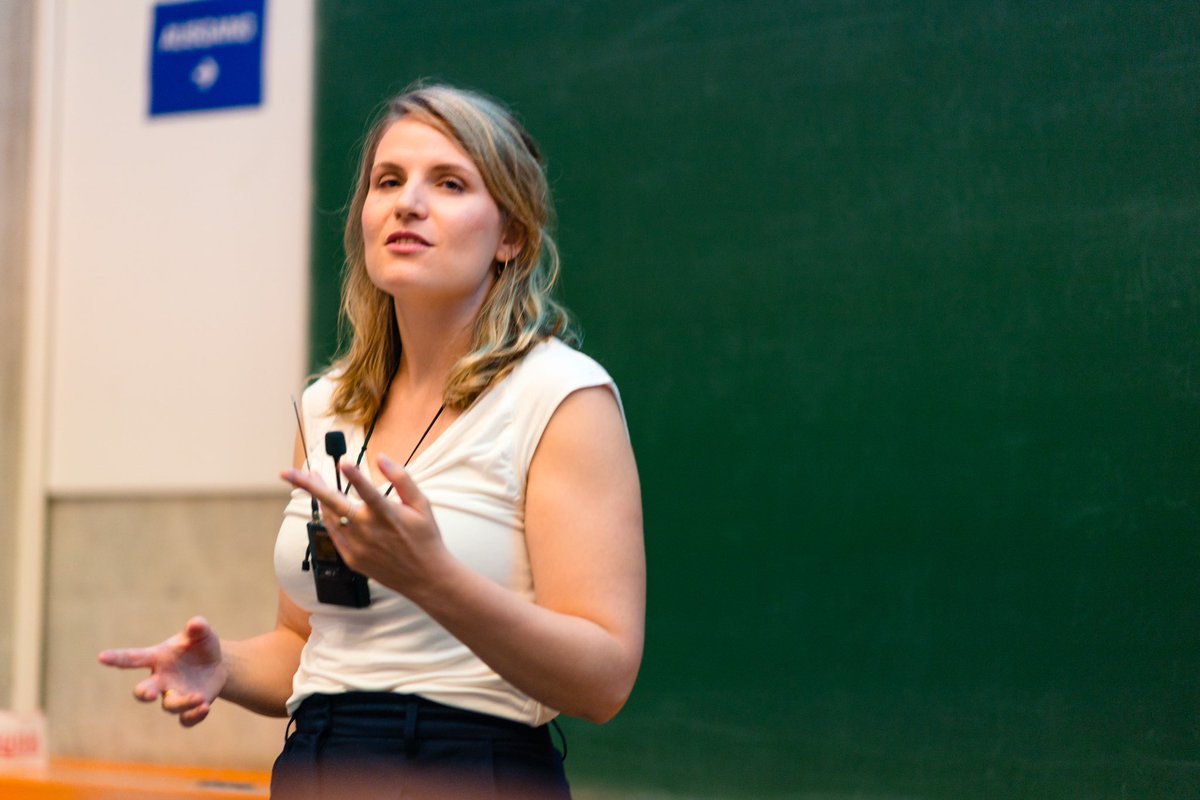
📣New Publication📣 In their new @apsrjournal article, @saskia_goldberg , @Marina_Lindell and André Bächtiger discuss the potential of empowered minipublics for democratic renewal 👇🧵(1/4)
https://t.co/2MPhgRFYYw
Participants that actually participated in minipublics, are familiar with them as well as with low individual political trust and high individual trust in other citizens as political decision-makers are more open for empowered and/or autonomous minipublics ✊ (3/4)
🎶 "Bad Blood" between Trump supporters and #TaylorSwift?
Our survey conducted before the #USElection2024 reveals some interesting divides! Trump supporters show significantly lower Swift fan levels than Harris supporters.
Let's take a closer look at some fun data! 📊 🧵👇
Today we met Swantje Sperling from the @Landtag_BW and talked with her about projects on local and state politics and citizen dialogue. We look forward to continuing and deepening the dialogue between politics and science! 🌻
Is democracy in crisis? Yesterday, students from the Cotta Gymnasium Stuttgart visited us to discuss the challenges facing democracy, what innovative solutions and reforms might look like on Mars 🚀and how they can contribute to shape the future of democracy✨
Who can vote in Germany, and why? Last week, @FranziskaMaier and André Bächtiger were honored to receive the @Uni_Stuttgart publication prize for their research on deliberative opinion change about non-citizen voting rights in Germany. 🎉🙌
📸 by Gabriel Parsyak
Last week, our very own @JVrydagh attended #NOPSA in beautiful Bergen ☀️ He presented the next stage of our project "Designing Democracy on Mars and Earth": a novel setup on how to design future governance with and for citizens in the 21st century 💬✨️
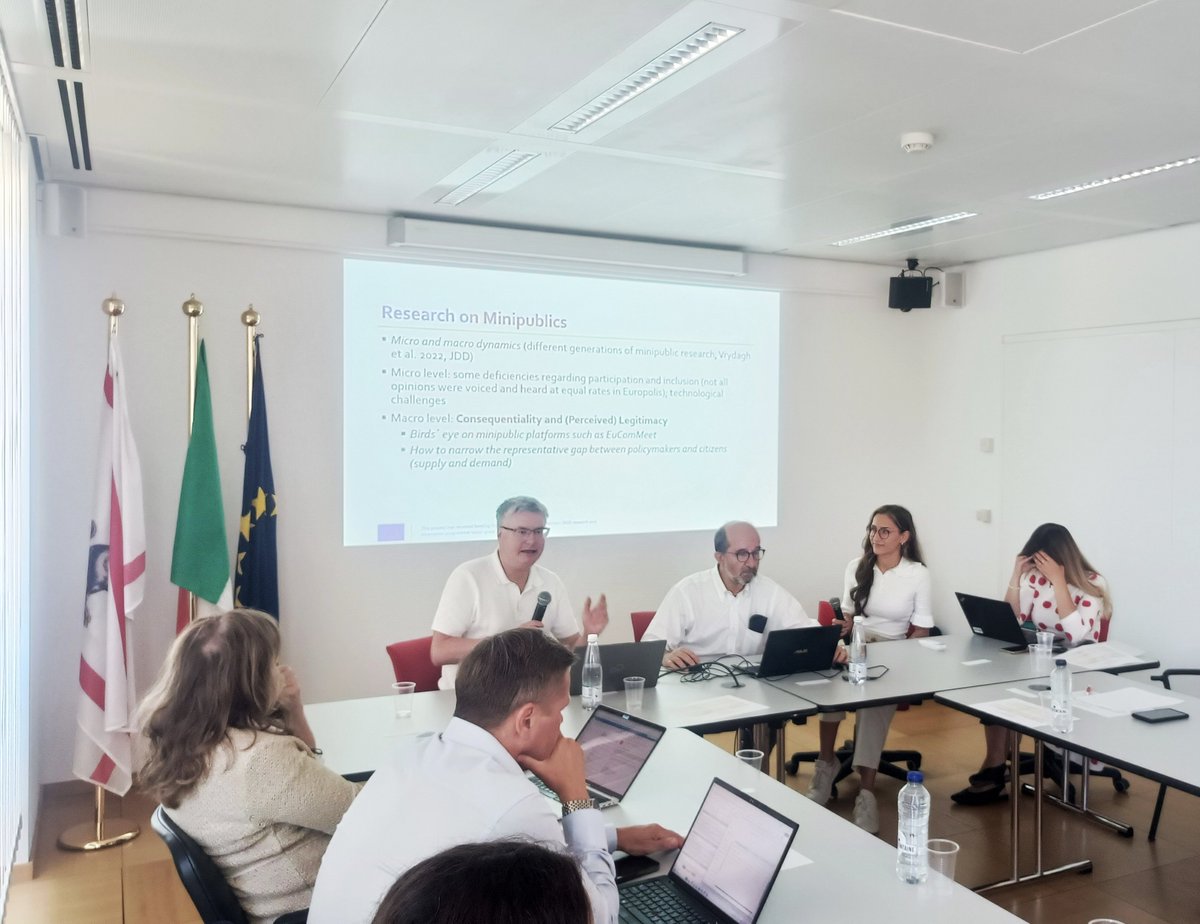
Today happening at the European Committee of the Regions 🇪🇺
"Just transition and participatory democracy" - Lessons learned from the H2020 @EuComMeet project.
Last week, André Bächtiger attended the summer retreat of the Düsseldorfer Institute for Internet and Democracy. It was an exciting event filled with inspiring discussions on the future of deliberative democracy 🤩✨
Vielen Dank an @AndreBaechtiger für den spannenden Austausch im DIID-Forschungsworkshop zu unseren Forschungsprojekten und Ideen. Wir sind ziemlich sicher, dass daraus noch vieles erwachsen wird.
⏳Don’t miss out on this book launch co-organised w/ @DemocracyNet_ feat John Dryzek (@DelDemUCan), André Bächtiger (@Demo_LabS) —w/ Claudia Landwehr (@uni_mainz) & @AndreaFelicetti as discussants, moderated by @DannicaFleuss
ALL INFO / REGO BELOW 👇🏾
Our very own @Anja_Rieker presented her innovative research on using constant sum and compositional data analysis to assess democratic preferences at #CoDaWork2024 in beautiful Girona! 🌟📊
Huge congrats to @JanVelimsky who's successfully defended his PhD thesis on "Perceptions of Representation of People in Precarious Living Conditions" 🥳🎓🥂
In it he explores the impact of political & social exclusion on long-term unemployed people
📊
Initial analyses of 🇪🇺election results in 🇩🇪 seem to confirm stereotypes of left-behind and populist voting. But are people who are/feel left behind generally undemocratic? @vschwaiger1 presents new research on the link between obj & subj disadvantage and undemocratic attitudes💫
🥁🥁We’re super excited to launch John Dryzek’s & André Bächtiger’s timely book (@CUP_PoliSci ) in collab w/ @DemocracyNet_)!
✨DELIBERATIVE DEMOCRACY IN DIABOLICAL TIMES✨
Chime in for a convo w/ the authors, Claudia Landwehr & @AndreaFelicetti!
‼️REGO: https://t.co/g3jk7BxNUc)