Continuing our spotlight on Japanese American veterans’ experiences, this powerful segment features a 100th/442nd RCT veteran and founding member of the Seattle Nisei Veterans Committee (NVC), Masao Watanabe.
As he reflects on the decision he made, he believed that he and his fellow volunteers ultimately did the right thing, though he added, “I don’t know which was worse. Being locked up in camp or going off to war.”
Thank you, Rachel Maddow, for your powerful testimony on the impact and necessity of Densho’s work. It was deeply meaningful to include your words during our 30th anniversary virtual celebration last month.
What was voting like behind barbed wire?
With voting underway for the 2026 midterm elections, Densho Editorial Manager and Staff Historian Jonathan van Harmelen reflects on the attempts to suppress the voting rights of incarcerated Japanese Americans in 1942.
The challenges facing Americans to participate in elections underscores the fragility of American democracy. Just as in 1942, attacks on voting rights now undermine the democratic values advanced by the Constitution.
Next Friday, join us for a Lunch & Learn screening of a film that answers a question unresolved for over 80 years: Why did the U.S. government build a jail inside Tule Lake?
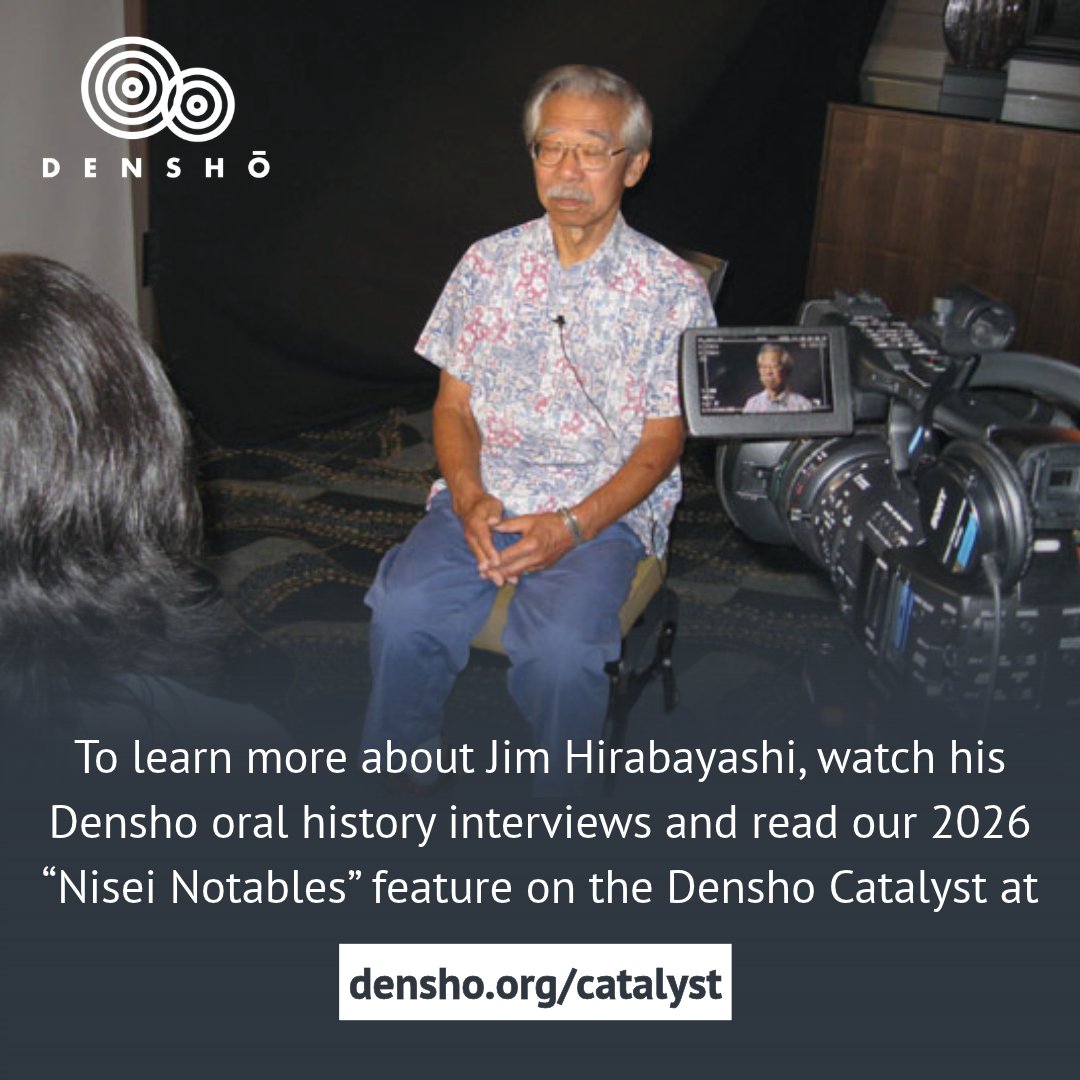
2nd photo is of Jim Hirabayashi in the middle of an interview with Densho, featured in Rafu Shimpo’s article, “James Hirabayashi Remembered,” June 22, 2012.
Celebrating what would’ve been Jim Hirabayashi’s 100th birthday!
Jim is recognized in the Catalyst blog’s 2026 Nisei Notables feature for his work and contributions to the Japanese American community.
Both photos are courtesy of Rafu Shimpo.
1st photo is of Jim Hirabayashi (third from right) and former Secretary of Transportation Norman Mineta (middle) cutting the ribbon at a memorial plaza at the assembly center site in Fresno on Feb. 16, 2009. Photo by John Hix, Rafu Shimpo
For Gidra’s readers, it was the voice of the Asian American Movement, raising awareness of the growing ethnic studies movement on college campuses and quickly expanding to topics including anti-imperialist movements and the publication of art and poetry.