It can often be difficult to tell what teenagers are thinking, but @RCN_AUS provides a list of signs to look out for teenage depression. https://t.co/Se7q3eF9l7
A survey of 24,055 young Australians, released by @MissionAust, shows in 2017, mental health was identified as the most important issue in the nation. It is the first time mental health has topped the list. https://t.co/DoXNrqgYRs
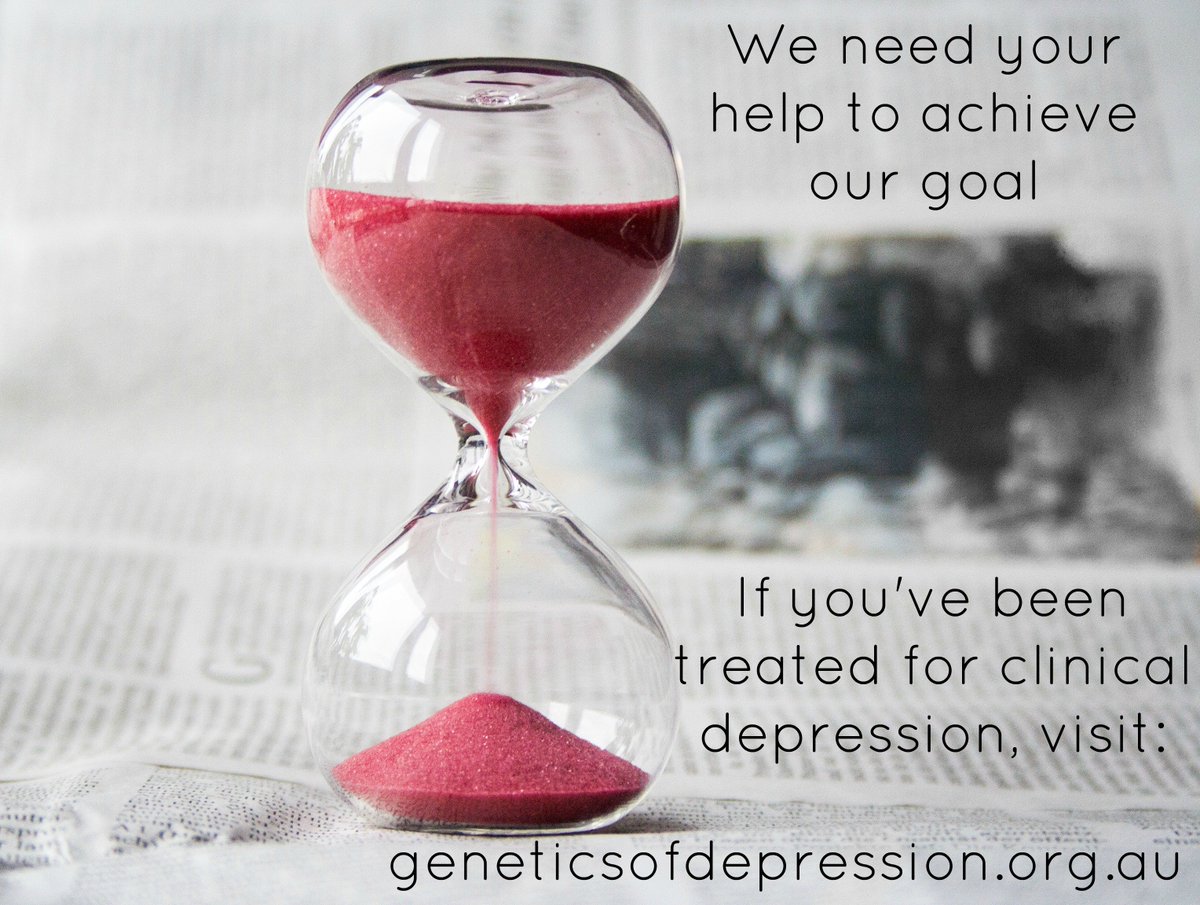
To participate in the Australian Genetics of Depression Study:
Call: 1800 257 179 Email: [email protected]
Write to: Locked Bag 2000, Royal Brisbane Hospital, Herston, QLD, 4029, AUSTRALIA https://t.co/8EwsPB9k0X
Are you concerned you might be living with anxiety or depression? If so, @beyondblue have a checklist that can help you learn more. https://t.co/Iwf1brLwns
There is always a lot of confusion & discussion around mental illness. @SANEAustralia separates the facts from the myths in mental illness. https://t.co/mjybeQ4DTW
Men who are diagnosed with a mental health condition can expect to live 10.2 years less than those who aren’t, according to our new research. https://t.co/GzcuaTtyUV
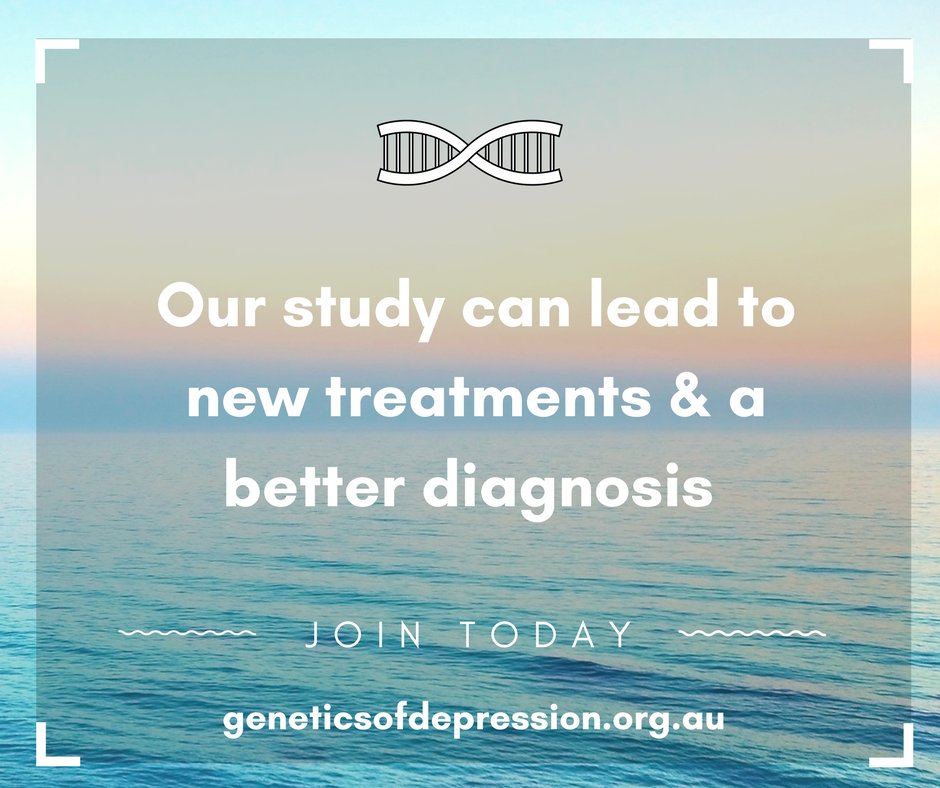
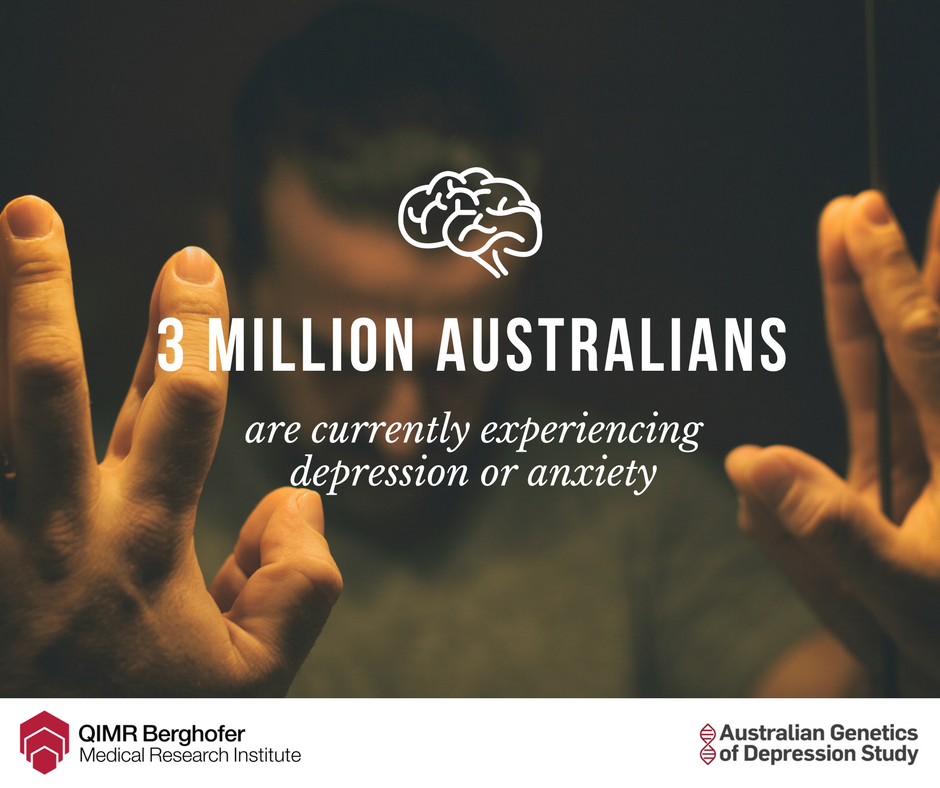
The Australian Genetics of Depression Study aims to identify the genetic risk factors associated with clinical depression, and how a person’s genes influence their risk of developing depression and their response to treatment. https://t.co/8EwsPB9k0X
Women's mental health was highlighted, with @blackdoginst Director, Prof Helen Christensen & NSW Minister for Women & Mental Health, Tanya Davis launching a report on Weds, Dec 6, 2017. https://t.co/W5LzA4cyg3
Thank you to everyone who has participated in the Australian Genetics of Depression Study this year. We've had resounding success with both the launch and renewed effort, and we hope to continue recruiting in 2018 and find the answers to the genetics of depression.
If you've been treated for depression and are over the age of 18, make it your new years resolution to participate in the Australian Genetics of Depression Study. You can help make a difference for future generations