We’re still early, and the buyback & burn dashboard is now live
You can check the wallet balance, view confirmed burn transactions, and follow the countdown to our daily 4 PM UTC buyback and burn
https://t.co/oAi49SvyYR
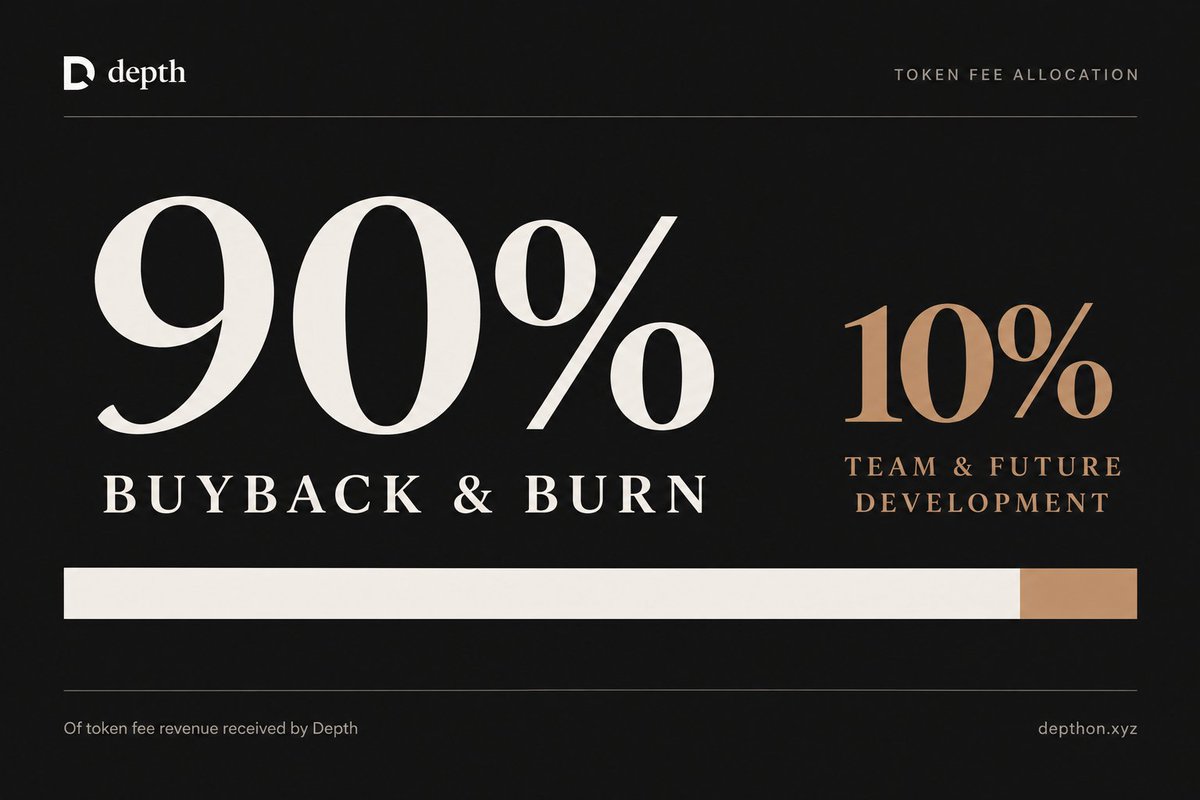
We’ll use 90% of the token fee revenue we receive for buybacks, and burn every token purchased through those buybacks
The remaining 10% will support team operations and future development
Here’s where we want to take Depth next!!
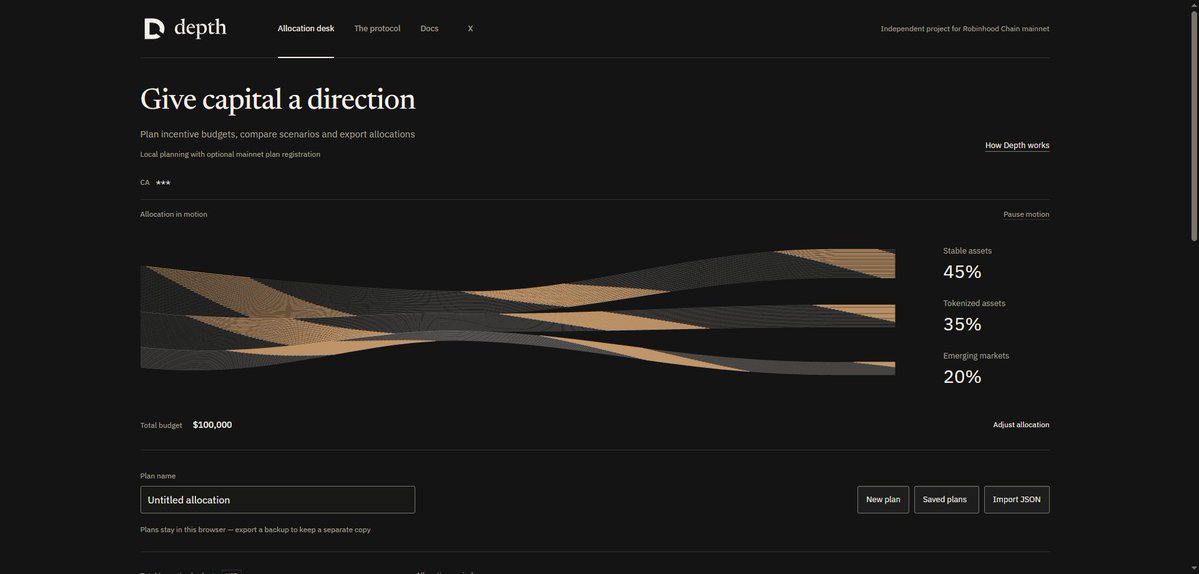
The allocation desk and plan registry are already available on Robinhood Chain mainnet. You can work through a budget, register a plan from your wallet, and update its public record as your allocation changes
Next, we want to make registered plans easier to find and compare, with a clear history of what changed and why
Community proposals and token-holder participation are part of the next design phase. The aim is to let people help decide which markets receive support, how much budget is allocated, and how long that support runs
Longer term, we want to connect those decisions to funded incentive campaigns and track whether they improve market depth, alongside how the budget is used
Planning and registration are live today. Governance and campaign execution are the next stages we’re working toward
https://t.co/fowIyUAij9
@zm2nxv Appreciate the support! We’ll take care of the DEX payment too. We also plan to work with other projects and will share more once things are confirmed
We’re adding a buyback & burn dashboard to the site so you can track the wallet and onchain records
It’ll also have a countdown to our daily buyback and burn at 4 PM UTC
Coming soon.
We’ll use 90% of the token fee revenue we receive for buybacks, and burn every token purchased through those buybacks
The remaining 10% will support team operations and future development
Here’s where we want to take Depth next!!
The allocation desk and plan registry are already available on Robinhood Chain mainnet. You can work through a budget, register a plan from your wallet, and update its public record as your allocation changes
Next, we want to make registered plans easier to find and compare, with a clear history of what changed and why
Community proposals and token-holder participation are part of the next design phase. The aim is to let people help decide which markets receive support, how much budget is allocated, and how long that support runs
Longer term, we want to connect those decisions to funded incentive campaigns and track whether they improve market depth, alongside how the budget is used
Planning and registration are live today. Governance and campaign execution are the next stages we’re working toward
https://t.co/fowIyUAij9
Depth is open: https://t.co/LbyskJHLSD
Build an allocation plan around your own budget, adjust the market weights, and save it for later
You can also register it on Robinhood Chain. The same wallet controls future updates, and the record stays public after archiving
Give it a try and tell us what you’d change. We want feedback from people actually using it
You can try Depth directly at https://t.co/fowIyUAij9
Start with an incentive budget and an allocation period. Adjust the market weights to see how the budget is distributed, then save or export your plan
If you want a public record, connect your wallet and register the plan on Robinhood Chain. You can update it later from the same wallet, with each change recorded as a new revision
Registration records the plan and requires network Gas — it doesn’t transfer your planning budget
0xbe0846bbb2148c668ea0f6e4ad308f03e44fa3bd
CA:
0xbe0846bbb2148c668ea0f6e4ad308f03e44fa3bd
Depth is live on Robinhood Chain, starting with liquidity planning and public onchain plan records @RobinhoodCrypto@ponsdotfamily
We’re building Depth for liquidity coordination on Robinhood Chain, starting with how incentive budgets are planned and recorded
When a market receives incentives, the allocation should be clear: how much is assigned, which markets it supports, and how long the plan runs
The allocation desk lets you work through those decisions before publishing anything onchain. Set a budget, adjust market weights, compare allocations, and save or export your plan
Our plan registry is already deployed on Robinhood Chain mainnet. Plans are registered from your wallet, and only the owner can update or archive them. Each update advances the revision. Archived records stay public and can’t be edited again
The video shows the workflow from allocation to registration, through an update and permanent archive, using isolated demo transactions
The current release covers planning and public records. We’ll build on that as Depth develops toward broader liquidity coordination
Try the allocation desk and read the docs:
https://t.co/aDHKqzdEj6
Depth’s first contract is live on @RobinhoodApp@RobinhoodCrypto
We’ve deployed DepthPlanRegistry. It supports registering allocation plans, updating them through the owner’s wallet and permanently archiving them
A registered plan includes its name, planning budget, duration and market weights. These records are public, including the changes made over time
Only the wallet that created a plan can change it. Updates check the current version before they go through, and archived plans remain available to read
This is the first part of Depth running on mainnet. The release is focused on keeping allocation plans and their revisions onchain. The budget recorded in a plan is planning data; registering it does not move those funds
The contract is available below for anyone who wants to inspect it
0x4A2ADa02D9A9AB4dA764e422b661d70A0BFF1b3b
Today we worked on saving and revising incentive allocation plans in Depth.
A proposal can go through several versions before a vote. Someone changes the budget, tries different market weights, or wants to compare an alternative. We want people to be able to revisit those versions without losing their work.
We’ve tightened up draft handling and imports. A file that finishes loading late can no longer replace a newer draft you’ve already opened.
This is the planning workflow we’re building ahead of onchain execution. Participants should have a clear record of the alternatives they considered before deciding which allocation to support.
Suppose a pool attracts liquidity for a four-week campaign, then loses most of it when rewards stop.
Whether that budget was well spent depends on what the campaign was meant to achieve. Supporting a launch and building a lasting market are different goals.
For Depth, we want that goal to be clear before participants vote on an allocation. They should also know when the results will be reviewed.
We’re exploring how those reviews could feed into later funding rounds, giving voters a record of what previous incentives achieved.
A project asking for continued support should be able to explain what happened during its last campaign and why another round makes sense.
We're building Depth for tokenized asset markets on @RobinhoodCrypto 's Robinhood Chain.
Our focus is how liquidity incentives get allocated. A project may need support for a market, but a shared budget can't fund every request. The people committing capital should have a say in those choices.
In the design we're developing, projects would explain the liquidity they need and what their requested incentives are meant to achieve. Participants would lock tokens to take part in allocation votes, using those proposals to decide where the budget goes.
An allocation would also have a review point. If a program isn't helping the market it was meant to support, that should affect its next funding round.
We're working through the locking and voting rules, including how longer-term participants should be represented. We'll share those decisions as the design develops.