The Dera Protocol is live on Ethereum mainnet.
DERA is the first asset issued on the protocol: a yield-bearing, USDC-backed token on permissionless yield infrastructure.
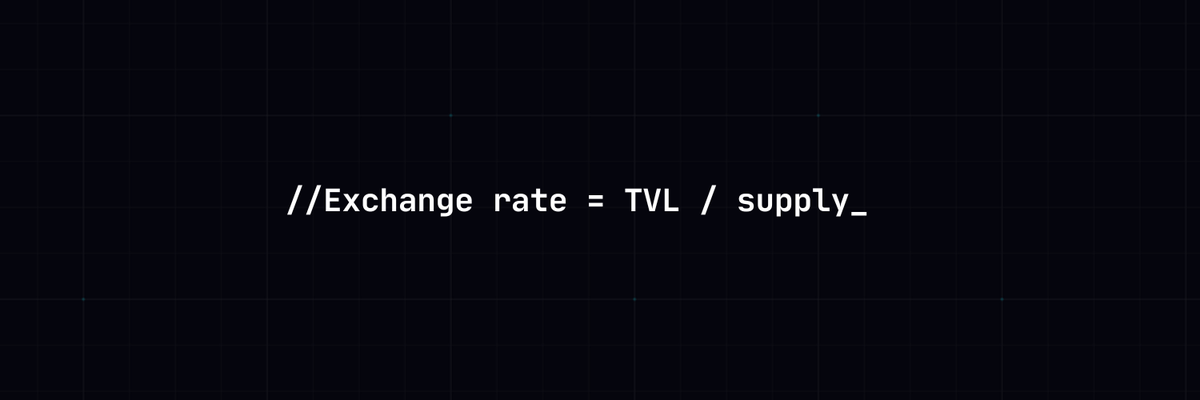
// Exchange rate = TVL / total DERA supply
// Yield accrues into TVL. No rebase. No staking.
// Non-custodial by architecture
Capital routes directly from user wallets to external DeFi protocols via smart contract connectors.
DERA is deployable as a liquidity asset. LPs earn protocol yield and AMM trading fees from a single position, continuously and independent of pool volume.
Permissionless exits at the prevailing Engine exchange rate. Enforced at the contract level.
// https://t.co/XNKz9rf2N5
// https://t.co/0PrrtFy7EG
// https://t.co/RhMyDnQJYf
// https://t.co/rNT6vELmjo
Only whitelisted stablecoins can be deposited into Dera. Whitelisting is an admin-gated action, logged on-chain, separate from day-to-day pool rebalancing.
Withdrawal valuations are checked against Chainlink price feeds, not computed solely from Dera's internal state. This is one of several checks against manipulated or stale pricing.
The performance fee is deducted at the connector level, before yield reaches the exchange rate. What holders see reflected in the rate is already net of that fee.
When Dera references historical exchange rate performance, the number always comes with a stated time period. Past performance over that period says nothing about what comes next.
Pool additions, removals, and fund reallocations each emit a distinct on-chain event: ProtocolPoolAdded, FundsReallocated, and others. None of this requires trusting Dera's own reporting.
Replacing the Dera Engine does not require migrating user balances. setNewEngine() transfers contract ownership; DERA holdings stay exactly where they are.
Regardless of which connectors a deposit was routed through, Aave, Compound, or Fluid, every DERA withdrawal returns USDC. The Engine handles the conversion back from each pool's native representation.
Dera's connectors originally integrated Beefy. That integration was replaced by Aave, Compound, and Fluid after API issues with Beefy. The change is documented, not hidden.
TVL at Dera specifically means capital routed into third-party protocols through connectors, not assets held by Dera itself. The protocol never takes custody of what it allocates.
If the Dera Engine itself needs to be replaced, setNewEngine() transfers role ownership of connectors, the token contract, and the Safety Escrow to the new engine. User balances are untouched by the migration.
Recovery operations on Dera's contracts exist for tokens mistakenly or maliciously sent directly to them, not for user deposits made through normal flows. Gated by admin role and logged on every call.
Connector contracts are upgradeable through a UUPS proxy pattern. The core DERA token logic, once deployed, is not. User balances and past mints are immutable regardless of any future upgrade.
TVL at Dera specifically means capital routed through connectors into third-party pools. It is not capital sitting idle inside Dera's own contracts, because none does.
Dera does not use a bid/ask spread. Instead it applies a configurable withdrawal fee at redemption, capped at 1%. The distinction matters for anyone modeling cost of exit.
Multisig-gated changes and time-buffered role transfers on Dera's contracts are built to align with MiCA Article 30's operational resilience requirements.
Only the DeraEngine contract holds ENGINE_ROLE, the permission required to mint or burn DERA. This is enforced by OpenZeppelin's AccessControlDefaultAdminRules, not by internal policy.