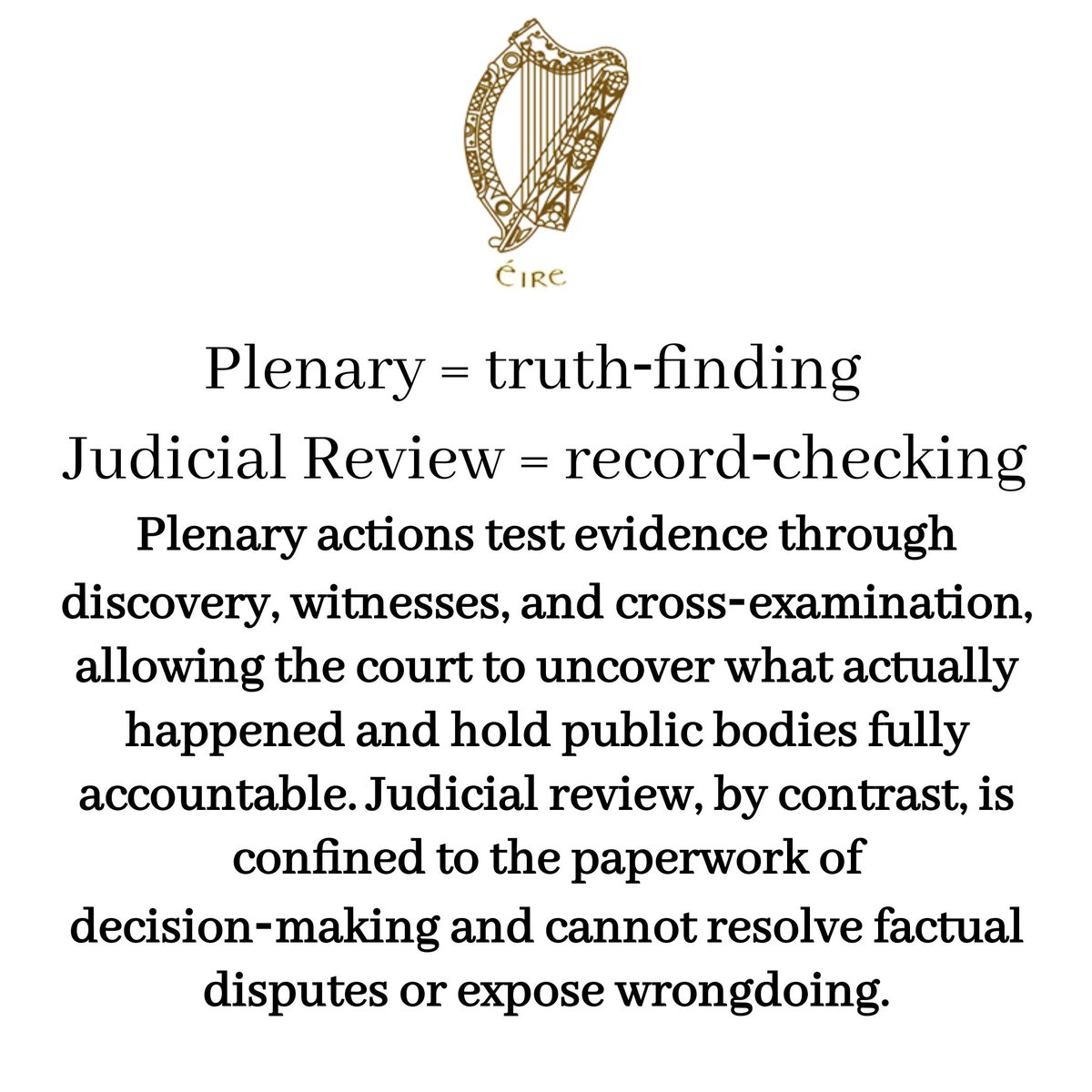
Plenary actions allow the court to examine what actually happened when a public body or public servant is alleged to have violated your rights. They permit oral evidence, cross‑examination, discovery, and, in many torts, a jury. These tools are essential for exposing misconduct, testing official accounts, and vindicating fundamental rights through meaningful remedies, including damages.
Judicial review, by contrast, is confined to the administrative record. It relies almost entirely on affidavits, rarely permits discovery, never allows a jury, and cannot resolve factual disputes. Its purpose is not to uncover wrongdoing but to assess whether a decision‑making process appeared lawful on paper.
For that reason, plenary proceedings hold the individuals accountable, while judicial review merely oversees procedure. When rights have been violated by public bodies or individual public servants, only plenary proceedings provide the constitutional mechanisms necessary to reveal the truth and secure effective redress.