Transitioning out of academia !?
In this video, Matteo & Hannah talked with @Desfosa, a long-term ECoENet member, on his transition out of academia into industry.
Watch the entire interview to learn about Desmond's interesting experiences!
▶️ https://t.co/iCNs8R88Df
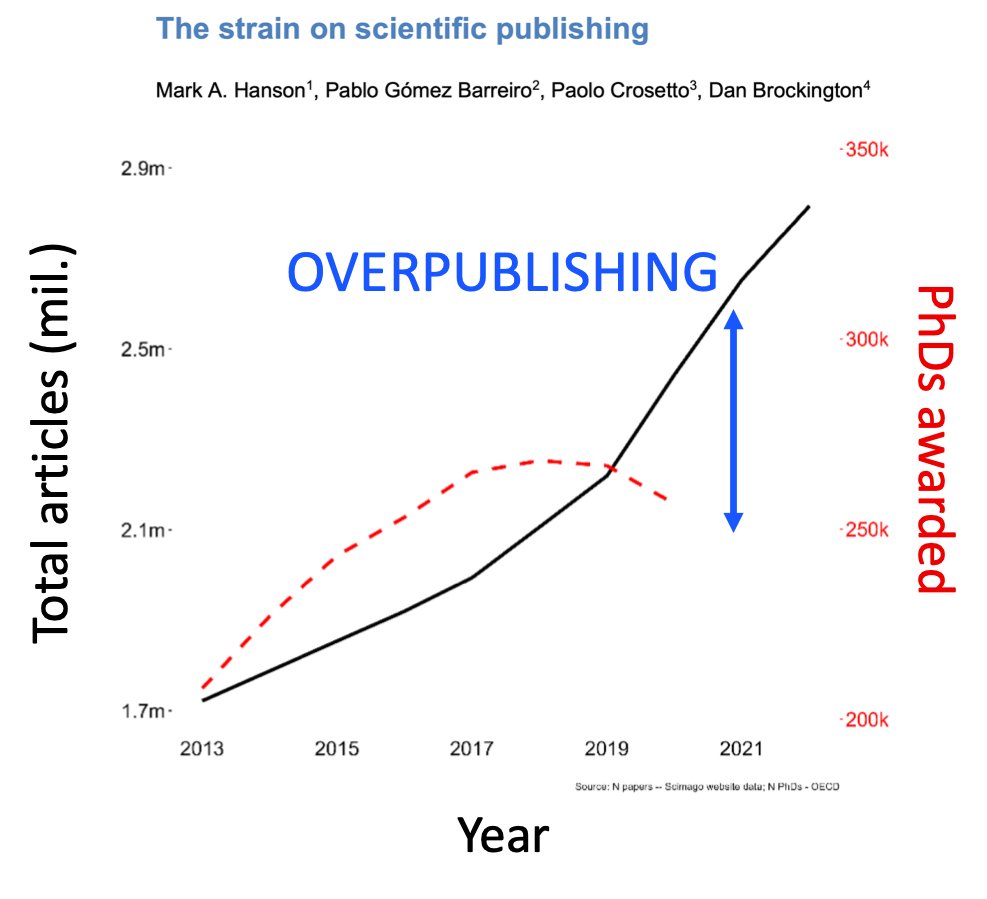
Overpublishing puts enormous stress on students and PIs.
And brings tons of money to publishers in STEM.
A new study shows that the number of papers is increasing FASTER than the number of #PhD graduates.
It’s an amazing work with very useful statistics. Huge kudos to the authors!
▫️
Main outcomes:
1️⃣ In 2022 the number of articles is 47% higher than in 2016. The amount of writing, reviewing and editing workload per scientist is increased enormously.
2️⃣ “Special issues” is a strategy for publishing lots of papers with reduced review time. This is possible due to the “publish or perish” pressure and clearly benefits the publishers.
3️⃣ The publishing time varies widely!
MDPI = 37 days. Frontiers = 72 days. Elsevier = 134 days. Springer = 157 days. Nature = 185 days.
4️⃣ The article rejection rates do not seem to correlate with publisher growth. However, rejection rates decline with increased use of special issue publishing.
5️⃣ Certain for-profit gold-open-access publishers create an increasing number of special issues, with uniquely reduced turnaround times, and in specific cases, high impact inflation and reduced rejection rates.
6️⃣ The authors suggest a new metric - Impact Inflation, which is reflected in self-citation within the same journal. For example, MDPI has a high impact inflation due to excessive self-citation compared to other publishers.
Conclusions and my opinion:
- Scientists have to spend a lot more time on reviewing and writing than before (on average).
- The more papers are published, the more the quality is compromised.
- Scientific progress has become partially bound to the business models of publishers and their revenue (a sad reality today).
- There is a huge lack of transparency. Much of these data had to be ‘web-scraped’ from numerous sources in order to get a full picture. We clearly need regulators to mandate open access to publisher’s statistics.
- Reduce the number of special issues! Those typically have low standards.
▫️
Science, publishing and funding make a trio that is very hard to disentangle.
However, research quality is controlled by the community.
This is why preprint + community review can make a big difference.
#AcademicTwitter #AcademicChatter
Thermopeaking and its direct 🐟 ecological effects have hardly been studied -- until now!
Check out our new paper on cold and warm thermopeaking 👇 https://t.co/EPgBYkUNOd
What's inside? (1/2)
A global database on morphological traits of freshwater fishes.
Download "FISHMORPH" here: https://t.co/w4hj9ZBAM4 #csv
The paper can be found here: https://t.co/m6qJkSfX6C
We are excited to announce the launch of the People's Choice awards as part of the 2022 Awards Gala. Head to https://t.co/8N7RWWTrpW to view the nominations and have your say.
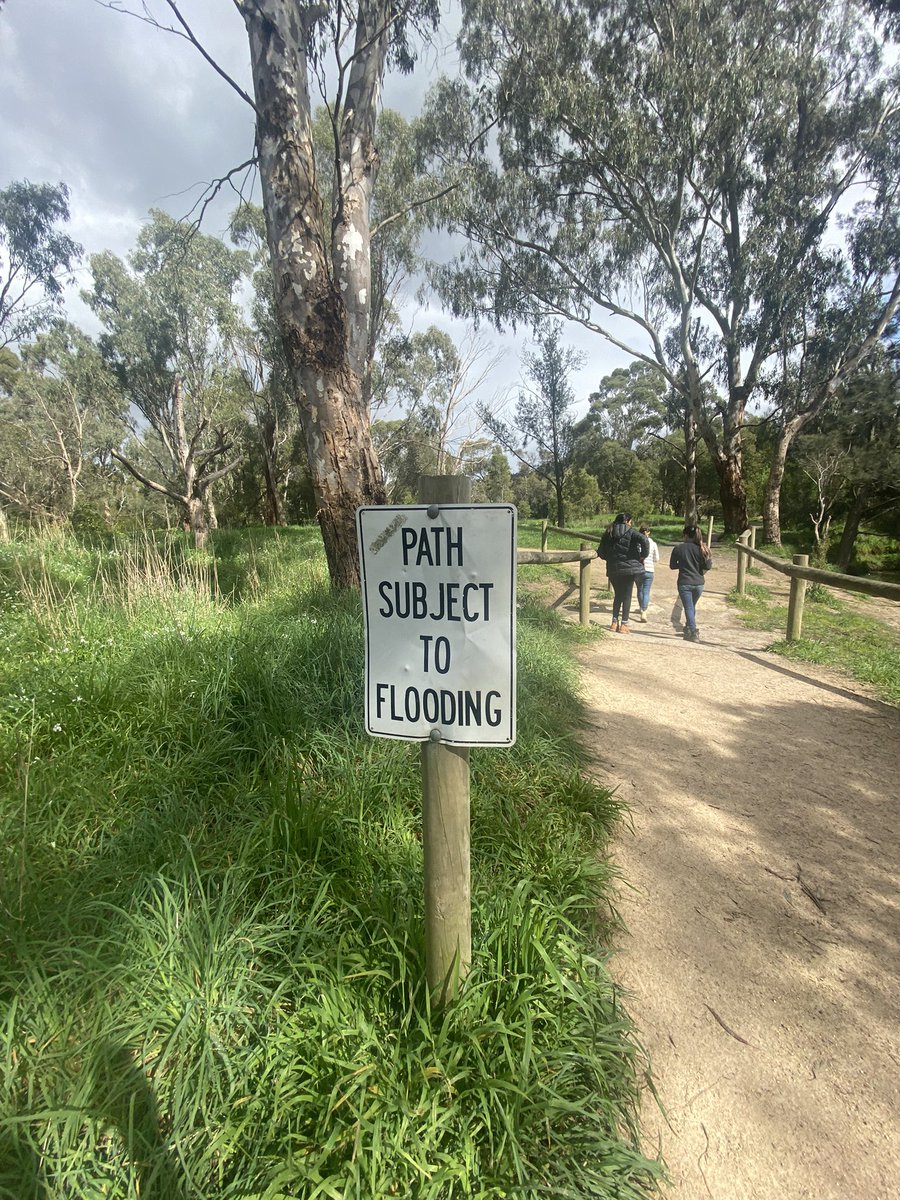
Great to get out there on the field to do some waterway assessment for an exciting catchment management and flooding project for the Knox City Council.