Shipping software isn’t the hard part anymore.
Getting someone to actually use it… and pay for it… is.
That’s the shift most founders are feeling right now.
AI made building faster, but it also made it easier to build the wrong thing faster.
So we built something different.
🛠️ TractionLab 🛠️
A 90-day plan focused on one thing:
👉 turning an idea into real usage and real revenue
No endless roadmap. No guessing. No prototype that never sees the market.
By Day 30: a real user is using your product
By Day 90: your first dollar of revenue
If V1 isn’t in real users’ hands by Day 30, Month 2 is free.
Because shipping features isn’t the goal.
Proving the business works is.
🔗 https://t.co/486Pvl9HMK
🚨 We’ve got two upcoming webinars for founders building with AI, scaling SaaS products, and trying to avoid expensive technical mistakes later on.
🎤 Hosted by MicroConf
🤖 The Modern Builder: Vibe-Coding, AI-Accelerated Development, and Creating Market-Validated Products
🗣️with Carlos Sanabria
📅 Members-only session
Vibe-coding tools have made it easier than ever to go from idea to prototype, but only 10% of AI-built apps actually make it to production.
In this session, Carlos will break down:
🔹 Why vibe-coded apps fail at scale
🔹 The hidden architecture and security risks AI tools create
🔹 What “AI-generated monoliths” look like under the hood
🔹 How senior engineering teams are really implementing AI-assisted development
🔹 Why the biggest gains happen when AI is paired with intentional engineering and product thinking
If you’re building with AI right now, this session will give you a much clearer picture of what it actually takes to scale confidently.
📢 Hosted by Founders Network
🧠 SaaS Audit Red Flags: Lessons for Non-Technical Founders
🗣️ with Carlos Sanabria
📅 June 25 | 11:30 AM - 12:30 PM GMT-5
Using real-world case studies and past SaaS audits, this webinar focuses on the red flags founders should know before technical debt, poor architecture, or scaling issues start slowing everything down.
We’ll cover:
🔹 Common warning signs in SaaS products
🔹 What founders should ask engineering teams early
🔹 Lessons learned from real audits and rebuilds
🔹 Practical ways to avoid painful (and expensive) mistakes later
🎟️ Join the event here: https://t.co/QvPTZE2uHw
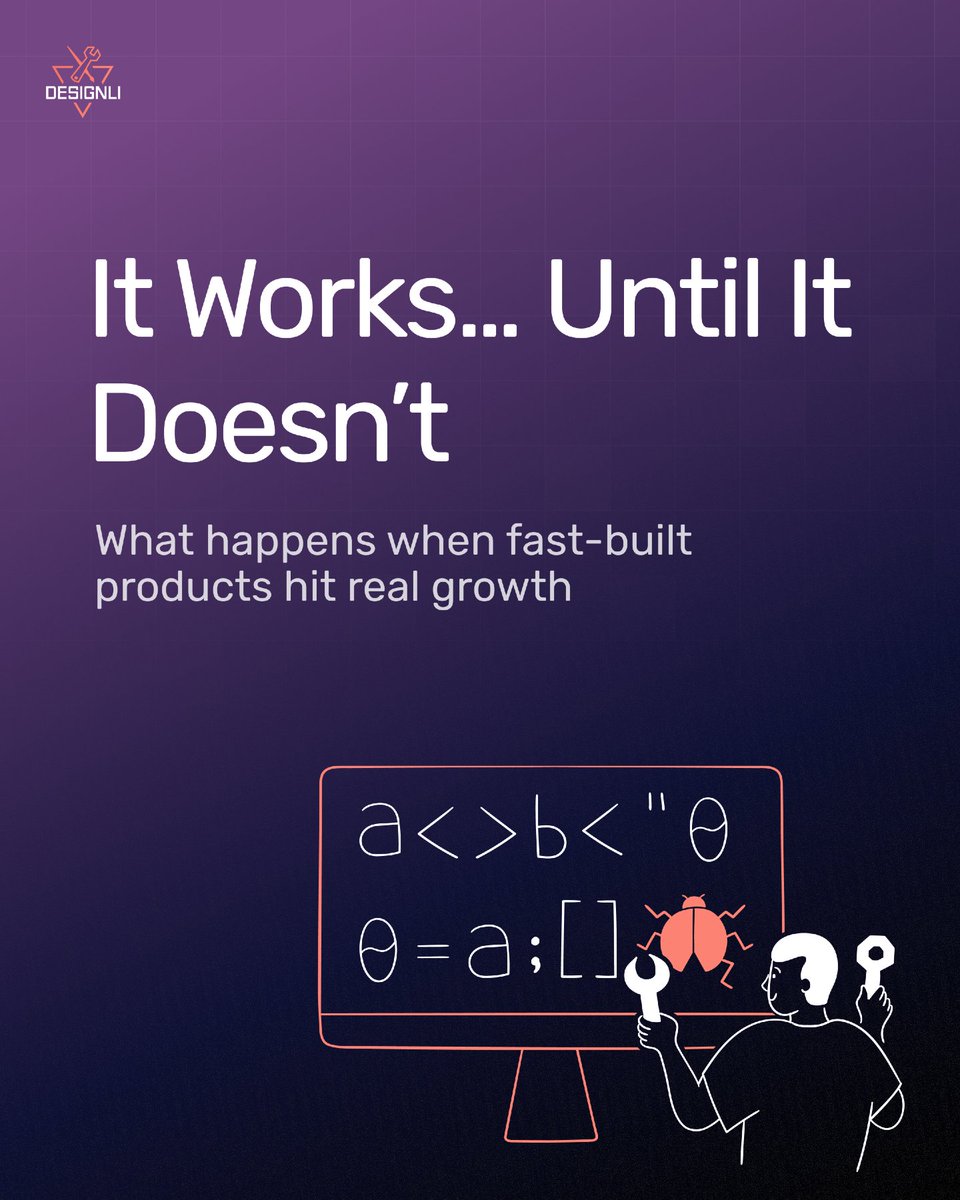
A lot of products today get built really fast.
AI made that possible. You can go from idea to something usable in days.
But a few months later, things can start breaking in ways that aren’t obvious at first.
Simple updates take longer, bugs appear everywhere, performance starts slipping, and the product becomes harder to scale.
We just published an article on Clutch that breaks down a real SaaS case we worked on, including what was happening behind the scenes from an architecture, scalability, and security perspective.
If your product is starting to feel harder to manage as it grows, this is worth reading.
https://t.co/bYRprHnuBW
Most founders are still thinking about building.
The ones winning in 2026? They’re thinking about defensibility.
What makes your product hard to copy?
What keeps customers from leaving?
What actually gives you leverage as AI levels the playing field?
We put together a survey to break this down across founders:
→ tech moat
→ data advantage
→ distribution strategy
→ AI in product + service
→ what really causes churn
It’s meant to expose where your business is actually strong… and where it isn’t.
If you take a few minutes to fill it out, we’ll send you a full report with aggregated insights and patterns we’re seeing across founders in 2026.
https://t.co/YtZkcXutQN
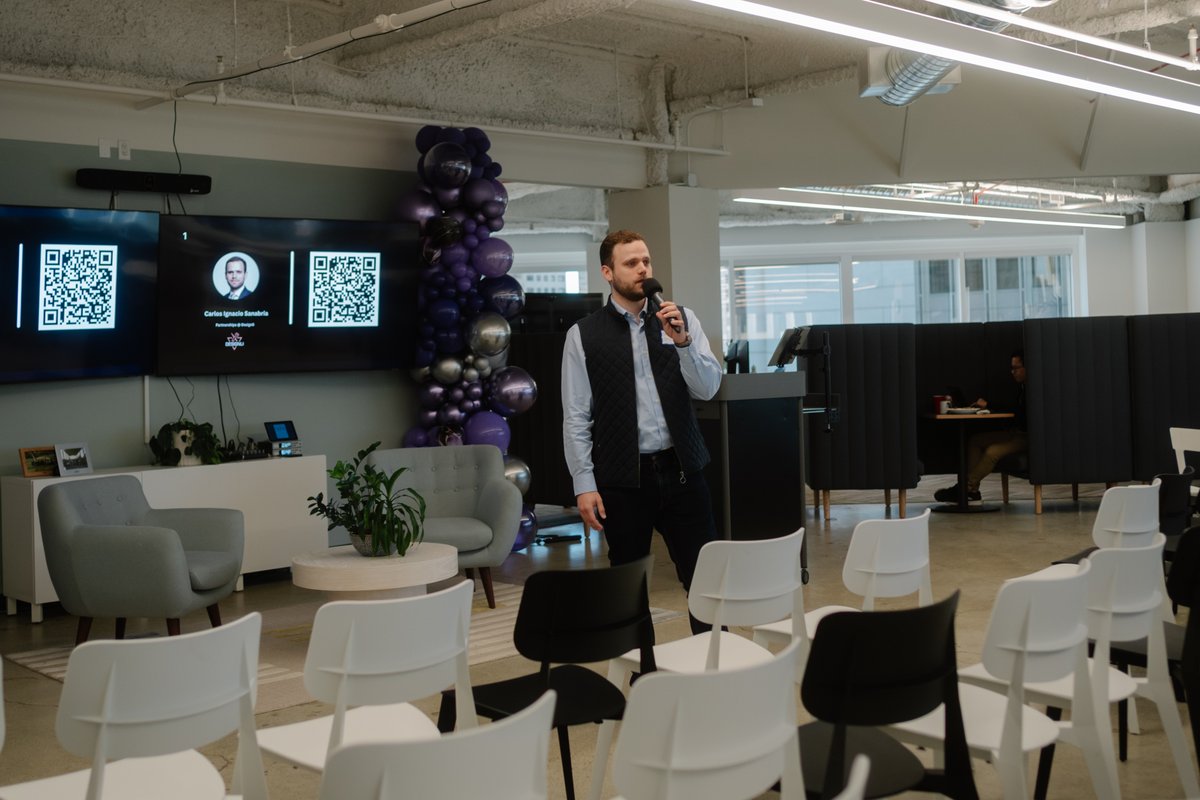
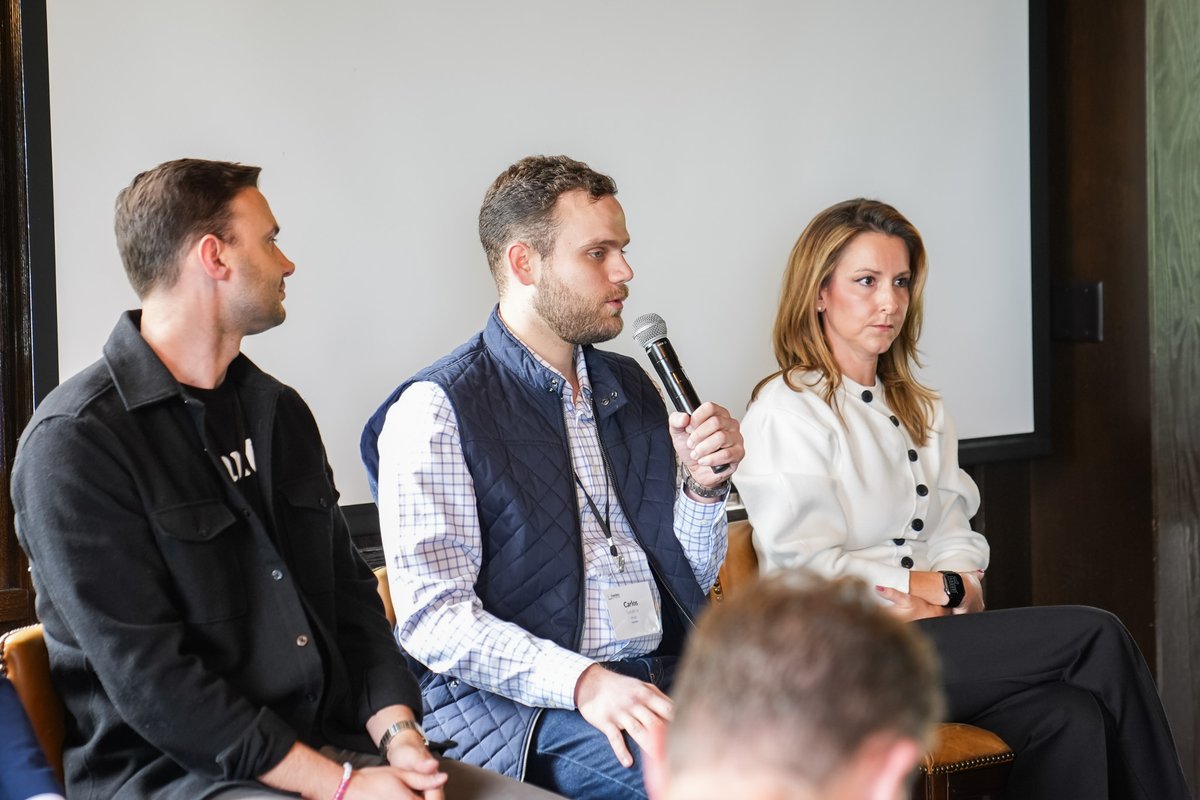
Last week, our Partnerships Manager, Carlos Sanabria, joined founders, operators, and investors in San Francisco for a couple of great startup community events hosted by Founder Social Club and Founders Network.
Always great seeing Designli in rooms full of people building ambitious things and sharing ideas around SaaS, fundraising, product strategy, and growth. 🚀
Thanks to everyone who connected with us. Looking forward to the next one.
Most founders stress about the wrong things.
Features. Timelines. Budget.
But the thing that ends up shaping everything? Who you build with.
In his latest newsletter, Keith Shields shares a lesson from early days. A few takeaways from this edition:
• The right partner understands your business, not just your code
• AI can speed things up, but it won’t make the hard decisions for you
• Cultural fit isn’t “nice to have”, it’s what determines if things actually work
• The best partners don’t just execute, they challenge you when it matters
At the end of the day, your product partner should be the one thing you don’t have to worry about.
If you’re building right now, this one’s worth the read.
https://t.co/UZiSVEYZv1
AI is making it easier than ever to build software fast. But speed alone doesn’t guarantee stability, scalability, or clean architecture.
We’re seeing more founders launch quickly with AI-assisted development tools, only to hit major issues once real users and growth enter the picture.
That’s what this webinar with Felix Navas, Director of Operations at Designli, will cover on May 14:
• The hidden risks of vibe-coding and AI-accelerated development
• When it makes sense to scale with a dev shop vs. in-house
• What separates a quick prototype from production-ready software
If you’re building an MVP or scaling a SaaS product, this will be a valuable conversation.
Grab your spot here: https://t.co/qbWNKoamhV
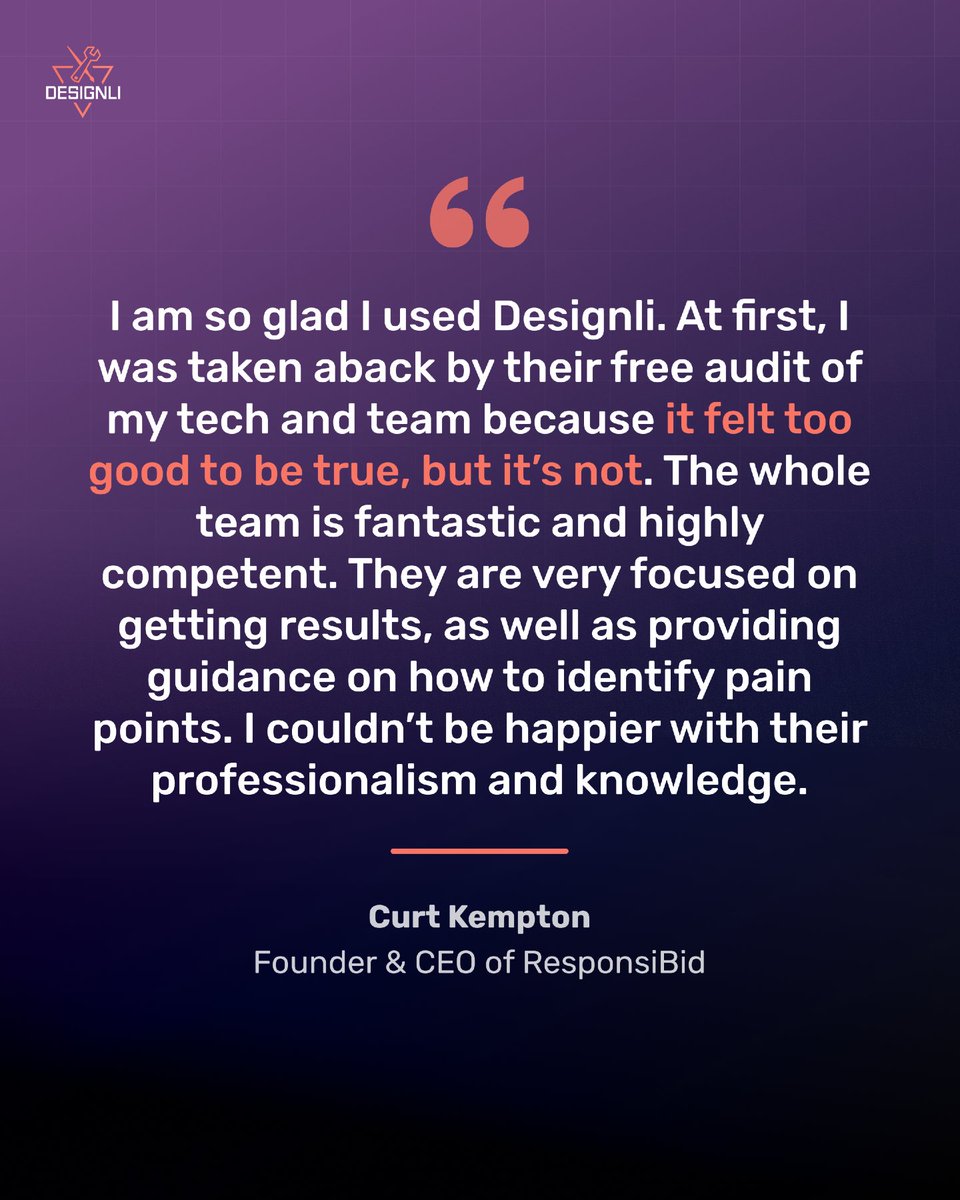
“At first it felt too good to be true… but it wasn’t.”
Really appreciate this review from Curt Kempton, founder and CEO of ResponsiBid.
Clarity, real guidance, and a focus on results is what we aim for every time.
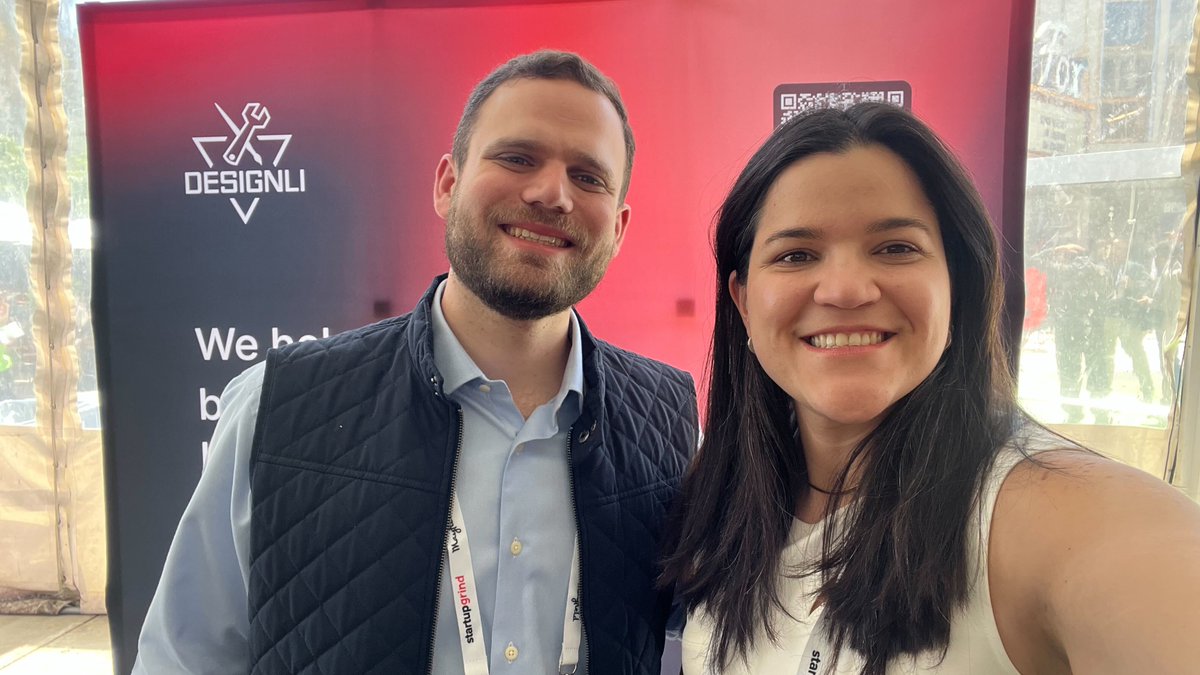
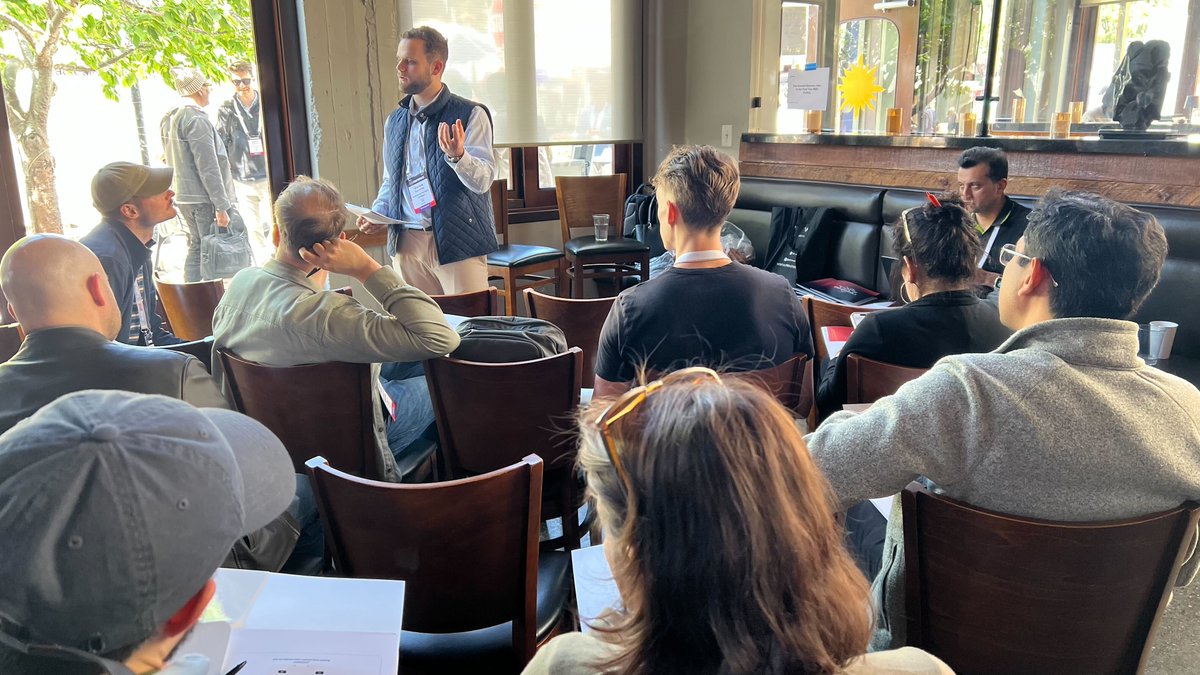
We’re out in Silicon Valley this week at Startup Grind 🚀
It’s been a busy few days at the booth connecting with SaaS founders who are actively building and scaling their products. One thing is clear from these conversations: founders aren’t just looking for someone to build features anymore. They’re looking for clarity, consistency, and a team they can trust as things grow.
We also hosted a workshop earlier this week that saw a strong turnout, with great engagement from founders working through real product and growth challenges.
Let’s go 🔥
CapTech Services was managing dozens of wells across Texas using scattered Excel sheets. Scheduling, maintenance, and customer updates were all manual, which made things slow and harder to scale.
We helped turn that into a centralized platform built for how their team actually works.
Technicians can now log work on-site with GPS and photo tagging. Managers have real-time visibility into jobs and team activity. Customers get clear, up-to-date reports without the constant back-and-forth.
By simplifying the way everything is tracked and shared, the operation went from reactive and manual to organized, efficient, and ready to grow.
Take a look at how it all came together: https://t.co/YAbtNNjpx1
AI is making it easier than ever to build software fast.
But here’s the catch: a lot of developers still don’t fully trust the code it generates, and we’re seeing why.
Things look fine on the surface, but bugs, logic gaps, and messy structure start showing up later. That’s where human code review really matters.
AI helps you move fast.
Good engineering is what keeps things from breaking.
If you’re building with AI, this is worth a quick read: https://t.co/Q7ODvFhyaW
Most SaaS founders don’t hit a wall overnight. It’s quieter than that.
You’re still closing deals, but your MRR isn’t moving. Churn creeps in, sales slow down, and CAC starts climbing.
That $100K MRR plateau is where things get real.
Our CEO, Keith Shields, put together a breakdown of what’s actually happening at this stage and why adding more features usually makes things worse, not better. It’s less about code and more about fixing the systems behind your growth.
If you’re anywhere near this stage, this is worth a read.
🔗 https://t.co/LOCfj4lqJF
We’re excited to share a Designli case study featuring VerticalXchange Xtranet.
This project focused on turning a complex platform vision into something clear, usable, and built for the people who rely on it every day. From shaping the product experience to building out the right functionality, the work was all about creating a solution that feels practical, intuitive, and ready for real-world use.
It’s always rewarding to help bring a product like this to life, especially when the goal is not just to launch something new but to create something that genuinely supports the business behind it.
Take a look at the full case study here: https://t.co/ihQhthoj9t
We’ve been recognized as a Top Mobile App Development Company for 2026 by MobileAppDaily.
Always grateful for the trust our clients place in us and the team that shows up every day to build things the right way.
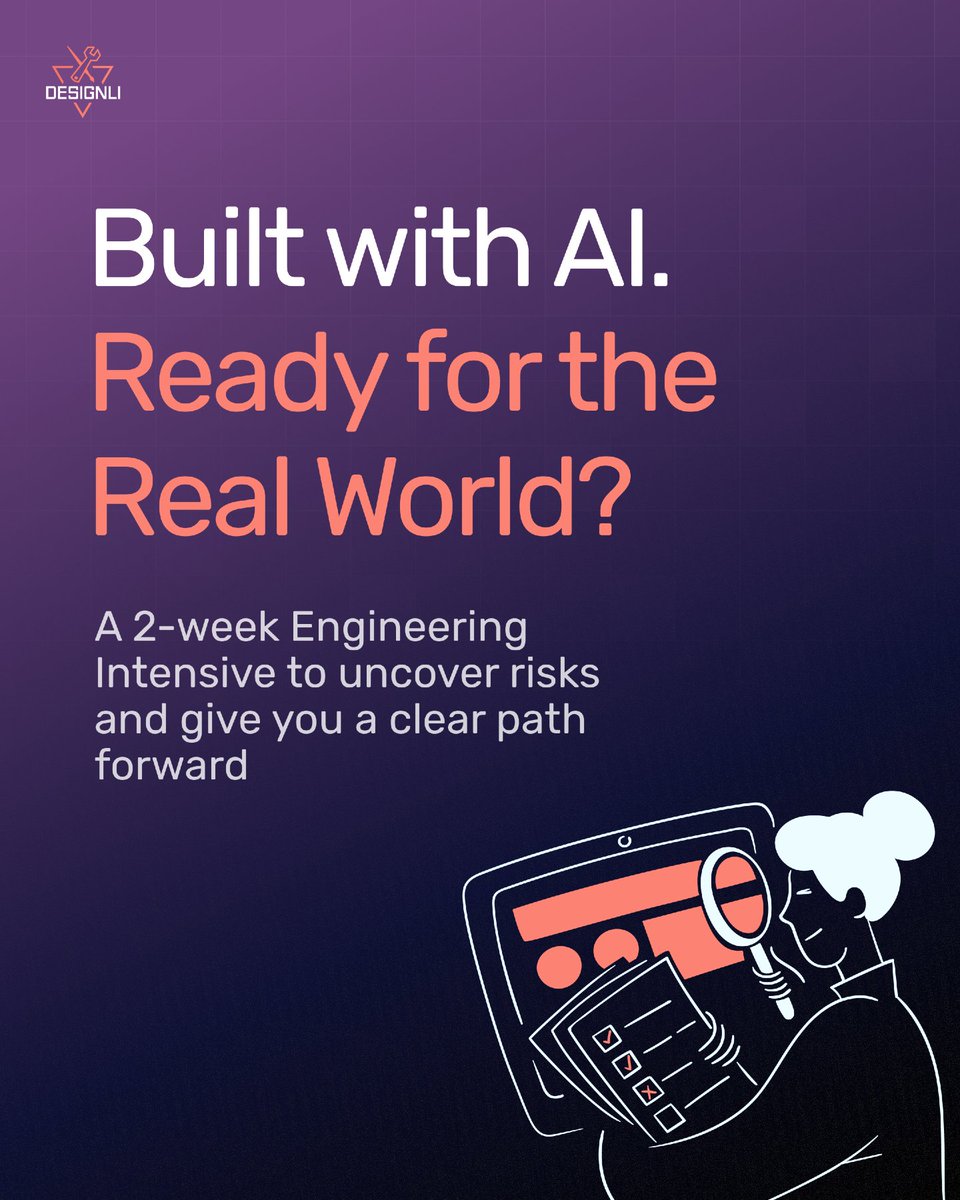
You built your product fast with AI, and for a while, that felt like a win. Now things feel a little different.
Every time you push a new feature, something else breaks. Bugs start popping up in places you didn’t expect. And when someone asks about security or scalability, you’re not totally sure what to say.
We’ve seen this happen a lot. Getting to a working product has never been easier, but getting it to a place where it’s stable, secure, and ready to grow is a completely different challenge.
That’s why we created the Engineering Intensive.
In two weeks, we take a deep look at your product and give you a clear, honest picture of where things stand. What’s working, what’s not, and what needs to happen next to get you on solid ground.
Because building fast is only the first step. At some point, you need to know your product can actually hold up.
Learn more here: https://t.co/b5jodMCwRN
Keith recently sat down with TechBehemoths to talk about what actually goes wrong when building software.
A lot of it comes down to things founders don’t expect at the start: moving too fast without clarity, jumping into development too early, and losing visibility into what the team is actually doing
As Keith put it:
“Most founders don’t fail because of bad ideas… they fail because the build takes over.”
That’s the part that gets overlooked.
The full interview breaks down how to stay in control, why early validation matters, and what separates products that actually work from the ones that don’t.
Worth a read if you’re building something (or about to).
https://t.co/9pqbQn2nst
Not all early-stage ideas are easy to explain… especially when they involve AI, healthcare, and real-world impact.
This team came to us with a big mission:
👉 connect underrepresented patients to clinical trials
👉 build trust through behavioral science
👉 and turn it all into something investors could actually see and believe in
So we got to work.
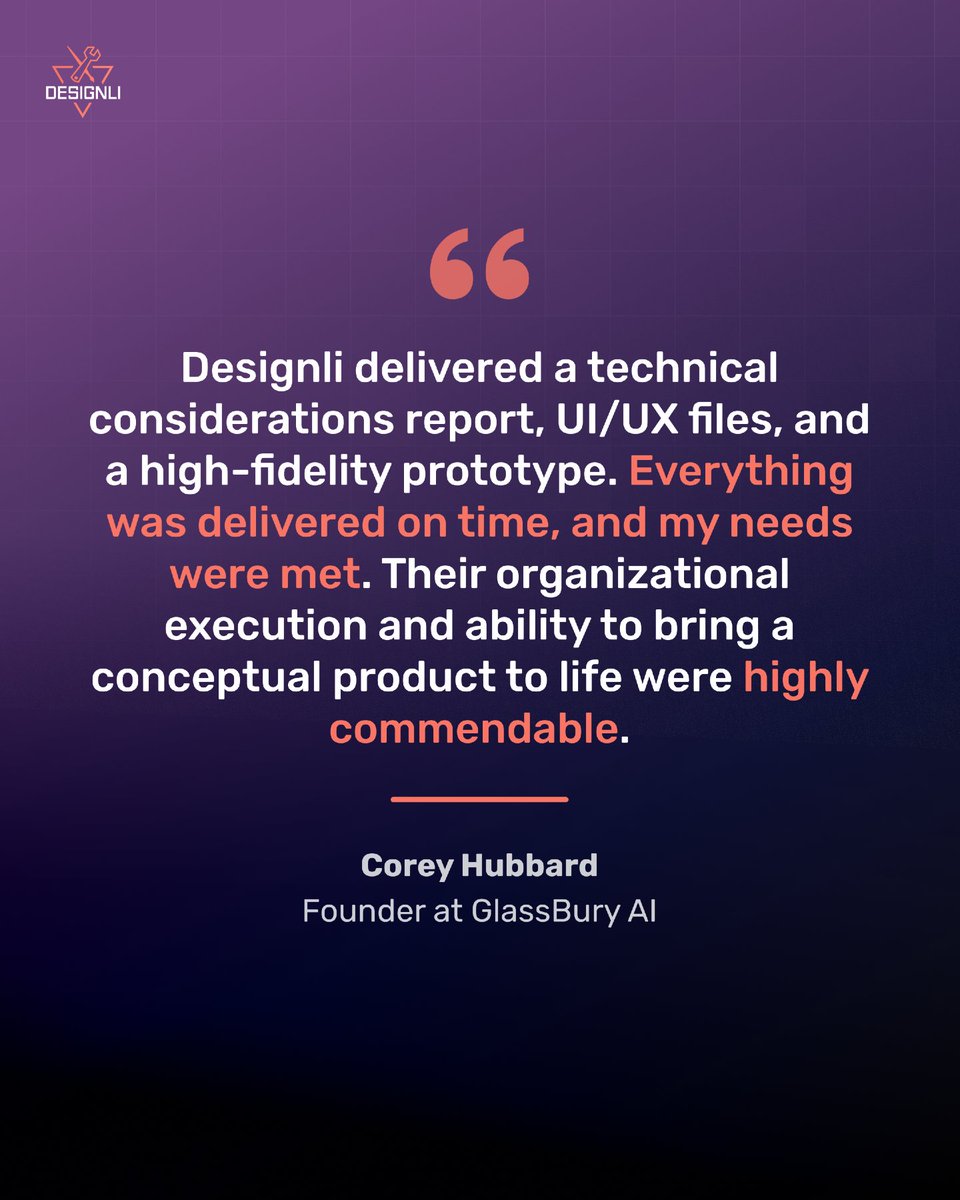
In just a couple of weeks, we helped turn that vision into a high-fidelity, clickable prototype; something tangible they could use to validate, align, and move forward with confidence.
And this was their takeaway:
“Everything was delivered on time, and my needs were met.”
Simple, but it says a lot.
Behind that is what we care about most:
clear process, strong execution, and making complex ideas feel real.
We’re heading out this April ✈️
Our team will be attending a few of our favorite SaaS and startup events, and we’re excited to connect with fellow founders, operators, and builders along the way.
📍 April 12–14 – MicroConf US 2026 in Portland, OR
📍 SaaStock USA 2026 – part of the SaaStock community
📍 April 28–29 – Startup Grind Conference 2026 in Silicon Valley
If you’ll be at any of these, let’s meet up. We always enjoy real conversations with founders building meaningful software businesses.
See you in April 👋
We’re excited to share that Designli has been named a High Performer on G2 for Spring 2026 in both (UX) Design Services and iOS Development.
What makes this one meaningful is simple: our clients put us there.
Every review, every project, every partnership adds up. And it’s a good reminder that strong UX and solid mobile development don’t happen by accident. They come from a team that listens, iterates, and actually cares about the outcome.
Grateful for the trust from our clients and excited for what we’re building next.
Code review is where good products are actually built
You can ship fast; you can even ship clean-looking code.
But if no one is really reviewing it, things start to drift.
We’re seeing this more now with AI. It helps you write code faster, sure… but it doesn’t understand your product, your users, or the tradeoffs behind decisions.
So you end up with code that works but doesn’t fully make sense.
That’s where code review comes in.
Not just to catch bugs, but to align on why something exists, how it fits into the bigger picture, and whether it actually moves the product forward.
It’s also where teams learn from each other. Where small issues get caught early instead of turning into expensive fixes later.
The teams that take this seriously don’t just build faster, they build better.