We shipped Assist Classic, learned what was wrong with it, and rebuilt the whole thing in Elixir. Stateful agents, on-demand skill loading, MCP for data access.
Here's the full architecture. https://t.co/uU67m59812
You don't need to fork a gem to extend it. Prepend one module at the right seam, call super, and broadcast. The gem does its work. Your code does yours. No lines replaced. Check out part 2: https://t.co/Ce4s0nA4mi
A maintenance task UI isn't an admin convenience. It's what determines whether only the task author can safely run it or any engineer can. We fixed that by treating gem data as an API.
Read about it in our latest blog post: https://t.co/vFO2g7XGm6
99% of Ramp uses ai daily. but we noticed most people were stuck — not because the models weren't good enough, but because the setup was too painful and unintuitive for most. terminal configs, mcp servers, everyone figuring it out alone.
so we built Glass. every employee gets a fully configured ai workspace on day one — integrations connected via sso, a marketplace of 350+ reusable skills built by colleagues, persistent memory, scheduled automations. when one person on a team figures out a better workflow, everyone on that team gets it and gets more productive.
the companies that make every employee effective with ai will compound advantages their competitors can't match. most are waiting for vendors to solve this. we decided to own it.
The more I use AI tools, the more I have to admit that I'm not that much more productive... I simply FEEL that much more productive.
In reality, the context switching of kicking several things off wipes out my perceived productivity gains. At least in many/most cases!
We built Flurry to make data access simple at Fullscript.
Ask questions in plain English, get trusted answers instantly. No SQL, no dashboards, no waiting.
Here’s how we did it and what we learned 👇https://t.co/SELyaAOUK1
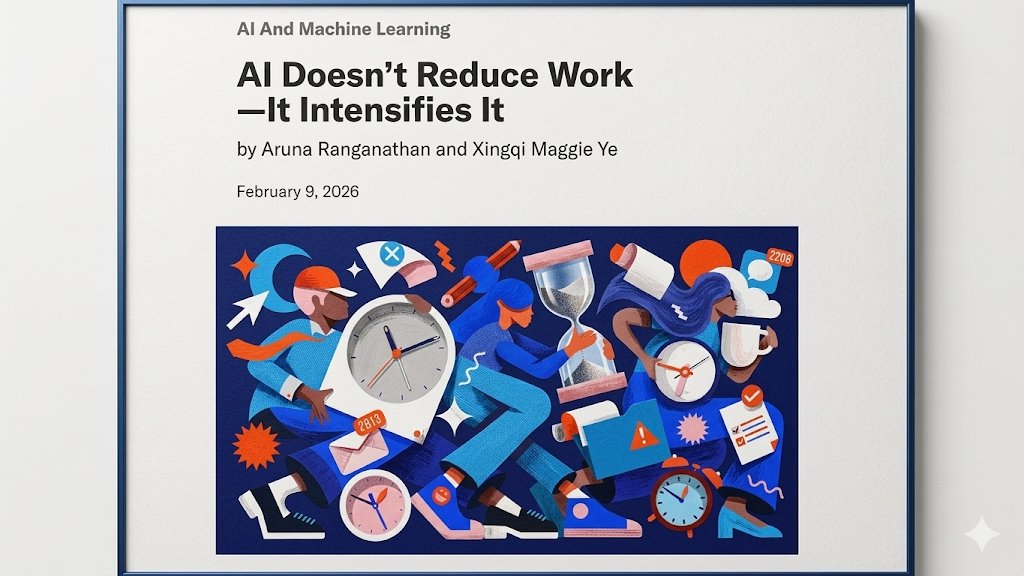
🚨BREAKING: Berkeley researchers spent 8 months inside a tech company watching how employees actually use AI.
The promise was simple: AI will save you time. Do less. Work smarter.
The opposite happened.
Workers didn't use AI to finish early and go home. They used it to take on more. More tasks. More projects. More hours. Nobody asked them to. They did it to themselves.
The researchers sat inside the company two days a week for 8 months. They watched 200 employees in real time. They tracked work channels. They conducted 40+ interviews across engineering, product, design, and operations.
Here's what they found. AI made everything feel faster, so people filled every gap. They sent prompts during lunch. Before meetings. Late at night. The natural stopping points in the workday disappeared. People ran multiple AI agents in the background while writing code, drafting documents, and sitting in meetings simultaneously.
It felt like momentum. It felt productive. But when they stepped back, they described feeling stretched, busier, and completely unable to disconnect.
83% said AI increased their workload. Not decreased. Increased.
62% of associates and 61% of entry-level workers reported burnout. Only 38% of executives felt the same strain. The people doing the actual work absorbed the damage while leadership celebrated the productivity numbers.
Then came the trap nobody saw coming. When one person uses AI to take on extra work, everyone else feels like they're falling behind. So the whole team speeds up. Nobody formally raises expectations. But the new pace quietly becomes the default. What AI made possible became what was expected.
The researchers gave it a name: workload creep. It looks like productivity at first. Then it becomes the new baseline. Then it becomes burnout.
AI was supposed to give you your time back. Instead it's eating more of it. And the worst part? You're doing it to yourself. Voluntarily.
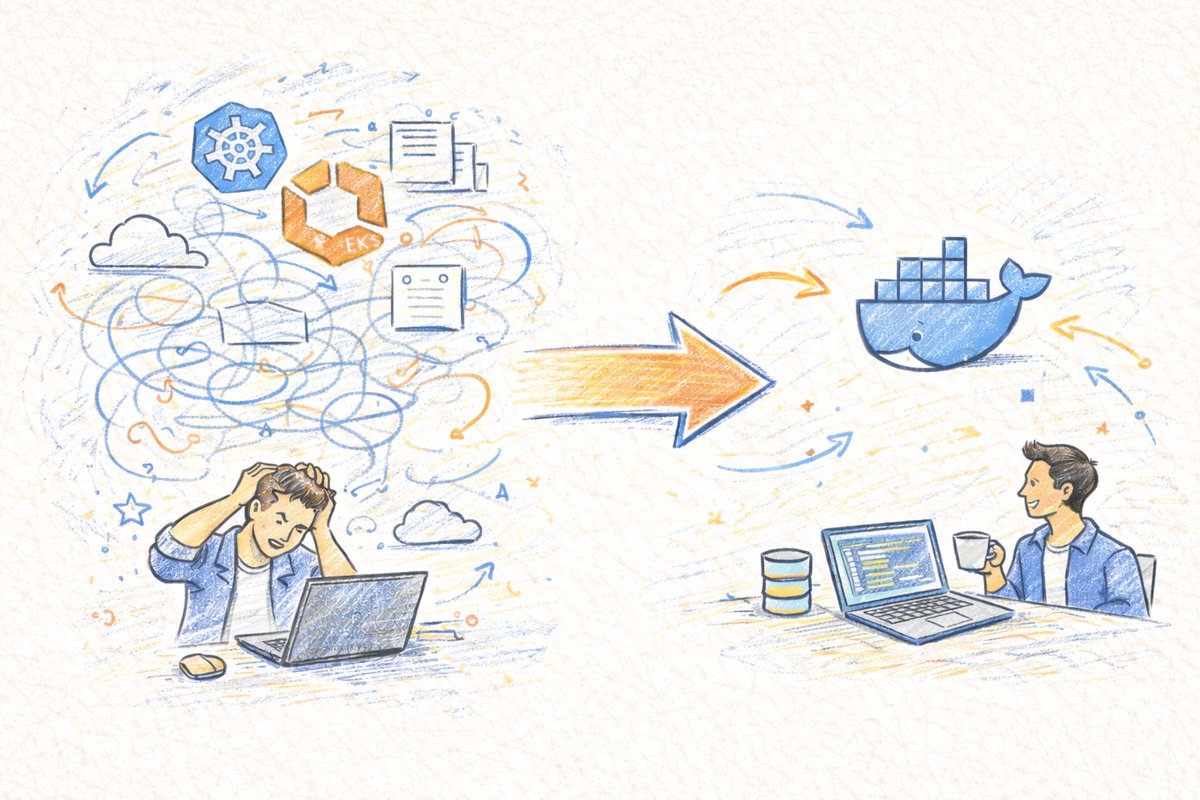
Read how Fullscript replaced K8s-heavy local- and cloud-based dev environments with local Docker Compose and never looked back. https://t.co/KbRXOue21e
With AI tools everywhere and token costs climbing,
Activity is getting easier.
I start to wonder how does this change what developer productivity actually means? If everyone can ship more, how do we define and measure impact?
One weird thing about AI:
“Old school” companies, laggards and government agencies are adopting AI dev tooling for their engineers pretty much the same pace as eg cutting-edge startups. They are not years/a decade behind like usual: but months behind at most.
Anthropic just released the receipts on a fear everyone’s been hand-waving.
52 junior engineers learning a new Python library. AI group scored 50% on comprehension tests. Manual coding group scored 67%. That’s a 17% gap on foundational skills, and debugging showed the steepest decline.
The productivity trade looked even worse. The AI group finished only two minutes faster on average, and that difference didn’t reach statistical significance. Several developers spent up to 30% of their time just composing queries.
Here’s what actually matters: they identified three failure patterns that predicted sub-40% scores. Fully delegating code to AI. Starting independently but progressively offloading work. Using AI as a debugging crutch without building understanding. All three share a common thread: removing the cognitive struggle that produces learning.
The high scorers (65%+) did something different. Some generated code first, then asked follow-up questions to understand what they’d produced. Others requested explanations alongside the code. The fastest group asked only conceptual questions, then coded independently while troubleshooting their own errors.
The gap between “AI makes you faster” and “AI helps you learn” turns out to be enormous. And most workflows are optimized entirely for the former.
Rule of thumb I learned years ago.
My boss was ambushed by another team complaining about a decision I made.
She didn't know about the decision. I apologized.
She said, "Just imagine I'll be asked about it. If I'll look dumb for not knowing, make sure to tell me."