Kylian Mbappé 26 años, patrimonio $300m juega en el R Madrid con salario d $30m, valor d mercado $180m defiende políticas públicas y vos muerto d hambre q sobrevives con 1 cubeta d huevos mensual, un sueldo básico defiendes banqueros y oligarcas
¡Tente misericordia adefesio!
Mientras millones celebraban en las calles, este hincha paraguayo festejó la clasificación a octavos junto a su perro. Solos, pero con la misma emoción que todo un país. El video ya es considerado por muchos como el “festejo del año”.
"Perdón que los moleste, pero está pasando ahora mismo"
En pleno vivo, periodista argentina frena su programa en vivo para denunciar que decenas de compañeros fueron despedidos por reclamar aumentos salariales y renuncia en vivo
@DanielNoboaOk Gracias a los jugadores y al presidente por el feriado. Ahora le rogamos que nos ayude a los pacientes renales, porque no hay diálisis, no hay insumos, no hay vida. Unámonos y etiquetenos al presidente para que nos escuche.
#SOS@IESSec@Salud_Ec#LaTri#Ecuador
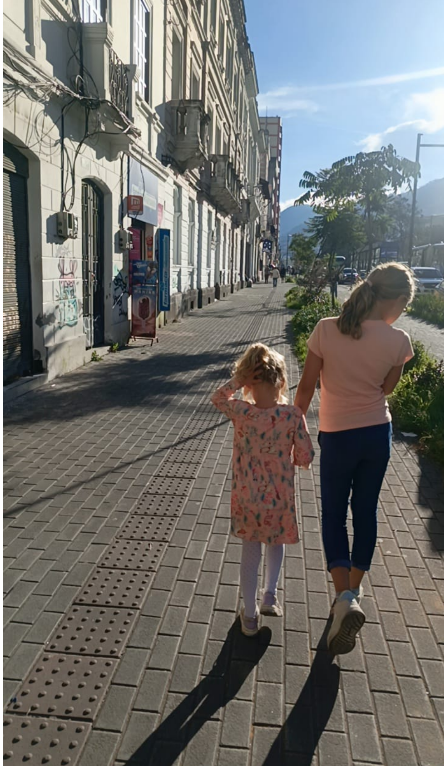
Le cuento que hoy, mientras las dormía, mi chiquita me dijo: 'Mami, siento tanta alegría por cómo lo pasamos hoy'. Conmueven las palabras de mi cría de apenas cinco añitos recién cumplidos, considerando que hoy me acompañaron a la Asamblea Nacional, entre otras diligencias en el bello Quito❤️
Fernando, cuando decidiste construir ese guion, ¿pensaste en el dolor de quienes han acompañado el proceso de Aquiles?
¿Pensaste que al hacerlo también te burlabas del dolor de sus hijos, de su esposa, de su familia?
No hay límites cuando se convierte el dolor humano en recurso de entretenimiento.
Hoy no se apela solamente a la razón. Sobre todo, se apela a la humanidad.
KOMPLO TEORİSYENLERİ YİNE HAKLI ÇIKTI..!
Avustralya’da yapılan araştırmalar korkunç gerçeği ortaya çıkardı:
Popüler güneş kremleri endokrin bozucu kimyasallar ve doğurganlığı, hormonları, hatta ruh halini etkileyen zehirli maddeler içeriyor… Ve bunlar özellikle çocuk ve bebek kremlerinde bolca var.!
Yıllardır “kimyasal güneş kremlerine dikkat!” diyenler haklıydı.
Büyük kozmetik şirketleri çocuklarımızın cildinden hormonlarını ve geleceğini mi çalıyor.?
Uyarı: Çocuklarınızın cildine sadece çinko oksit içeren mineral kremlerden başka hiçbir şey sürmeyin. Gerisi zehir!
"Cuenta la leyenda, que un día la verdad y la mentira se cruzaron.
- Buenos días— dijo la mentira.
- Buenos días— contestó la verdad.
- Hermoso día— dijo la mentira.
Entonces la verdad se asomó para ver si era cierto y lo era.
- Hermoso día — dijo entonces la verdad.
- Aún más hermoso está el lago— dijo la mentira. Entonces la verdad miró hacia el lago y vio que la mentira decía la verdad y asintió. Corrió la mentira hacia el agua y dijo:
- El agua está aún más hermosa. Nademos.
La verdad tocó el agua con sus dedos y realmente estaba hermosa y confió en la mentira. Ambas se quitaron la ropa y nadaron tranquilas. Un rato después salió la mentira, se vistió con las ropas de la verdad y se fue. La verdad, incapaz de vestirse con las ropas de la mentira comenzó a caminar sin ropas y todos se horrorizaban al verla. Es así como aún hoy en día la gente prefiere aceptar la mentira disfrazada de verdad y no la verdad al desnudo."
Jorge Bucay 🇦🇷
¿Quién se creen que son?
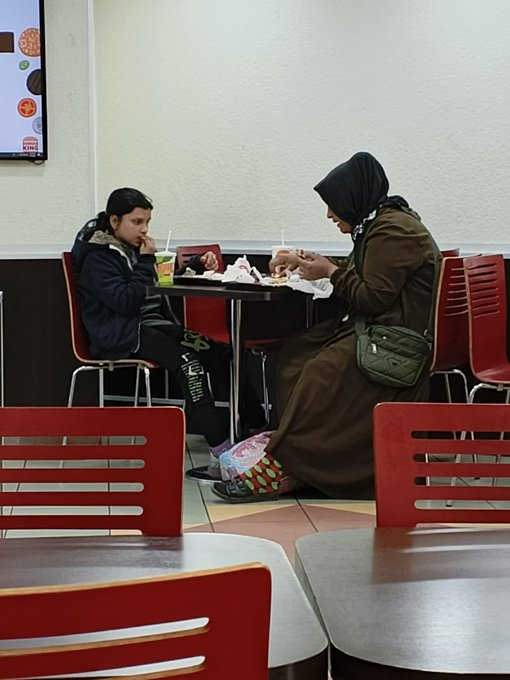
Hace un momento, en una sucursal de Burger King, pedí comida desde la máquina para una madre y su hija que no tenían recursos. Les entregué el recibo.
Después de pagar mi propio pedido, nos pusimos juntos en la fila. Prepararon mi bandeja, pero no la de la familia. Cuando pregunté por qué, me dijeron: “Ellas no pueden comer en el restaurante, podemos prepararlo para llevar”.
Ante este escándalo, llamé al encargado. Le pregunté por qué, si yo podía comer allí, esa familia no. Me respondió en voz alta: “Tenemos reglas, no podemos dejar entrar a cualquiera”.
Cuando otros clientes también reaccionaron, finalmente sirvieron a la familia. Cuando dije que haría pública la situación, el encargado quiso hablar conmigo, pero sin pedir disculpas ni una sola vez, siguió defendiendo su postura.
Tomé los datos de la familia, que nunca antes había ido a ese local ni había causado problemas, y que solo fue tratada así por ser pobre. Me quedé en el restaurante hasta que terminaron de comer.
Dejo a su juicio esta mentalidad tan despreciable, capaz de decirle a una niña pequeña: “Tú no puedes sentarte aquí a comer”.
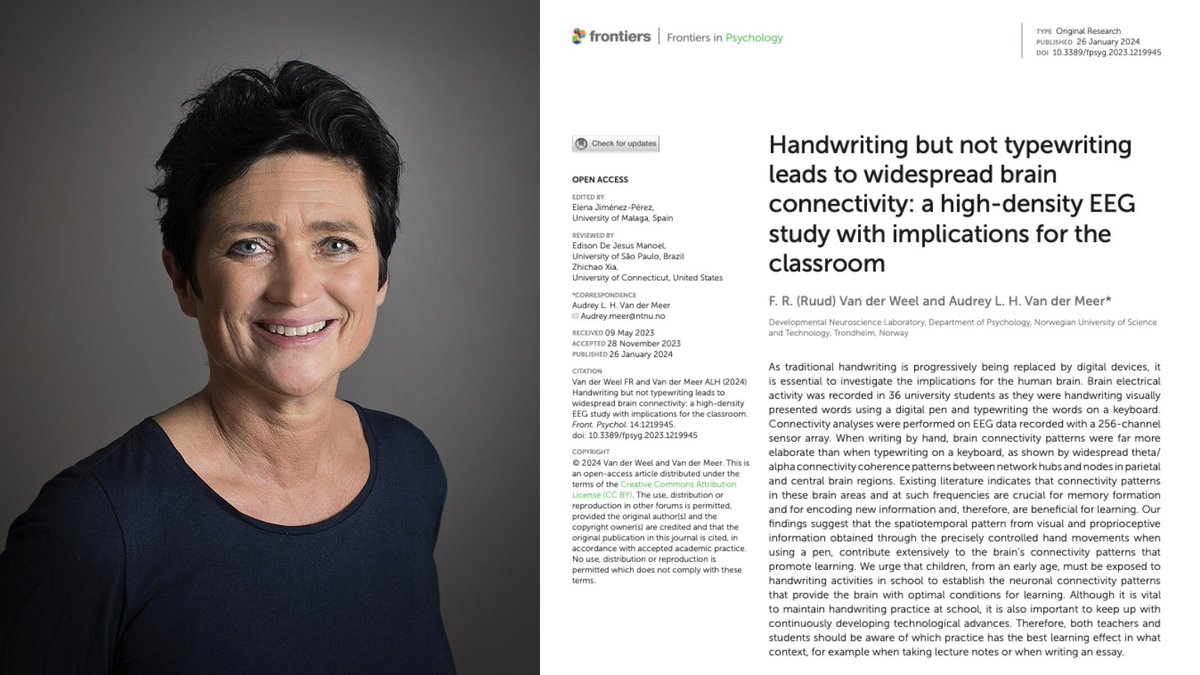
A Norwegian neuroscientist spent 20 years proving that the act of writing by hand changes the human brain in ways typing physically cannot, and almost nobody outside her field has read the paper.
Her name is Audrey van der Meer.
She runs a brain research lab in Trondheim, and the paper that closed the argument was published in 2024 in a journal called Frontiers in Psychology. The finding is brutal enough that it should have changed every classroom on Earth.
The experiment was simple. She recruited 36 university students and put each one in a cap with 256 sensors pressed against their scalp to record brain activity. Words flashed on a screen one at a time.
Sometimes the students wrote the word by hand on a touchscreen using a digital pen, and sometimes they typed the same word on a keyboard. Every neural response was recorded for the full five seconds the word stayed on screen.
Then her team looked at the part of the data most researchers had ignored for years, which is how different parts of the brain were communicating with each other during the task.
When the students wrote by hand, the brain lit up everywhere at once.
The regions responsible for memory, sensory integration, and the encoding of new information were all firing together in a coordinated pattern that spread across the entire cortex. The whole network was awake and connected.
When the same students typed the same word, that pattern collapsed almost completely.
Most of the brain went quiet, and the connections between regions that had been alive seconds earlier were nowhere to be found on the EEG.
Same word, same brain, same person, and two completely different neurological events.
The reason turned out to be something nobody had really paid attention to before her work. Writing by hand is not one motion but a sequence of thousands of tiny micro-movements coordinated with your eyes in real time, where each letter is a different shape that requires the brain to solve a slightly different spatial problem.
Your fingers, wrist, vision, and the parts of your brain that track position in space are all working together to produce one letter, then the next, then the next.
Typing throws all of that away. Every key on a keyboard requires the exact same finger motion regardless of which letter you are pressing, which means the brain has almost nothing to integrate and almost no problem to solve.
Van der Meer said it plainly in her interviews.
Pressing the same key with the same finger over and over does not stimulate the brain in any meaningful way, and she pointed out something that should scare every parent who handed their kid an iPad.
Children who learn to read and write on tablets often cannot tell letters like b and d apart, because they have never physically felt with their bodies what it takes to actually produce those letters on a page.
A decade before her, two researchers at Princeton ran the same fight using a completely different method and ended up at the same answer. Pam Mueller and Daniel Oppenheimer tested 327 students across three experiments, where half took notes on laptops with the internet disabled and half took notes by hand, before testing everyone on what they actually understood from the lectures they had watched.
The handwriting group won by a wide margin on every question that required real understanding rather than surface recall.
The reason was hiding in the transcripts of what the two groups had actually written down.
The laptop students typed almost word for word, capturing more total content but processing almost none of it as they went, while the handwriting students physically could not write fast enough to transcribe a lecture in real time, which forced them to listen carefully, decide what actually mattered, and put it in their own words on the page.
That single act of choosing what to keep was the learning itself, and the keyboard had quietly skipped the choosing and skipped the learning along with it.
Two studies. Two countries. Same answer.
Handwriting makes the brain work. Typing lets it coast.
Every note you have ever typed instead of written went into your brain through a thinner pipe. Every meeting, every book highlight, every idea you captured on your phone instead of on paper was processed at half depth.
You did not forget those things because your memory is bad. You forgot them because typing never woke the part of the brain that would have made them stick.
The fix is the thing your grandmother already knew.
Pick up a pen. Write the thing down. The slower road is the faster one.