Zelensky claimed today that Ukraine has suffered 50,000 soldiers killed in action so far during this war.
In February 2026, he claimed that 55,000 Ukrainian soldiers had been killed.
Apparently, according to Zelensky, Ukraine has achieved the ability to resurrect soldiers from the dead. But I guarantee you there will be people doing insane mental gymnastics to somehow justify this.
By the way, if we were to completely ignore the figure of 55,000 in February and take into account Zelensky's earlier claim of 46,000 KIA in February 2022, that would give us a hypothetical Ukrainian KIA rate of 222 per month, or around 7.4 per day.
Zelensky claims that 28,000 Russian soldiers were killed in June (933 per day), which would give us a hypothetical death ratio of 126:1 in favour of Ukraine...
Essentially, Zelensky is claiming that more Russian soldiers are killed in 1 day than confirmed Ukrainian deaths in more than 4 months. Although, he has stated that there are a significant number of "missing" Ukrainian soldiers.
צה"ל חיסל את מפקד מרחב מחנות המרכז בארגון הטרור כתאאב אלמג׳אהדין שלקח חלק בחטיפת אבינתן אור ונועה ארגמני ובהכוונת חטיפתו של סודיסאק רינטלאק
צה"ל תקף בדרום רצועת עזה מוקדם יותר השבוע וחיסל את אחמד חסין מחמד כפינה, מפקד מרחב מחנות המרכז בארגון הטרור כתאאב אלמג׳אהדין.
מחמד כפינה פשט והכווין את הפשיטה של מחבלי הארגון לשטח מדינת ישראל בטבח ה-7 באוקטובר, ולקח חלק בחטיפתם של אבינתן אור ונועה ארגמני ובהכוונת חטיפתו של סודיסאק רינטלאק.
לאורך המלחמה ובעת האחרונה, מחמד כפינה קידם מתווי טרור נגד כוחות צה”ל ואזרחי מדינת ישראל.
המחבל היווה איום מיידי על הכוחות וחוסל בתקיפה מדויקת מהאוויר.
כוחות צה"ל בפיקוד הדרום פרוסים במרחב בהתאם להסכם וימשיכו לפעול להסרת כל איום
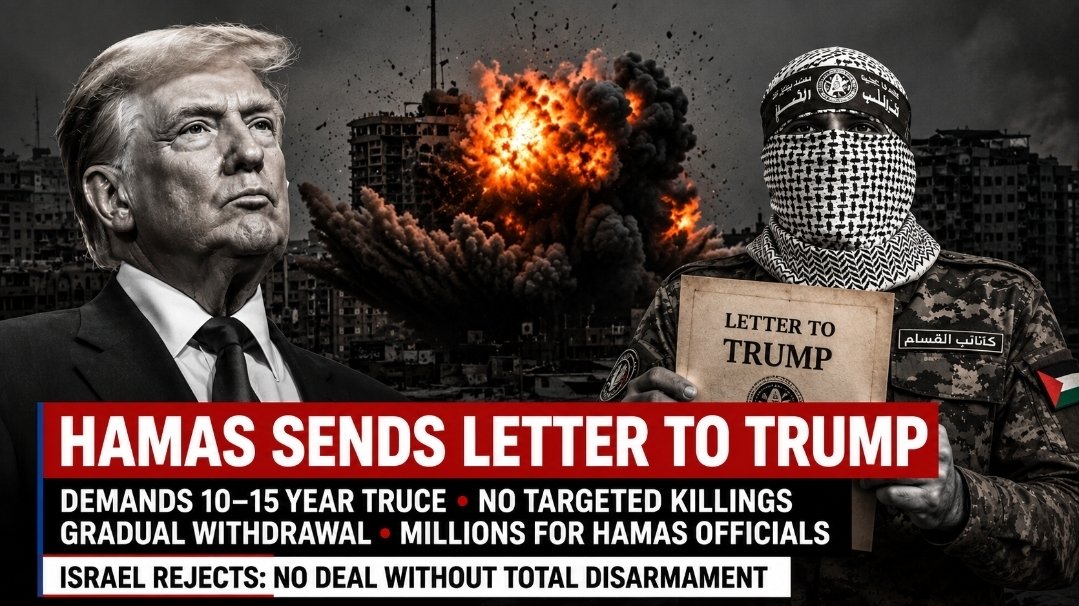
HAMAS ASKS TRUMP FOR 15-YEAR TRUCE
Hamas has reportedly sent the White House a proposal for a 10–15 year “hudna” in Gaza.
In exchange, Hamas wants:
• Israel to halt military operations
• An end to targeted killings of Hamas leaders
• A gradual IDF withdrawal
• Years to slowly “surrender” some weapons
• Millions in retirement payments for Hamas officials
Hamas would not commit to surrendering its heavy weapons, dismantling its tunnel network, or fully demilitarizing Gaza.
Israeli officials dismissed the proposal as a desperate attempt by Hamas to buy time, rebuild, and survive.
Israel’s position remains clear: no withdrawal before Hamas is completely disarmed and Gaza fully demilitarized.
💥IDF BLOWS UP HEZBOLLAH’S UNDERGROUND FORTRESS
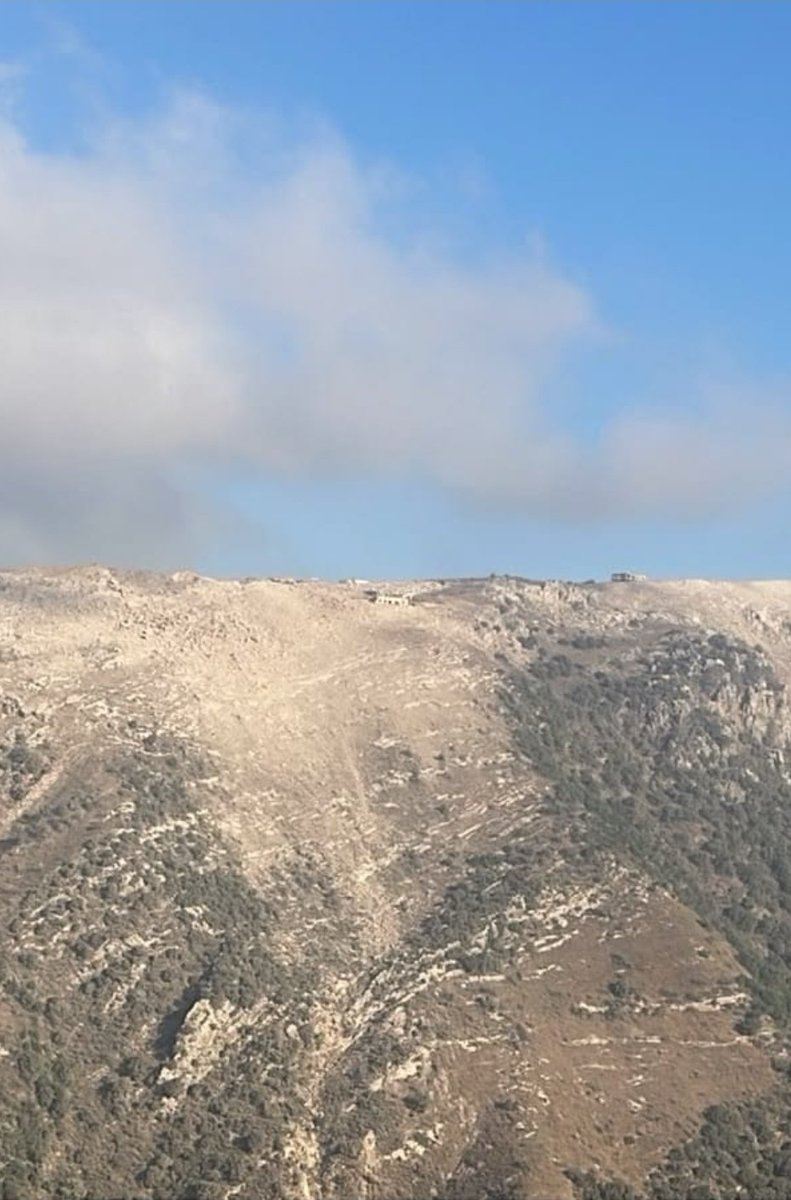
The IDF destroyed key sections of a massive Hezbollah tunnel network beneath the Beaufort Ridge—just six kilometers from Metula.
Built over 20 years with Iranian funding, the multi-level complex served as a command center for Hezbollah’s Bader Unit and a launch hub for drones, explosives and anti-tank missiles targeting northern Israel.
Iran built it. Hezbollah used it. Israel buried it.
This is how Gaza fooled the world with the fake “genocide.”
Same actors.
Same script.
Same choreography.
Anyone who believed them must feel really stupid right now.
🇮🇱 HOSTAGE TUNNEL DESTROYED: IDF DISMANTLES 10+ HAMAS TERROR TUNNELS
💥 The IDF says troops from the 188th Brigade and Yahalom combat engineers dismantled more than 10 Hamas underground terror tunnels in southern Gaza, including one used to hold hostages.
🚫 Forces also seized rockets, launchers, explosives, grenades, and assault rifles while expanding defensive positions along the Yellow Line.
✅ Operations continue to eliminate remaining terrorist threats.
@GeoConfirmed@fdov21 For future reference, the Al=Furqan Mosque is located at 31.406041, 34.344414, while the bridge is located at 31.404457, 34.343013.
Geolocation of an Israeli drone strike on a Al-Qassam [Hamas] sniper commander near the Wadi Al-Salqa Bridge, close to the Al-Furqan Mosque.
Location: 31.405068, 34.344919
8G3PC84V+2X Hakkar, Deir Al Balah Governorate, Gaza Strip
@GeoConfirmed
H/T: @fdov21
A Hamas sniper commander and a terrorist who invaded Israel during the October 7, 2023, onslaught were killed in separate strikes in the Gaza Strip this week, the military announces.
One strike on Monday in southern Gaza killed Ahmad Hisham Mahmoud Louh, commander of a sniper cell in Hamas's Nuseirat Battalion, according to the IDF.
The IDF says a separate strike on Monday in northern Gaza on Monday killed Mahmoud Ali Mahmoud Taroush, a platoon commander in Hamas's military wing, who invaded Israel on October 7.
The military justifies the strike amid the ceasefire by saying that the two terror operatives were planning attacks on troops and Israeli civilians. "The terrorists posed a threat to the troops and were eliminated in precise aerial strikes," the IDF says.
IDF LEAVES HEZBOLLAH STRONGHOLD IN RUINS
Lebanese media are publishing footage this morning showing the destruction across the Beaufort Ridge area after the IDF demolished key sections of Hezbollah’s underground tunnel network overnight.
The strategic complex served as a command center for directing attacks against northern Israel.
For months, the situation on the Sloviansk front has been deteriorating
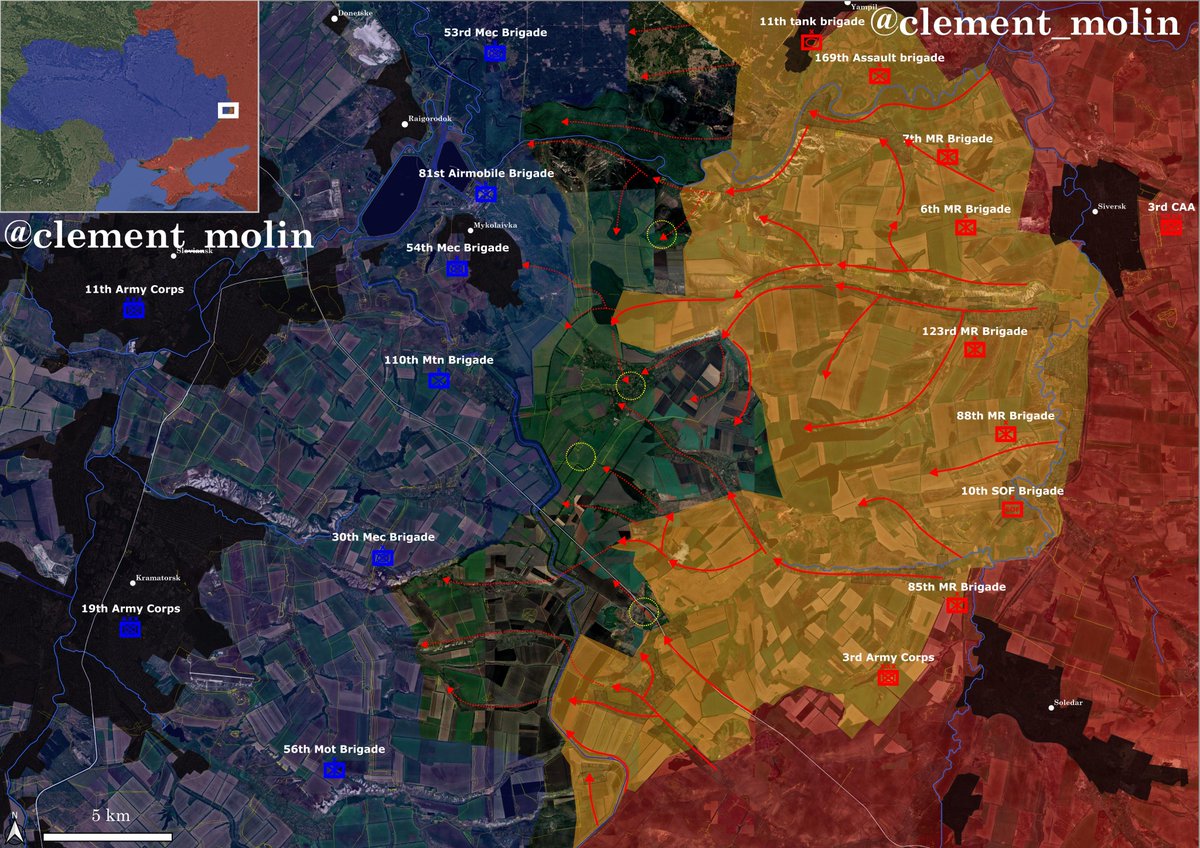
The new Chief of the General Staff of the Ukrainian 🇺🇦Army, Mykhailo Drapaty, must respond as the first Russian 🇷🇺 units have reached approximately 10 km east of Sloviansk and Kramatorsk.
Since the fall of Siversk in December 2025, attributed to errors by several local commanders, this front has been the most successful for the Russian army throughout 2026.
Not only have Russian forces managed to consolidate their hold on Siversk, which had resisted them for three years, but they have also pushed 10 to 15 km westward, drawing significantly closer to the last major urban centers of the Donbas: Sloviansk and Kramatorsk. While a future assault on the cities from the east seems unlikely due to the terrain, this strategic position allows the Russians to monitor and bomb the urban area and its logistical supply lines.
Three weeks ago, the first Russian infiltrators were captured in Mykolaivka, a town about 10 km east of Sloviansk. Recently, Russian soldiers have been spotted in buildings on the eastern edge of the town; this could signal the imminent start of the battle for the town, which serves as the eastern gateway to Sloviansk. Russian forces are advancing on Mykolaivka along two main routes, following the Siverskyi Donets River and moving through forests via Kryva Luka, Pyskunivka, and Starodubivka, while taking cover in houses and wooded areas. Countering these infiltrations is difficult due to the dense forests along the Donets River.
The second infiltration route runs through a forest north of Rai Oleksandrivka. Russian forces have been actively using this forest for over a month to enter Rai Oleksandrivka. This small village, seemingly insignificant at first glance, is actually of strategic importance, as the surrounding high ground overlooks the city of Sloviansk. In recent weeks, Russian forces have been consolidating their hold on the village and the surrounding heights, even though Ukrainian troops still maintain positions in many areas.
Further south, the situation is hardly better. Russian forces are infiltrating daily along the Donets Canal, with some units crossing this canal, which serves as a makeshift fortification, to advance toward Kramatorsk. Several villages west of the canal have thus shifted into the "gray zone," a source of growing concern for the Ukrainian command. If these infiltrations continue, we could see the first Russian soldiers in the Bilenke district of Kramatorskbefore the end of the year.
Why is the situation so difficult for the Ukrainians? First, the geography complicates the Ukrainian defense: the Donets Canal aids the Ukrainian defense just as much as it facilitates the Russian offensive. The situation here mirrors the one described yesterday, but in reverse. Crossing the canal, reaching Mykolaivka, and massing troops there is a highly complex undertaking. The Russian army will face the same challenge: crossing the canal, particularly around the Sloviansk power plant and its network of waterways, will come at a very high cost, especially given the extensive fortifications the Ukrainians have built in the area over recent months. Consequently, it is highly unlikely that the battle for Sloviansk will begin this year, not least because the fighting in Mykolaivka is likely to be prolonged.
Another key factor is the high frequency of Russian airstrikes targeting forests and buildings, particularly in Mykolaivka, as illustrated in the map included in the following tweet.
Ultimately, Ukrainian resources in the area are insufficient - comprising only five or six brigades - though doing better is difficult given the local logistical challenges. Russian losses in the sector are significant, particularly when troops are forced to advance across open ground; nevertheless, this has not halted their steady progress this year.
In the coming weeks, attention must shift to the Donbas, specifically the area between the Donets River and Dobropilla, where the Russian army is concentrating its forces. Elsewhere, however, potential offensive opportunities are opening up for Kyiv.
Thank you for following this new analysis. Sources include open source data, sattelite images, geolocated videos and some private sources.




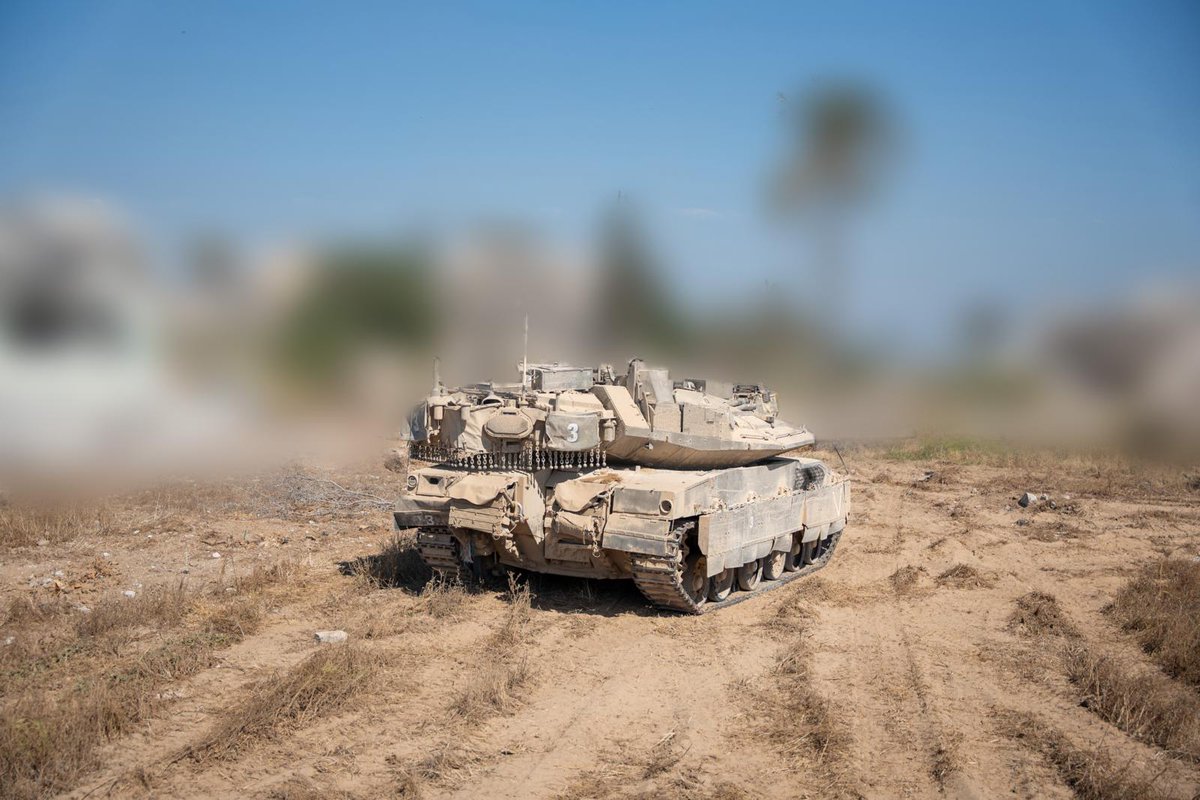


![Stinky915846091's tweet photo. Geolocation of an Israeli drone strike on a Al-Qassam [Hamas] sniper commander near the Wadi Al-Salqa Bridge, close to the Al-Furqan Mosque.
Location: 31.405068, 34.344919
8G3PC84V+2X Hakkar, Deir Al Balah Governorate, Gaza Strip
@GeoConfirmed
H/T: @fdov21 https://t.co/PWz5T3JRLr](https://pbs.twimg.com/media/HOjWtXeXQAADuTt.jpg)