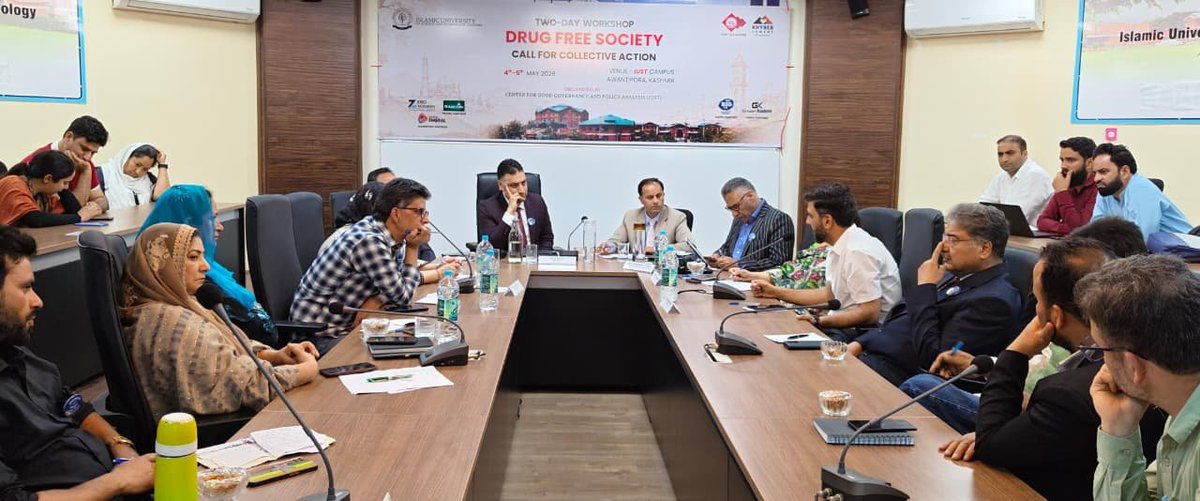
I am dedicating this writeup to @DineshSinghEDU . We wrote the first draft soon after Sir’s visit to @iust where he talked about using ChatGPT as one’s critique!
Since then, we have been putting ourselves to brutal criticism (😀), surely for good reasons though…
For a growing number of Indian women, paid work doesn’t come from sitting in corporate or government offices. Instead, it is their presence in the lower layers of the fragmented labour market of the informal segment that gives them access to earned wages.
https://t.co/A2J1HU1OPt
Spent a week hearing the same line from colleagues at the university: “I feel tired.”, “Low energy.”, “Just lazy these days.”
All non-vegetarian, Hb fine, B12 fine.
The suspect? Magnesium.
Deadline Stress + caffeine + refined carbs + low greens = low Mg.
And without Mg, ATP doesn’t function efficiently.
Before blaming burnout, check the plate:
Pumpkin seeds, Almonds, Spinach, Legumes, Dark chocolate.
Sometimes it’s not motivation.
It’s minerals.
#WorkLifeBalance #guthealth #PhDlife
Usually candid discussions turn into nothing but here at IUST, a candid conversation abt Kmri. Feminist Poets bw 2 of us from diverse fields is becoming a published chronological series.
Sharing the 01st one now & others over time!
@shakilrom https://t.co/a57OQ8FGV8
#BookReviews | The stagnation of the manufacturing sector in India is increasingly being identified as one of the major bottlenecks in the process of speedy and sustainable economic development.
https://t.co/DIqECIsuCm
Being an academic actually rocks. If you can land a permanent job, you get to read and write about the stuff that fascinates you and teach young people to think. It’s the IF that kills you.
Can’t be excited enough doing this! It took our H-VC @shakilrom 02 complete years to orient & train us in becoming community leaders! Never knew it was a thing, nor that it was so imp.! & now here we are holding his beacon ✅ #DisasterRiskReductionCapacityBudingWorkshop#iust
Happy to share our latest paper bringing out some new insights into the developmental issues of Tribals from J&K! Focus being policy information @icssr @DhananjayaJnu @TribalAffairsIn ✅ https://t.co/52YAx9NSYx
Glad to share another paper from our @icssr project, highlighting the growing food insecurity among tribals of J&K. The very first study in this direction - @DhananjayaJnu @shakilrom https://t.co/P4K6yHBMYb
In the latest issue of @reviewagrarian (15,1), the article “Gujjars of Jammu and Kashmir: Evidence from a Field Survey” by Dr. Mehak Majeed, Assistant Professor of Economics at the Islamic University of Science and Technology, Jammu and Kashmir (@iustjk ), examines the changing lifestyle of the Gujjars. Once predominantly nomadic and pastoral, 97% of Gujjar households have now settled—a shift driven by climate change, restrictions on forest access, and declining returns from shepherding.
In January, Dr. Majeed had visited the Foundation’s office and presented her findings on the Gujjar society, which led to an in-depth discussion and a deeper understanding of the changing ways of the nomadic community.
Read the article here: https://t.co/udGAOKlDDj
Know more about the event: https://t.co/NoKHg5vCaV
The first publication from the Tribal Research Project is out! All thanks to our HVC @shakilrom for declaring Tribal Studies as a focal study area of IUST & @DhananjayaJnu@icssr for continued endorsement!
Most Gujjars of J&K are no longer nomads engaged in shepherding. @DhaarMehak (@iustjk ) writes in RAS 15,1 based on her extensive state-wide field survey (@icssr ): https://t.co/pkvGXIyRUB.
“The Gujjars of Jammu and Kashmir are no longer a nomadic community, their needs have evolved, and focussed policy interventions are required to help them transition smoothly to a settled way of life.”
Delivered the Lead Lecture at @SKUASTJammu! An absolutely rich experience sharing findings from my @icssr project! Thanking @DhananjayaJnu & @shakilrom for making it all possible & supporting the cause of Tribal Development 🫡🫡