@narendramodi modi ji shame on you aap jis mehnat ke sath yaha tk pahunche use galat kr diya desh ka nash kr diya aap deshdrohi ho aap ne 140 crore janta k vishwas k sath khilwad kiya hai ram mandir chori , petrol milawat, paper leak , aur kai anya aarop please chorahe pe aao aap ne kaha tha
With everybody's permission, let me explain the FCNR arithmetic:
A. Current rates being offered: ~6% USD, 3 year deposits ( eg, HDFC bank etc, although AU is offering 7%)
B. Private banks are the only entities that give funding for such instruments. ( PSU Banks don't because they don't have a private banking practice.
C. Funding rates are still getting worked out but it does look likely that ICICII Bank will be the lead Bank in this particular round. In 2013 it was right at the fore front but BNP was also there.
Why?
Because the banks that are aggressive in raising such deposits need to have, a private banking business, and also a very large local India lending business.
This is absolutely critical: it helps a lot if the lending Bank for the overseas leg has a large local India business, eg, ICICI bank.
Because when you are raising such USD deposits you simply cannot get adequate avenues for lending in the international markets.
You need to lend to the domestic Indian market and for that you need the loan franchise. BNP no longer has this edge. HDFC bank has its own overseas issues, AT1 Credit Suisse bonds etc.
D. A critical think to be kept in mind is of course that when you get leverage to invest in such deposits, private banks typically offer you only one month floating rates.
Nobody gives you three year fixed rates because that is much too risky from a rate perspective.
Therefore there is an interest rate swap ( IRS) involved, from floating to fixed USD.
So, given the current interest rates structure globally, base rate would be 1 month SOFR , which is around 3.75%.
3 year IR swaps may be around 4-4.5%.
Now a private bank will put a credit cost on top of this for the non resident, eg, around 1%.
This is simply a judgement on the credit risk of the borrower. Then on top of that the private bank will put a profit spread of around 0.5%.
All in all, I would imagine that the final cost to the non resident Indian would come to around 5.5% or thereabouts, after considering the interest rate swap and the other costs.
If indeed the leverage given is 19:1, as was the case in 2013, the return on equity for the borrower non resident will come to ~15%.
That's pretty good.
So it should be able to gather decent capital.
But do keep in mind that in 2013, the capital raised like this was literally a buffer.
Overseas flows were healthy right throughout the taper tantrum period ( barring one month).Full year was +10 billion.
This time this capital is going to fund a leaking boat, not act as a buffer.
~$40-50 billion would be around 3-4 months of F2 outflows.
Critical difference this time vs 2013.
Separately, yesterday,F2s sold a lot less... because D2s bought a lot less. The lower May,June MF inflows are preventing F2s from selling more.
A slowdown, even outflows, in MF flows would be a gift from God for our BoP.
Dear @the5erstrading and @the5ersIndia , while I appreciate all the community activity being done I would request you to personally also process traders payouts on timelines
My Discord community member has been waiting for close to 18 days for a payout of 267$
He was called for an interview and informed wait for 72 hours, but it's been 8 days post that too
Should traders normalise this behaviour?
What's the point of waiting 14 days + 18 days extra to get the split? Name your payout cycle as Monthly, right?
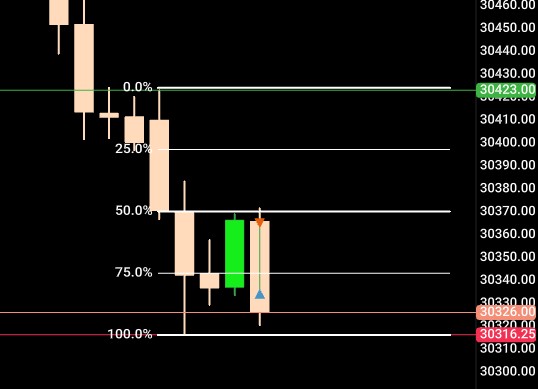
W Globex IB
Couldn't have been a better delivery than this.
IB high formed first, IB low second. Target IB low. Entry off a rejection at the IB50, SL at IB75, TP at IB low or whenever I'm happy with the green.
$300 in 10 minutes on a Thursday night.
If we placed 100 traders in a room and had them trade a profitable strategy, the majority would still lose.
You know why?
At the most basic level, trading is a mental game —you are up against your insecurities, impulses, emotions, biases...
“In the stock market, you’re playing probabilities, not certainties; that means you cannot be correct all the time. If you make more on your winners than you lose on your losers over time, that’s all you need to accomplish to be successful.”
— Mark Minervini
Market Wizard Linda Raschke's 12 Technical Trading Rules
1. Buy the first pullback after a new high. Sell the first rally after a new low.
2. Afternoon strength or weakness should have follow‑through the next day.
3. The best trading reversals occur in the morning, not the afternoon.
4. The larger the market gaps, the greater the odds of continuation and a trend.
5. The way the market trades around the previous day’s high or low is a good indicator of the market’s technical strength or weakness.
6. The previous day’s high and low are two very important “pivot” points, for this was the definitive point where buyers or sellers came in the day before. Look for the market to either test and reverse off these points, or push through and show signs of continuation.
7. The last hour often tells the truth about how strong a trend truly is. “Smart money” shows their hand in the last hour, continuing to mark positions in their favor. As long as a market is having consecutive strong closes, look for the up‑trend to continue. The up‑trend is most likely to end when there is a morning rally first, followed by a weak close.
8. High volume on the close implies continuity the next morning in the direction of the last half‑hour. In a strongly trending market, look for resumption of the trend in the last hour.
9. The first hour’s range establishes the framework for the rest of the trading day.
10. A greater percentage of the day’s range occurs in the first hour than was the case in the past, and thus it has become increasingly important to trade aggressively if there are early signs of a strong trend for the day.
11. There are four basic principles of price behavior which have held up over time. Confidence that a type of price action is a true principle is what allows a trader to develop a systematic approach.
The following four principles can be modeled and quantified and hold true for all time frames, all markets. The majority of patterns or systems that have a demonstrable edge are based on one of these four enduring principles of price behavior. Charles Dow was one of the first to touch on them in his writings.
Principle One: A Trend Has a Higher Probability of Continuation than Reversal
Principle Two: Momentum Precedes Price
Principle Three: Trends End in a Climax
Principle Four: The Market Alternates between Range Expansion and Range Contraction
In the world of money, which is a world shaped by human behavior, nobody has the foggiest notion of what will happen in the future. Mark that word – Nobody! Thus the successful trader does not base moves on what supposedly will happen but reacts instead to what does happen.
@cadalukaanubhav In links se account kholo aur $100usd deposit kro us se tume $50 USD milega use se silver kharid lena yeh lo link
Bybit - https://t.co/rkQ6LT2vf5
Binance -- https://t.co/oaD76MYj6Q
But if you trade with Proper Risk means you can bear 10 back to back loses and make just 10% more then you loose per trade and just trade for 1 particular time a day you will be better performing with a trader who knows technicals but it's not that much as far as you are a human
I have been lost 100s and 100s of times but one day when I checked and analyzed them all when I loose or win . I found out I common mistakes that are News trading, ignoring that the red flags of higher or sometimes lower times frames because whenever you have any bias regarding
After struggling from this i learnt 4 things
●market is always right
●protect your capital
●limit the risk per trade
●don't showoff either you win or loose.
As much as we believe technicals are the goo really it's not i can bet if you know zero technicals zero strategy