@PVT_Paraverse 8 months have passed since last update and you guys have went completely silent about $PVS and web3. The community is asking for an update on the progress
@PVT_Paraverse 8 months since this post and you guys have went completely silent about $PVS and web3. The community is asking for an update on the progress
The system doesn't just manufacture consent. It also manufactures dissent and decides which dissidents you're allowed to hear.
Michael Parenti published "Inventing Reality" in 1986. Chomsky's "Manufacturing Consent" came out in 1988.
Chomsky cited Parenti exactly once, for an article, not the book that preceded his own on the same subject.
Same thesis: media serves power. But the books are not the same.
On "conspiracy": Chomsky dismisses structural analysis that names actors as "conspiracy theorism." Parenti: "The alternative to a conspiracy theory is an innocence theory... the CIA is by definition a conspiracy."
Chomsky wanted you to protest... abstractly. Never name the names.
Right-wing anticommunism is obvious. But they needed someone to attack socialism from the left, to gut-punch communism from inside the tent. Enter Chomsky.
Chomsky equates Stalin with Goebbels, called Leninism "counterrevolution."
Parenti documented the real gains: full employment, free healthcare, free education, free housing.
He wrote about how the existence of the USSR forced concessions in the capitalist countries: social programs, worker rights, formal decolonization.
Capital had to compete with an alternative Chomsky made sure you wouldn't defend.
On empire: Chomsky framed US foreign policy as blunders and mistakes. Parenti said "the Iraq war has not been a mistake", it succeeded for the class it serves. Your taxes, your children's lives. Their profits, their reconstruction contracts. Externalized costs, privatized gains.
On intervention: Chomsky supported the NATO no-fly zone over Libya. Parenti opposed it, listed what Libyans would never see again after "liberation."
On elections: Chomsky did the "lesser evil" dance every four years, vote Democrat in swing states. Parenti broke with Bernie Sanders over the bombing of Yugoslavia.
Chomsky got MIT, The Guardian, documentaries, Jacobin. Parenti barely got lecture halls and public access TV.
Parenti was the one they didn't want you listening to, so they put Chomsky in front of you.
Note Of Extreme Caution To Comrades:
DO NOT FALL FOR THE “IT’S ALL ABOUT OIL” LIE
I’ve lived through multiple imperial wars where the so-called “left” reflexively responded with the same lazy line: “They’re just there for the oil.” I remember this explicitly during the First Gulf War, and implicitly throughout Iraq, Libya, and Syria.
This is historical bunk. The United States never extracted shit from Iraq. Not in any meaningful sense. Not structurally. Not in a way that lowered prices, improved supply, or benefited the American public. The argument collapses entirely once you understand the nature of financialized capital, whose primary objective is not extraction but the prevention of productive extraction in favor of rent, debt, and control.
Let me walk you through the contradiction:
Trump claims explicitly what the original neocons like Paul Wolfowitz claimed implicitly in the 1990s: that there is a geopolitical payoff in seizing another country’s resources. To a battered American population paying $5 a gallon, that claim sounds concrete. On a subconscious level, people imagine that “taking the oil” means cheaper gas, lower costs, relief from austerity.
They don’t care about morality. They care about price. Then the left responds by framing everything as kleptocracy while still implicitly accepting the premise that resources could be taken, but that doing so would merely be “wrong.” This is a losing argument. For someone living under austerity, there is no material counter-logic being offered. You’ve conceded the terrain.
But here’s the reality: it never comes. Nothing is extracted.
What actually happened in Iraq was not oil extraction, but financial looting. The U.S. state shoveled pork-barrel money into the MIC, especially firms like Halliburton, through no-bid logistics, security, and “reconstruction” contracts. Iraqi oil production, which hovered around 3.5 million barrels per day in the late 1980s, collapsed to a few hundred thousand barrels per day during parts of the 1990s and early 2000s. Even after the U.S. exit in 2011, it took another decade for Iraq to claw its way back to those production levels and only then through Chinese state-led industrial investment, not American capital.
So the correct response to Trump’s argument is not moral outrage. It is to deny the premise entirely: these wars produce no material gain for anyone tangibly; only financialization, debt, suppressed production, and long-term economic ruin. Then the US economy falls apart and they print more dollars to synthesize "profit" from thin air. Sure capital accumulation occurs, completely bereft of logic and reality!
Ironically, Trump himself understands this. He has repeatedly mocked the old neocons for failing to “take the oil,” lamenting their sheer incompetence and lack of “management.” But that critique misses the deeper truth: they didn’t fail. The system worked exactly as designed.
Which brings us to Venezuela.
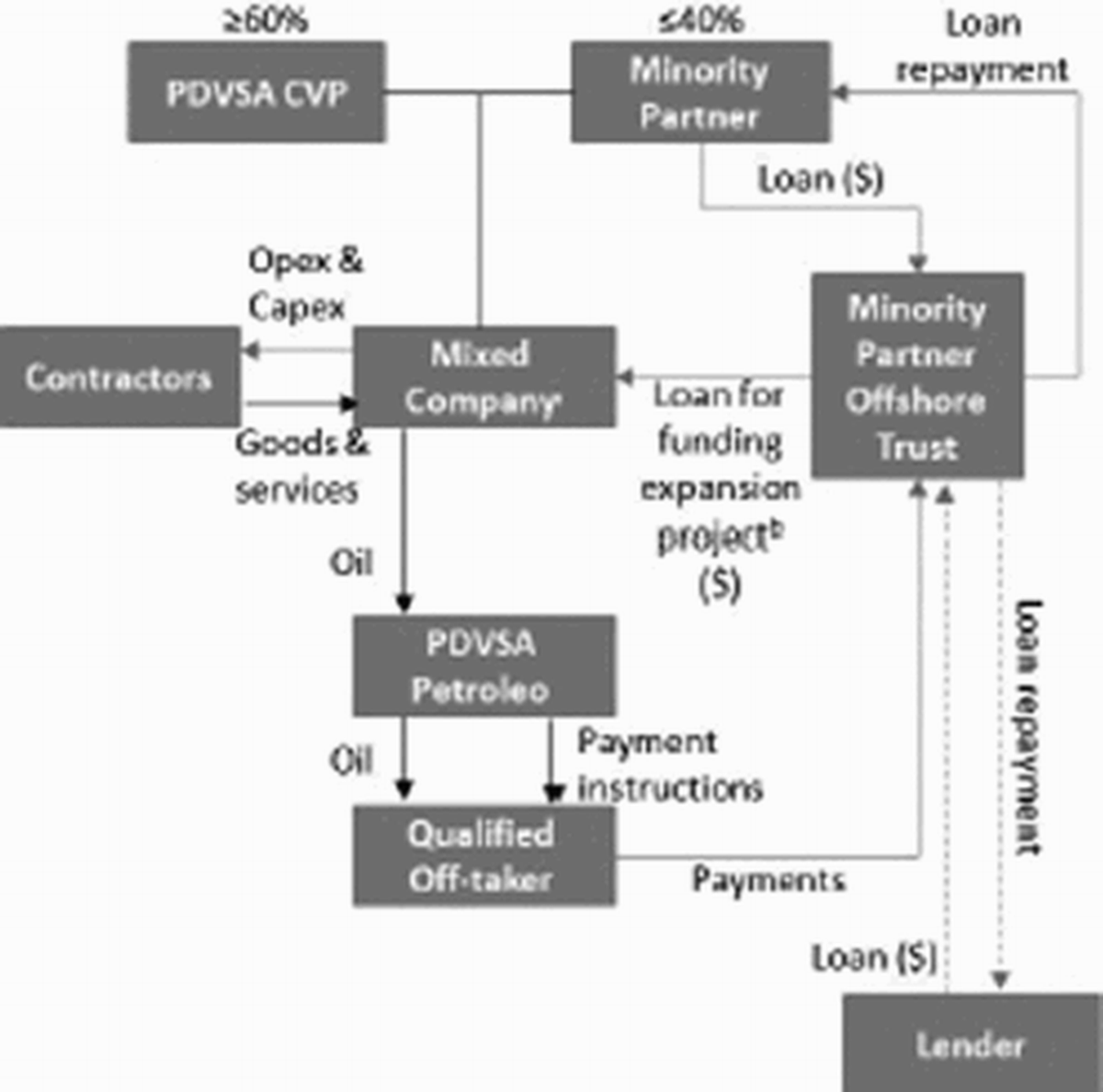
Do you seriously believe that Trump, along with his Palantir Technologies cronies, are about to become industrial planners? That without invasion, without regime change, without national reconstruction, they’ll somehow negotiate a $200 billion, 15-year industrial oil expansion in a country whose infrastructure has been deliberately strangled for a decade?
This is a pipe dream of pipe dreams.
What’s actually lined up for Venezuela is not extraction, but asset stripping. The firms positioned to “re-enter” Venezuela are overwhelmingly financial, not productive. Asset managers like BlackRock are positioned to absorb distressed sovereign and PDVSA-linked debt, restructure it, and turn future production into collateral streams rather than national revenue. U.S. and European oil majors are waiting not to build capacity but for production-sharing agreements, arbitration rulings, and debt-for-equity swaps that cap output and guarantee rents. Sanctions relief is used as leverage not to expand capacity, but to discipline the state and force Venezuela into IMF-style restructuring, privatization, and legal subordination to Western capital markets. They want the Chinese to pay for this oil in dollars, a minor nuisance for Xi, a silly ploy for the western rentier oligarchs.
In a derivatives-driven, dollar-hegemonic system, money is not made by flooding markets with oil. It is made by restricting supply, inflating prices, securitizing future flows, and extracting rents through debt instruments.
That is the real play. Not oil for Americans.
Not development for Venezuela. But financial control, chopped-up industry, suppressed production, and higher global prices. Here is how the mechanism actually functions, step by step, as a single integrated system:
PDVSA entered the 2010s with roughly $30–35 billion in external debt, much of it accumulated during the oil-price collapse after 2014. That debt was issued under New York and international commercial law, not Venezuelan law, making it immediately vulnerable to foreign litigation once payments slowed.
U.S. sanctions, primarily enforced through the Treasury Department’s OFAC regime, did not simply “punish” Venezuela. They froze PDVSA’s access to dollar clearing, blocked refinancing, prohibited U.S. persons from rolling over debt, and severed access to spare parts, diluents, insurance, shipping, and reinsurance. This guaranteed production collapse. Output fell from over 2.3 million barrels per day in 2015 to under 700 thousand by 2020. This collapse was then cited as evidence of “mismanagement,” completing the narrative loop.
Once payment defaults occurred under sanctions-induced conditions, creditors activated arbitration and litigation channels. Bilateral investment treaties signed in the 1990s gave foreign firms standing in ICSID, the World Bank–linked arbitration system designed explicitly to protect capital against sovereign states. Venezuela now faces tens of billions of dollars in ICSID awards and claims, many tied to pre-Chávez privatizations and post-Chávez nationalizations.
Those arbitration awards are enforceable not inside Venezuela, but against Venezuelan assets abroad. This is why CITGO, PDVSA’s U.S. subsidiary, became the primary target. Courts in Delaware treat arbitration judgments as senior claims. The result is not compensation through production, but forced asset liquidation and debt waterfalls.
At no point does this process require rebuilding Venezuelan oil capacity. In fact, rebuilding capacity would undermine the entire structure by increasing supply and reducing price leverage. The rational financial outcome is permanently constrained production, collateralized future barrels, and externally controlled cash flows.
Sanctions create default. Default activates arbitration. Arbitration enables asset seizure. Asset seizure disciplines the state. Financial firms then step in to “stabilize” the wreckage through debt restructuring, equity swaps, and price-managed reentry. The oil stays mostly in the ground. The rents flow outward.
This is why the “they just want the oil” line is not merely wrong but backwards. The oil is most valuable when it is not produced, when it exists as a future claim backing debt, derivatives, and geopolitical leverage.
Anyone telling you otherwise is either historically illiterate or selling the lie. Trump is simply accelerating the debt peonage machine, not extracting resources like the Roman Raubbauwirtschaft fantasy.
The reality is the western left spent decades making the "it's wrong to extract resources cus' muh morality" argument and IT NEVER HAPPENED. It's a loser, it's time to contradict the financial oligarchy as FUNDAMENTALLY UNPRODUCTIVE in all senses.
Neo-Liberals, Thatcherites, Libertarians, Hayek-fans, Ayn Rand-fans......whatever the believers in the magic of the marketplace are called, their beliefs are based on faith - and not on real evidence.
On this day in 2016, Cuban Revolutionary Fidel Castro passed away.
Before the Cuban revolution, US financial interests owned:
90% of Cuba’s mines
80% of public utilities
50% of railways
40% of sugar production
25% of bank deposits
In response to Fidel Castro removing the US’ iron grip over the island nation, the CIA launched the failed Bay of Pigs invasion and tried to assassinate him over 600 times. All of them failed.
In the first 30 months after Fidel Castro and Cuba’s communists came to power, more classrooms were built in those 30 months than had been built in the previous 30 years.
Within the first six months of Castro's government, 600 miles of road had been built across the island, while $300 million was spent on water and sanitation schemes.
Over 800 houses were constructed every month in the early years of the administration in a measure to cut homelessness, while nurseries and day-care centers were opened for children and other centers opened for the disabled and elderly.
With the arrival of the revolutionary government, Cuban healthcare was nationalised and expanded with heavy investment, bringing free healthcare access to millions. Universal vaccination for childhood diseases was introduced, leading to infant mortality rates plummeting.
Cuba's 'army of doctors' is now sent to crisis-hit countries around the world. Since 1963, more than 600,000 Cuban health workers have provided medical services in more than 160 countries.
Despite being under the illegal embargo imposed by the US, Cuba now has a higher life expectancy than the US, has more doctors per capita than the US, and is among the top 35 countries for lowest child mortality rates. Under Fidel Castro's rule, UNICEF declared severe child malnutrition to be eradicated.