Want to speak, read, and understand Dholuo confidently? Join our Virtual Dholuo Classes today guided by native speakers and cultural experts.
Age Groups:
8–12 yrs (Pre-teens)
13–17 yrs (Teenagers)
18–55 yrs (Adults)
Flexible online lessons perfect for learners in Kenya or abroad.
Affordable fees, payable in instalments.
If you value culture, language, and identity, this is for you.
DM me or WhatsApp +254 710 122 472 to register for the next intake.
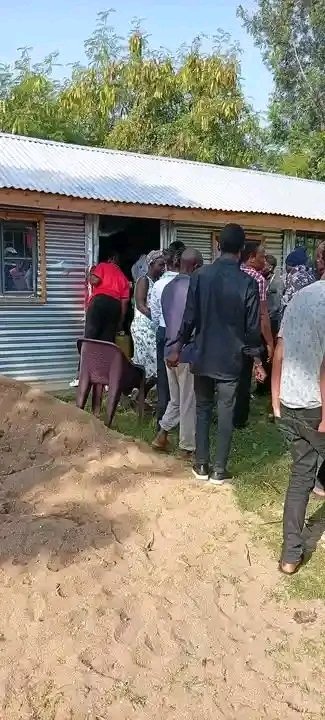
Japuonjre moro manie ike mar adek e tat somo ma Tom Mboya University, oyudi ka okawo ngimane owuon kokalo kuom dere gi tol e ot mar apanga, kamoro ni Arujo location, e kar chung' od bura ma Homa Bay town. Nyakasani pokoyangore gima omiyo okao ngimane oko. Bende ne ok oweyo chien andika moro amora.
Governor @orengo_james is one of the most underrated governors in Kenya today, and arguably the best-performing governor in Luo Nyanza when it comes to healthcare infrastructure.
In just his first term, Siaya County has made significant strides in strengthening its health sector through projects funded by the county's own development budget.
Among the flagship projects are:
• Tingare Maternal, Newborn and Child Health Facility, fully funded by Siaya County.
• The Yala Mother and Child Complex, currently under construction.
• A fully completed and well-equipped Accident and Emergency Department at Siaya County Referral Hospital.
• A new Surgical Complex dedicated exclusively to surgeries, featuring 4 operating theatres, 10 ICU beds, a 14-bed recovery area, and two pharmacies.
• The Bondo Outpatient Block, which is currently under construction.
• Siaya is also the only county in Kenya with two CT scan machines. The county has further acquired an ultra-modern 24-slice CT scanner, a level of equipment typically associated with national referral facilities such as KNH and MTRH.
These are tangible projects that residents can see and benefit from.
Now compare that with Homa Bay County. What major healthcare projects can be pointed to over the same period? Shortages of essential drugs and healthcare personnel. Several lower-level health facilities remain underutilized or non-operational, while the Accident and Emergency Department at the county referral hospital has stalled and turned into a breeding ground for mosquitoes.
The contrast between the two counties is striking. While Siaya is investing heavily in healthcare infrastructure, Homa Bay is still waiting for transformative flagship projects funded through the county's development budget.
Homa Bay governor is only a specialist in PR and optics. Nothing tangible to show for her 4 years in office, not even one flagship project done with Homa Bay County development budget, I am told the most hyped New funeral parlour is privately owned, built on public land without public participation.
On healthcare delivery and infrastructure, Governor James Orengo has set a benchmark that many county governments would do well to emulate.
As the country reflects on the rising cases of school unrest and dormitory fires, we must move beyond simply blaming students and confront the deeper systemic issues facing our education sector.
Many of our schools were originally designed to accommodate 500 or 600 students. Today, some of these same institutions are struggling to host 2,000 or even 3,000 learners using infrastructure that was never expanded to match the growth in enrollment.
Dormitories are overcrowded. Dining halls are overstretched. Sanitation facilities are under immense pressure. In some schools, students must bathe in shifts because the available facilities cannot serve the numbers enrolled. Privacy is limited, personal space is non-existent, and basic amenities are stretched beyond capacity.
At the same time, students are navigating intense academic pressure, rigid schedules, social challenges, and uncertainty about their future. When thousands of young people are packed into environments that cannot adequately meet their physical and psychological needs, stress levels inevitably rise.
This does not excuse the destruction of school property. Burning dormitories and vandalising facilities endangers lives and undermines education. However, if we are serious about preventing unrest, we must also be honest about the conditions under which many students are living and learning.
The solution lies not only in discipline, but also in investment. We must expand school infrastructure, improve student welfare services, strengthen guidance and counselling programs, and ensure that enrollment growth is matched by adequate facilities and staffing.
A country with a rapidly growing youth population cannot continue relying on infrastructure built for a different era. If we ignore the pressure building within our schools, we should not be surprised when it manifests in destructive ways.
The conversation must move from blame to solutions.
If you are interested in the DHOLUO dictionary please hit my inbox. It is very comprehensive and has illustrations. It has ALL DHOLUO words and their English meanings.
Available in Soft Copy
Learn Dholuo with the Experts; ( At a small fee)
If you are interested in Dholuo Virtual Classes you can Dm me or WhatsApp +254710122472.
Intake ages ;
8- 12 ( Pre-teens)
12-17 ( teenagers)
18-55 ( Adults )
As discussions around petroleum revenues, local content, and energy investment continue, workers and host communities must not be relegated to the margins while others reap the rewards. The men and women who power the industry, alongside communities that host energy infrastructure and extraction activities, deserve a fair share of the benefits.
KPOWU believes transparency, accountability, and equitable benefit-sharing must be at the centre of Kenya's petroleum economy. This means scrutinising local content commitments, promoting skills transfer, supporting decent employment opportunities, and ensuring that host communities see tangible improvements in livelihoods and public services.
Happy Sunday, fellow citizens.
As we gather with our families, friends, and communities today, let us reflect on the values that bind us together: faith, hard work, integrity, and hope for a better tomorrow.
Our nation faces challenges, but no challenge is greater than the determination of a united people.
The Kenyan state belongs to all citizens equally. Attempts to rewrite history or suggest exclusion of any community from government is both inaccurate and unhelpful to national cohesion.
What matters is not which community has or has not been in power, but whether the policies implemented have improved the lives of Kenyans across the board.
Today, many citizens across regions including Nandi, Nyanza, Central Kenya and beyond are feeling the pressure of rising living costs, unemployment, and strained public services. This is a policy question, not an ethnic one.
Leadership must be judged on outcomes: cost of living, jobs, healthcare, education, and economic dignity for all Kenyans.
Safina is the party of economic and financial advancement ; safi na pesa. Our focus is clear: rebuilding the economy, restoring dignity in work, and putting citizens at the centre of national priorities.
We reject legacy politics and their associated networks of influence that have contributed to the current economic and governance challenges. Kenya requires a clean break from systems that prioritise power-sharing over problem-solving, and positions over public service.
Safina does not subscribe to political arrangements driven by the distribution of offices. Our commitment is to principles, not patronage. Real change cannot emerge from recycled political formations that have already had their chance to deliver.
We are building a movement anchored in accountability, economic justice, and a new political culture that puts country before careers.
Obila ondhiyo jago moro, 39, manyocha onego owadgi maduong' tok laro kieu mar loo.
Kevin Ochieng' Utazo ichich nine onego owadgi manyinge Lucas Killion, e gweng' ma Nyawalongo, Wakula North Sub location, Mfang'ano West, chieng' tich adek godhiambo
Jopiny mane nikod mirima mager okinyi ma kawuono ne onego Jakuo moro mosebedo ka kwalo e dala mane osenindo, Jakom Festus Amimo
Jagono ne ojuki ka muko chiel mar dala jakom, kendo ichich ni en emosebedo kokwalo jamni e dalano chakre be jakom wit ngimane.
While this signals a significant milestone in the country’s extractive and energy agenda, KPOWU underscores that commercial viability cannot be pursued in isolation from occupational health safeguards and environmental integrity. The union emphasizes that Turkana’s fragile ecosystem and water systems require stringent, continuously enforced monitoring frameworks to prevent contamination, while workers in upstream operations must be protected through mandatory exposure tracking, enforceable PPE compliance, and a national occupational disease registry.
KPOWU further warns that community health impacts must not be treated as externalities of production but as central indicators of project legitimacy, requiring transparent air and water quality surveillance and independent audits. Ultimately, the union maintains that Kenya’s oil ambitions must be anchored in scientific accountability, worker dignity, and environmental justice, or risk converting economic progress into long-term public health liability.
In the petroleum sector, safety is a daily discipline that protects lives, families, and livelihoods.
KPOWU reminds all workers across upstream, midstream, and downstream operations that occupational health and safety standards must be strictly observed at all times. This includes proper use of PPE, timely incident reporting, adherence to HSE regulations, and compliance with emergency response protocols.
Every incident is preventable. Every life is valuable.
Workers must be empowered with training, equipment, and safe systems of work not exposed to avoidable risk in the line of duty.
We continue to advocate for stronger enforcement of safety standards, transparent reporting mechanisms, and full employer accountability in all petroleum workplaces.
Is the government truly prepared to fully implement the Competency-Based Curriculum (CBC)?
Beyond policy announcements and phased rollouts, the real question is whether there is sufficient investment in teacher training, learning materials, infrastructure, and long-term funding to support a system of this scale.
Education reform cannot succeed on paper alone. It requires consistent financing, well-prepared institutions, and a clear commitment to addressing the practical challenges facing schools across the country.