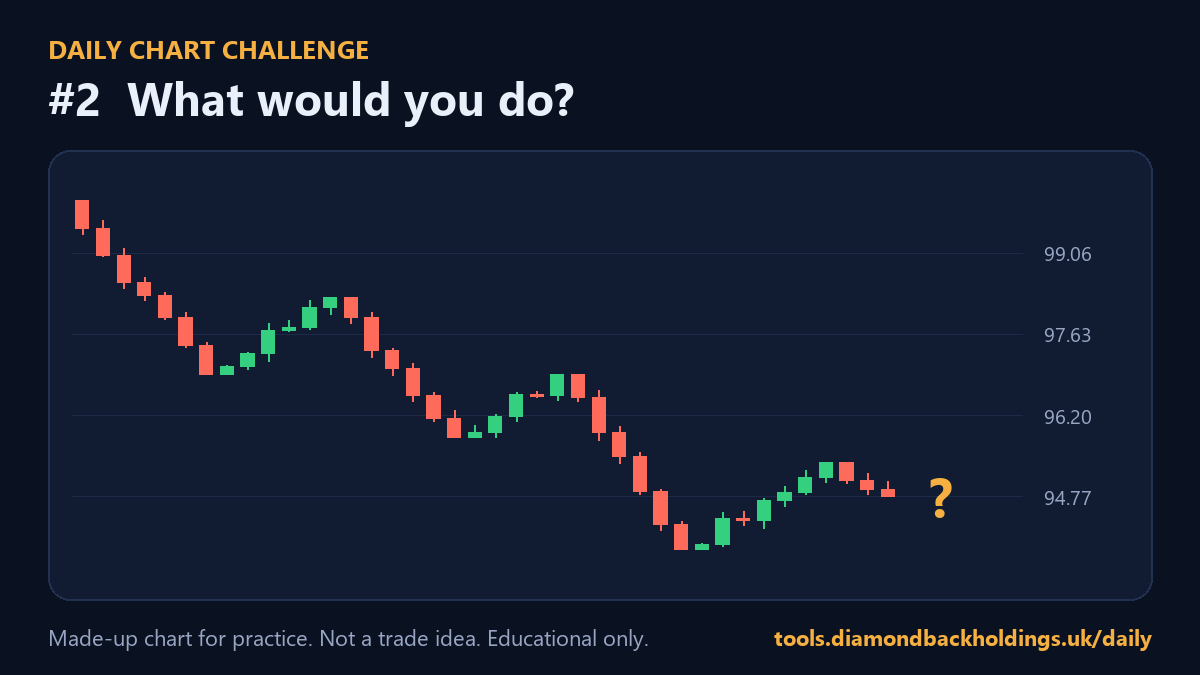
Daily Chart Challenge #3
Before the entry: where are you wrong? Find the stop, then work out the reward to risk.
Practice only.
https://t.co/NIP4aMwQLs
@interequity Good point. The follow-on is size: if the structural stop is further away, the position has to get smaller so the money at risk stays the same.
@LQHMarkets Mostly agree. A stop doesn't guarantee your exit price, gaps and slippage happen, but without one you haven't decided what the trade is allowed to cost.
@early404 Worth knowing why those levels get busy. I'd still put the stop where the idea is wrong, then cut the size to fit, rather than squeeze it in somewhere that looks safe.
@forexwithmodu@grok I'd say it starts with the plan. If the exit isn't written down before entry, fear and ego get to negotiate it in real time. A stop you chose calmly is easier to leave alone.
Premium or discount?
Take one swing from low to high and mark the halfway point. Above it, traders call price premium. Below it, discount.
A way some traders read charts, not a proven method. Cheap can still get cheaper.
Educational only, not financial advice.
Big swing breaks or small ones: which do you treat as meaningful? A 24 second structure lesson. Education only, not advice. Illustration, not real data.
A short lesson on internal vs external structure. Which one do you check first on your charts? Education only, not advice. Illustration, not real data.
Not every break on your chart matters. Big swings or small ones?
Educational content only, not financial advice. Trading carries a high risk of loss.
#trading#marketstructure
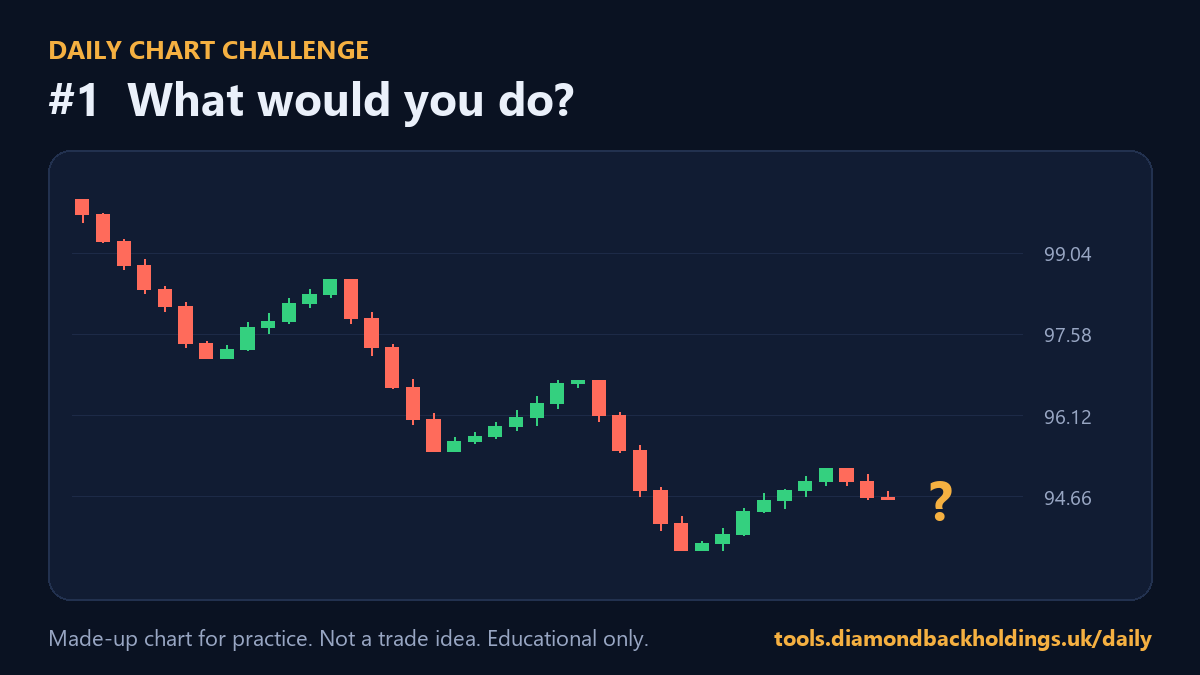
Daily Chart Challenge #1
Which way has this chart been moving, and where would your stop go?
Three questions, then your call. Made-up practice chart.
https://t.co/NIP4aMwQLs
Why do perfect backtests fail the moment they go live? Test a hundred tweaks, keep the best, and you may have found luck, not an edge. Backtest edge (A) or backtest luck (B)?
Educational only, not financial advice. Trading carries a high risk of loss.
#trading#backtesting